

Picking the right luggage for an international trip is the first step toward a smooth, headache-free journey. It’s more than just a bag; the best luggage sets for international travel are a key part of your travel plan, built to handle the unique demands of going global. Think of this guide as your masterclass in the science of packing smart.
Your Guide to Smarter International Travel
Gearing up for an international adventure is exciting, but it all starts with a very practical decision: choosing the right luggage. Your suitcase isn’t just a box for your stuff; it’s your mobile home base. It has to survive rough handling, navigate crowded airports, and roll smoothly over everything from slick terminal floors to ancient cobblestone streets.
The wrong luggage can turn a dream trip into a series of frustrations. We’ve all been there—wrestling with a wobbly handle, discovering a zipper has given up, or getting hit with surprise overweight baggage fees at the check-in counter.
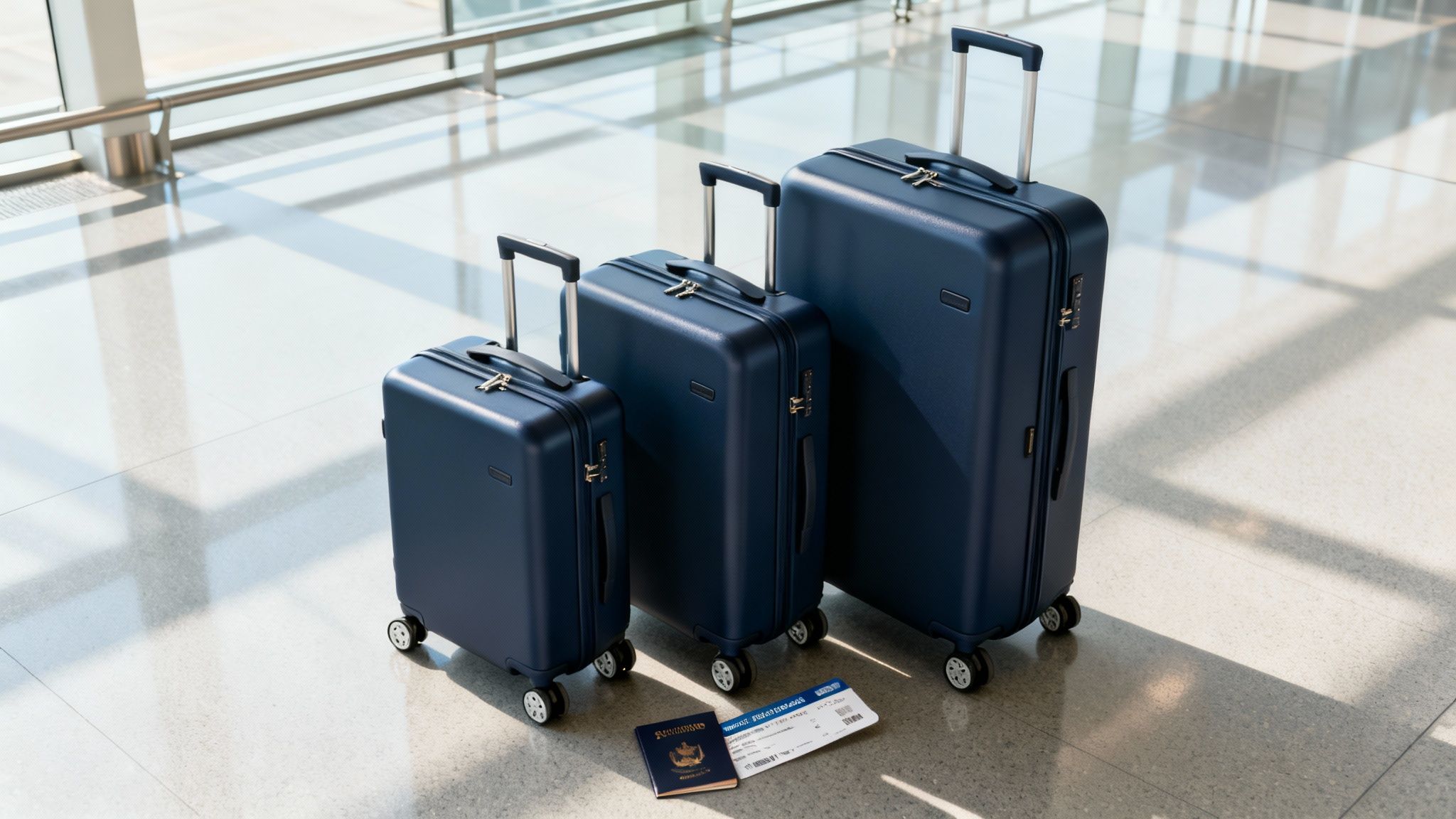
Today’s travelers need luggage that does more than just hold clothes. It has to protect your belongings, comply with a maze of airline rules, and keep your valuables secure across continents. This means looking beyond the surface and understanding what really makes a suitcase great.
Matching Luggage Materials to Your Journey
The heart of any good suitcase is what it's made of. You’ll generally find three main options—hardside, softside, and aluminum—and each one shines in different situations. It’s like picking the right tool for the job; what's perfect for a quick city break might not cut it for a two-week tour through multiple countries.
Here's a quick rundown of the big three:
- Hardside (Polycarbonate/ABS): This is your go-to for protecting fragile souvenirs and electronics. The rigid shell offers fantastic impact resistance and a sleek, modern look that stands out on the carousel.
- Softside (Nylon/Polyester): If you’re an "over-packer" or just love easy access, softside is for you. The external pockets are a lifesaver for stashing last-minute items, and the fabric has a bit of give for that one extra sweater you just had to bring.
- Aluminum: This is the gold standard for durability and security. It's a premium choice for frequent flyers and serious globetrotters who need their gear to be practically indestructible and look timelessly cool while doing it.
To make it even simpler, here's a quick way to match the material to what you care about most.
Quick Guide to Your Ideal Luggage Type
| Travel Priority | Hardside (Polycarbonate/ABS) | Softside (Ballistic Nylon/Polyester) | Aluminum |
|---|---|---|---|
| Durability & Protection | Excellent impact resistance, protects fragile items. | Good for scuffs and tears, but less impact protection. | The ultimate in strength and security. |
| Flexibility & Packing | Fixed volume, but great for organization. | Flexible; can squeeze in extra items. External pockets. | Fixed volume; best for precise packers. |
| Weight | Often lighter than it looks. | Typically the lightest option. | The heaviest, but built to last a lifetime. |
| Aesthetics | Modern, sleek, and available in many colors. | Classic and functional. | Premium, industrial-chic, and sophisticated. |
Choosing the right material really comes down to how you travel. There’s no single "best" option—only what's best for your journey.
As global travel roars back to life, the demand for truly reliable luggage has never been higher. The global luggage market was recently valued between USD 20.96 billion and USD 41.04 billion, a number that reflects just how many of us are hitting the road. This boom highlights why you need luggage designed to withstand the grind of frequent, long-haul trips.
Your luggage set is an investment in stress-free travel. The right choice empowers you to focus on the experience ahead, confident that your belongings are safe, organized, and easy to manage.
Of course, the bag is just one piece of the puzzle. For a complete look at getting ready, check out this stress-free guide on how to prepare for international travel, which covers everything from documents to money. And once you have your perfect bag, learn how to fill it like a pro with our essential packing tips for international travel to maximize every inch of space.
Understanding What Makes Great Luggage Tick
When you’re staring down a wall of suitcases, it’s easy to get overwhelmed. But choosing the right luggage for an international trip isn’t just about picking a pretty color. It’s about understanding the nuts and bolts of what makes a bag a reliable travel partner versus a source of frustration.
Think of it like buying a car. You wouldn't just look at the paint job; you'd want to know what's under the hood. The same goes for luggage. Every component—from the shell that protects your gear to the wheels that glide across the airport floor—plays a huge part in how your journey unfolds. Let's pop the hood and see what makes a suitcase truly great.
The Foundation: It’s All About the Material
A suitcase's shell is its armor. It’s the first and last line of defense against rough baggage handlers, conveyor belts, and the general chaos of travel. The material you choose dictates the kind of protection your belongings get.
-
Polycarbonate: This is the superstar of hardside luggage for good reason. It’s impressively durable yet surprisingly light. Its real magic trick? It flexes under impact and then pops right back into shape, kind of like a high-tech plastic that bends instead of cracking. This makes it perfect for absorbing the shock of being tossed around.
-
Ballistic Nylon: If you’re a fan of softside bags, ballistic nylon is your workhorse. Originally designed for military flak jackets, this stuff is tough as nails. It resists scrapes, tears, and punctures like a champ. Plus, its inherent flexibility is a lifesaver when you need to squeeze in that one last souvenir.
-
Aluminum: This is the gold standard for ultimate protection and a timeless, premium look. Aluminum luggage offers unparalleled defense against being crushed or broken into. It’s certainly heavier, but for travelers who need to protect expensive equipment or simply demand the best, its sheer strength is worth it.
Wheels: The Engine That Drives Your Journey
The wheels are what turn a heavy, cumbersome box into something that glides effortlessly by your side. A bad set of wheels can turn a sprint to your gate into a miserable, bumpy struggle. You've got two main options here.
Spinner wheels, the ones with four wheels that spin 360 degrees, are a crowd favorite. They let you push the bag upright right next to you, which feels almost weightless on smooth airport floors.
Then you have the classic two-wheel roller system. These bags are meant to be pulled behind you. Their wheels are often larger and more recessed, giving them an edge on rougher surfaces like cobblestone streets or cracked city sidewalks.
A great set of wheels can make a 50-pound bag feel like it’s floating. That smooth, silent roll through a chaotic terminal is one of those small travel luxuries that makes a massive difference.
Handles and Locks: Your Control Panel
The parts you interact with most—the handle and the lock—are just as critical. A wobbly, flimsy telescoping handle is an immediate red flag. You want something that feels solid, locks firmly into place at different heights, and doesn't rattle.
And for the lock, this is non-negotiable for international flights: get a TSA-approved lock. This is especially crucial if you're flying to or through the United States. These locks have a special keyhole that allows security agents to open your bag for inspection without having to break your lock or your zipper. It's a simple feature that gives you security and peace of mind.
Getting familiar with these signs of quality construction is the first step. To go even deeper, check out our complete guide on how to choose luggage, which covers everything you need to know. Once you understand this anatomy, you're no longer just buying a bag—you're investing in a dependable travel companion built for the real world.
Hardside vs. Softside vs. Aluminum Decoded
Picking the right luggage material is a lot like choosing a coat for a trip. A stylish trench coat is perfect for a city break, but you’d want a heavy-duty parka for a mountain expedition. Hardside, softside, and aluminum luggage are all fantastic choices, but they’re each built for different kinds of adventures. The best one for you really boils down to your travel style.
This isn’t just about looks, either. Your choice directly impacts how you pack, what you can bring, and how well your stuff is protected. Let's break down the big three to find the perfect match for your next international journey.
The Case For Hardside Luggage
Imagine you're coming home from a tour through Italy with delicate Murano glass and a few bottles of Chianti Classico. This is where hardside luggage shines. Typically made from tough materials like polycarbonate or ABS plastic, its rigid shell acts as armor for your belongings.
It’s brilliant at absorbing shocks and preventing your things from getting crushed when bags are inevitably stacked and tossed around. Modern polycarbonate is particularly great because it can flex under pressure and pop right back into shape, avoiding the cracks you might see on older, cheaper plastic models.
Hardside luggage is your personal vault on wheels. It creates a structured, protective barrier, making it the go-to choice for travelers carrying fragile souvenirs, electronics, or anything that can't afford to be squished.
This style also encourages neat packing. The fixed "clamshell" design splits the suitcase into two equal halves, making it super easy to separate shoes from clothes or keep your outfits organized by destination.
- Best For: Meticulous packers, souvenir lovers, and anyone carrying fragile items.
- Scenario: A two-week trip through Japan where you plan to bring home delicate ceramics and new tech gadgets.
- Key Feature: Superior impact resistance and a clean, modern look.
If this sounds like your packing philosophy, checking out some of the best hardside luggage brands will give you a great sense of what’s out there.
The Advantages Of Softside Luggage
Now, picture a multi-city business trip. You need quick access to your tablet between flights and might have to stuff a few last-minute client gifts in your bag. Softside luggage, usually made from durable fabrics like ballistic nylon or polyester, is built for exactly this kind of flexibility.
Its secret weapon? Exterior pockets. They are an absolute game-changer for grabbing your passport, charging cables, or a book without having to splay your entire suitcase open on the airport floor.
Softside bags also have a little bit of "give." That extra inch of stretch can be a lifesaver when you’re trying to zip up a slightly overstuffed bag. The fabric construction is also more forgiving when it comes to scuffs and scratches, often hiding the wear and tear of travel better than a glossy hardside case.
- Best For: Business travelers, last-minute packers, and anyone who values quick-access storage.
- Scenario: A week-long conference where you need to keep your laptop, files, and personal items separate but easily reachable.
- Key Feature: Packing flexibility and convenient external pockets.
The Pinnacle Of Durability: Aluminum
Finally, think about an adventure photographer hauling expensive gear through rugged terrain. When ultimate security and toughness are the top priorities, nothing beats aluminum. It’s the tank of the luggage world, offering maximum protection against theft, moisture, and serious impact.
Aluminum suitcases are a real statement piece, blending an industrial-chic aesthetic with brute strength. They often feature reinforced corners and heavy-duty latches instead of zippers, making them incredibly difficult for anyone to pry open. While they are heavier and carry a premium price tag, an aluminum case is a buy-it-for-life investment for the serious globetrotter.
- Best For: Adventurers, photographers, and frequent flyers who demand the absolute best in security and durability.
- Scenario: A photography expedition across South America, where protecting sensitive equipment from both impact and the elements is crucial.
- Key Feature: Unmatched security and a timeless, premium design.
To make the choice even clearer, this side-by-side comparison lays out the specific strengths and weaknesses of each material.
In-Depth Comparison of Luggage Materials
| Feature | Hardside Luggage | Softside Luggage | Aluminum Luggage |
|---|---|---|---|
| Durability | High impact resistance, but can scuff or crack | Resists scuffs and tears, but offers less crush protection | Highest impact and crush resistance; virtually indestructible |
| Weight | Generally lightweight, especially polycarbonate models | Often the lightest option available | The heaviest of the three, but built for toughness |
| Security | Good; solid shells are difficult to slash | Vulnerable to slashing; relies on lockable zippers | Excellent; often uses latches instead of zippers, very secure |
| Flexibility | No "give"; fixed volume requires planned packing | Fabric flexes to accommodate over-packing; has external pockets | No flexibility; offers maximum structural integrity |
| Ideal For | Protecting fragile items, organized packing, wet climates | Business travel, easy-access needs, over-packers | Maximum security, protecting valuable gear, frequent flyers |
Ultimately, the best material is the one that aligns with where you’re going and what you’re bringing.
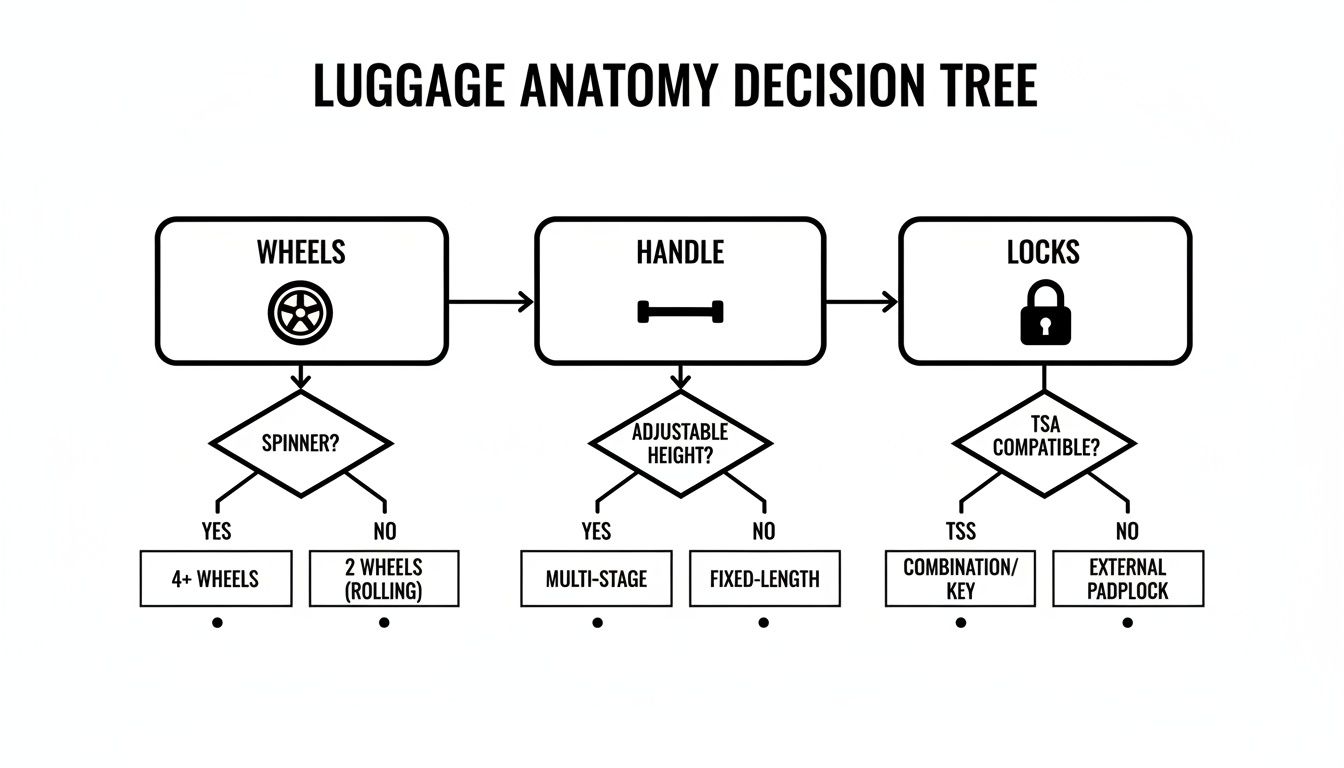
Understanding these core components—wheels, handles, and locks—helps put the material choice into context. The right shell, combined with the right features, creates the perfect travel companion for your journey.
How to Match Luggage to Your Travel Style
Let's be honest, the "best" luggage doesn't exist in a vacuum. The perfect suitcase for a solo business traveler would be a nightmare for a family of four. The real secret to finding the best luggage sets for international travel is matching the bag's features to your personal travel style.
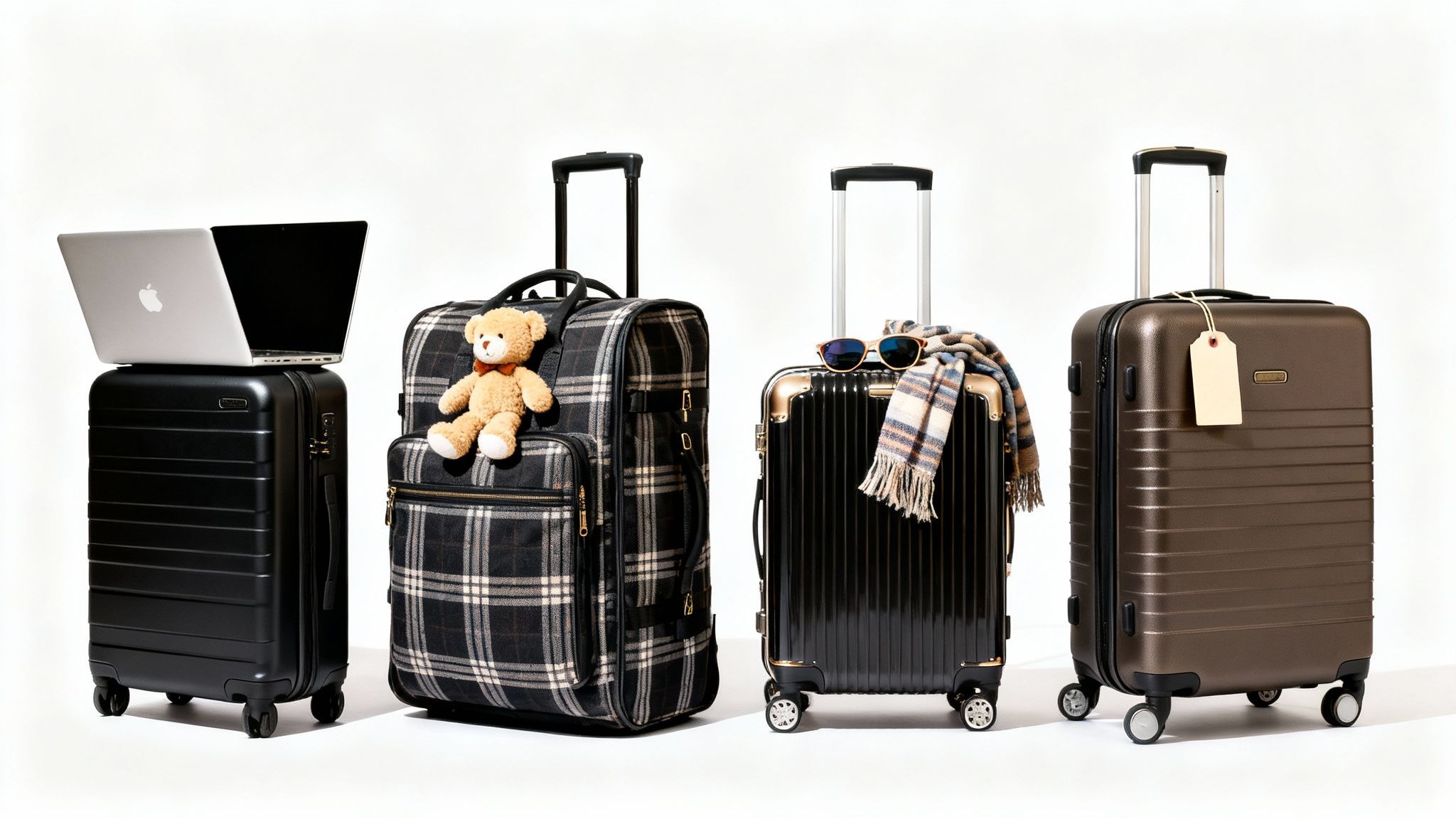
Think of it like picking a car. You wouldn't use a two-seater sports car for a camping trip, and you wouldn't drive a moving van to the office every day. Your luggage is a tool for the journey, and getting the right one makes every trip smoother and far less stressful. Let's break down a few common traveler types to help you find your perfect match.
The Business Professional
For anyone traveling for work, efficiency is king. Your luggage isn't just a bag; it's your mobile office. It needs to be organized, professional, and quick on its feet. You’re often zipping through airports with just a carry-on, needing immediate access to your laptop and documents.
Your ideal luggage set is all about sleek design and smart features. You'll want to look for:
- A Protected Laptop Compartment: This is non-negotiable. A dedicated, padded sleeve keeps your tech safe and makes pulling it out for security a breeze.
- Wrinkle-Resistant Suiter Section: Arriving with a crisp suit or dress shirt is a must. A built-in garment folder or suiter keeps you looking sharp right out of the bag.
- Effortless Spinner Wheels: You need to be able to glide down long airport hallways while taking a call or grabbing a coffee. Smooth, 360-degree wheels make all the difference.
A sharp-looking hardside carry-on paired with a matching briefcase or underseat bag creates a powerful, cohesive system that says you mean business.
The Family Vacationer
Traveling with family is a special kind of adventure, one that demands military-grade planning. Your luggage needs to be a fortress on wheels—tough enough to survive being overstuffed with toys and sturdy enough to handle the inevitable tumbles from the baggage carousel.
For families, the perfect luggage set is all about maximum capacity and resilience. Here’s what to prioritize:
- Large, Expandable Capacity: Look for sets with big checked bags that can expand by an extra two inches. You’ll need that room for souvenirs and all those "just-in-case" outfits.
- Ultra-Lightweight Construction: Juggling multiple bags gets heavy fast. A lightweight set is your best defense against expensive overweight baggage fees. Polycarbonate is a great material for this.
- Durable, Scuff-Resistant Shells: Brightly colored hardside luggage is a double win—it’s easy to spot on the carousel and can take a beating without showing every single scuff.
For families, a nested three-piece set is the ultimate solution. It gives you options for trips of any length and stores away neatly at home, with the smaller cases fitting right inside the largest one.
The Style-Conscious Globetrotter
If travel is as much about the aesthetic as the destination, your luggage is a core part of your wardrobe. It’s a fashion statement that reflects your personal style. You're drawn to premium materials, elegant lines, and brands that perfectly blend beauty with brains.
Your ideal set should turn heads for all the right reasons. Keep an eye out for:
- Premium Finishes: Think brushed aluminum, vegan leather trim, or unique metallic polycarbonate shells that stand out from the endless sea of black bags.
- Luxury Details: The little things matter. High-end components like silent Hinomoto wheels, full-grain leather handles, and custom hardware elevate the entire travel experience.
- Timeless Design: You're not chasing fast-fashion trends. You're investing in a classic piece that will look just as good in ten years as it does today.
This focus on quality is something we see across the market. The carry-on and medium suitcase sizes actually led the global market in 2023, with travelers demanding high-quality, convenient options for everything from international trips to quick weekend getaways. You can discover more insights on how consumer preferences are shaping the luggage industry.
Navigating Airline Rules and Security Like a Pro
Finding the perfect luggage set is one thing. Getting it through the airport without a hitch is another. International travel comes with its own web of airline rules and security protocols that can feel overwhelming, but once you know the playbook, you'll sail through every time. Think of these rules less as obstacles and more as the universal language of global travel.
The first thing to get a handle on is baggage allowance. Every airline has its own limits for size and weight, and these rules can change dramatically from one carrier to the next. This is especially true on budget airlines or smaller regional flights. A carry-on that was fine on your last trip might be an inch too big for this one, forcing you to gate-check it and pay a frustrating, unexpected fee.
Before you even think about packing for an international trip, make it a habit to check your airline's specific baggage rules on their website. Never assume they're the same as last time.
Cracking the Code on Luggage Dimensions
While the specifics can differ, some common standards offer a good starting point. For checked bags, most international airlines set the limit at a total of 62 linear inches—that’s length + width + height all added up. For your carry-on, the magic numbers are usually around 22 x 14 x 9 inches, which is the sweet spot for fitting into most overhead bins.
But where they really get you is the weight. Overweight baggage fees are famously steep and can put a real dent in your travel budget. The easiest way to sidestep this is with a small, portable luggage scale. Weighing your bags at home gives you a chance to shuffle things around before you’re stuck at the check-in counter.
This global travel boom is also changing the luggage industry. The Asia-Pacific region, for example, has become a massive market, thanks to a surge in travel from countries like China and India. What’s interesting is that about 60% of luggage sales there are made online, which shows why it’s so critical for a retailer like Voyage Luggage to connect with customers around the world. You can actually discover more insights about the global luggage market dynamics on Technavio.com.
Mastering the Security Checkpoint
A smooth trip through security doesn't start at the airport; it starts when you're packing at home. One of the best tools in your arsenal is a TSA-approved lock.
If your travels take you to or through the United States, these are a must-have. They come with a special master keyhole that allows Transportation Security Administration (TSA) agents to inspect your bag without having to break your lock. If you use a lock that isn’t TSA-approved, they have the right to simply cut it off, leaving your bag unsecured for the rest of its journey.
Beyond the lock itself, how you pack makes all the difference. Here are a few tips that will make your life much easier:
- The 3-1-1 Rule for Liquids: Remember this simple rule for your carry-on. All your liquids, gels, and aerosols have to be in containers of 3.4 ounces (100 ml) or less. And they all have to fit into one clear, quart-sized zip-top bag.
- Electronics Out: Be prepared to take your laptop, tablet, and any other large electronics out of your bag. They almost always need to be placed in a separate bin for scanning.
- Embrace Packing Cubes: They're not just for organization. Packing cubes keep everything contained. If a security agent needs to open your bag for a random check, it’s much faster for them to sift through an organized bag and get it closed again properly.
By getting these airline and security basics down, you turn potential travel headaches into a simple, repeatable process for a smooth start to every trip.
Your Top Questions About International Luggage, Answered
Even after doing your homework, a few lingering questions can pop up before you commit to new luggage. It's completely normal. Let's clear up some of the most common ones so you can feel confident you're making the right choice for your adventures abroad.
What’s the Toughest Luggage Material for International Trips?
For pure, brute strength, nothing beats aluminum. It's the gold standard for protecting your gear from the crushing forces of baggage handling. That said, most travelers find modern polycarbonate hardside luggage to be the perfect sweet spot.
This stuff is engineered to be incredibly tough yet surprisingly lightweight. Its secret is the ability to flex when it takes a hit and then pop back into shape, rather than cracking under pressure. It’s a fantastic, durable choice for the realities of global travel.
Is It Better to Buy a Luggage Set or Individual Pieces?
Buying a luggage set is almost always the smarter move, both for your wallet and your sanity. You typically get a much better price buying a carry-on and checked bag together than you would purchasing them one at a time.
But it’s not just about the savings. A matched set gives you a consistent, polished look and ensures all your bags have the same great features. You're covered for a weekend getaway or a month-long expedition, and when you get home, the smaller bags nest inside the larger ones for super easy, space-saving storage.
Think of a quality luggage set as a long-term investment. Better materials and stronger components—from the wheels to the zippers—drastically reduce the chances of a disastrous bag failure mid-trip. That peace of mind alone is worth it.
It's no surprise that the global luggage market is expected to hit USD 101 billion by 2035. More and more people are realizing that good gear is essential. We're also seeing a huge demand for smart features like GPS trackers and charging ports. You can learn more about luggage market growth trends on Allied Market Research.
Spinner (4) Wheels or Roller (2) Wheels: Which is Better?
This really comes down to where you'll be doing most of your walking.
- Spinner wheels (four wheels) are a dream inside airports. Their 360-degree mobility lets you effortlessly glide the suitcase alongside you, through crowded lines and down long corridors, with zero strain on your wrist.
- Roller wheels (two wheels) truly shine on rough terrain. Think cobblestone streets or cracked city sidewalks. Because the wheels are recessed into the case, they are more protected and handle uneven ground like a champ.
So, if your journey is mostly smooth terminals and paved streets, spinners are fantastic. If you anticipate dragging your bag over more challenging surfaces, the durability of rollers might be the better bet.
Ready to find the perfect travel partner for your next adventure? Explore the curated collection at Voyage Luggage, featuring premium brands, exceptional value, and a 60-day hassle-free return policy. Shop the best luggage sets for international travel today.



Share:
The Best Hardside Luggage Brands for Durability and Style
Durable Luggage for International Travel A Complete Guide