

Any smart packing strategy for an international trip begins with your luggage. I can't stress this enough: investing in lightweight, hardside luggage with smooth-gliding wheels is the single best move you can make. It's the foundation for a stress-free journey and helps you dodge those costly overweight baggage fees right from the start.
Choosing Luggage That Works for You
Before you even pull a single shirt from your closet, think about your luggage. It dictates the entire flow of your trip. We've moved beyond the simple hardside versus softside debate; today's frequent traveler needs a system that's adaptable, tough, and—most importantly—doesn't weigh a ton before you've even packed. Your bag should be an asset, not something you have to wrestle through a crowded terminal.
Prioritizing Lightweight and Durable Materials
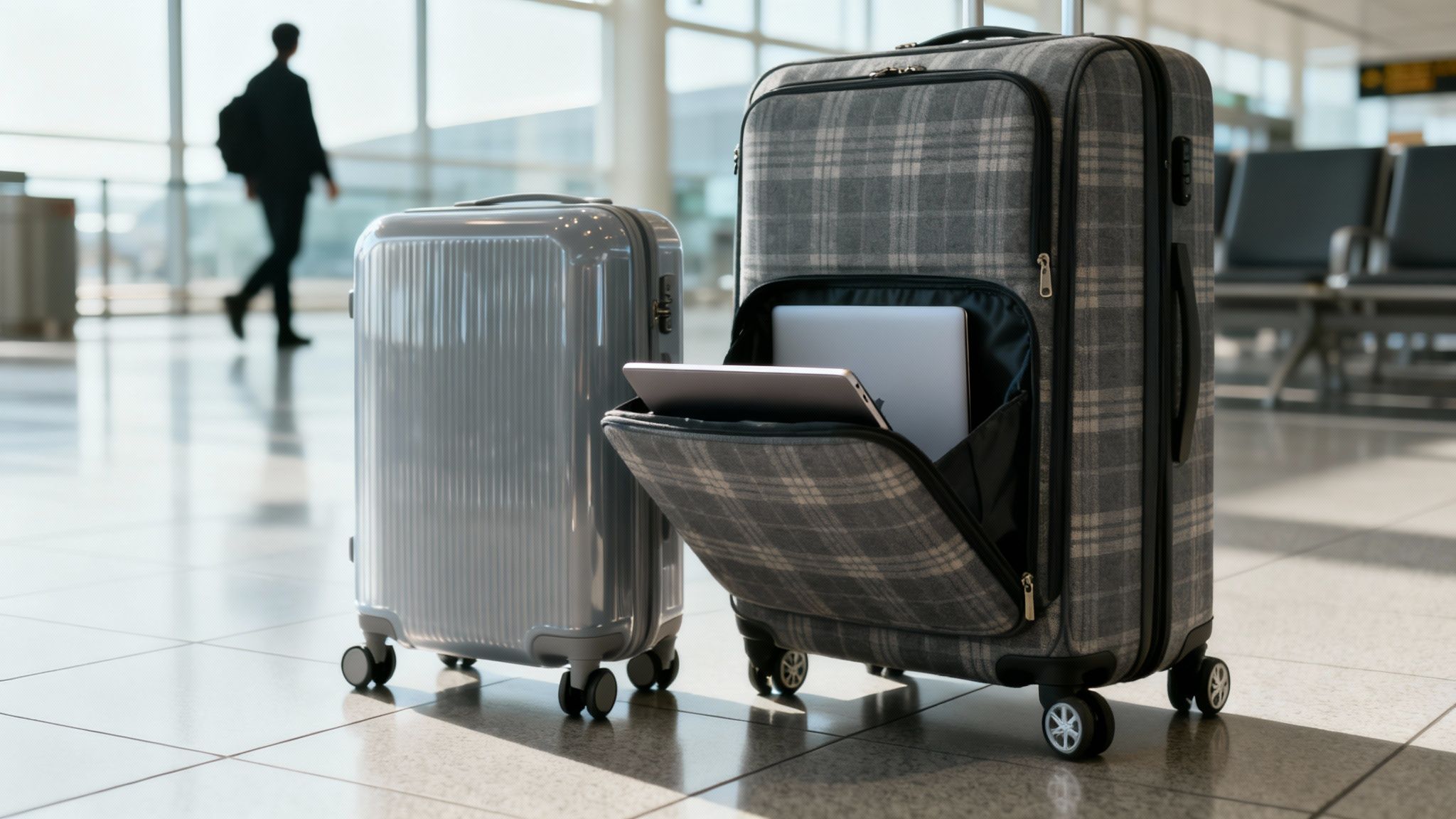
Opting for modern materials like polycarbonate or aluminum is a strategic play. A suitcase that starts off lighter gives you several extra kilograms for your belongings, which is a massive advantage when you're up against strict airline weight limits.
Think about it: a premium polycarbonate case from a brand like TUMI or Briggs & Riley can be up to 2-3 kg (4-6 lbs) lighter than a cheaper, heavier alternative. That difference alone is an entire pair of shoes or a couple of extra outfits.
These materials also give your gear far better protection. A hardside shell is built to absorb impacts, keeping fragile items safe in a way a softside bag, which can easily be crushed, simply can't. That’s real peace of mind when you’re checking your bag for a long-haul flight.
Features That Solve Real Travel Problems
For navigating sprawling international airports, smooth-gliding spinner wheels are non-negotiable. Seriously. When you're sprinting to catch a connection in Amsterdam or Tokyo, being able to effortlessly glide your bag beside you instead of dragging it makes all the difference. Look for brands known for their durable, 360-degree wheel systems.
Beyond the wheels, it's the thoughtfully designed interiors that separate the good from the great. These features might seem minor at home, but they become lifesavers on the road:
- Dedicated Tech Compartments: Padded sleeves for your laptop and tablet make security checkpoints a breeze and keep your most expensive gear protected.
- Built-in Garment Bags: A suiter section is fantastic for keeping business attire or a nice dinner jacket looking sharp, meaning less time spent steaming out wrinkles upon arrival.
- Integrated Compression Systems: These are great for packing more efficiently while also holding everything securely in place, preventing your carefully folded clothes from becoming a jumbled mess.
Choosing the right luggage isn't just about convenience anymore; it's about cost control. With airlines tightening their baggage rules, 19.3% of U.S. travelers now report paying overweight fees. For someone who travels often, those fees can quickly add up, easily canceling out any money saved on a cheaper, heavier bag.
Creating a Modular Luggage System
The most seasoned international travelers I know rarely depend on a single suitcase. They build a modular system that can adapt to different trips. The classic combination is a reliable checked spinner paired with a high-quality carry-on. This setup gives you ultimate flexibility.
For a week-long business trip, that well-organized carry-on might be all you need, letting you bypass baggage claim completely. For a multi-week vacation, the checked bag can hold the bulk of your wardrobe, while the carry-on keeps your absolute essentials—medications, a change of clothes, and electronics—safely with you in the cabin. Our guide to choosing the perfect carry-on luggage has some great tips on finding a bag that meets international airline rules while maximizing your packing space.
Ultimately, your luggage should make every part of your journey easier. By choosing lightweight materials, focusing on essential features, and building a flexible system, you’re laying the groundwork for a perfectly packed trip every time.
Crafting a Smart Capsule Wardrobe
Let's be honest, clothes are the biggest headache when packing for a big trip. The dream is simple: pack less, but have more to wear. This is exactly where a capsule wardrobe comes in—it's less about a packing hack and more about a strategic mindset that keeps you looking sharp without lugging a monster suitcase around the globe.
The big idea? Instead of packing specific outfits, you pack a curated collection of interchangeable pieces. You move away from that one shirt that only goes with one pair of pants. In a capsule wardrobe, every top works with every bottom.
Start with a Cohesive Color Palette
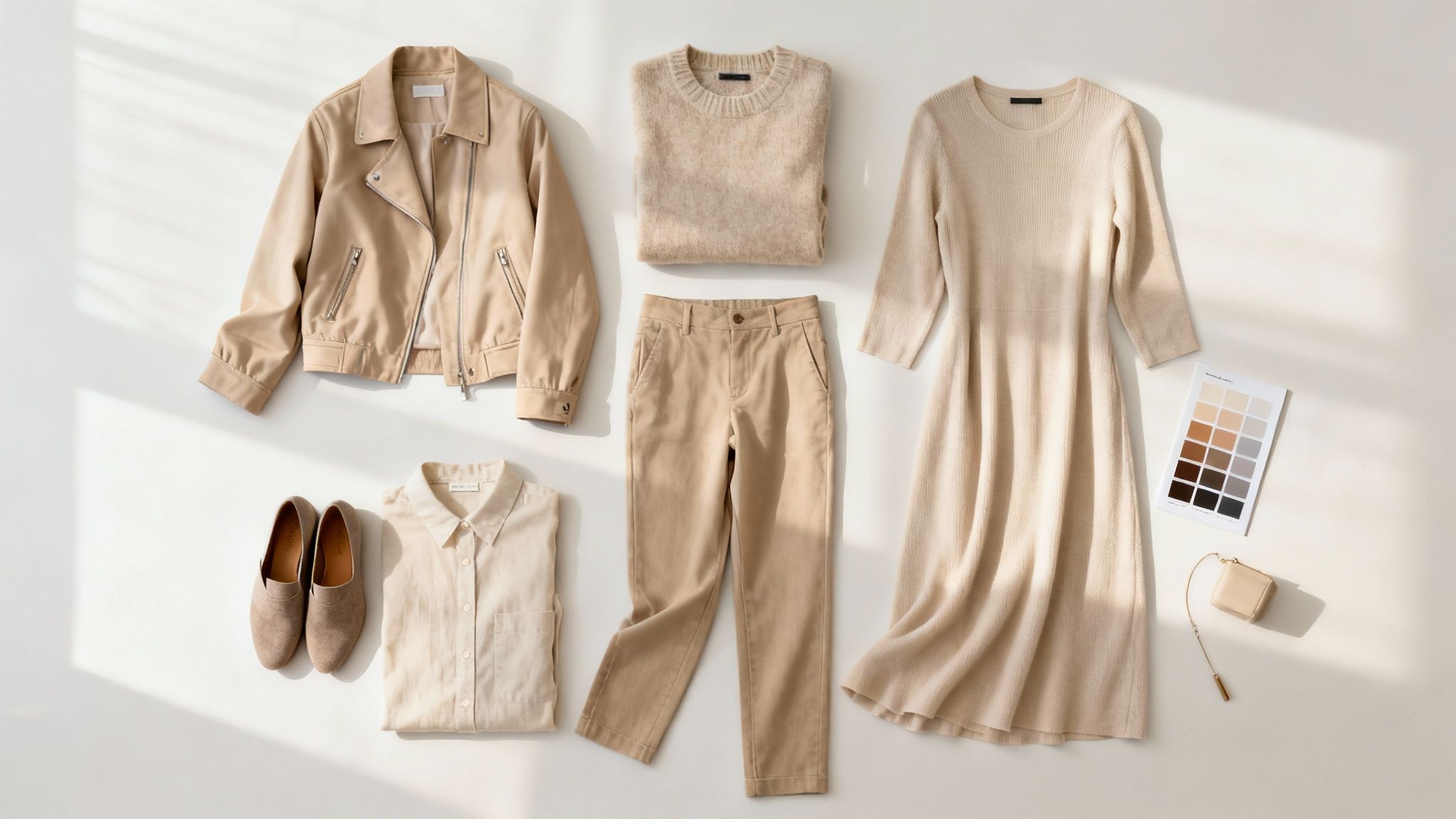
The foundation of a truly functional travel wardrobe is a smart color palette. It sounds simple, but this is the secret sauce. I always recommend picking two or three neutral base colors, then one or two accent colors that pop. This discipline ensures everything you pack works together effortlessly.
For a business trip to a city like Frankfurt, a classic palette is your best friend:
- Neutrals: Think charcoal, navy, and a crisp white. These will be the workhorses—your suit, trousers, and core shirts.
- Accents: A muted blue or a deep burgundy. These tones can show up in a tie, a silk scarf, or a single statement blouse.
Heading to the Mediterranean? Lighten things up:
- Neutrals: Beige, cream, and olive green are perfect for linen trousers, simple tees, and shorts.
- Accents: Terracotta or a vibrant turquoise. Use these for a sundress, a swimsuit, or accessories that add a splash of local color.
Stick to your chosen palette, and you can practically get dressed in the dark and still look pulled together.
Follow a Simple Packing Formula
We’ve all been there—the "just in case" items that never leave the suitcase. It's no surprise that over 40% of travelers admit to overpacking. To beat this, I rely on a simple counting method for a week-long trip. The "5-4-3-2-1" rule is a brilliant guideline that gives you structure without feeling rigid.
Here's how it breaks down:
- 5 Tops: A mix is key. I'll usually pack a few quality t-shirts, a couple of smarter blouses or button-downs, and one versatile sweater.
- 4 Bottoms: Depending on the trip, this might be two pairs of tailored trousers, one pair of dark jeans, and a skirt or shorts.
- 3 Layers & Dresses: This is where versatility shines. A sharp blazer, a lightweight cardigan, and a dress that can be styled for day or night.
- 2 Pairs of Shoes: One for walking (stylish sneakers or loafers are my go-to) and one dressier pair for evenings out. Comfort is non-negotiable.
- 1 Outerwear Piece: A classic trench coat or a packable technical jacket that suits the forecast.
This is a starting point, of course. Feel free to tweak it based on your itinerary, but it forces you to be deliberate about every single item that earns a spot in your luggage.
The real magic of a capsule wardrobe isn't just about saving space—it's about saving mental energy. When every piece works with every other piece, you eliminate decision fatigue and can focus on your trip, not on what you're going to wear.
Choose Fabrics That Travel Well
The right fabric can be a game-changer. I always look for materials that resist wrinkles, dry quickly, and feel good to wear all day.
Merino wool is a travel superstar. It regulates temperature, resists odors, and barely wrinkles, making it perfect for everything from sweaters to base layers. Other fantastic choices are Tencel, modal, and high-quality jersey knits. They drape beautifully and can be rolled tightly without turning into a creased mess. For business trips, a wool-blend suit with a hint of stretch is a lifesaver on long-haul flights.
Master the Art of Layering
If there’s one skill every seasoned traveler masters, it’s layering. This is how you adapt to shifting weather and transition seamlessly from a day of sightseeing to a nice dinner. A few well-chosen layers let your core pieces pull double or even triple duty.
Picture a day exploring a city like Paris. You could start with a simple tee and trousers. As the afternoon breeze picks up, you add a cashmere sweater. For dinner, throw a blazer over that same combination, and you're instantly polished. Each layer adds a new dimension, effectively multiplying your outfits without adding bulk to your bag.
Organizing Your Luggage Like a Pro
A great suitcase is only half the battle. The real secret to a stress-free trip lies in how you pack it. Think of it less as stuffing a bag and more as strategically organizing a mobile closet. It's about blending smart space-saving techniques with a system that protects your belongings and, most importantly, keeps your essentials right where you need them.
Forget the old "toss and hope" method. With the right tools—like packing cubes and garment bags—you can create a system that keeps everything neat and accessible from the moment you leave until you're back home.
The Game-Changing Power of Packing Cubes
If I could recommend only one packing accessory, it would be packing cubes. These simple zippered pouches are the absolute best way to bring order to the chaos of a suitcase. Instead of one big jumble of clothes, you get a tidy, compartmentalized system.
I like to think of them as drawers for my luggage. You can organize them in a way that makes perfect sense for your trip, which makes finding anything a breeze.
- By Clothing Type: This is the classic method. One cube for shirts, one for pants, and a smaller one for socks and underwear. Simple and effective.
- By Outfit: For trips with multiple stops, I pack entire outfits into a single cube. When you arrive, you just grab that day's cube, and you’re set. No digging around required.
- By Activity: Headed to the beach and the city? A cube for swimwear, another for gym clothes, and one for your dinner outfits keeps everything separate and easy to find.
This approach doesn't just keep you organized; it also compresses your clothing slightly, which can free up a surprising amount of space. Unpacking becomes as easy as pulling a few cubes from your suitcase and placing them in the hotel dresser. For a closer look at the different types, check out our guide to the best packing cubes for travel.
There's a reason the global travel accessories market is booming. It's set to grow from around $2.33 billion in 2025 to $3.68 billion by 2032, driven by a massive rebound in international tourism. As more of us travel, we're realizing that investing in smart organization isn't a luxury—it's essential. After all, 77.1% of travelers say a packing list helps them avoid forgetting things. When you pair that planning with the right gear, you eliminate the biggest sources of travel stress. You can see more on travel accessory market trends on Fortunebusinessinsights.com.
Protecting Your Wardrobe on the Go
Some clothes need more TLC than just being rolled into a cube. For your more delicate or structured items, a few specialized bags are worth their weight in gold.
Garment Bags for Wrinkle-Free Formal Wear
If you're traveling for a wedding or an important business meeting, a garment bag is non-negotiable. Whether it's a dedicated bag or a suiter insert in your luggage, it's the only reliable way to get a suit, dress, or blazer to your destination looking sharp. That gentle fold is far kinder than cramming it into a corner of your suitcase.
Shoe Pouches and Covers
Let's be honest: the soles of your shoes are probably the dirtiest things in your bag. Always pack them in dedicated shoe bags to keep that grime from getting all over your clean clothes. In a pinch, even a couple of disposable hotel shower caps will do the trick.
The rule is simple: if it has touched the ground, it doesn't touch your clothes. Shoe bags are an inexpensive accessory that pays for itself by keeping your wardrobe fresh.
Mastering the Art of the Carry-On
Your carry-on isn't just for overflow; it's your survival kit. It’s what gets you through a long flight, a missed connection, or the dreaded lost-luggage scenario. I always pack a small "in-flight kit" inside my carry-on—a little pouch I can pull out and keep at my seat.
Here's a quick look at what absolutely must go into your carry-on bag. Think of this as your non-negotiable list for a smooth and secure journey.
Your Essential Carry-On Checklist
| Category | Essential Items | Why It's Essential |
|---|---|---|
| Documents & Valuables | Passport, visa, driver's license, wallet (cash/cards), house/car keys, jewelry. | These items are irreplaceable and should never be checked. |
| Health & Medications | All prescription medications (in original bottles), basic painkillers, lip balm, hand sanitizer. | Immediate access is crucial. Checked luggage can be delayed or lost. |
| In-Flight Comfort | Noise-canceling headphones, sleep mask, a change of clothes (at least underwear/shirt). | Helps you arrive rested. A fresh outfit is a lifesaver if your checked bag is delayed. |
| Electronics | Phone, laptop/tablet, portable power bank, all charging cables, and travel adapters. | Keeps you connected and entertained. Power banks are essential for long travel days. |
This checklist covers the absolute must-haves. A well-packed carry-on means that even if you're separated from your main luggage, you have everything you truly need to navigate the first 24 hours of your trip without any major stress.
Managing Tech, Documents, and Health Essentials
While a perfectly planned wardrobe is great, it’s the small things—documents, tech, and health items—that can make or break an international trip. Get these right, and you're set for a smooth journey from start to finish. It’s all about being prepared so you can breeze through customs, stay connected on arrival, and have your health needs completely covered.
My golden rule is to build redundancy into your system for all critical information. Never rely on a single copy of anything. I always keep physical copies in a dedicated travel wallet and have digital backups saved securely in the cloud.
Safeguarding Your Travel Documents
Your passport, visas, and boarding passes are your keys to the world. Treat them that way. I swear by a good travel wallet that keeps everything—passport, credit cards, reservation printouts—in one place. It completely eliminates that frantic pat-down I used to do at the check-in counter.
Before you even think about zipping up your suitcase, take high-quality photos of these documents and save them to a secure cloud service like Dropbox or Google Drive:
- Your passport’s photo page
- Any required visas
- The front and back of your credit cards
- Your driver's license
This digital backup is your lifeline. If your wallet goes missing, having instant access to these copies makes reporting the loss and getting replacements a much less painful process.
This flow diagram breaks down how I approach organizing my luggage. It starts with sorting items into packing cubes, then moves to protecting special items in a garment bag, and finally, pulling all critical in-flight items into a separate kit.
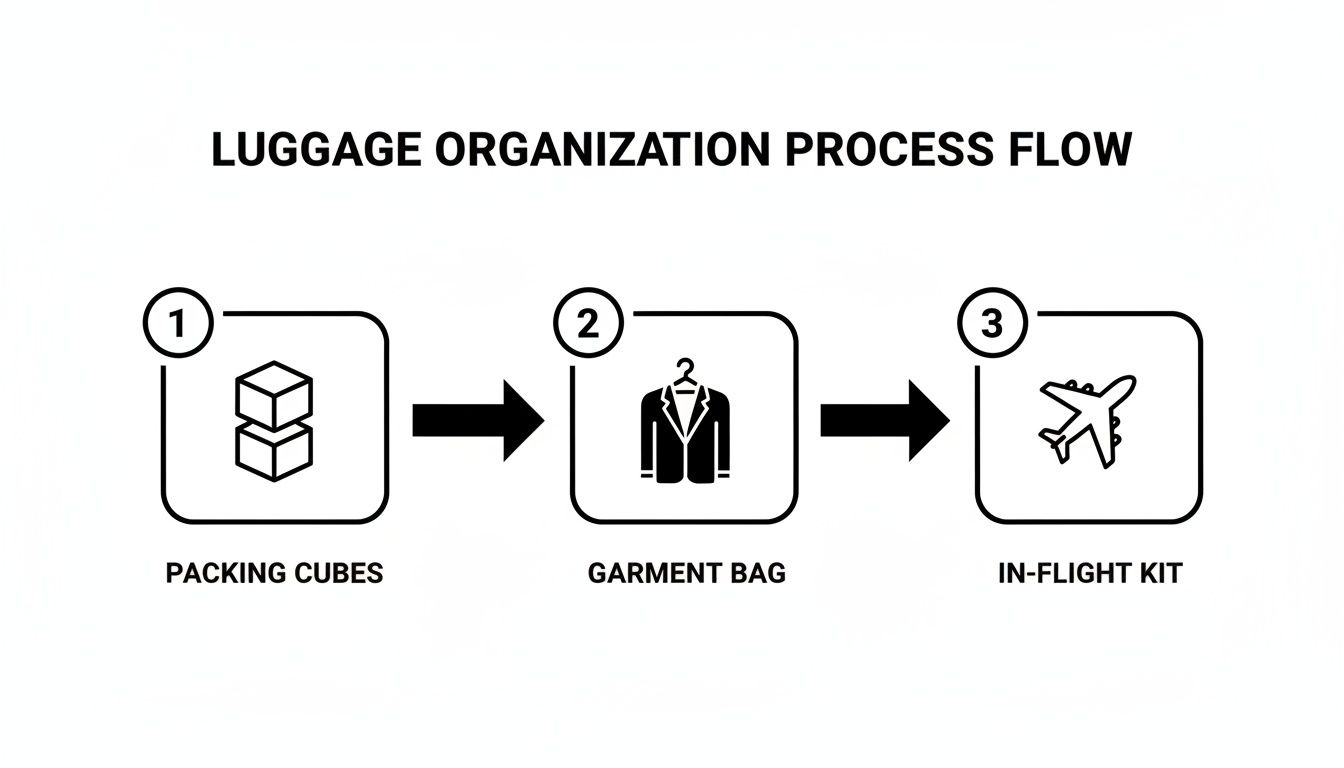
You can see how moving from broad organization to specific, essential kits ensures nothing vital ends up in your checked bag when you need it most.
Staying Powered and Connected Abroad
Few things are more frustrating than landing in a new country with a dead phone and the wrong plug. A reliable universal power adapter is non-negotiable. Don't cheap out here—invest in a quality one that has built-in surge protection and multiple USB ports. It’s a game-changer when you can charge your phone, laptop, and power bank all from one outlet in your hotel room.
And on that note, a power bank is an absolute lifesaver. I never travel without one that has at least 10,000mAh capacity. That’s enough to recharge a modern smartphone two or three times, giving you the freedom to use maps and take photos all day without battery anxiety.
For staying connected, you have a few solid choices:
- International Roaming Plan: The easiest route. Check with your home carrier about their international passes. They can be pricey but are incredibly convenient for short trips.
- Local SIM Card: Your most cost-effective bet for longer stays. You can usually grab a prepaid SIM right at the airport once you land.
- eSIM: The modern traveler's best friend. If your phone supports them, you can buy and activate an eSIM digitally before you leave home, giving you local rates with zero hassle.
Pro Tip: Your chargers, adapters, and power bank always go in your carry-on. Always. Not only are there restrictions on lithium-ion batteries in checked luggage, but you’ll be kicking yourself if your flight is delayed and your entertainment is in the cargo hold.
Managing Medications and Health Items
When it comes to your health, there's no room for compromise. Pack enough of your prescription medications to last the entire trip, plus at least a few extra days' worth. You never know when a flight delay might pop up.
Always, and I mean always, keep medications in their original, labeled containers. This is crucial for avoiding any questions or trouble with customs officials. For controlled substances or large quantities of liquids, it’s a good idea to also carry a copy of your prescription or a note from your doctor.
All your medications belong in your carry-on. Never pack them in your checked luggage. Imagine your bag gets lost—trying to replace a critical prescription in a foreign country is a nightmare you don't want to live. A small pill case is fine for daily organization, but the original bottles must stay with you.
Preparing for Your Departure and Return
A great packing strategy doesn't end when your suitcase is zipped. The real test comes in the final days before you leave and, just as importantly, when you’re packing to come home. Taking a few moments to think about these bookends of your trip is what separates a smooth journey from a stressful one.
Before you even think about leaving, a few last-minute checks can save you from major headaches. It's non-negotiable: call your bank and credit card companies to set a travel notice. Nothing ruins a trip faster than a frozen card. Double-check that your travel insurance is active and you have a digital copy handy. Even general travel advice, like these tips for traveling with pets, reinforces the importance of this kind of meticulous planning.
Final Luggage Weigh-In and Adjustments
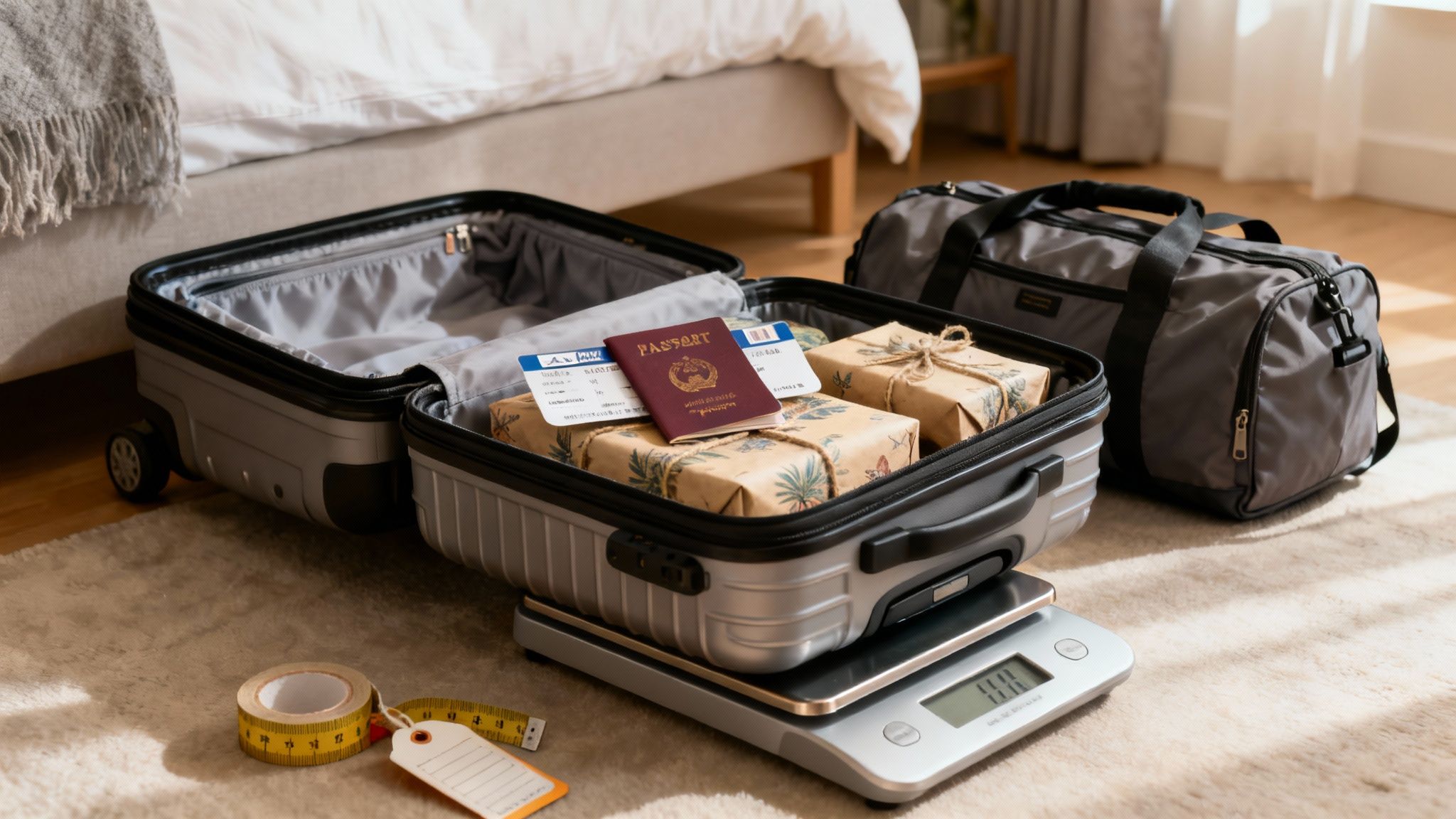
Here’s a tip that has saved me hundreds of dollars over the years: weigh your packed bags at home. A simple digital luggage scale is one of the best travel investments you can make. Most international airlines are incredibly strict about their 23 kg (50 lb) limit for checked bags, and the overweight fees are punishing.
If you’re tipping the scales, now is the moment to be ruthless. Go back through your "just-in-case" pile and pull out anything non-essential. This final check means you’ll walk up to the check-in counter with confidence, not frantically repacking on the floor while a line of impatient travelers watches.
Don't guess your luggage weight. Weighing your bag before you leave home transforms an unknown variable into a known fact, giving you full control and eliminating one of the most common and avoidable travel expenses.
Planning for the Return Journey
It’s easy to focus so much on packing for your destination that you completely forget about the trip home. But a smart packer always anticipates bringing things back, whether it's gifts for family, a piece of art you fell in love with, or a few bottles of local wine. The suitcase that felt perfectly organized on departure can quickly become an overstuffed mess.
Don't just take my word for it. Recent travel data shows that 33% of travelers specifically plan to shop abroad for things they can't get at home, and another 25% prioritize buying souvenirs. The takeaway is clear: a huge number of us are planning to return with more than we left with. My rule of thumb is to leave 15–20% of my suitcase empty or use a bag with an expandable zipper.
Smart Strategies for Packing Souvenirs
So, how do you manage the extra bulk on the way back? I rely on a few tried-and-true methods to make room for new purchases without any last-minute panic.
- Pack a Foldable Duffel Bag: This is my favorite trick. A lightweight duffel takes up virtually no space on the way out. For the return, it becomes a dedicated bag for souvenirs or even dirty laundry, instantly freeing up precious real estate in my primary suitcase.
- Use an Expandable Suitcase: That extra zipper running around your suitcase is there for a reason! Keep it zipped for your outbound flight, and on the way home, unzip it to give yourself several more liters of packing volume.
- Ship Items Home: For anything particularly large, heavy, or fragile, shipping it home directly is a fantastic solution. It might seem like an extra expense, but it’s often cheaper than paying for a second checked bag and eliminates all the hassle.
Thinking about the return journey from the very beginning is the final piece of the perfect packing puzzle. For a more detailed breakdown of everything to do before you go, check out our guide, Preparing for Your First International Journey A Checklist.
Your International Packing Questions, Answered
No matter how many stamps you have in your passport, a few nagging questions always pop up before a big international trip. Let's tackle some of the most common packing dilemmas head-on, so you can zip up your bag with total confidence.
What’s the Best Way to Pack a Suit and Avoid Wrinkles?
A dedicated garment bag or a suitcase with a built-in suiter compartment is, without a doubt, the gold standard. Brands like TUMI and Briggs & Riley design these specifically to keep your formalwear looking sharp.
But if you're working with a standard suitcase, the "interfold" method is your secret weapon. Start by laying the bottom half of your suit jacket or trousers inside, letting the rest hang over the edge. Gently pile other folded clothes in the middle, creating a soft cushion. Then, simply fold the rest of the suit over the top. This technique creates a gentle roll instead of a hard, pressed-in crease.
How Can I Make Sure My Liquids Don't Explode Mid-Flight?
Ah, the dreaded shampoo bomb. We've all been there. Thankfully, a simple two-step process can prevent this nightmare. First, stick to the 100ml (3.4 oz) rule for your carry-on liquids and keep them in a transparent, resealable bag. That’s non-negotiable.
For total peace of mind in any bag, here’s the trick: unscrew the cap, put a small piece of plastic wrap over the opening, and then screw the cap back on. It creates a surprisingly strong secondary seal. For good measure, I always tuck these bottles into a waterproof toiletry bag. A little redundancy goes a long way.
Pro Tip: The plastic wrap trick is a game-changer. It takes just a few seconds per bottle and has saved my clothes from disaster more times than I can count. It's a low-effort move that delivers maximum protection.
Are Packing Cubes Actually Worth It?
One hundred percent, yes. For any trip longer than a weekend, packing cubes are essential. They do two things incredibly well: compression and organization. They let you squeeze the air out of clothes, freeing up a surprising amount of space for that extra pair of shoes or souvenirs.
Even better, they turn your suitcase into a tidy set of drawers. You can group items by type—shirts in one, trousers in another—or even pack by daily outfits. This means no more digging through a perfectly packed bag for a single pair of socks. They are an absolute lifesaver when you're hopping between cities and living out of a suitcase.
How Much Room Should I Leave for Souvenirs?
I've learned this one the hard way. A good rule of thumb is to leave 15-20% of your suitcase empty on the way out. This buffer gives you plenty of room for shopping without having to perform luggage acrobatics on your return trip.
If you know you're a big shopper, pack a lightweight, foldable duffel. It weighs next to nothing and takes up almost no space on your outbound flight. On the way back, it becomes an extra carry-on or checked bag, saving you from those painful overweight baggage fees at the check-in counter.
And of course, if you're traveling with a four-legged friend, their needs come first. Before you even start packing for yourself, double-check the rules of your hotel. Resources like this helpful Hyatt's pet policy guide can be a lifesaver, ensuring you have all the necessary supplies and paperwork for your companion.
At Voyage Luggage, we believe the right gear is the foundation of any great trip. From lightweight hardside spinners to sophisticated garment bags, our curated collection from the world’s top brands is designed to make your travels seamless. Explore our premium luggage and accessories today and start your next journey with confidence.


Share:
How to Fold Clothes for Travel A Guide to Wrinkle-Free Packing
The Ultimate Guide to the Best Carry On Luggage for Business Travel