

Quick answer: The best cruise carry-on packing list is not a smaller version of your main suitcase. It is a portable first-hours kit: keep your boarding documents, required identification, medications, valuables, phone, a change of clothes, swimwear, and the few essentials you would not want to wait for.
Why pack this way? Larger bags are often handed over before you board and delivered later, while your stateroom may not be ready when you first step onto the ship. Royal Caribbean’s current luggage guidance, for example, tells guests to personally carry travel documents and medications and suggests a small bag with a change of clothes and bathing suit. Carnival’s guidance similarly says boarding documents, valuables, medications, and anything needed during luggage delivery should remain with the guest.
The practical rule is simple: if losing access to an item for several hours would disrupt embarkation day, carry it yourself. Everything else can wait in your tagged luggage.
Cruise carry-on checklist at a glance
Keep with you
- Passport or other required ID, boarding documents, and any visas
- Prescription medication, essential medical items, and instructions
- Wallet, cards, cash, jewelry, keys, and other valuables
- Phone, charging cable, camera, and permitted power bank
- One change of clothes, swimwear, and a cover-up
- Glasses, sunscreen, and a compact set of essential toiletries
- Any child, accessibility, or comfort item needed before the cabin is ready
Usually safe to leave in tagged luggage
- Most dinner outfits and extra daytime clothing
- Most shoes and nonessential accessories
- Backup toiletries and full-size products allowed by your line
- Extra layers, beachwear, and permitted activity gear not needed immediately
“Usually” matters: confirm what your cruise line allows and how it handles checked luggage for your sailing.
Choose an embarkation bag you can manage for a few hours
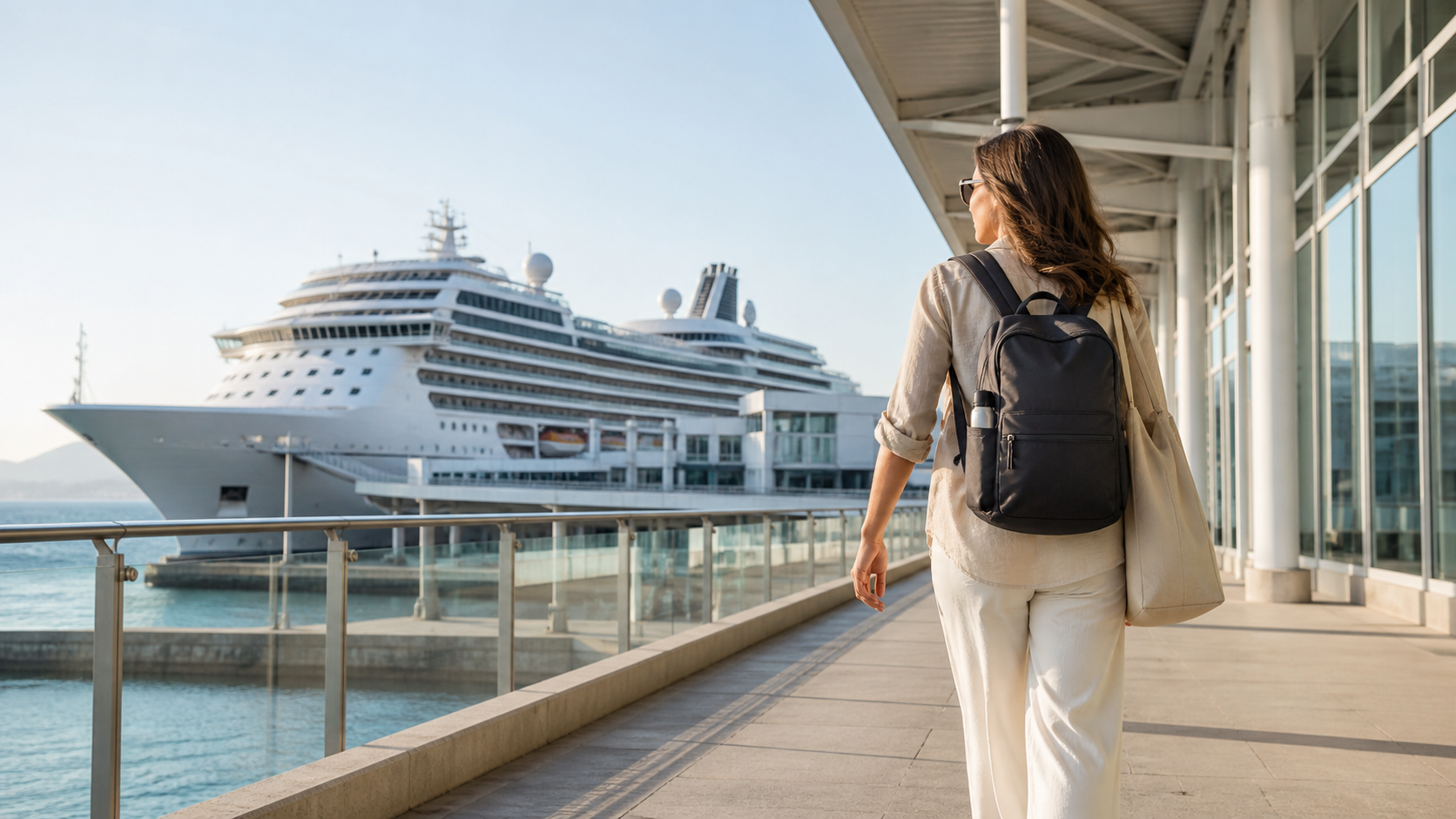
Your first-day bag should be easy to carry through the terminal, security screening, lunch, and any time before your room opens. A lightly packed backpack keeps both hands free. An underseat bag can add structure and quick-access pockets. A compact wheeled case gives you more room but is less convenient if you must pull it through crowded spaces or keep it beside you for an extended period.
Choose based on your route, not on a universal “cruise carry-on” dimension. Port screening equipment and cruise-line limits can vary. If you are flying to the port, your airline’s rules add another constraint, so compare your itinerary against both carry-on luggage and smaller personal-item options before buying.
A compact spinner can make sense for a traveler who wants one organized cabin bag for the flight and ship. The Travelpro VersaPack Compact Carry-On Spinner uses a removable packing-cube organizer, two shoe bags, a laundry bag, a wet pocket, up to two inches of expansion, and a built-in TSA-compliant lock. It is a good fit for organized one-bag travelers; it is more bag than someone who only wants a lightweight daypack for embarkation needs.

Pack documents and medication where you can reach them
Do not put your passport, required ID, boarding pass, visas, wallet, or essential medication in a bag you hand to a porter. Store them together in one protected pocket, then return them to the same place after every checkpoint. Download any boarding documents your cruise line accepts before leaving home so weak terminal service does not become a problem; bring physical copies when your line or port requires them.
Medication deserves its own small, easy-to-remove pouch. Keep labels and supporting documentation as required for your trip, and pack enough for foreseeable delays based on guidance from your prescriber and cruise line. Essential medical devices, allergy information, and emergency contacts belong in the same with-you system—not buried under clothing.
A document organizer can reduce counter-side shuffling for couples or families. The Portland Gear Travel Wallet measures 4.5 by 1 by 7 inches and has mesh ID slots, eight card slots, document and currency dividers, and a pen slot. It suits travelers who want one shared checkpoint hub; a solo traveler carrying only a phone and one card may prefer a slimmer wallet.

Build a first-afternoon clothing and comfort kit
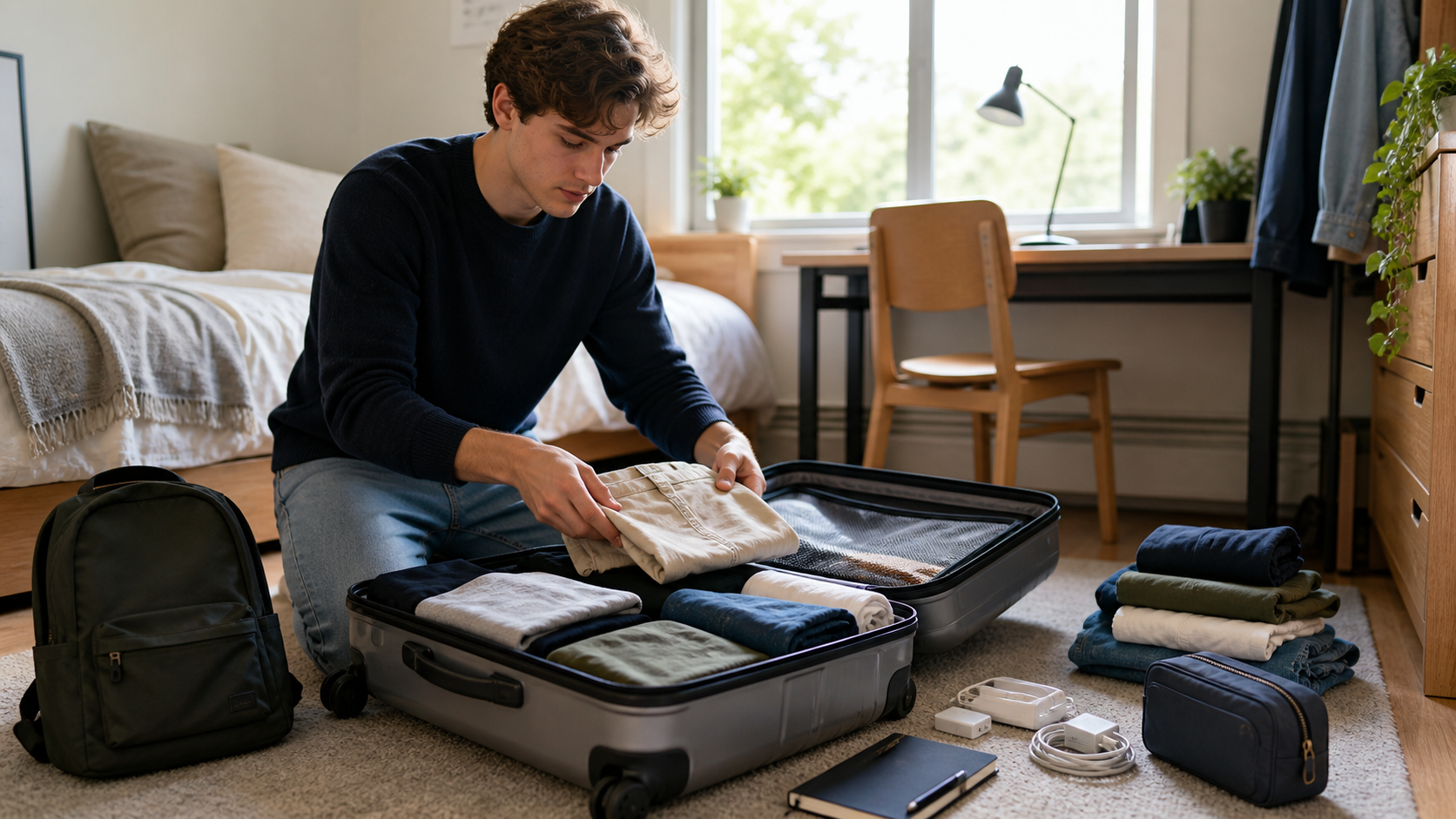
Assume you may not see your main luggage until after lunch. Pack one complete change of clothes rather than unrelated “just in case” pieces. For a warm-weather sailing, that might be a shirt, shorts or a simple dress, underwear, swimwear, and a cover-up. For a cool-weather departure, swap the pool layer for a light jacket or sweater.
Add only the comfort items that earn immediate access: prescription glasses, sunscreen, lip balm, hand sanitizer, and a small toiletry pouch. If you fly to the port, airport security requirements still apply before ship rules do; Voyage’s guide to packing toiletries for air travel can help you plan that leg.
Use one small packing cube for the change of clothes. The point is not to compress every inch. It is to remove one complete outfit without exposing documents, electronics, or medication at the same time.
Protect electronics, valuables, and wet items
Keep your phone, camera, headphones, charging cable, and any other high-value electronics with you. Place liquids in a separate pouch so a sunscreen leak cannot reach your documents. If you expect to head straight to the pool or take the same bag ashore, include a second barrier for a damp swimsuit.
The Eagle Creek Pack-It Dry Pouch S is sized for a phone or passport and uses welded seams with waterproof recycled TPU polyester. It is useful for rain, splashes, and separating small essentials, but the manufacturer explicitly says it is not intended for underwater submersion.

Fly-to-port travelers should pay special attention to batteries. The FAA’s carry-on guidance says that if a bag is gate-checked, spare batteries and lithium-battery devices such as power banks must be removed and kept in the cabin. Put those items in a small inner pouch you can lift out quickly, and verify your airline’s current limits.
Use a four-zone packing system
A simple layout prevents the terminal version of unpacking your entire bag:
| Bag zone | What goes there | Why it works |
|---|---|---|
| Quick-access | Boarding document, approved ID, phone | Fast retrieval without opening the main compartment |
| Protected core | Medication, wallet, valuables, backup documents | Keeps irreplaceable items away from exterior pockets |
| First-hours cube | Change of clothes, swimwear, cover-up | One-grab access without disturbing essentials |
| Isolated pouch | Liquids, sunscreen, damp swimwear | Reduces leak and moisture transfer |
Before zipping the bag, rehearse the first checkpoint: can you reach your ID and boarding document in ten seconds without setting valuables on a counter? If not, rearrange the top layer.
Check the prohibited-items list for your exact sailing
Do not rely on a universal internet list. Cruise lines and departure ports can treat beverages, alcohol, irons or steamers, extension cords, multi-outlet devices, locks, and other everyday items differently. Rules can also change between sailings or regions.
Open your cruise line’s current prohibited-items and luggage pages shortly before departure. Check your port instructions, too. If you fly, review your airline and the relevant aviation/security authority separately. A product being sold as a travel accessory does not automatically make it permitted on every ship or aircraft.
Pack the same bag for the final night
Your embarkation bag can do a second job. Some cruise lines collect larger luggage before disembarkation; Royal Caribbean advises retaining an overnight bag for nightclothes and toiletries. On the last evening, repack your carry-on with tomorrow’s clothes, medication, documents, valuables, and anything you need before reclaiming your luggage.
Five-minute door check
- Documents: Confirm every traveler’s required ID and boarding documents.
- Medication: Move all essential doses and supporting information into the bag that stays with you.
- First afternoon: Add one complete change, swimwear or a weather layer, and essential toiletries.
- Valuables and power: Pack wallet, phone, chargers, and permitted batteries in protected, reachable pockets.
- Rules: Recheck the cruise line, departure port, and—if applicable—airline requirements.
Cruise carry-on FAQ
Is a backpack suitable for cruise embarkation?
Yes, if it meets your cruise line’s current requirements and remains comfortable when fully packed. A backpack is hands-free and easy to keep close, but a compact roller may be better for travelers who should not carry weight on their shoulders.
How large can a cruise carry-on be?
There is no single size that applies to every cruise line and port. Your bag must meet the operator’s rules and pass its embarkation screening. If you fly to the port, it must also meet your airline’s size and item-count limits.
What should never go in checked cruise luggage?
Keep required travel documents, essential medication, money, valuables, and anything medically or practically irreplaceable with you. Follow your cruise line’s instructions for special-handling items.
Should beverages or a luggage lock go in the carry-on?
Only when your cruise line’s current policy permits them. Beverage quantities, packaging, alcohol rules, and acceptable lock practices vary. Check the exact operator and sailing instead of borrowing another line’s policy.
The best cruise carry-on is ready for the gap
A useful embarkation bag covers the gap between handing over larger luggage and settling into your cabin. Keep it portable, organize it by access priority, and carry the items you cannot replace or comfortably wait for. For a restrained starting point, compare Voyage’s current travel accessories and carry-on options, then choose only what fits your route and first-day plan.
Voyage Luggage sells some of the products mentioned in this guide. Availability, specifications, and pricing may change.
Cruise-line, port, airline, and security rules change. Confirm current requirements with your cruise line, departure port, airline, and relevant authority before you travel.

Share:
School Backpack Size Guide: How to Choose the Right Fit
Best Luggage for Train Travel: What Works on Rails