

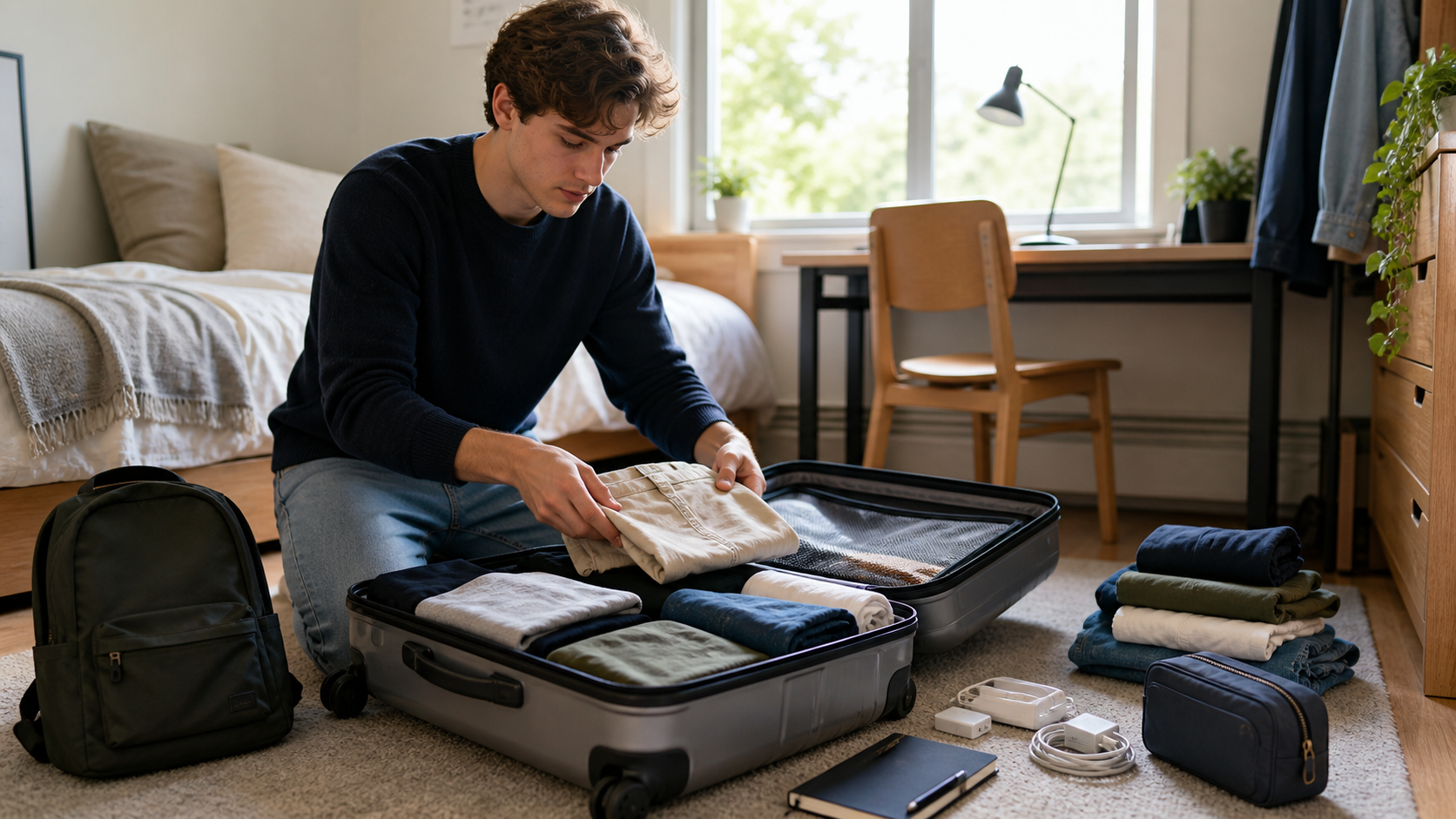
The simplest study abroad packing system is to give every bag one job. Keep the items you need in transit and during daily life in a backpack, use a carry-on for your first days and a compact clothing backup, and reserve checked luggage for replaceable bulk. Then buy low-cost, heavy, or housing-specific items after arrival.
That structure is more useful than a giant list because a semester is not a four-month vacation. You are packing for classes, laundry, changing weather, weekend trips, and a room you may not have seen yet. This study abroad packing list helps you build a repeatable wardrobe and decide where each item belongs.
Quick answer
Pack a seven-to-ten-day clothing rotation, not one outfit for every day abroad. Put documents, medication, electronics, and everyday essentials in your backpack; two days of clothing and arrival basics in your carry-on; and the rest of your repeat-use wardrobe in checked luggage. Confirm your program, housing, airline, customs, and health requirements before closing any bag.
Study abroad packing list by bag
| Zone | Best for | Avoid filling it with |
|---|---|---|
| Backpack or day bag | Travel documents, wallet, phone, laptop, chargers, required medication, glasses, and one light layer | Bulky clothing that makes the bag uncomfortable for daily use |
| Carry-on | Two changes of clothes, sleepwear, permitted toiletries, basic underlayers, and first-day essentials | Duplicates and “maybe” items you can easily buy locally |
| Checked bag | The rest of your clothing rotation, extra shoes, seasonal layers, and confirmed housing needs | Irreplaceable documents, fragile electronics, or unverified prohibited items |
| Buy after arrival | Laundry detergent, hangers, full-size toiletries, basic kitchen goods, and inexpensive room supplies | Specialty products that may be hard to replace because of sizing, allergies, or medical needs |
Collect four facts before choosing your bags
Your packing limit is not “everything that fits.” Start with four answers:
- What does your housing provide? Ask about bedding dimensions, towels, laundry access, kitchen equipment, climate control, and storage. Do not sacrifice suitcase space to linens until the program confirms what you need.
- What will you actually do? Build around class, internship, exercise, worship, formal events, and planned travel—not an imagined version of every possible weekend.
- What does every flight segment allow? Baggage size, weight, quantity, and fees depend on the fare and operating carrier. Check each segment, including regional connections, and measure the bags using the carrier's current method.
- What can legally enter the destination? Review local customs rules and medication restrictions. The U.S. Department of State's official studying-abroad guidance also points students to destination advisories, entry documents, local laws, insurance considerations, and STEP enrollment.
If any answer is uncertain, leave room. Empty capacity is more useful than paying to move something your dorm already supplies.
Build a seven-to-ten-day clothing loop
A practical semester wardrobe should survive a normal laundry cycle and combine into multiple outfits. A useful starting point is five to seven everyday tops, three or four bottoms, enough underlayers and socks for at least a week, sleepwear, one exercise set, one presentable outfit, and weather-appropriate outer layers. Adjust for your climate, dress expectations, and access to laundry.
Use three filters before an item earns space:
- Repeatability: Can you wear it in at least three combinations?
- Care: Can it share a wash cycle with most of your clothes and dry without special treatment?
- Replacement: Would buying it locally be easy and reasonably priced?
Shoes consume space quickly. Wear your bulkiest comfortable pair in transit, then pack only pairs with distinct jobs—perhaps an everyday walking shoe and one option for exercise, rain, or formal use. Climate-specific footwear may make more sense as an arrival purchase if you do not already own the right pair.
Pick a bag system that still works after move-in
A coordinated set is useful when your itinerary genuinely calls for both cabin and checked luggage. The current Trend 3 Piece Set 20''/24''/28'' is $274.99 at publication; its White, Black, Orange, Rose Gold, Blue, and Sand variants are in stock. The PC/ABS set includes 20-, 24-, and 28-inch cases with spinner wheels. You do not need to travel with all three: select the combination your ticket, transfers, and storage can support.

Your backpack should remain useful on campus after the flight. The Samsonite Paralux 2-1 Travel Backpack is $199.99 at publication, with Black, Olive, and Stone grey in stock. It opens flat like a travel bag and separates into a Main Bag and Go Bag; it also has a dedicated laptop compartment and expandable water-bottle pocket. That flexibility suits students who want one arrival bag to become a smaller daily bag, but it is more travel-oriented than a slim book bag.

Whichever bags you choose, compare them with your operating airline's current dimensions and weight rules. Product size labels are not universal airline approval.
What belongs in your backpack
Pack this zone for transit and normal campus days:
- Passport and visa or residence documents, as applicable
- Boarding details, program contact information, and your first address
- Wallet, phone, laptop or tablet, chargers, and headphones
- Required medication, prescriptions or supporting documents, and spare glasses
- A pen, compact notebook, light layer, and empty reusable water bottle
The CDC's current guidance for traveling abroad with medicine says country rules differ and advises checking destination and layover-country requirements. It recommends original labeled containers, prescription copies, and enough medication for the trip plus a delay buffer. Coordinate with your prescriber, insurer, program, and the relevant embassy well before departure.
Keep this bag comfortable enough to carry between housing, class, and public transportation. If the laptop, chargers, water, and books already make it heavy, move nonessential clothing elsewhere.
What belongs in your carry-on
Think of carry-on luggage as a compact setup kit, not a second checked suitcase. Include two versatile outfits, sleepwear, underlayers, a lightweight layer, basic toiletries that meet current screening rules, and any small academic item you need immediately. Add one empty reusable bag for laundry or wet items.
If you are packing liquids, batteries, electronics, food, or specialty equipment, confirm the latest rules with every operating airline and the relevant security, customs, and destination authorities. Rules can differ across connections and change after this guide is published.
What belongs in checked luggage
Use checked space for replaceable volume: the remainder of your clothing loop, extra shoes, cold- or wet-weather layers, and housing items the program has specifically told you to bring. Put heavy pieces near the wheel end so an upright case is easier to control, and use the case's tie-downs or dividers to limit shifting.
Avoid adding duplicates merely because space remains. A fourth sweatshirt or “backup” stack of notebooks can push out the coat or specialized item that is genuinely expensive at your destination. Pack the case completely, weigh it using the carrier's stated limit, then remove the least versatile pieces.
Use organizers for routines, not extra volume
Packing cubes work best when their labels reflect how you live: tops, bottoms, underlayers, exercise gear, and laundry. They improve access, but compression does not reduce weight.
The current Compression Packing Cubes three-pack is $79.99 in the in-stock Moss, Black, and Navy variants at publication. The zippered system compresses clothing; use that space savings to make the bag easier to organize rather than to add more weight.

For more ways to divide a case without losing track of what you packed, see Voyage's guide to packing cubes for travel.
What is usually smarter to buy after arrival
Wait on bulky, inexpensive, or housing-dependent goods: hangers, detergent, a laundry basket, full-size shampoo, basic cleaning supplies, simple kitchen tools, and room decor. Bedding also belongs on the “confirm first” list because mattress sizes and included linens vary.
Bring specialty items when replacement would be difficult: prescription supplies, preferred products for allergies or sensitive skin, hard-to-find clothing or shoe sizes, and required academic equipment. The goal is not minimalism for its own sake; it is to spend baggage space on items with the highest replacement cost or personal importance.
Five-minute final check
- Confirm passport validity, visa or permit requirements, and program documents.
- Review the destination advisory, local laws, customs restrictions, and health guidance.
- Verify each airline segment's bag quantity, dimensions, weight limit, and restricted-item rules.
- Confirm housing inventory, laundry access, bedding size, and expected seasonal weather.
- Check that medication is permitted, documented, labeled, and packed according to current rules.
- Measure and weigh every travel bag after the final edit.
- Leave enough empty space for ordinary life abroad and the return trip.
Study abroad packing FAQ
How many bags should I take for a semester abroad?
Use the smallest system that fits your confirmed allowance and that you can manage during every transfer. A backpack, carry-on, and one checked case is common, but it is not a universal recommendation. Your fare, housing, trip length, physical needs, and local transportation should decide.
Should I pack enough clothes for the whole semester?
No. Pack a repeatable seven-to-ten-day rotation with layers for the expected climate. Plan to do laundry and buy a small number of destination-specific pieces only if needed.
What should I leave at home?
Leave duplicate outfits, excessive books, full-size consumables, single-use gadgets, unconfirmed bedding, and anything prohibited by a carrier or destination. If an inexpensive item is widely available and not personally specialized, it is usually a good arrival purchase.
How do I keep a semester bag under the weight limit?
Pack the complete list, weigh the case, and remove the least versatile items first. Compression changes volume, not weight. Wear the heaviest practical clothing in transit, but keep the outfit comfortable for the journey.
Can I take my prescription medication abroad?
Possibly, but legality, quantity limits, and documentation vary by destination and transit country. Check official embassy or consular guidance and speak with your prescriber and program. Keep medication in original labeled containers and follow current carrier and authority rules.
Pack for the life you will repeat
A strong study abroad packing list is built around ordinary weeks: class, laundry, weather, walking, and a few planned events. Give every bag a job, bring a compact clothing loop, confirm what your housing supplies, and reserve space for the things you cannot replace easily.
When your list is final, compare Voyage's current luggage sets, travel backpacks, and organizers to build only the bag system your semester requires.
Voyage Luggage sells some of the products mentioned in this guide. Availability, specifications, and pricing may change.


Share:
Best Luggage for Train Travel: What Works on Rails