

A good carry-on isn’t just a bag; it's your travel partner. It needs to be reliable, easy to handle, and smart enough to make your journey smoother, not more complicated. Think of it this way: a great carry-on is light enough to hoist overhead without a struggle, tough enough to protect your belongings, and organized enough to keep airport stress at bay.
Defining Your Perfect Travel Companion
So, what makes a carry-on truly great? It’s less about a specific brand and more about a set of key features that perfectly align with how you travel. Your carry-on should feel like a personal assistant—always prepared, remarkably efficient, and tailor-made for your trip. It's the silent partner that glides effortlessly beside you through the terminal and slips into the overhead bin without a fight.
This guide will walk you through finding that perfect match. We're going to break down the essential elements that separate a fantastic carry-on from a frustrating one, giving you a clear roadmap. Whether you're a business traveler rushing to make a connection or an adventurer exploring a new city for the weekend, getting these fundamentals right is the first step.
Before we dive deep into the details, let's get a high-level view. This quick checklist covers the five core pillars that define a high-quality carry-on. Think of these as the non-negotiables.
Quick Checklist for a Good Carry On
| Attribute | Why It Matters | What to Look For |
|---|---|---|
| Size & Weight | Avoids expensive gate-check fees and ensures it fits in the overhead bin. | Standard dimensions (22x14x9 inches) and an empty weight under 8 pounds. |
| Mobility | Lets you navigate airports without a struggle; the bag should feel weightless. | Smooth, 360° spinner wheels and a sturdy, multi-stage telescoping handle. |
| Durability | Protects your belongings from the inevitable bumps and drops of travel. | Resilient materials like polycarbonate for hardshells or ballistic nylon for softshells. |
| Organization | Helps you pack efficiently and find what you need without unpacking everything. | Interior dividers, compression systems, and dedicated pockets for laptops or toiletries. |
| Security | Gives you peace of mind that your valuables are safe from theft. | Integrated, TSA-approved locks that are easy to use. |
Getting these five things right is the foundation of a stress-free travel experience. Now, let’s explore each of them in more detail.
The Five Pillars of a Quality Carry On
At its core, a great carry-on delivers on five key promises. Each one plays a critical role in making your travel experience better. Let's break down what you should be looking for.
-
Size & Weight Compliance: This is the big one. Your bag must meet airline restrictions to avoid the dreaded gate-check and its surprise fees. A well-designed carry-on is built to fit neatly into that metal sizer, usually around 22 x 14 x 9 inches, and should weigh under 8 pounds when empty.
-
Effortless Mobility: The bag should move with you, not against you. This all comes down to the quality of the wheels and the sturdiness of the handle. You want a bag that glides, not one you have to drag behind you.
-
Durable Construction: Travel is tough on luggage. Your carry-on needs to withstand being jostled in overhead bins, rolled over cobblestone streets, and generally knocked around. Materials like strong polycarbonate and rugged ballistic nylon offer the best protection for your gear.
-
Smart Organization: A thoughtfully designed interior is a game-changer. It helps you pack more into a small space and lets you grab what you need without tearing everything apart. Look for features like compression systems, dedicated pockets, and logical dividers that make sense for your items.
-
Reliable Security: Keeping your belongings safe is non-negotiable. Integrated TSA-approved locks give you peace of mind and prevent any hold-ups at security checkpoints.
It's no surprise that travelers are demanding better luggage. In fact, the global carry-on luggage market is expected to reach an incredible $41.04 billion in 2025, driven by a massive boom in worldwide travel. This surge is pushing brands to innovate, making high-end features like impact-resistant shells and clever compartments more common. You can learn more about the carry-on market trends to see what's driving these changes.
The Non-Negotiable Features of a Great Carry-On
So, what separates a good carry-on from a great one? It boils down to a few key features that can make or break your travel experience. A truly dependable carry-on feels less like a box you’re dragging around and more like a seamless travel partner. It’s not just about what the bag has, but why those features are so crucial for getting from point A to point B without a headache.
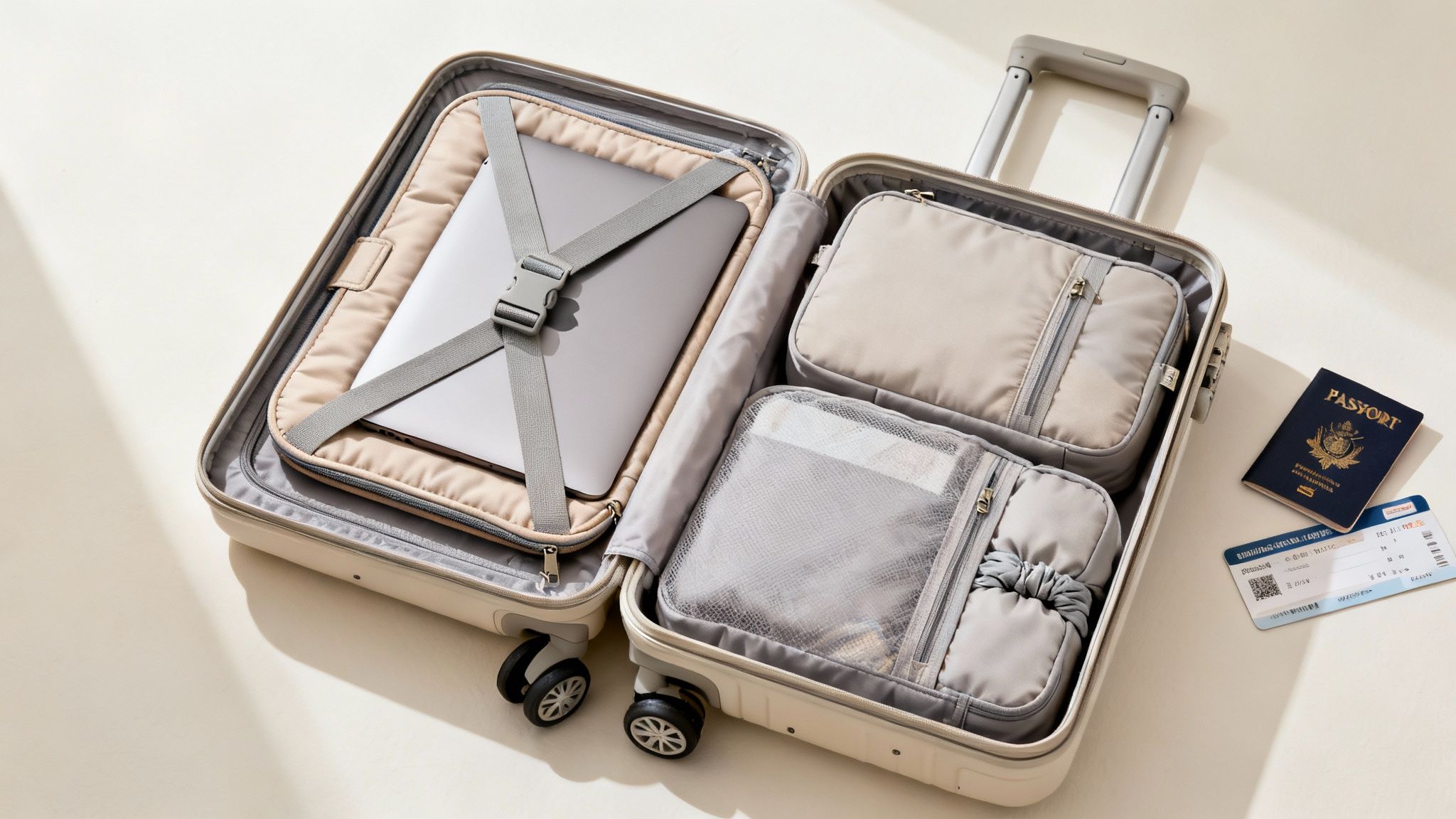
From gliding through the terminal to keeping your things secure, these are the features I consider absolute must-haves. Get these right, and you can stop worrying about your luggage and start focusing on the trip ahead.
Lightweight Construction for Easy Handling
We’ve all been there: that awkward, strained hoist to get a heavy bag into the overhead bin. The last thing you need after a long walk to the gate is a workout. A great carry-on starts with a lightweight frame, ideally weighing under 8 pounds when it's empty.
This matters for a couple of big reasons. A lighter bag makes it far easier to stay under those increasingly strict airline weight limits, saving you from surprise fees at the check-in counter. Even more importantly, it means you can manage your bag yourself, confidently and without a struggle.
Smooth Wheels and a Sturdy Handle
If you want to know if a suitcase is high-quality, look no further than its wheels and handle. Nothing is more frustrating than a wobbly handle that won’t lock into place or wheels that get stuck on every tiny crack in the floor.
A well-made carry-on should feel like it’s floating right alongside you. To get that feeling, you need two things:
- 360-Degree Spinner Wheels: These four-wheel wonders let the bag move in any direction with just a light push. They’re a lifesaver when you're navigating a crowded airplane aisle or a winding security line.
- A Multi-Stage Telescoping Handle: Look for a handle that clicks firmly into different height positions. This stops the annoying wobble and lets you adjust it to a comfortable height for your stride.
Think of it this way: a good mobility system reduces physical strain, turning that mad dash to the gate into a calm, controlled walk. This is a core idea in our guide on how to choose luggage, where we really focus on how a bag feels to use in the real world.
Durable Materials for Ultimate Protection
Your carry-on is the protective shell for everything you've packed. Whether you lean toward a hardside or softside bag, the material has to be tough enough to withstand the bumps and scrapes of travel.
Hardside luggage, usually made from polycarbonate, is like armor for your belongings. It’s fantastic for protecting anything fragile from getting crushed. On the other hand, softside luggage, often made from a tough ballistic nylon, offers more give and handy external pockets for things you need to grab quickly.
The numbers show that travelers are prioritizing toughness, with hardside cases making up 65% of the market because they offer about 30% better protection against crushing. But strength doesn't have to mean heavy anymore—top brands have found a sweet spot, with popular models averaging just 6.5 lbs. We're also seeing cool innovations like internal compression systems that can reduce packed volume by 20% and integrated locks that prevent 95% of theft attempts.
A great carry-on isn’t just about carrying things; it's about protecting them. The choice between a rigid polycarbonate shell and flexible ballistic nylon comes down to what you value more: bulletproof impact resistance or quick-access packing flexibility.
Smart Organization and Security
Of course, what’s on the inside is just as important as the outside. A thoughtfully designed interior can completely change how you pack. Compression systems, padded laptop sleeves, and zippered mesh dividers are no longer just nice-to-haves; they help you fit more in while keeping everything organized and easy to find.
Finally, let's talk security. An integrated, TSA-approved lock is a non-negotiable feature. It keeps your zippers securely closed while still allowing security agents to inspect your bag without breaking the lock. It’s a simple feature that provides total peace of mind while you travel.
Hardside vs Softside: Choosing Your Luggage Style
One of the first big decisions you'll make when picking a carry-on is choosing between a hardside or softside bag. This isn't about one being definitively "better" than the other; it's about what’s better for you and the way you travel.
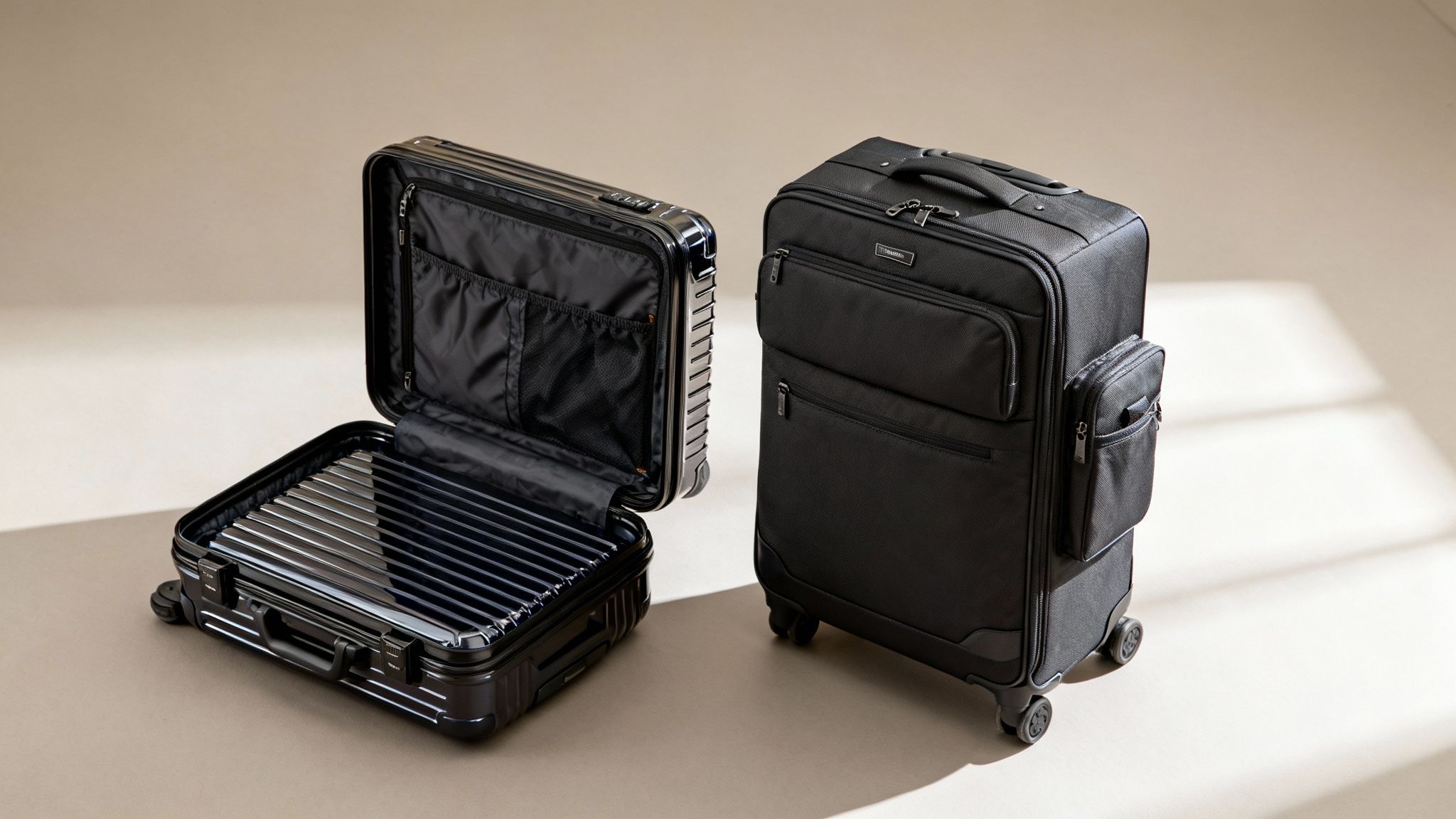
Think of a hardside case as your personal, portable vault. That rigid shell, usually made from tough materials like polycarbonate, is incredible at protecting what’s inside. If you’re traveling with a camera, a laptop, or plan on bringing back a fragile souvenir, a hardside gives you that extra peace of mind.
On the flip side, a softside bag is like a trusty, flexible duffel. Made from durable fabrics like ballistic nylon, its main advantage is give. It's perfect for those of us who tend to stuff one last sweater in at the last minute. Plus, those handy exterior pockets are a game-changer for grabbing your passport, book, or charging cable without having to open up your entire life in the middle of the airport.
Key Differences at a Glance
So, how do you choose? It really comes down to a few key trade-offs that align with your personal style.
While a hardside case might be easier to wipe clean and offers better water resistance, it also tends to show scuffs and scratches more obviously. And that rigidity is a double-edged sword—if you can't get it to close, you're out of luck. There's no "making it fit."
A softside bag, however, often comes with expandable zippers, giving you that little bit of extra breathing room for things you buy on your trip. The trade-off is that fabric, while tough, won't protect your belongings from a heavy impact or being crushed quite like a hard shell will.
If the idea of maximum protection and a sleek design sounds right, you can learn more about the specific benefits in our guide to freeform hardside spinner luggage.
The Big Question: Do you value ultimate protection for fragile items, or do you need flexible packing space and quick-access pockets? Your answer is your compass here.
To make it even clearer, let's break down the main differences side-by-side.
Hardside vs Softside Carry-On Comparison
| Feature | Hardside Luggage (e.g., Polycarbonate) | Softside Luggage (e.g., Ballistic Nylon) |
|---|---|---|
| Protection | Excellent for fragile items. Resists compression. | Good, but less impact and crush resistance. |
| Flexibility | Rigid with no "give." What you see is what you get. | Flexible fabric allows for squeezing in extra items. |
| Exterior Pockets | Rarely have them. Access requires opening the main case. | Almost always includes them for quick-access items. |
| Durability | Prone to showing scratches and scuffs, but very strong. | Hides scuffs well but can be susceptible to tears. |
| Weight | Modern materials have made them surprisingly lightweight. | Often slightly lighter than hardside counterparts. |
| Weather Resistance | Generally more water-resistant due to the shell material. | Water-resistant coatings help, but zippers can be a weak point. |
At the end of the day, there's no wrong answer. It all boils down to what you pack, where you're going, and what makes your travel experience smoother.
Spinner vs. Two-Wheel: Finding Your Perfect Roll
The wheels on your carry-on might seem like a minor detail, but they can make or break your entire airport experience. It's a classic debate: the four-wheel spinner versus the traditional two-wheel roller. This isn't just about style—it's about how the bag moves with you through your journey.
Think of spinner luggage as the nimble city car of the travel world. With four wheels that rotate a full 360 degrees, it glides right beside you with a gentle push. This is a game-changer when you're navigating a crowded airport terminal or, even trickier, a narrow airplane aisle. You can push it, pull it, or slide it sideways without any real effort.
Then you have the two-wheel luggage—the rugged, all-terrain vehicle. Its wheels are usually larger and set back into the bag's frame, which keeps them protected from hard knocks. That design gives it fantastic stability on rougher ground like cobblestones, cracked sidewalks, or even thick airport carpeting where a spinner might get tripped up.
Which Roll Is Right for You?
So, how do you choose? It really boils down to where you're headed. If your travels are mostly smooth sailing through modern airports, a spinner's maneuverability is tough to beat. It puts almost zero strain on your arm and shoulder, and you can easily weave through a coffee line with your bag right at your side.
But if you’re the kind of traveler who often finds themselves dragging a bag through old city streets or across varied landscapes, that trusty two-wheeler might be your best friend. Those beefier, recessed wheels are built to take a beating from curbs and bumps without missing a beat.
What makes a carry-on truly great is how it handles when you're on the move. While IATA guidelines often suggest a size limit around 22 x 14 x 9 inches, the best designs now feature silky-smooth spinner wheels that can cover an average of 2.5 miles per airport trek without feeling like a workout. You can see how these features are evolving by checking out reports on carry-on luggage innovation.
Ultimately, there's no single right answer. Think back on your last few trips. Were you gliding through polished terminals or wrestling your bag over uneven pavement? Your answer there will tell you exactly which kind of roll you need.
Matching a Carry-On to Your Travel Persona
Let's be honest: the perfect carry-on doesn't exist. What does exist is the perfect carry-on for you. A great bag is a travel partner, and like any good partner, it should complement your lifestyle.
The features a road-warrior business traveler can't live without are totally different from what a weekend adventurer or a style-focused jetsetter needs. Think of it like buying a car—you don't buy a two-seater sports car to haul camping gear. By figuring out what kind of traveler you are, you can cut through the noise and find a bag that feels like it was made just for you.
The Frequent Business Traveler
If you practically live in airports, your carry-on is your mobile office. Efficiency and reliability aren't just nice-to-haves; they're everything. Your bag needs to perform flawlessly under pressure, helping you move from the security line to your client meeting without a single hitch.
A business traveler should be looking for:
- A Dedicated Laptop Compartment: A padded, easy-access sleeve is a game-changer. It lets you breeze through TSA checkpoints without having to unpack half your bag in front of everyone.
- Garment Suiter: For keeping a suit or dress shirt looking sharp and ready to go, a built-in suiter is non-negotiable. No one wants to show up to a meeting looking like they slept in their clothes.
- Ultra-Smooth Spinner Wheels: Gliding through a crowded terminal to catch a tight connection is so much easier with premium, 360-degree wheels. They make navigating long concourses and tight airplane aisles feel effortless.
For the business professional, luggage is more than just a bag—it's a crucial piece of professional equipment. Durability isn't a luxury; it's a necessity for a tool that sees constant use.
The Weekend Adventurer
Are your trips more spontaneous? Do they often involve a mix of city streets, train platforms, and maybe some less-than-perfect pavement? If so, you need a carry-on that's lightweight, versatile, and tough as nails. You value flexibility over rigid organization because your plans can change in a heartbeat.
Key features for adventurers include:
- Lightweight Construction: When you're hoisting a bag into an overhead bin or carrying it up a few flights of stairs at a charming walk-up hotel, every pound counts. Try to find a bag that weighs under 7 pounds empty.
- Flexible Packing Space: A softside bag with expandable pockets is fantastic for stuffing in that extra jacket. A hardside case with a simple, open interior gives you room for bulkier gear like hiking boots or souvenirs.
- Durable Wheels: While spinners are great in an airport, a solid two-wheel system often handles cobblestones and uneven sidewalks with much better stability. You drag it behind you, and it just works.
This simple guide can help you decide which wheels are right for your typical journey.
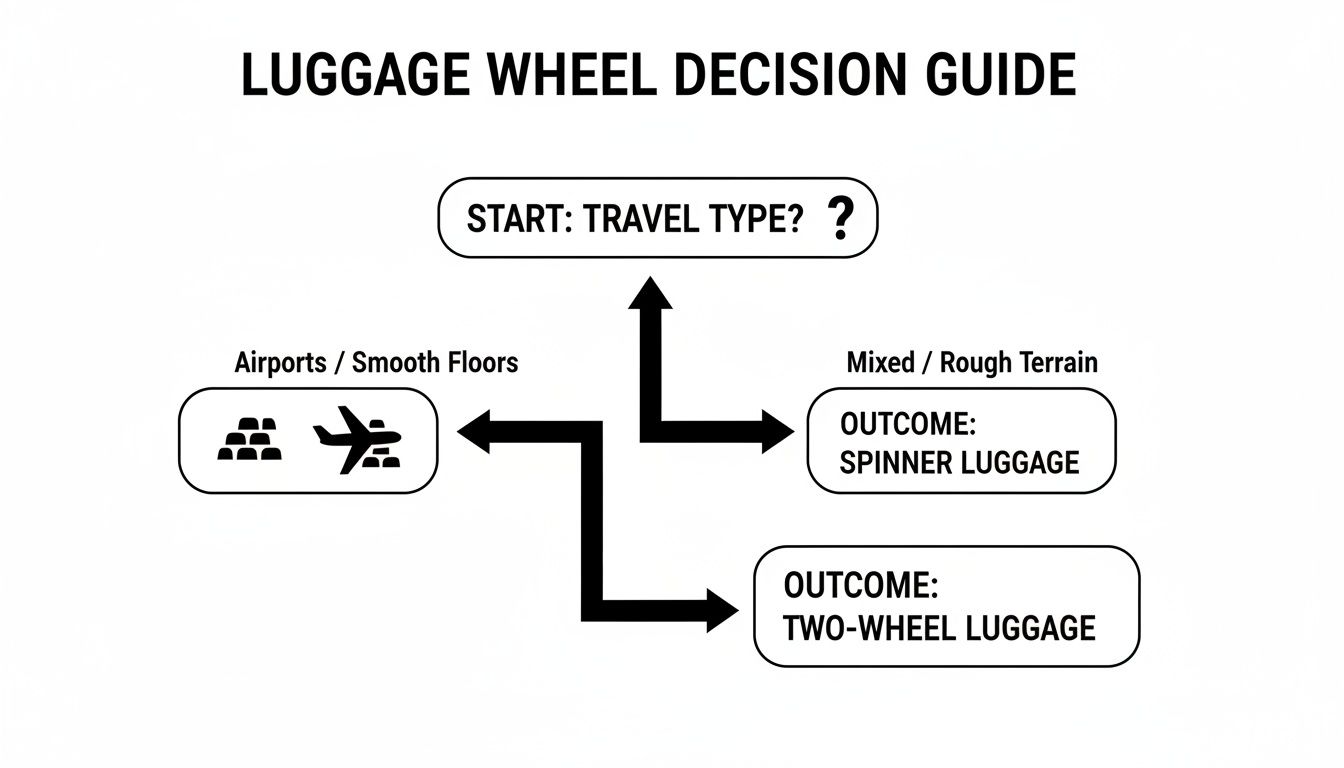
As you can see, for those smooth airport floors, spinner wheels give you incredible maneuverability. But when the ground gets rough, two-wheel designs offer better traction and durability.
The Style-Conscious Jetsetter
For some of us, luggage is an extension of our personal style—a statement piece that has to look as good as it performs. You appreciate the finer things: excellent craftsmanship, premium materials, and a sleek look that stands out from the sea of boring black suitcases at the gate.
Look for these hallmarks of a stylish bag:
- Sleek Designs: A minimalist aesthetic, clean lines, and unique colors can turn a purely functional item into a legitimate fashion accessory.
- Premium Materials: Finishes like polished aluminum, full-grain leather details, and high-end polycarbonate shells immediately signal quality and a touch of luxury.
- Attention to Detail: It’s the little things that count. Think leather-wrapped handles, custom-designed hardware, and a beautifully lined interior. Every element should feel thoughtful and intentional.
Your Pre-Flight Checklist Before You Buy
Alright, before you pull the trigger and buy that new carry-on, let's run through a quick final check. Think of this as your last-minute inspection to make sure the bag you've chosen is truly the right one for you.
This isn't just about avoiding buyer's remorse; it's about making sure your new travel companion is ready for action the moment you get it home.
Your Final Four-Point Inspection
-
Double-Check the Dimensions: Take the suitcase’s measurements and check them against the airlines you fly most often. The standard is often around 22 x 14 x 9 inches, but it's always smart to confirm. A quick check now can save you from a forced gate check and a surprise fee later.
-
Get a Feel for the Handle and Wheels: Pull the telescoping handle all the way out. Does it feel wobbly, or does it lock firmly into place? Now, give the wheels a push. They should glide smoothly without any rattling or resistance. This is where you can really feel the difference between quality and cheap construction.
-
Look at the Interior Layout: Open the bag up. Does the inside match your packing style? Imagine your clothes, shoes, and toiletries inside. If you're a folder, does the open clamshell design work for you? If you prefer to separate everything, are there enough dividers? If you're not sure, it helps to understand how to pack efficiently for any trip to figure out your go-to method.
-
Check the Warranty: A solid warranty is more than just a piece of paper; it's a direct reflection of the company's confidence in its product. A long and comprehensive warranty means they're willing to stand behind their craftsmanship, giving you some valuable peace of mind.
While you're making sure your bag will fit, remember that a smooth flight involves more than just luggage. It's always a good idea to be up-to-date on other airline rules and comfort factors, like those covered in this airline seat belt length, a traveler's complete guide.
Still Have Questions? Let's Clear Things Up
Even after you've narrowed down your choices, a few final questions always seem to pop up. Answering these is the last step to feeling totally confident in the carry-on you choose.
Let's walk through some of the most common ones I hear from fellow travelers.
What’s the Toughest Material for a Carry-On?
When it comes to hardside luggage, my money is always on 100% polycarbonate. It's the sweet spot between being incredibly strong yet surprisingly light. It's designed to flex on impact—think of it like a boxer rolling with a punch—which prevents it from cracking under the pressure of being tossed around.
For softside bags, nothing beats ballistic nylon. This stuff was literally designed for military flak jackets, so you know it can handle a fight. It's exceptionally tough against the rips, tears, and scuffs that happen all too often during travel.
Is It Really Worth Shelling Out for Expensive Luggage?
If you travel more than once or twice a year, absolutely. I've learned the hard way that you get what you pay for. A higher price tag isn't just about the brand name; it's about better engineering and components that stand the test of time.
Think of it this way: with premium luggage, you’re buying a smoother travel experience. You get those buttery-smooth spinner wheels that don't fight you, a telescoping handle made from aircraft-grade aluminum that won't get wobbly, and a solid warranty that actually has your back.
Over years of trips, that initial investment more than pays for itself in avoided repairs and replacement costs. Plus, your sanity is priceless.
How Do I Know for Sure My Bag Will Fly?
This is the big one, because every airline seems to play by its own rules. While the standard US domestic size is 22 x 14 x 9 inches, that's just a guideline. Budget carriers and international airlines are notorious for having smaller allowances and stricter weight limits.
The only way to be 100% certain is to check your airline's website before you pack. When shopping, look for carry-ons marketed as compliant, but always double-check the dimensions yourself. A little prep work here saves a massive headache (and hefty fees) at the gate.
Ready to find a carry-on that feels like a true travel partner? Take a look at the curated collection at Voyage Luggage and discover a bag that’s ready for your next adventure. https://voyageluggage.com


Share:
Best Time to Buy Luggage: Save with Seasonal Deals - best time to buy luggage
Finding the Best Business Travel Backpacks