

When you're hunting for a great deal on luggage, the goal isn't just to find the cheapest bag. It's about finding the best value. For carry-on bags, that sweet spot usually sits in the $100-$200 range. In this price bracket, you can find bags from solid brands made with durable materials like polycarbonate or ballistic nylon, complete with smooth wheels and a sturdy handle.
Spending a little more upfront for quality like this means your bag will actually last, saving you from having to buy a new one every year.
How to Find Great Luggage Without Overspending
Let's be honest, your travel budget should go towards the experience, not just the suitcase you pack it in. So, how do you find luggage that's affordable but won't fall apart mid-trip? The secret is to stop thinking "cheap" and start thinking "smart value."
Chasing the absolute lowest price tag is a trap. It often lands you with a bag that has flimsy zippers or a shell that cracks on its first encounter with a baggage handler. A better approach is to look for that perfect balance of durability, function, and price. Think of your luggage as a long-term travel partner—one you can rely on trip after trip.
Prioritizing What Truly Matters
So, what makes a budget-friendly suitcase a genuinely good buy? It comes down to focusing on the components that do the heavy lifting.
- Smooth-Rolling Wheels: Always check for 360-degree spinner wheels. They should feel like they're gliding, not dragging. This makes zipping through a crowded airport a whole lot less stressful.
- Sturdy Handles: Give the telescoping handle a good test. It should lock into place firmly and have very little wobble. This is one of the quickest ways to tell if a bag is well-made.
- Tough Materials: Whether you prefer softside or hardside, the material has to be tough. For softside, look for high-denier nylon. For hardside, polycarbonate blends offer fantastic protection without being too heavy or expensive.
A well-chosen budget suitcase is the one you don't have to replace after two vacations. It's about maximizing the lifespan of your purchase through smart, informed choices from the start.
A great deal isn't just about what you pay today. It's about getting a reliable piece of gear that makes your travels easier for years to come. To get even smarter about your purchase, it pays to understand a few retailer clearance secrets, which can help you score a high-quality bag for way less than you'd expect.
To make it even clearer, here’s a quick breakdown of what to prioritize and where you might need to compromise.
Smart Luggage Shopping: What to Prioritize
| Feature | What to Look For (The Win) | Potential Trade-Off (The Compromise) |
|---|---|---|
| Wheels | 360-degree dual spinner wheels that roll smoothly. | Single spinner wheels or less robust two-wheel systems that might not glide as easily. |
| Handles | A multi-stage telescoping handle with minimal wobble. | A handle that feels a bit flimsy or has fewer height adjustments. |
| Zippers | Tough, self-repairing zippers (like YKK brand) that run smoothly around corners. | Standard, unbranded zippers that may be more prone to snagging or breaking over time. |
| Shell/Fabric Material | Hardside: Polycarbonate or ABS blends. Softside: High-denier ballistic or Cordura nylon. | Hardside: Pure ABS (less durable). Softside: Lower-denier polyester (more prone to wear). |
| Warranty | A limited warranty covering manufacturing defects for at least 3-5 years. | A shorter 1-year warranty or one that excludes common issues like wheel or handle damage. |
Think of this table as your cheat sheet. If you nail the "Win" column on core features like wheels, handles, and zippers, you're already way ahead of the game.
Choosing the Right Material for Your Travels
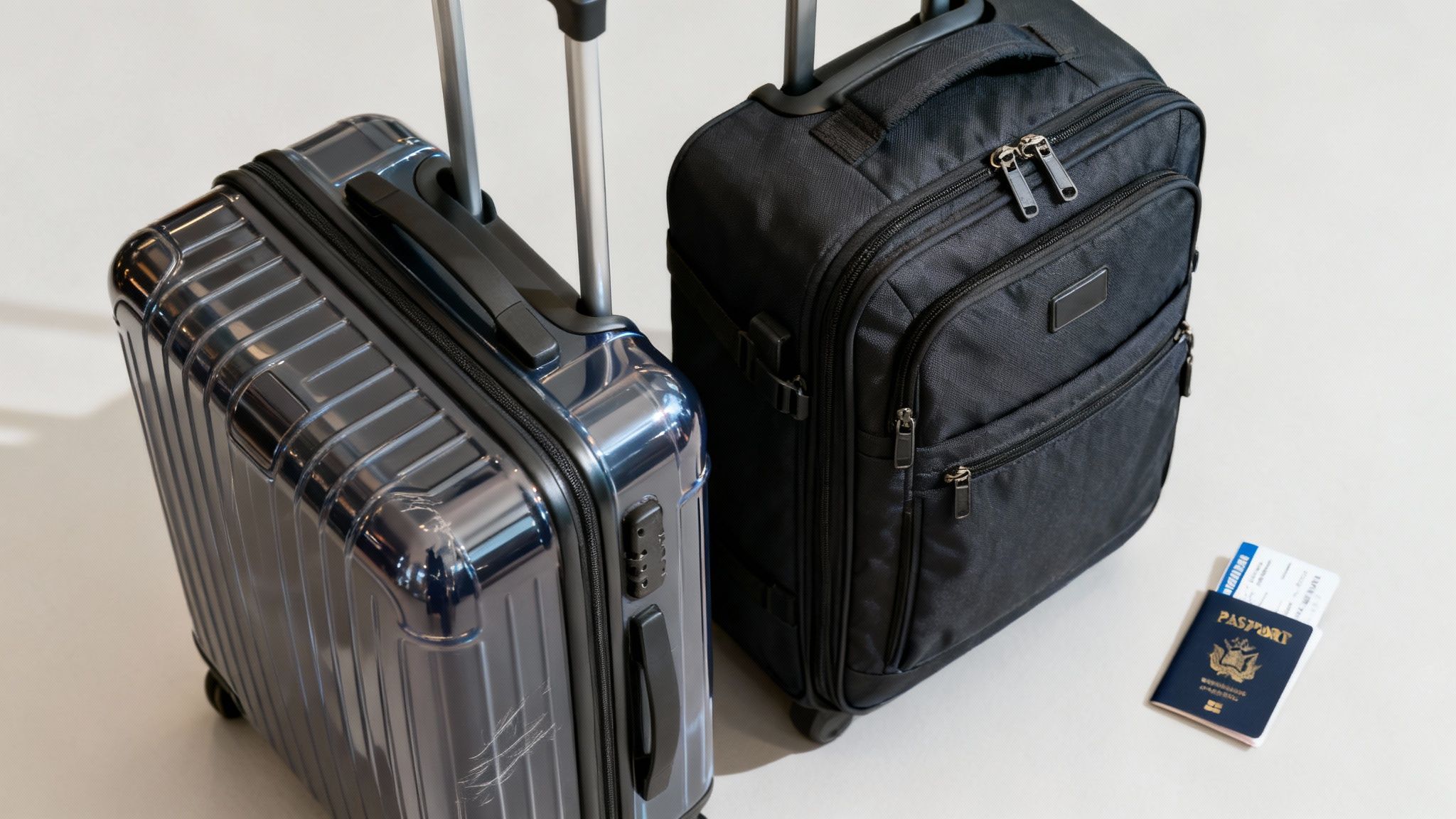
The first thing to look at when you're hunting for a great, long-lasting suitcase is what it's made of. Think of the outer shell as armor for your stuff. Some types are rigid and deflect blows like a shield, while others are flexible and absorb the shock of impact.
Getting a handle on the difference is the first step to finding budget-friendly luggage that actually fits how you travel. The two main players are hardside and softside, and each one comes with its own set of pros and cons. The right one for you really just depends on what you value most.
The Case for Hardside Luggage
Hardside luggage is the tough guy. These suitcases are typically made from plastics like polycarbonate or ABS, and they’re fantastic at protecting anything fragile inside. If you’re the type to bring back delicate souvenirs or travel with electronics, that unbending structure is your best defense against bumps and being squished in the cargo hold.
In the budget-friendly arena, polycarbonate is the real MVP. It’s tough as nails but has just enough flex to keep it from cracking under pressure, which is a common problem with cheaper, more brittle plastic cases. Plus, that smooth surface is a breeze to wipe clean after a long haul.
Of course, there's always a trade-off. That rigidity means hardside cases can show scuffs and scratches more easily. They also almost never have outside pockets, which can be a pain when you need to quickly stash a book or your boarding pass.
For a deeper dive, check out our guide on how to choose the perfect luggage.
The Flexibility of Softside Luggage
On the other side of the aisle, you've got softside luggage—the versatile workhorse of the travel world. Made from tough fabrics like ballistic nylon or high-denier polyester, these bags are all about flexibility and resilience. They’re much better at absorbing shocks and hiding the inevitable scuffs and scratches that come with travel.
One of the biggest perks of a softside bag is those handy external pockets. They're a lifesaver for grabbing your travel documents or a jacket without having to splay your entire suitcase open on the airport floor. And let's be honest, that little bit of "give" in the fabric is perfect when you need to squeeze in that one last souvenir.
For anyone trying to stick to a budget, the real win isn't just the price. It's finding that perfect blend of durability and practical features. The best value comes from materials that can take a beating without costing a fortune.
It turns out most travelers agree. The mid-range luggage segment actually holds a massive 45.5% share of the entire global market. People are clearly looking for that sweet spot where affordability and durability meet. By choosing the right material, you're making the same smart choice.
Look Beyond the Shell: Wheels, Handles, and Zippers Make or Break a Suitcase
A suitcase’s shell is its armor, sure, but the wheels, handles, and zippers are the parts that actually do the work. They’re the joints and muscles of your bag. When you're trying to find great luggage that doesn't cost a fortune, these are the exact spots where manufacturers tend to cut corners. A quick check of these three things will tell you almost everything you need to know about how long a bag will last.
Think about it like test-driving a car. You wouldn't just kick the tires and admire the paint; you'd get behind the wheel to see how it feels. A wobbly handle or a zipper that catches is a huge red flag—it’s a travel headache just waiting to happen.
Smooth Wheels Are a Non-Negotiable
Wheels are probably the most important feature on a modern suitcase. They're the difference between gliding effortlessly through a massive airport and wrestling your bag over a slightly cracked sidewalk. You’ll generally find two types: two-wheelers and four-wheelers (spinners).
- Spinner Wheels (Four Wheels): These are the ones that spin 360 degrees, letting you push the bag right alongside you. On a smooth airport floor, this is a game-changer. It puts zero strain on your wrist or shoulder.
- Inline Wheels (Two Wheels): These are more like skateboard wheels—they’re set into the case and only roll forward and backward. They aren't as nimble, but they are often tougher and handle rough ground like cobblestones or curbs much better.
For most people, spinners offer the best mix of convenience and easy movement. They're a big reason why the trolley bag market is exploding, projected to grow from USD 18.92 billion in 2025 to USD 32.21 billion by 2034. That boom shows just how much travelers care about practical, easy-to-move luggage. You can dig into the latest trends in wheeled luggage here.
Sturdy Handles and Strong Zippers
After checking the wheels, grab the telescoping handle. Pull it all the way out and give it a good wiggle. Does it rattle and flex all over the place? A solid handle should lock firmly at different heights with very little wobble. That minimal movement tells you the internal parts are built to last.
A handle with too much play is a classic sign of cheap construction. It's often the first part to bend or break, rendering an otherwise good suitcase useless.
Finally, give the zippers a once-over. They are the only thing standing between your clothes and the airport floor. Look for chunky, oversized zippers, and if you see the "YKK" brand stamped on them, that's a great sign. Run them back and forth a few times, especially around the corners where they are most likely to stick. A smooth glide means better craftsmanship, simple as that. Some even have a "self-repairing" feature, where a misaligned tooth can be fixed just by zipping past it. It sounds small, but it can be a real trip-saver.
To make it even clearer, let’s break down what to look for when you're comparing these critical parts.
Comparing Critical Luggage Components
This table will help you quickly spot the difference between a bag that will last one trip and one that will last for years.
| Component | Budget-Friendly (Good) | High-Value (Better) | Why It Matters |
|---|---|---|---|
| Wheels | Single spinner wheels | Double spinner wheels (dual-caster) | Double wheels provide a smoother glide and better stability over uneven surfaces, reducing the risk of tipping. |
| Handles | Locks at 2 heights, some wobble | Locks at 3+ heights, minimal wobble | More locking points offer better ergonomics for different heights, and less wobble means stronger, more durable components. |
| Zippers | Standard, smaller-gauge zippers | Branded (e.g., YKK), larger-gauge, or coil zippers | Reputable brands and larger teeth are far less likely to snag, break, or separate under the stress of an overpacked bag. |
Paying attention to these small details is what separates a smart purchase from a future problem. A bag with solid wheels, a sturdy handle, and reliable zippers is a travel partner you can count on, trip after trip.
The Carry-On Strategy for Saving Money
Sometimes, the best way to find affordable luggage is to completely change how you think about packing. If you can commit to traveling with just a carry-on, you'll open up a world of savings and sidestep some of the most common travel frustrations. It's a simple switch that really pays off.
The most obvious win is the money you'll save. Checked bag fees, which are usually around $30 per flight, can sting. If you travel a few times a year, that can easily add up to over $200 in savings. In fact, smart travelers who stick to carry-ons avoid about 70% of all checked bag fees. It’s no wonder the carry-on market in North America alone reached USD 2.33 billion in 2024—a lot of people are catching on to this trick.
More Than Just Saving Money
But it’s not just about the cash. Going carry-on-only makes your whole airport experience smoother. You get to skip those painfully long check-in lines and head right for security. And when you land? No more anxious waiting at the baggage carousel, wondering if your suitcase will even show up. That peace of mind is priceless.
This approach also gives you a ton of flexibility. Zipping through a crowded train station becomes a breeze, and you can easily hop on an earlier flight if a spot opens up. You’re in complete control of your belongings from start to finish.
Even when you're on a budget, you need a carry-on that can keep up. The infographic below breaks down the key features—wheels, handles, and zippers—that really matter.
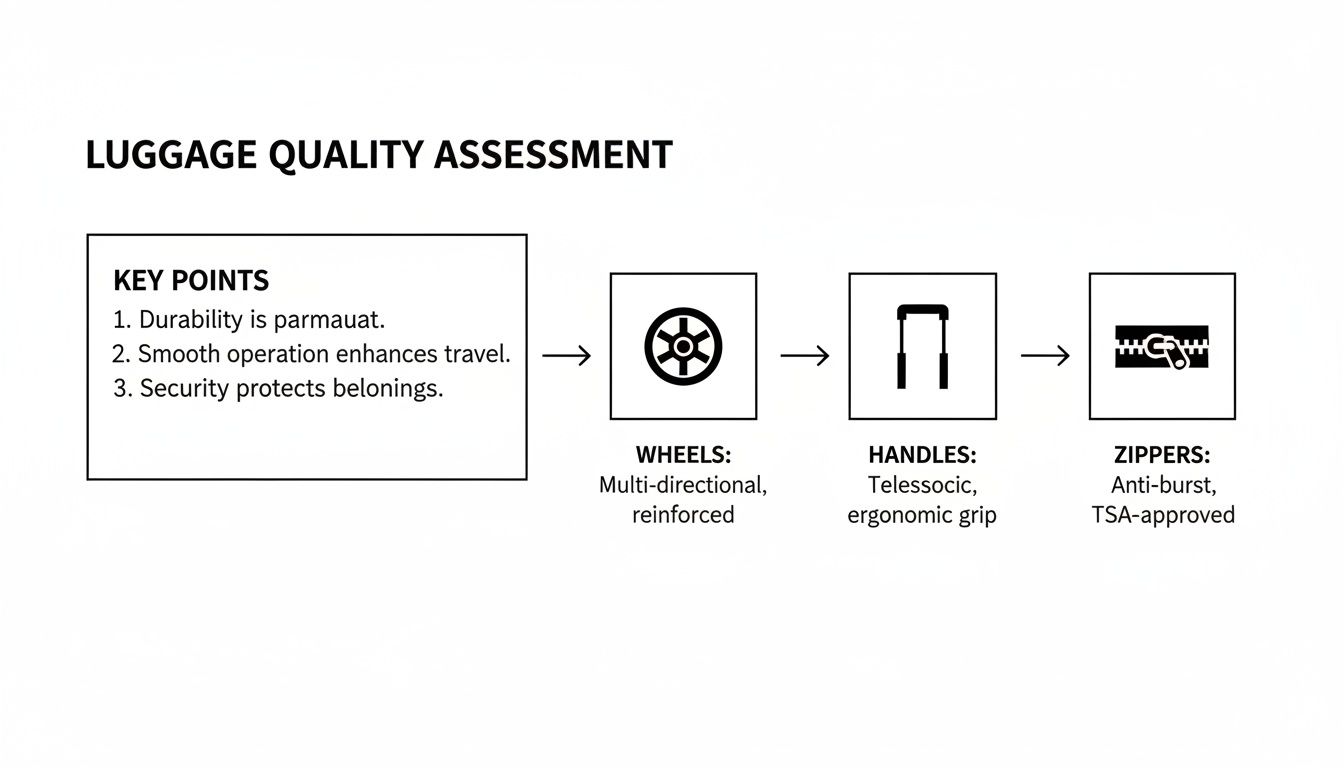
It’s a great reminder that focusing on these three critical areas is the secret to finding a bag that’s both affordable and reliable.
Mastering the Art of Packing Light
Of course, the carry-on strategy only works if you can pack smart. It’s not about leaving essentials behind; it’s about choosing the right things and making every last inch of space work for you.
The core principle of carry-on travel is efficiency. By choosing versatile items and using smart packing techniques, you can fit everything you need without the burden or cost of a checked bag.
Here are a few tried-and-true methods to help you maximize your space:
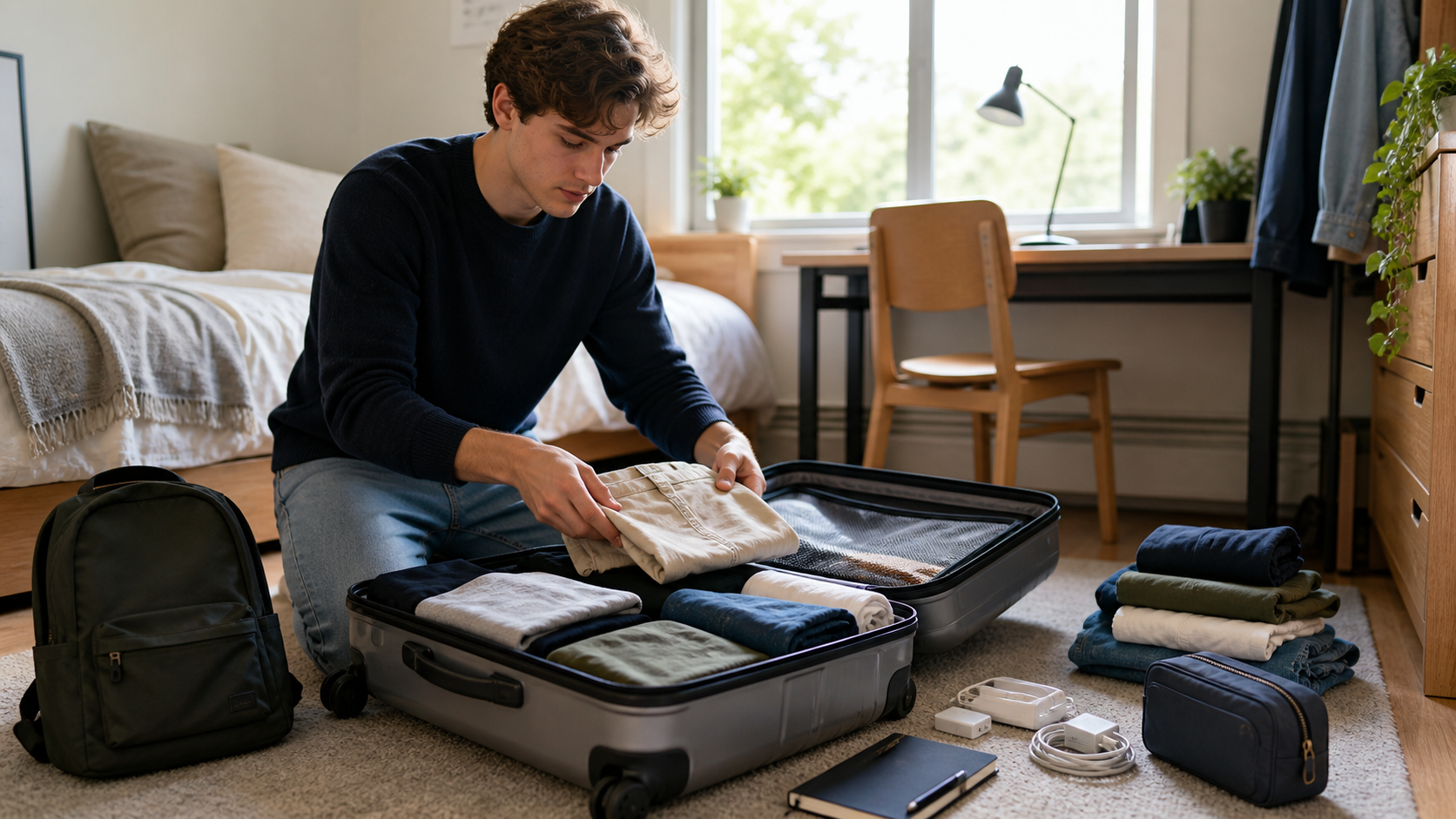
- Use Packing Cubes: These little organizers are a game-changer. They compress your clothes, creating a surprising amount of extra room while keeping everything neat.
- Master the Rolling Technique: Rolling clothes instead of folding them not only saves space but also helps prevent deep wrinkles.
- Plan a Capsule Wardrobe: Stick to a coordinated color palette and choose versatile pieces you can mix and match to create different outfits.
For a great example of how to travel light and dodge those extra fees, check out this anti-tourist packing list. And if you want more in-depth advice, our complete guide on how to choose the perfect carry-on has you covered.
Where to Find the Best Deals on Luggage
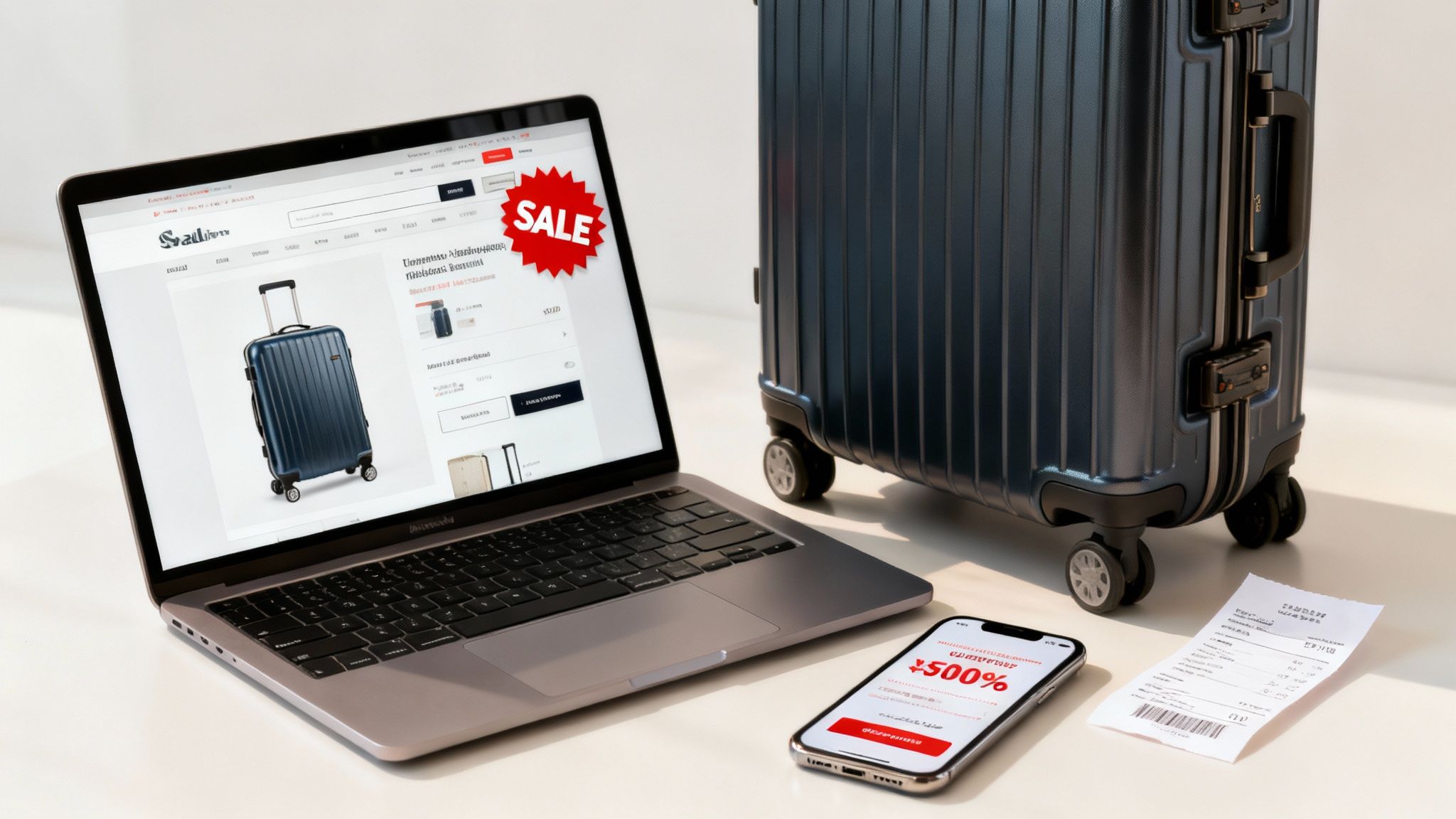
Finding a great deal on luggage is a bit of a treasure hunt. The real prize isn’t just a cheap bag, but a genuinely high-quality one that you snagged for a steal. Knowing where to look is half the battle. It’s about more than just browsing the big department stores—it's about smart timing and knowing where the hidden gems are.
Timing, as they say, is everything. Luggage prices tend to dip after the big summer travel season winds down. You can also expect to see some serious discounts during major sales events like Black Friday, when retailers are eager to clear out last season's stock.
Strategies for Unlocking Maximum Savings
If you want to consistently score great deals, you need to think like a seasoned bargain hunter. Don’t just rely on one tactic; mix and match a few different approaches to make sure you never pay full price for a top-tier suitcase again.
Here are a few tricks of the trade to find that hidden value:
- Hit the Outlets: Many top brands, like Samsonite and Travelpro, have dedicated outlet stores or online outlet sections. This is where you’ll find perfectly good luggage from past seasons or bags with tiny cosmetic blemishes for a fraction of what they originally cost.
- Look for Bundle Deals: Buying a complete set—say, a carry-on, a medium checked bag, and a large one all together—is almost always cheaper than buying each piece separately. These bundles usually offer the best value per suitcase.
- Get on the List: It sounds almost too simple, but signing up for a brand's email newsletter is a classic insider move. Companies like Voyage Luggage often send their subscribers exclusive discount codes, give them early access to sales, and let them know about flash promotions first.
Don't forget that a great deal is more than just the price tag. Things like free shipping and a generous 60-day return policy add a ton of value by taking the risk and extra costs out of the equation.
By using these strategies, you can easily find premium bags from some of the best luggage brands without the hefty price tag. It just takes a little patience and a smart approach.
Simple Habits to Make Your Luggage Last Longer
Snagging a great deal on your luggage is just the first step. The real win? Making that suitcase last for years to come. Think about it: the most budget-friendly luggage is the one you already own and don't have to replace.
A few smart habits can be the difference between a bag that gives up after a couple of trips and one that becomes a trusted travel companion for a decade. It’s a lot like owning a car—a little proactive care goes a very long way.
Smart Cleaning and Care
After every trip, give your bag a quick five-minute wipe-down. This simple step keeps dirt and grime from slowly breaking down the fabrics and materials over time.
Different bags need slightly different care, but it’s always straightforward.
- Hardside Shells: Got a polycarbonate or ABS case? Just use a soft cloth with a bit of mild soap and water to wipe away any scuffs from its journey on the baggage carousel.
- Softside Fabrics: For nylon or polyester bags, a damp cloth is your best friend. Use it with a gentle fabric cleaner to spot-treat any stains you see. Try not to soak the fabric, as that can weaken it.
Once it's clean, always let your luggage air dry completely before you store it.
Storing your suitcase properly is just as crucial as cleaning it. Find a cool, dry spot away from direct sunlight. Over time, sunlight can make plastics brittle and cause fabrics to fade.
Preventing Common Wear and Tear
If a suitcase is going to fail, it's almost always the wheels or the zippers. These parts take a real beating, but a little attention can keep them going strong.
Before you put your bag away, take a second to check the wheels. You'd be surprised how much hair and thread can get wrapped around the axles, causing them to jam up. A quick clean-out ensures they’ll roll smoothly next time you need them.
But here’s the most important tip of all: avoid overpacking. When you stuff a suitcase until it's bulging, you’re putting a massive amount of strain on the zippers and seams. It's the #1 reason zippers burst and seams split. Pack smart, and you'll not only save your bag from an early death but also enjoy a lighter, less stressful trip.
Common Questions About Budget Luggage
Shopping for affordable luggage can feel like a minefield. You're trying to save money, but you don't want to end up with a suitcase that falls apart mid-trip. Let's clear up some of the most common questions travelers have when they're hunting for a great deal.
Getting these fundamentals down will help you spot true value and feel good about the bag you choose. It's not about finding the cheapest option, but the smartest one.
Is Hardside or Softside Luggage More Durable on a Budget?
This is the classic debate, but the answer isn't as simple as one being better than the other. Honestly, both can be incredibly durable—it all boils down to the material they're made from. A well-built polycarbonate hardside case can take a beating, while a softside bag made from high-denier ballistic nylon will fend off tears and scrapes like a champ.
The real key for budget-conscious shoppers is to prioritize material quality over the style. A well-constructed fabric bag will always outlast a flimsy, brittle plastic one. Look for brands that have a reputation for solid construction, even in their entry-level collections.
What Is the Best Carry-On Size for Budget Travel?
If you want a safe bet that will save you money for years to come, stick to the standard 22 x 14 x 9 inches. This size is the gold standard for most major airlines around the world, which makes it the smartest choice for avoiding those dreaded checked bag fees.
Of course, it never hurts to double-check the specific rules for your favorite airline. But if you're looking for one versatile bag that will almost always work, a 22-inch suitcase is your most cost-effective option.
The smartest investment you can make in budget luggage is buying the piece that prevents future costs. A standard-sized carry-on eliminates checked bag fees on every single trip, delivering savings that add up fast.
How Can I Tell if a Cheap Suitcase Is Actually Good Quality?
You don't need to be an expert to spot a well-made bag. Just ignore the price tag for a second and focus on the three "touch points"—the parts you'll interact with most. These small details are dead giveaways for a bag's overall quality.
- Give the telescoping handle a good shake. Does it extend smoothly? A little wiggle is normal, but excessive rattling is a major red flag.
- Take the wheels for a spin. They should glide effortlessly and rotate a full 360 degrees without sticking. If they feel wobbly or cheap, walk away.
- Yank on the zippers. Test them a few times, especially around the corners. They should feel sturdy and move without catching. Flimsy zippers are often the first thing to fail.
Are Outlet Stores a Good Place to Find Luggage Deals?
Absolutely! Outlet stores and big seasonal sales are my go-to spots for scoring incredible deals. You can often find last season's premium models from top brands at a massive discount, getting you way more bang for your buck.
Another pro tip is to sign up for brand newsletters. You'll be the first to know about flash sales and special promotions. Just make sure to check the warranty and return policy before you buy—a generous policy is like a free insurance plan for your purchase.
Ready to find a travel partner you can count on? At Voyage Luggage, we’ve hand-picked a collection of the best luggage on a budget from trusted brands, all backed by our 60-day return policy and free shipping. Explore our collection today and travel smarter.


Share:
A Smart Traveler's Guide to Lightweight Luggage with Spinner Wheels
Your Guide to the Best Affordable Carry On Luggage