

Learning how to fold clothes for travel isn’t about finding one perfect method—it's about knowing which technique to use for each piece of clothing. My years of travel have taught me that the secret is a hybrid approach. You roll the casual, wrinkle-resistant stuff like t-shirts and jeans to maximize every inch of space, and you precisely fold the structured items like dress shirts and blazers to keep them looking sharp.
When you master a few key methods, you can turn a chaotic suitcase into a beautifully organized, space-efficient travel companion.
Why Your Folding Technique Matters
Let’s move past the endless "rolling versus folding" debate. The real goal here is to build a packing system that saves space, prevents wrinkles, and just makes your trip easier. The right fold is your best defense against surprise checked bag fees and the headache of unpacking a suitcase full of crumpled clothes. It’s all about turning that pile of garments into compact, stable units that fit together like a perfect puzzle.
This isn’t just a nice idea; it’s a proven advantage. The push toward carry-on-only travel is real, and it’s almost entirely driven by tightening airline baggage rules. Think about it: in the U.S., the share of economy passengers paying for a checked bag shot up from 25% in 2008 to over 50% by the late 2010s.
This trend has fueled a global travel bag market that hit a massive USD 24.0 billion in 2023 and is expected to nearly double. High-end luggage now comes with features like built-in compression panels that promise 20–30% more capacity, but they only work if your clothes are neatly folded or rolled to begin with.
The Core Folding Methods
To start building your own system, you only need to get comfortable with three foundational techniques. Each one is designed for a different purpose and works best with specific fabrics and garment types.
- The Ranger Roll: This is my go-to for t-shirts, workout gear, and other casual knits. It creates a tight, compact cylinder that squeezes out excess air, making it perfect for tucking into the corners of your luggage or packing cubes.
- The Savile Row Fold: If you travel with button-down shirts or blouses, you need to know this one. It avoids that dreaded vertical crease right down the middle by folding along the shoulder seams, keeping your shirts looking crisp and ready to wear.
- The Trifold Method: This is the best way to handle trousers, jeans, and dress pants. Folding them in thirds minimizes the number of creases and creates a neat, flat rectangle that stacks perfectly.
This visual guide gives you a quick breakdown of these three essential folding techniques.
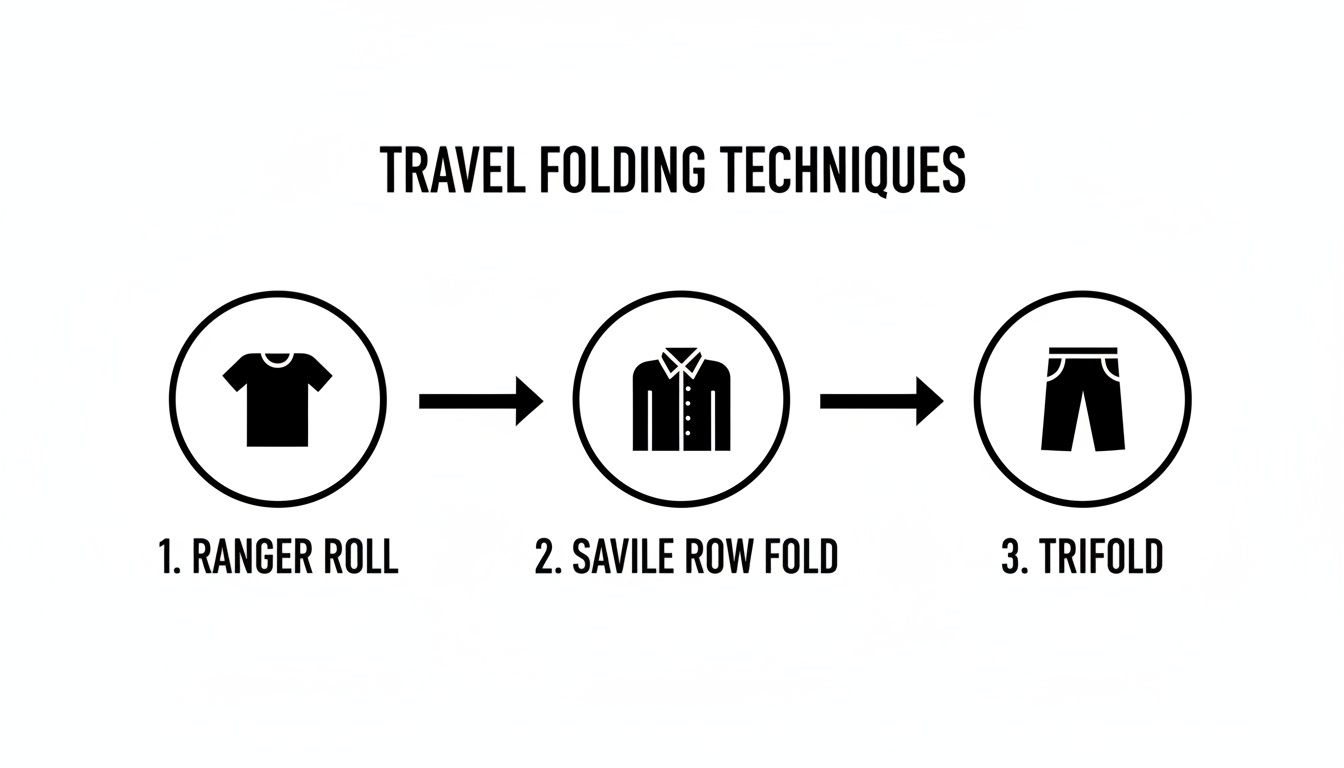
As you can see, each method is tailored to a specific garment shape, giving you the most efficient and protective fold possible.
Building on the Basics
Getting these core folds down is the first step. The real magic, though, happens when you start combining them into a strategy that fits your trip. A weekend business trip, for example, might be all about the Savile Row Fold inside a garment bag. A two-week vacation, on the other hand, will probably involve Ranger Rolling dozens of casual items into compression cubes to save space.
The goal isn't just to fold clothes; it's to create a modular, organized system where every item has its place. This approach not only saves space but also saves you a ton of time when you get to your destination and unpack.
By mastering these fundamentals, you’re laying the groundwork for more advanced packing strategies. Our full guide on how to pack efficiently for any trip takes these concepts even further, showing you how to build a complete packing blueprint. Think of your folding skills as the building blocks for a truly stress-free travel experience.
Building Your Personal Packing System
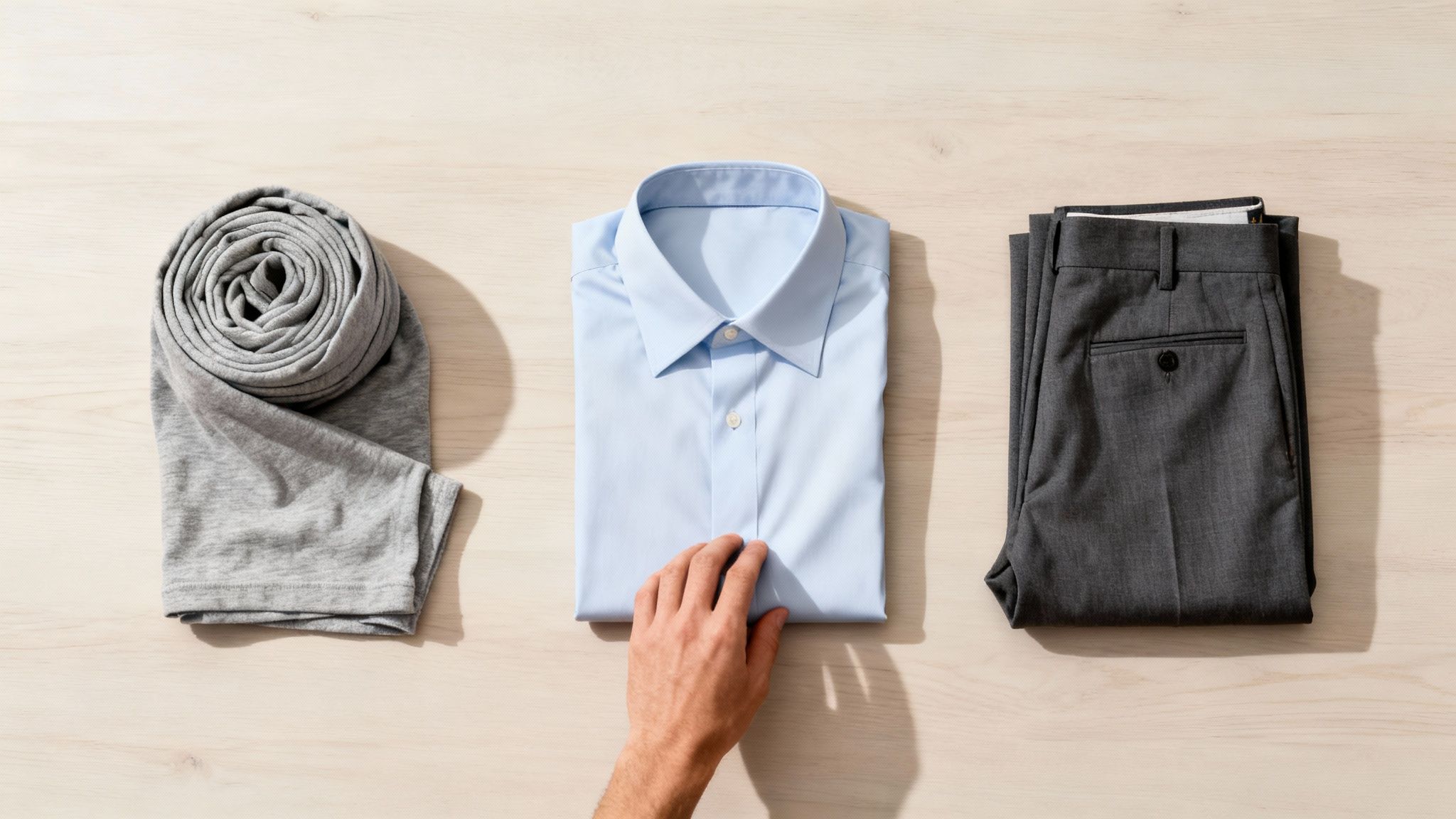
Knowing the right way to fold a t-shirt is one thing. The real art of packing is building a personal system that actually works for you and your trip. Honestly, there isn't one "best" method. The goal is to pick and choose from different strategies to match what you’re packing and where you're headed.
Think of these as frameworks you can tweak. After a few trips, you’ll naturally find your own rhythm, combining folding, rolling, and organizing in a way that turns packing from a dreaded chore into a quick, satisfying process.
The Modular Cube System
This one's for the hyper-organized traveler—the person who loves when everything has a designated spot. Using packing cubes is like putting a set of drawers inside your luggage. You can group your clothes by type, by day, or by outfit, transforming a potential jumble of clothes into a tidy, easy-to-navigate space.
When I’m packing for a week-long vacation, for instance, I’ll grab a few different-sized cubes:
- One medium cube gets all my rolled t-shirts and casual tops.
- Another is for bottoms, like shorts and linen pants, which I usually fold flat.
- A small cube is perfect for keeping socks and underwear from disappearing.
The best part of this system is what happens when you arrive. Instead of dumping your suitcase onto the bed, you just pull the cubes out and slide them right into the hotel drawers. It makes finding what you need completely effortless. This is a core skill when you're figuring out how to pack for a week in a carry-on and travel light, since organization is key to maximizing space.
The Bundle Wrapping Method
If you're a business traveler or packing anything that wrinkles easily, this technique is your secret weapon. Bundle wrapping is less about individual folds and more about creating one large, cushioned bundle of clothes. It’s a total game-changer for items like suits, blazers, and dresses.
You start with a soft "core" item, like a small pouch of socks or a folded t-shirt. Then, you carefully wrap your larger, more delicate garments around that core, one by one. You might lay down a blazer first, then a dress shirt, then trousers, smoothing each layer as you go. The final result is a single, tidy bundle where clothes are protected by soft, gentle curves instead of sharp, wrinkle-setting creases.
This method takes a little practice to get the hang of, but the payoff is huge. Arriving with a suit that’s ready to wear—no frantic search for a hotel steamer—is a major win for any professional on a tight schedule.
The Hybrid Method For Ultimate Flexibility
Let's be real: for most of us, one single system won't work for every trip. That’s where the hybrid method comes in, and it's my personal go-to. It lets you mix and match the best of every technique, tailoring your packing strategy to the specific clothes you’re bringing.
For a two-week trip to Europe using a larger Voyage Luggage checked bag, here’s how I might tackle it:
- Roll all the casual stuff—jeans, knits, tees—and stuff them into compression cubes. This saves an unbelievable amount of room.
- Fold my nicer button-down shirts and linen pants flat, stacking them in their own packing cube to keep them crisp.
- Bundle wrap a single blazer or dress for a fancy dinner out, laying it right on top of everything before zipping up the suitcase.
This strategy gives you the space-saving magic of rolling, the neat-freak organization of cubes, and the wrinkle-free confidence of bundling, all in one bag. It's simply the most practical and adaptable way to pack, ensuring you're ready for whatever your travels throw at you.
Choosing the Right Packing Accessories
Knowing how to fold clothes is only half the battle. The real secret to unlocking next-level packing lies in using the right accessories. These tools are the bridge between a pile of neatly folded clothes and a genuinely organized, space-efficient suitcase.
Think of it this way: a perfectly rolled sweater is great, but it's still bulky. Pop that same sweater into a compression cube, however, and you can shrink its volume by as much as 40%. Suddenly, you have a ton of extra room. This is what smart accessories do—they solve specific packing problems, whether it's protecting a suit jacket or keeping your dirty socks from mingling with your clean shirts.
Pairing Folds with the Perfect Accessory
The trick is to view your accessories and folding techniques as a team. A crisp Savile Row fold on a dress shirt is fantastic, but it won't stay crisp without a structured garment folder to keep it secure. Likewise, tightly rolled t-shirts can become a jumbled mess unless they're corralled into a packing cube, where they form a neat, easy-to-find block.
Even your luggage choice plays a role. When you invest in your carry-on, exploring options like personalized cabin luggage can add a layer of personal style to your highly functional packing system.
This systematic approach isn't just a niche travel hack; it’s a global trend. The global travel accessories market is on track to hit USD 76.29 billion by 2029, with organizers and cubes leading the charge. It shows a real shift in how people travel—we're moving away from just stuffing things in a bag and embracing methodical organization.
To help you get started, this table pairs common garments with the best folding methods and accessories.
Folding Technique and Accessory Pairing Guide
| Garment Type | Recommended Folding Technique | Best Paired Accessory | Primary Benefit |
|---|---|---|---|
| T-Shirts & Casual Tops | Ranger Roll | Standard Packing Cube | Maximum density, easy to find items |
| Dress Shirts & Blouses | Savile Row Fold | Garment Folder | Prevents deep-set wrinkles and creases |
| Sweaters & Hoodies | Flat Fold or Roll | Compression Cube | Reduces bulk by up to 40% |
| Pants & Jeans | Flat Fold or Roll | Compression or Large Cube | Saves significant space, keeps them flat |
| Dresses & Skirts | Bundle Wrapping Method | Garment Bag | Ultimate wrinkle prevention for delicates |
| Underwear & Socks | The "KonMari" Fold | Small Cube or Pouch | Keeps small items contained and organized |
Using this approach transforms your packing process from a guessing game into a repeatable, efficient system.
Why Packing Cubes Are a Game Changer
If you're going to invest in just one type of accessory, make it packing cubes. They're the most versatile tool in any traveler's arsenal, acting like portable drawers for your suitcase.
- Standard Cubes for Organization: These are your go-to for grouping items. I like to pack by category—tops in one cube, bottoms in another. It makes finding what you need a breeze.
- Compression Cubes for Space Saving: These are essential for bulky items. The extra zipper that squeezes out the air is a lifesaver when you’re packing thick jeans, fleece jackets, or sweaters.
- Specialty Cubes for Convenience: Many sets come with dedicated shoe bags and laundry pouches. Using them is a non-negotiable for me—it’s the best way to keep dirty shoes and clothes separate from the clean stuff.
By assigning a role to each cube, you turn your suitcase from a chaotic mess into a model of efficiency. Unpacking becomes almost instant—just pull the cubes out and place them directly into the hotel drawers.
Choosing the right accessories elevates packing from a chore to a skill. If you want to go deeper on this, our guide to the best packing cubes for travel will help you find the perfect set to pair with your Voyage Luggage.
Advanced Techniques for Delicate Fabrics
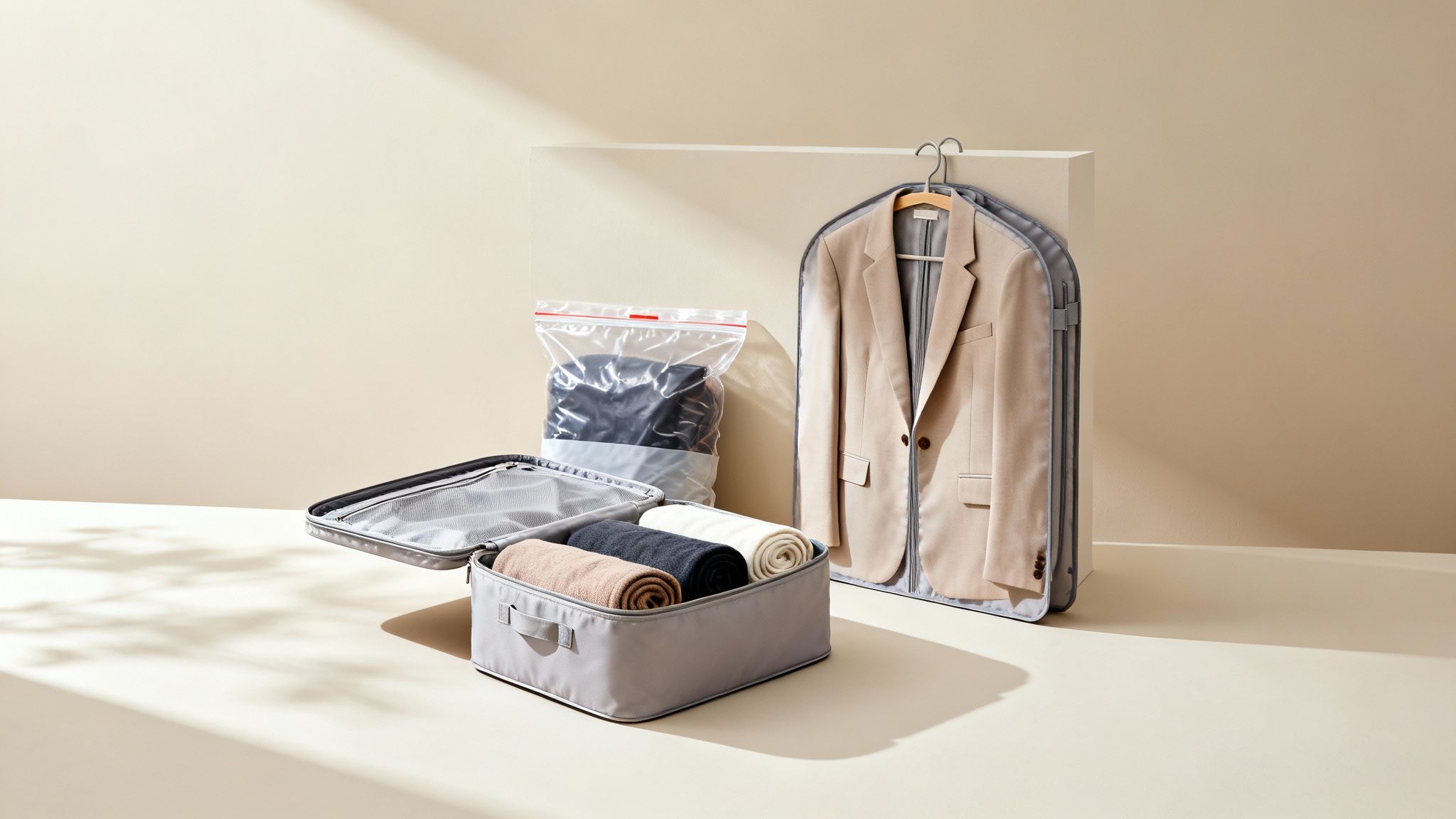
When you're packing higher-end pieces, your mindset has to shift. It’s less about just cramming things in and more about preserving your investment. For delicate fabrics like silk, cashmere, or fine wool, the main goal is to prevent snags, friction, and deep-set creases. This means moving beyond basic folding and rolling to a more protective strategy.
One of the best (and cheapest) tricks in the book is using acid-free tissue paper. Seriously, just placing a sheet between the folds of a silk blouse or cashmere sweater creates a soft buffer. This simple step dramatically cuts down on friction and stops the fine fibers from catching on each other, which is a big reason clothes pill or snag in transit.
Protecting Your Most Valuable Garments
For structured items like blazers and suits, it’s all about minimizing stress on the fabric. A really clever hack is to use the thin plastic bag from your dry cleaner. Before you fold your suit into a garment carrier, slip it inside the plastic bag first. The slick surface lets the fabric glide instead of grind against itself, which works wonders for preventing wrinkles on the journey.
This is a non-negotiable for business travelers who need to look sharp right out of the suitcase. We've got a complete walkthrough of this method in our guide on how to pack a suit without wrinkles that breaks it down step-by-step.
Treating your delicate items with extra care ensures they arrive in the same condition you packed them. Think of it as active garment preservation, not just packing.
Building a Stable and Shift-Proof Structure
The last piece of the puzzle is creating a solid, stable environment inside your luggage. Your delicate items should always be packed last, laid gently on top of a firm foundation of rolled clothes and packing cubes. This keeps them from getting crushed by heavier stuff below.
You want to pack everything snugly so nothing has room to shift around. Gaps are the enemy of wrinkle-free travel. I always use smaller items like rolled socks or small pouches to fill in any empty nooks and crannies, which basically locks everything in place.
This careful approach ties directly into the capsule wardrobe trend, where people are investing in fewer, better pieces. The capsule wardrobe market was valued at USD 1.3 billion in 2023 and is expected to hit USD 2.6 billion by 2030. That whole movement is about making clothes last, and for travelers who own quality luggage, these packing techniques are key to protecting those investments. You can find more on this growing market in the full market report.
Packing Blueprints for Your Next Trip
Knowing how to fold a shirt is one thing. Knowing how to pack an entire suitcase for a specific trip is another beast altogether. Let's move past the theory and put these techniques into practice with some real-world packing plans.
Think of these as starting points, not rigid rules. Tweak them based on where you're going, what the weather will be like, and your own personal style. The goal is to see how the strategy itself shifts depending on the trip.
The 3-Day Business Trip: The Carry-On Pro
For a quick work trip, you have two priorities: efficiency and looking sharp the moment you land. Fussing with a hotel iron is the last thing you want to do, so your packing strategy has to be all about preventing wrinkles. This is the moment a good garment folder really shines.
Keep your packing list lean and mean.
- The Essentials: One suit or blazer, two dress shirts or blouses, one pair of dress pants or a skirt, a casual outfit for dinner, and your undergarments.
- The Folding Game Plan: Your dress shirts need the Savile Row Fold. Place them carefully inside a garment folder—this is the secret to avoiding that dreaded crease down the middle. For your suit jacket or blazer, use the inside-out fold and either place it in a garment bag or lay it gently on top of everything else.
- Your Accessory Kit: A slim garment folder is non-negotiable here. I’d also use one small packing cube for your rolled casual items and undergarments. This clean, organized setup slides perfectly into a quality carry-on, like those from Voyage Luggage.
The 7-Day Beach Vacation: Master of Space
A week of sun and sand means more casual, and sometimes bulkier, clothes. Think swimsuits, cover-ups, and shorts. The main goal shifts from pristine presentation to maximizing every inch of space in your suitcase. Your new best friends are packing cubes—especially compression cubes.
This is all about getting more in without your bag exploding into a chaotic mess.
- The Vacation Wardrobe: Pack two swimsuits, a cover-up, four t-shirts or tank tops, two pairs of shorts, maybe a pair of linen pants, one sundress or a nice dinner outfit, and of course, your underwear.
- The Folding Game Plan: Get ready to Ranger Roll almost everything. T-shirts, shorts, and even your swimsuits can be rolled into tight, compact logs that fit beautifully into packing cubes. To minimize creasing, fold your linen pants and sundress flat and lay them across the top.
- Your Accessory Kit: Grab a medium packing cube for your rolled tops and another for your bottoms. A separate, water-resistant pouch for a wet swimsuit on the last day is an absolute lifesaver. This modular system makes it incredibly easy to find what you need without unpacking everything.
The 14-Day European Tour: The Long-Haul Expert
Two weeks, multiple cities, and unpredictable weather—this is the final boss of packing. You need a wardrobe that can handle it all, from museum-hopping to nice dinners, without hauling three giant suitcases. The only way to stay sane is with a hybrid strategy that combines every technique in the book.
For a trip this long, your suitcase basically becomes your mobile closet. Mixing and matching rolling, folding, and a full suite of packing accessories is the only way to manage it all without losing your mind.
Your packing list will be much more comprehensive:
- The Globetrotter's Wardrobe: A mix of layers is crucial—think sweaters and a light jacket. You'll want several pairs of pants (jeans and trousers), plenty of tops for sightseeing, a couple of nicer outfits for evenings out, and enough socks and underwear to get you through.
- The Folding Game Plan: Time for a hybrid approach. Use compression cubes for your bulkiest items like sweaters and jeans; you'll be shocked at how much space you save. Use standard packing cubes for your other rolled clothes. Any nicer trousers or shirts should be folded flat and either placed in their own cube or laid on top.
- Your Accessory Kit: A full set of both compression and standard packing cubes is essential. I also never travel this long without a dedicated laundry bag to keep worn clothes from mixing with clean ones. This kind of system is what keeps your bag just as organized in Rome as it was when you left London.
Common Questions About Folding for Travel
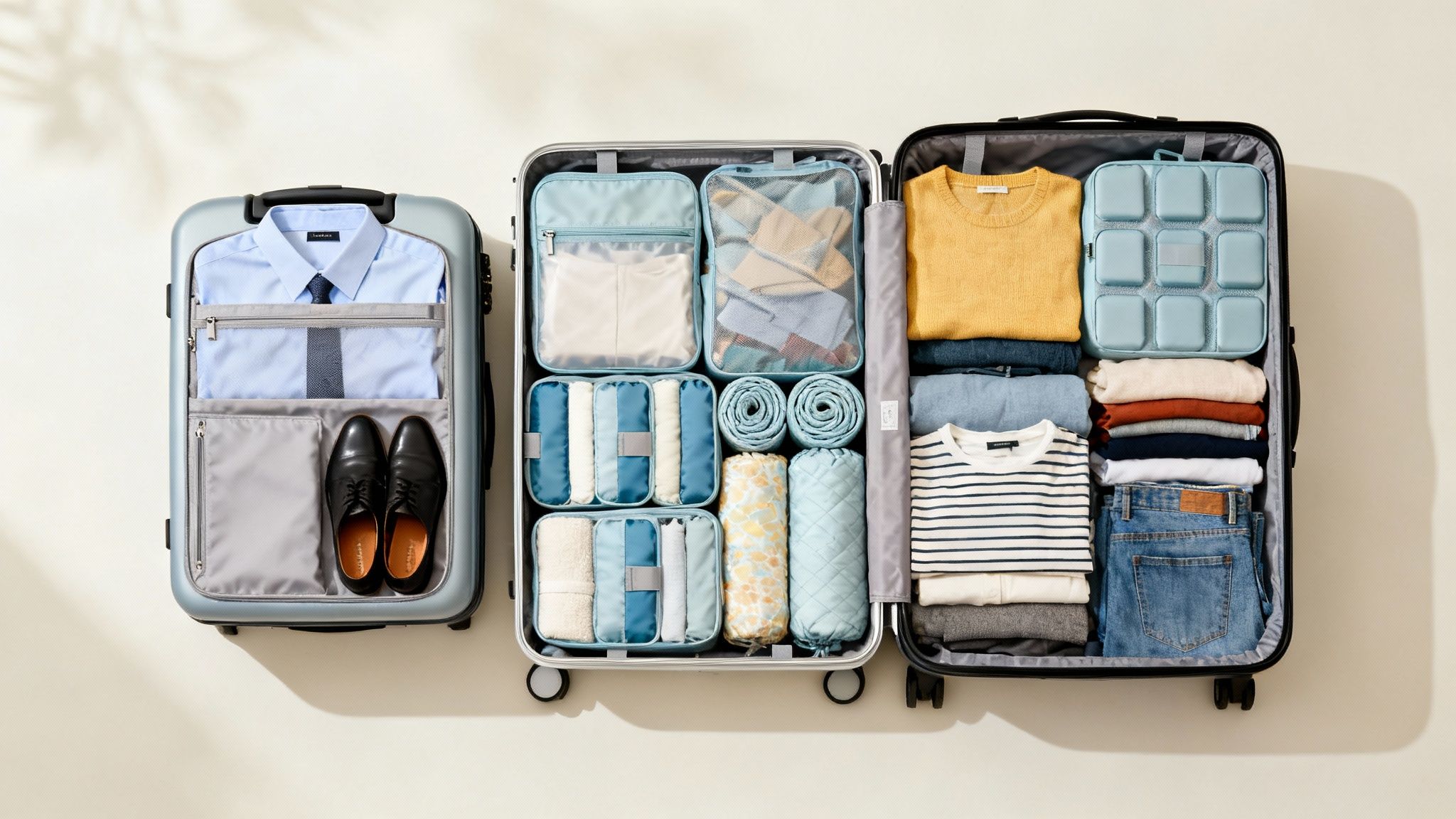
Even after you've mastered a few folding techniques, some questions always seem to surface right when you're in the thick of packing. Let's clear up some of the most common debates so you can button up your packing strategy and feel truly ready to go.
Think of this as the final piece of the puzzle. Once you get these details sorted, you'll know exactly how to handle every single item in your wardrobe, every single time.
Is It Better to Roll or Fold Clothes for Packing?
Honestly, the best answer is both. I've found that a hybrid approach works wonders, and the right choice really comes down to the fabric and type of clothing you're packing.
- Rolling is my go-to for casual, wrinkle-resistant clothes. Think t-shirts, workout leggings, pajamas, and soft knits. It squeezes the air out and lets you pack them incredibly tightly, making the most of every square inch.
- Folding is non-negotiable for more structured pieces. This includes things like blazers, dress pants, and crisp button-down shirts. Folding along the existing seams helps prevent those stubborn, hard-to-steam-out creases.
In my own suitcase, you’ll see all my casual stuff rolled up to tuck into the gaps, while my nicer outfits are neatly folded and laid flat on top.
How Should I Pack Bulky Items Like Jackets?
When you’re dealing with a bulky sweater or a puffer jacket, the name of the game is compression. Start by folding the item as flat and compact as you can get it.
From there, your best friend is a compression packing cube. These are a step up from regular cubes; they have a second zipper that cinches everything down and presses out all that trapped air. It's shocking how much smaller they can make a chunky fleece. Of course, for a really massive winter coat, the oldest trick in the book is still the best: just wear it on the plane.
What Is the Best Way to Pack to Avoid Wrinkles?
Preventing wrinkles is all about a three-pronged attack: using the right folding method, cutting down on friction, and making sure nothing shifts around during transit.
The secret to arriving with wrinkle-free clothes is creating soft, gentle folds instead of sharp, pressed creases. For really delicate items or a suit jacket, the bundle wrapping method is absolutely brilliant. Just as important is packing your suitcase full enough that items are snug and can't tumble around.
If you travel often for business, a dedicated garment folder is an investment you won't regret. It's designed specifically to keep dress shirts looking sharp.
Do Packing Cubes Actually Save Space?
They absolutely can, but you have to know which type you’re using. Standard packing cubes are fantastic for organization—I use them to separate tops from bottoms or to keep all my gym clothes together.
But if you want to create space, you need compression cubes. These are the ones designed to compact your clothing. They work wonders on denim, sweaters, and jackets. By using them correctly, most people can easily gain back 25-40% more room in their luggage. For anyone trying to squeeze into a carry-on, they are a must-have.
Ready to put these skills to the test with luggage that makes packing a pleasure? Explore the curated collections at Voyage Luggage and discover the perfect suitcase or accessory for your most organized trip ever. You can shop our premium brands at https://voyageluggage.com.

Share:
How to Pack a Suit Without Wrinkles: Quick, Pro Packing Hacks
Smart Packing Tips for International Travel