

When you’re a professional on the go, the best carry on luggage for business travel becomes more than just a bag—it's a critical tool. It needs to be a seamless blend of rock-solid durability, smart organization, and a look that says you mean business. Brands like TUMI, Briggs & Riley, and Travelpro consistently hit the mark, packing in essentials like protected laptop compartments and wrinkle-free garment suiters that keep you sharp and efficient.
Your Essential Business Travel Partner
For any professional today, business travel is a high-stakes game of managing time, upholding an image, and being ready for anything that comes your way. Your carry-on isn’t just a box on wheels; it's your mobile command center, a piece of gear that can genuinely make or break your trip. It’s what keeps you organized and ready for action the second you walk out your front door.
We’ve all been there. Sprinting through the terminal with a wobbly, clunky suitcase. Showing up to a big meeting with a suit that looks like you slept in it. Or frantically hunting for a power outlet because your phone is dead. These aren't just minor annoyances; they're preventable headaches that derail your focus. This guide is about shifting your mindset: choosing a carry-on is a strategic business decision, not just another purchase.
Why Your Carry-On Matters
Picking the right luggage is an investment in solving these all-too-common problems. The best carry on luggage for business travel is engineered with a singular purpose: to support the unique demands of a working professional. This goes way beyond just fitting in the overhead bin. It’s about how every feature works in concert to boost your productivity and cut down on stress.
Let's break down what really makes a difference:
- Effortless Mobility: Think smooth, silent spinner wheels and a rock-solid handle that feels like an extension of your arm. Navigating a crowded airport becomes a graceful glide, not a wrestling match.
- Professional Presentation: A dedicated garment compartment or a built-in suiter is a game-changer. It ensures your clothes arrive looking crisp and ready to wear, so you can skip the last-minute hotel ironing session.
- Seamless Organization: Purpose-built, padded sleeves for your laptop and tablet are non-negotiable. Add in thoughtfully placed pockets for chargers, documents, and other essentials, and you'll never have to frantically dig for anything again.
A great carry-on is like having a personal assistant on the road. It anticipates your needs, protects your most important assets, and frees you up to focus on the real work, not the chaos of travel.
Consider this guide your playbook for turning travel from a necessary evil into a streamlined, even enjoyable, part of your professional life. And remember, smart travel planning doesn't stop with your luggage. Reliable ground transportation is just as crucial. You might even explore options like EV rentals for business travel to keep your trip smooth from start to finish. Our goal is to help you arrive prepared, confident, and completely in control.
The Anatomy of a Perfect Business Carry-On
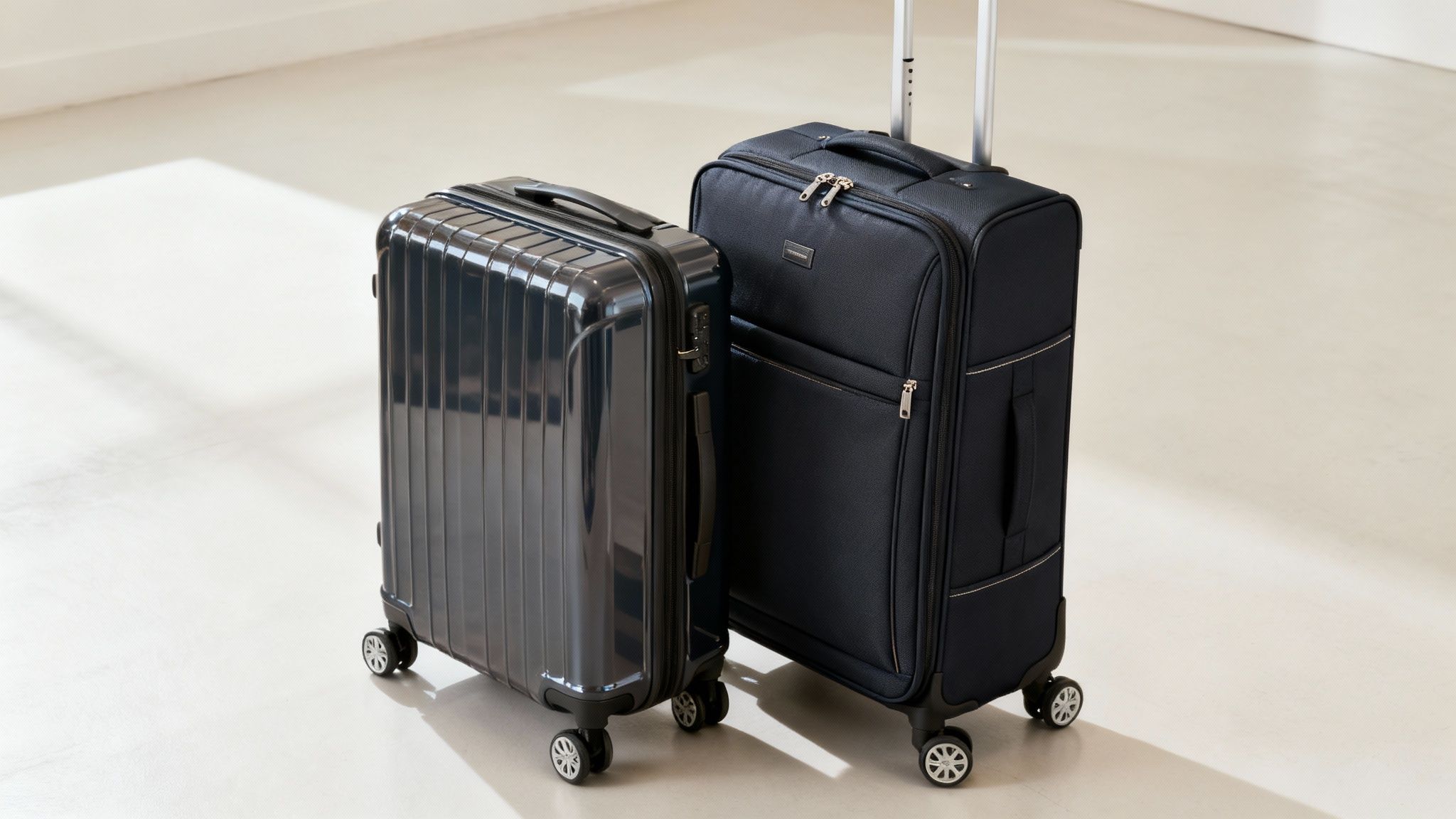
To find the best carry-on luggage for business travel, you have to look past the brand names and dig into what actually makes a bag a reliable partner on the road. Just like a high-performance car is built on a superior chassis, a carry-on's foundation is its material. That single choice dictates everything from its weight and toughness to how well it protects the gear you can’t work without.
The biggest debate you'll find is between hardside and softside luggage. Each has a totally different personality and purpose, and understanding their strengths and weaknesses is the first step toward picking the right tool for the job.
The Great Debate: Hardside vs. Softside
Hardside luggage, usually made from tough stuff like polycarbonate or aluminum, essentially acts like a personal vault for your things. That rigid shell is fantastic at shrugging off impacts, which is exactly what you want when you're carrying laptops, tablets, and other fragile tech. Think of it as armor for your electronics.
On the other side of the aisle, you have softside luggage, typically woven from durable ballistic nylon. Its main superpower is flexibility. The fabric build lets it absorb impacts without cracking and, maybe more importantly, it almost always comes with handy external pockets—a lifesaver when you need to grab your passport or a charging cable without opening up your entire suitcase in the middle of the terminal.
This isn't just about looks; it's a strategic decision. Market data reveals that the definition of the “best carry‑on for business travel” is now being shaped more by material, weight, and mobility than by size alone. A huge chunk of spending is shifting toward lightweight polycarbonate and ballistic-nylon bags that weigh under 3 kg while offering top-notch protection against impacts and scuffs.
It makes sense when you consider the time saved. Forecasts predict carry-on revenue in North America will climb by about 6% annually through 2031, as more professionals upgrade to skip the 20–40 minutes wasted at baggage claim on every single trip. You can dive deeper into these luggage market trends.
To make the choice clearer, let’s break down how these two styles stack up head-to-head.
Hardside vs Softside: A Business Traveler's Decision Guide
Choosing between a hardside or softside carry-on often comes down to your personal packing style, the gear you carry, and where you're headed. This table puts their key features side-by-side to help you decide.
| Feature | Hardside (Polycarbonate/Aluminum) | Softside (Ballistic Nylon) |
|---|---|---|
| Protection | Excellent for fragile electronics; crush-resistant. | Good impact absorption; less prone to cracking. |
| Weather Resistance | Naturally water-resistant shells protect contents. | Often treated but can be vulnerable in heavy rain. |
| Packing Style | Clamshell design requires more space to open fully. | Single-lid design is easier to pack in tight spaces. |
| Accessibility | Limited to no external pockets for quick-grab items. | Typically features multiple external pockets. |
| Weight | Modern polycarbonate is extremely lightweight. | Can be slightly heavier due to fabric and framing. |
| Appearance | Sleek, modern aesthetic with a wide array of colors. | Classic, professional look that hides scuffs well. |
Ultimately, hardside is the modern fortress for your tech, while softside is the flexible, accessible workhorse. Your travel habits will tell you which one is right.
Mastering Mobility: Wheels and Handles
Once you’ve landed on a material, the next thing you absolutely have to get right is mobility. A bag that fights you every step of the way through an airport is a productivity killer. This is where the wheels and handle come into play.
The undisputed champion for modern business travel is the four-wheel spinner. These bags have wheels that pivot a full 360 degrees, letting you glide the suitcase right alongside you with almost zero effort. That kind of maneuverability is a game-changer in crowded security lines and down narrow airplane aisles, saving your wrist and shoulder a lot of grief.
While traditional two-wheel roller bags are excellent on rough surfaces like cobblestone, the effortless glide of a spinner is unmatched for the smooth floors of an airport terminal. It’s the difference between dragging your luggage and escorting it.
Just as critical is the telescoping handle. A flimsy, wobbly handle isn't just an annoyance—it's one of the first things to break. Look for a multi-stage handle that locks firmly at different heights to match your stride. This also gives you a stable platform for stacking a briefcase or laptop bag on top. A solid handle, ideally made from aircraft-grade aluminum, provides the control you need for a smooth journey.
In the end, the perfect business carry-on isn’t about one single feature. It’s a system of well-engineered parts working together. A tough but light shell, paired with agile wheels and a sturdy handle, creates the foundation for a seamless, stress-free travel experience.
Mastering Organization for Peak Travel Productivity
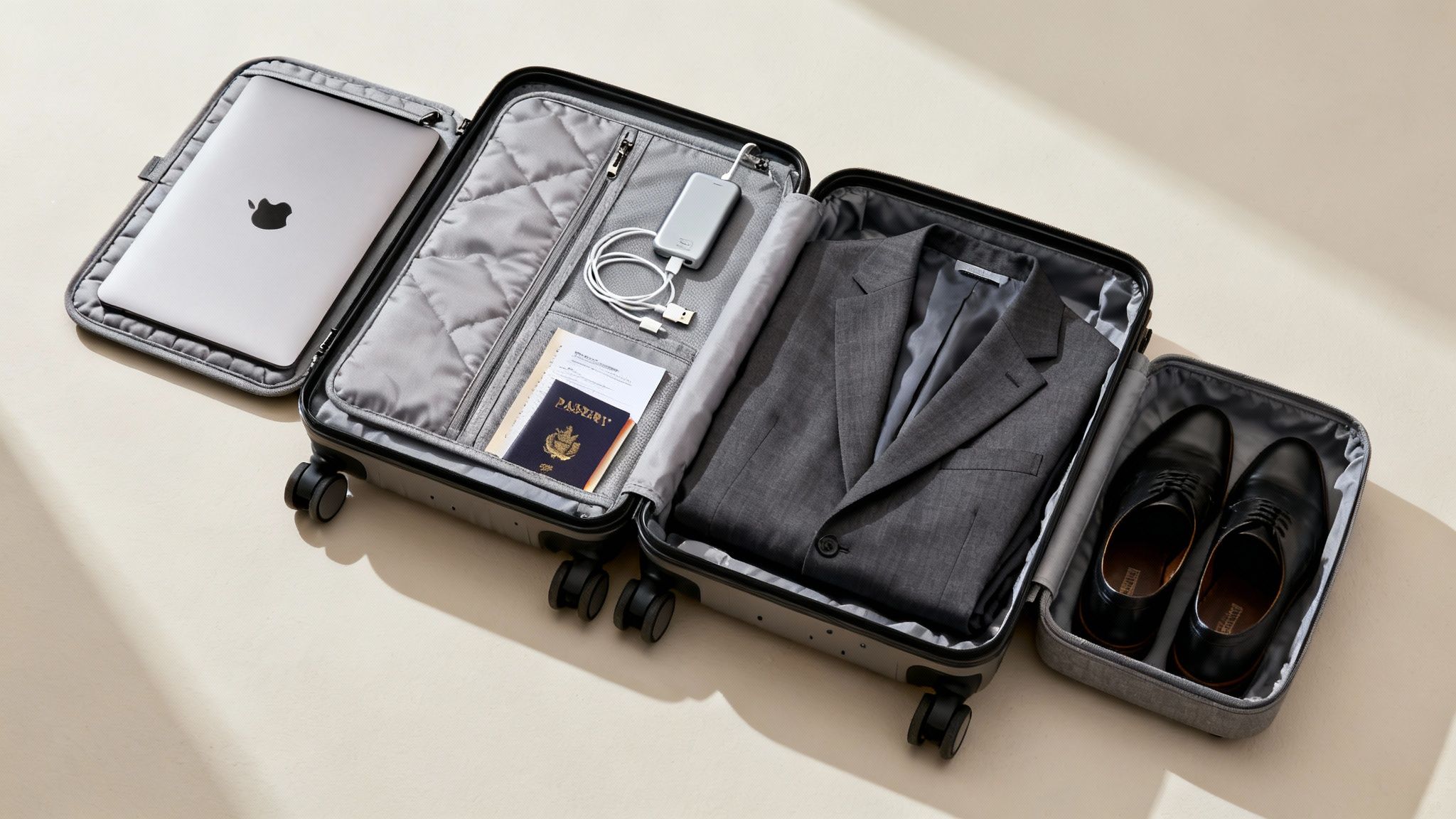
The real magic of a great business carry-on isn’t its hard shell or smooth wheels—it’s how it works as a mobile command center. Stop thinking of it as just a box for your stuff. Start seeing it as a tool that keeps you productive on the move. When everything has a designated spot, you cut out the friction of travel and get back precious time.
This smart approach to interior design is what really separates a decent bag from a fantastic one. Over the last decade, as business travel became the norm for so many, our expectations for luggage have completely changed. Brands are now designing carry-ons that not only squeeze into overhead bins but also supercharge our efficiency. That’s why you’re seeing features like built-in USB ports and quick-access laptop sleeves everywhere—they’re no longer a luxury, but a necessity.
The Non-Negotiable: A Padded Laptop Compartment
For almost any business traveler, your laptop is your lifeline. Keeping it safe is priority one, but getting to it quickly is a close second. The absolute gold standard here is a padded, external-access laptop compartment. This lets you slide your computer out for the security scanner without having to butterfly your entire suitcase open.
Trust me, this one feature is a game-changer at the TSA checkpoint. Instead of fumbling with zippers and showing your neatly packed clothes to the entire line, you just pull, scan, and go. It's a small detail that dramatically lowers your travel stress and gets you to the gate faster.
Arrive Wrinkle-Free and Ready for Business
Walking into a meeting with a wrinkled suit or a creased shirt just doesn't send the right message. This is where a dedicated garment compartment proves its worth, ensuring your professional attire looks sharp right out of the bag.
You’ll generally find two types of systems for this:
- The Garment Suiter: This is like a mini, built-in garment bag that folds out, often with a spot for a hanger. It’s perfect for keeping the structure of a suit jacket or dress pants intact with minimal creasing.
- The Garment Compression Panel: A simpler but highly effective design. It’s a large, zippered panel that gently presses folded shirts and slacks against one side of the case, stopping them from sliding around and getting rumpled.
Choosing a carry-on with either of these means you can head straight from the airport to your appointment, no emergency hotel room ironing required.
Think of your carry-on's interior not as empty space, but as a system of productivity zones. Each compartment should have a purpose, from protecting your tech to preserving your professional attire, ensuring you operate at peak efficiency from door to destination.
Smart Pockets for a Smoother Workflow
Beyond your laptop and suit, true organization is all in the details. The best carry-on luggage for business travel anticipates your needs with a smart layout of pockets and dividers. This is how you really dial in your travel process.
A well-designed interior creates a sense of flow, just like an organized desk. Instead of one big cavern where everything gets jumbled together, you want a system of smaller, dedicated zones. This not only keeps things tidy but also helps distribute weight evenly, making the bag easier to handle.
Essential Organizational Features
Here are some of the key internal elements that make for a truly productive travel experience:
- Integrated Tech Pockets: Look for a dedicated slot for a power bank, especially one that connects to an external USB port. This lets you charge your phone while walking through the airport without ever opening your suitcase.
- Document Sleeves: An easy-to-reach pocket for your passport, boarding passes, and receipts is a lifesaver. Having it on the outside or just inside the front lid saves you from that frantic pre-boarding pat-down.
- Water-Resistant Compartments: A separate, often plastic-lined pocket is brilliant for toiletries or a damp swimsuit from a quick hotel gym session. It quarantines any potential leaks and keeps everything else perfectly dry.
- Shoe Pockets: These keep the grime from your dress shoes or running sneakers away from your clean clothes. Simple, but so effective.
You can take this organization to the next level, too. To compartmentalize even more, check out our guide to the https://voyageluggage.com/blogs/voyage/best-packing-cubes-for-travel, which can completely revolutionize how you pack. It also helps to master a few key techniques, like learning how to efficiently pack bulky items like a coat in your carry-on. After all, a well-organized bag is the foundation for a clear, focused mind—ready for whatever business trip throws at you.
Navigating Airline Rules and Security Checkpoints
You've found the perfect bag—smart, organized, and ready to go. Great. But the real test isn't in the showroom; it's getting that bag through the airport gauntlet. This means playing by two different sets of rules: the airline's and the TSA's. Getting this right is what separates a smooth take-off from a stressful travel day.
Think of it this way: the airline gate agent is the first person you have to impress. Their size and weight restrictions are the first hurdle, and they can be strict. Showing up with a bag that’s even an inch too big can get you sent back, forcing you to check your carry-on at the last minute.
That’s a headache you just don’t need. It’s more than just an inconvenience; a forced gate check separates you from your laptop, your presentation notes, and your change of clothes. That's why checking your airline's policy before every single trip isn't just a good idea—it's essential.
Understanding Carry-On Size Restrictions
Thankfully, most major US airlines have settled on a fairly consistent size limit, creating an unofficial standard that luggage manufacturers design around. This gives you a great starting point for your search.
- The Common Guideline: You'll usually see dimensions around 22 x 14 x 9 inches (or 56 x 36 x 23 cm). And don't forget, this measurement almost always includes the wheels and handle.
But here’s the catch: this is just a guideline. Budget carriers and international airlines, especially on smaller jets, often have much tighter restrictions. A bag that breezes through security at LAX might get flagged in London or on a regional hop to a smaller city. The only way to be certain is to check your airline's website for the latest rules.
The goal isn’t just to buy a carry-on; it’s to invest in one that fits the airlines you actually fly. A quick check beforehand saves you from the frustration and surprise fees of a forced gate check, keeping your mission-critical gear safely by your side.
Sailing Through Security Screenings
Once you’re past the airline counter, your next stop is the security checkpoint. This is where a well-designed business carry-on proves its worth, turning a potential bottleneck into a smooth, efficient process.
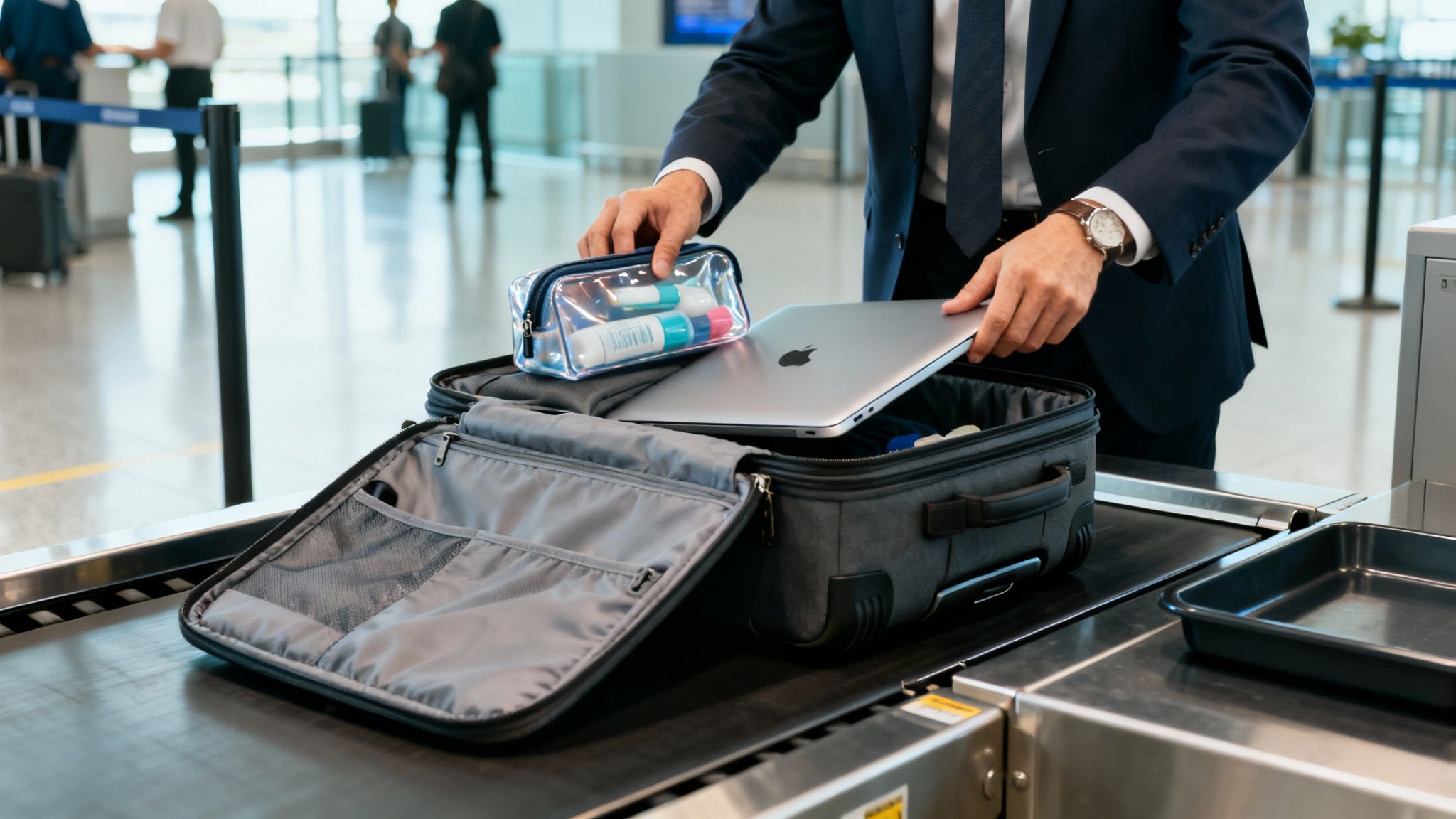
The secret is all about easy access to your electronics and liquids for the TSA. Look for bags marketed as "TSA-friendly" or "checkpoint-friendly." These almost always have a separate, padded laptop compartment that unzips and lays completely flat on the conveyor belt.
This feature is a game-changer. It means you can send your bag through the X-ray scanner without ever having to physically take your laptop out. It might sound like a small thing, but it shaves precious minutes off your time in line. Just as important is how you handle your toiletries.
Remember the TSA's strict 3-1-1 rule for liquids:
- Containers must be 3.4 ounces (100 ml) or smaller.
- All of them have to fit into one single, clear, quart-sized bag.
- You only get one of these bags per passenger.
The pro move here is to pack your clear toiletry bag in an easy-to-reach external pocket or right at the top of the main compartment. When it’s your turn, you can pull it out in seconds without digging through your neatly packed shirts. It’s these small, deliberate habits that make all the difference between chaos and calm at the airport.
Durability, Warranty, and Getting Your Money's Worth
Think of a great business carry-on as more of an investment than a simple purchase. It’s the one piece of gear you trust to protect everything you need to be successful on the road, from your laptop to the suit you’ll wear to close the deal. When you start thinking about it that way, you look past the price tag and start hunting for the real signs of quality—the little things that tell you a bag is built to last.
This is where you graduate from looking at feature lists to inspecting true craftsmanship. A well-made bag gives itself away in the details. Check the zippers—are they beefy and self-repairing, like those from a trusted name like YKK? Look at the corners. The best bags have reinforced guards right where they take the most abuse, ready to shrug off impacts from baggage carousels and tight overhead bins.
Pay close attention to the wheel housings, too. On cheaper bags, the wheels look almost like an afterthought, just screwed onto the bottom. On a premium case, they’re recessed securely into the frame itself. That small design choice makes a world of difference, protecting them from being snapped off by a rough baggage handler and ensuring they roll smoothly for years to come.
What a Warranty Really Tells You
Nothing says more about a company's belief in its product than its warranty. A solid warranty isn't just a repair plan; it’s a promise. It’s what turns a disposable product into a genuine long-term asset you can rely on. But not all warranties are created equal, so you need to know what you're looking for.
You’ll generally run into two types:
- Limited Guarantees: This is what most brands offer. They'll cover manufacturing defects for a set time, maybe five or ten years. The catch? They almost never cover "wear and tear" or damage caused by an airline—which, let's be honest, are the two most likely ways your bag is going to get wrecked.
- Comprehensive Lifetime Warranties: This is the holy grail of luggage protection. Offered by a handful of top-tier brands, these warranties cover functional damage for the life of the bag, no matter what caused it. An airline crushes a wheel? A zipper finally gives up after a thousand trips? They fix it, often for free.
A "no matter what" lifetime warranty is the clearest signal of quality you can find. It’s the brand telling you they’ve built that bag to take a beating for decades, and they’re willing to bet their own money on it. Suddenly, a higher price tag starts to look like a much smarter financial move.
The Real Cost of a Carry-On
This all boils down to long-term value. That $150 carry-on might feel like a steal, but if you're replacing it every couple of years, the costs really start to add up. On the other hand, a premium bag with a rock-solid lifetime warranty could very well be the last one you ever buy.
Just do the math. A cheap bag that costs $150 but only lasts two years has an annual cost of $75. A $600 bag with a lifetime warranty that you use for a decade (or longer) costs you just $60 per year. The longer you own it, the better the investment becomes. To see who really delivers on this promise, it's worth checking out a breakdown of the suitcases with the best warranty policies available to compare the fine print.
At the end of the day, choosing a bag built for the long haul is about buying peace of mind. It’s the confidence of knowing your travel partner won't fail you, trip after trip, year after year.
Finding Your Perfect Business Travel Carry-On
Now that we’ve covered all the key features, let's connect them to the real world—your world. The truth is, the "best" carry-on is a myth. The right carry-on, however, is the one that perfectly fits how you actually travel.
To make things easier, I’ve broken down the most common types of business travelers into three distinct profiles. Find the one that sounds most like you, and you’ll have a clear roadmap to the perfect bag. It’s about moving beyond endless options and making a smart, targeted choice.
The Road Warrior
Are you on a plane what feels like every other week? Living out of your suitcase more than you’d care to admit? If so, you’re a Road Warrior. For you, nothing matters more than absolute, uncompromising durability and a warranty that has your back, no questions asked.
You need a workhorse—a bag built to survive the relentless grind of constant travel without a single zipper failing or wheel giving out.
- What you need: Ultimate durability, a comprehensive lifetime warranty, and battle-tested components like reinforced corners and oversized YKK zippers.
- Brands to look for: Briggs & Riley is the gold standard here, legendary for its "Simple as that®" lifetime guarantee that covers all functional repairs. TUMI is another top contender, known for its rugged construction and premium materials engineered for high-mileage travelers.
The Tech-Savvy Consultant
For you, a carry-on isn’t just for clothes; it’s your mobile command center. You’re juggling a laptop, tablet, power banks, and a tangle of cables, and you need immediate access to your entire digital life at a moment's notice.
Your perfect bag is all about smart organization and integrated tech features that keep you powered up and productive from the curb to the conference room.
- What you need: An easy-access, heavily padded laptop compartment is non-negotiable. Look for built-in USB ports for charging on the move and clever pockets for all your gadgets.
- Brands to look for: Check out innovators like Carl Friedrik, who make sleek hardshells with brilliant front laptop pockets. Travelpro's Platinum® Elite line is also a great fit, often including dedicated power bank pockets and external USB ports.
Think of your traveler profile as a filter. It instantly cuts through the noise of countless options, pointing you straight to the features and brands that will actually make a difference in your travel life.
This focus on practical, business-first features is exactly what the market is demanding. With checked bag fees hitting $30–$50 each way, professionals are investing in high-quality cabin bags for frequent trips. At Voyage Luggage, these trends reinforce our mission: curating premium carry-ons for pros who understand quality and typically invest in new gear every 3–5 years. You can explore more of these carry-on luggage market insights.
The graphic below breaks down how to think about long-term value by focusing on what really matters: durability, zippers, and the warranty.
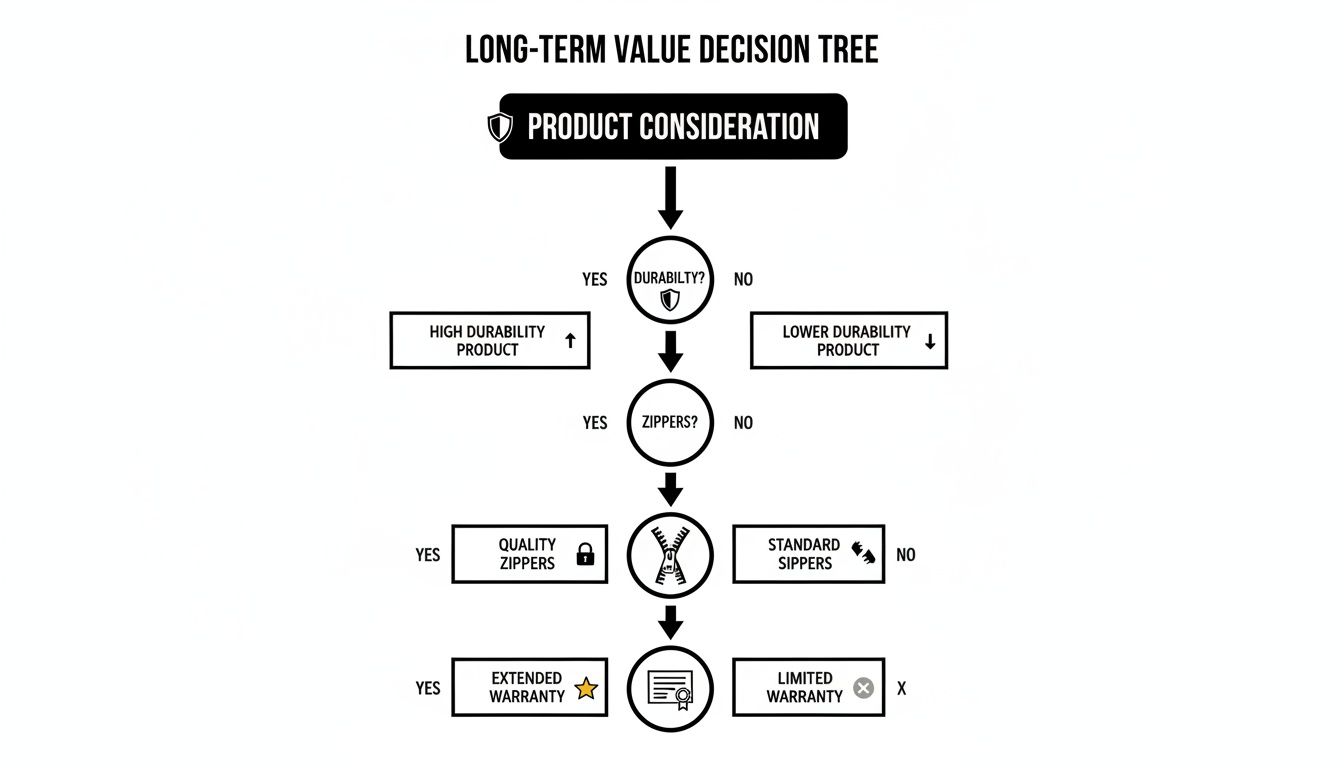
Following this logic helps you make a smarter purchase that pays off for years, not just a single trip.
The Style-Conscious Executive
For you, a carry-on is more than just luggage—it’s an extension of your professional brand. It has to perform flawlessly, of course, but it also needs to project a sophisticated, put-together image. We're talking premium materials, elegant design, and an undeniable sense of quality.
- What you need: High-end materials like aluminum or fine Italian leather, a refined and minimalist aesthetic, and that unmistakable look of quality craftsmanship.
- Brands to look for: RIMOWA is an icon with its signature grooved aluminum cases. For a touch of classic luxury, brands like Bric's deliver timeless Italian design and beautiful, high-end finishes.
By matching your own travel style to one of these profiles, you can stop guessing and start choosing with confidence. For a closer look at our top picks, check out our full roundup of the best business travel luggage.
Got Questions? We've Got Answers
Picking the right carry-on can feel overwhelming, so let's tackle some of the most common questions business travelers ask. Think of this as your quick-start guide to making a smarter choice.
Hardside vs. Softside: Which Is the Winner for Business?
Honestly, this really boils down to your personal travel style.
Hardside luggage, usually made from tough polycarbonate or sleek aluminum, is like an armored vault for your tech. It offers incredible protection for laptops and other fragile gear and always looks sharp.
On the other hand, softside bags, often built from ballistic nylon, are all about flexibility. They typically have handy exterior pockets for stashing your passport, charging cables, or a book—perfect for grabbing things on the go. That flexibility can also be a lifesaver when you're trying to squeeze it into a full overhead bin. For a lot of road warriors, the perfect middle ground is a hardside case that has a built-in front laptop pocket.
Are Four Wheels (Spinners) Actually Better Than Two?
For getting through an airport? Absolutely, yes. Four-wheel spinners give you that effortless 360-degree glide, letting you navigate a busy terminal with the bag right at your side. It’s a game-changer for avoiding strain on your wrist and shoulder.
Sure, a classic two-wheeler might handle cobblestone streets a bit better, but let's face it—most of your journey is on smooth airport floors. That’s where a spinner shines. The sheer ease of movement is a huge win for anyone looking to make their travel day less of a workout.
What's the Single Most Important Feature to Look For?
While great wheels and a solid handle are crucial, the one feature that will make the biggest difference to your sanity is an easily accessible, padded laptop compartment. Seriously.
A bag that lets you pull out your laptop for the TSA scan without having to open up the entire main compartment is a massive time-saver. It streamlines your trip through security, keeps your packed clothes from being on display, and just reduces a major travel headache. It’s a small design detail that has a huge impact.
A quick thought on investing in quality: for anyone who travels regularly for work, a premium bag is almost always worth it. High-end brands use better materials and components—from the zippers to the wheel bearings—that are simply built to last.
More than that, they usually back their gear with solid warranties that cover actual repairs. This turns a one-time purchase into a reliable travel partner that could last you a decade or more, which is a much smarter move financially in the long run.
At Voyage Luggage, we’ve already done the hard work by hand-picking a collection of the world's best luggage for professionals like you. Find the perfect carry-on for your next business trip by exploring our premium selection.


Share:
Smart Packing Tips for International Travel
Top Picks: best tsa approved luggage locks for secure travel