

If you've been on the hunt for the best polycarbonate luggage, you're not alone. Travelers are flocking to this material for a simple reason: it hits the sweet spot between toughness, flexibility, and a surprisingly light weight.
Think of it as a flexible shield for everything you've packed. It’s designed to take a hit from a clumsy baggage handler and pop right back into shape. That’s a huge advantage over more rigid materials that are prone to cracking when things get rough. This unique resilience is exactly why polycarbonate has become the gold standard for modern travel.
Why Savvy Travelers Prefer Polycarbonate Luggage
Polycarbonate isn't just another hard plastic suitcase—it's a marvel of material science built specifically for the chaos of travel. Its secret weapon is the ability to flex when it gets knocked around, much like how a credit card can bend without snapping in two. This flexibility lets it absorb the shock from a fall or a collision, which protects both the suitcase shell and, more importantly, your stuff inside.
This one-two punch of durability and a lightweight frame is why its popularity has skyrocketed. Nobody wants to drag a heavy suitcase around or get hit with surprise overweight baggage fees at the check-in counter. Polycarbonate solves that problem, giving you serious protection without the heft of materials like aluminum. We dive deeper into this in our guide on choosing the best lightweight luggage for international travel.
To give you a clearer picture, here's a quick rundown of what makes this material stand out.
Polycarbonate Luggage At a Glance
| Key Feature | Why It Matters for Your Trip |
|---|---|
| Impact Resistance | Absorbs shocks from drops and bumps, preventing cracks and protecting your belongings. |
| Lightweight Build | Helps you avoid excess baggage fees and makes navigating airports and cities much easier. |
| Flexibility | The shell can bend under pressure and return to its original shape, adding to its long-term durability. |
| Sleek Designs | The material can be molded into various shapes and colors, offering a modern and stylish look. |
Ultimately, these features combine to create a suitcase that's ready for anything you throw at it.
A Rapidly Growing Market
The move towards polycarbonate isn't just something we're noticing; the numbers back it up. The global market for this type of luggage was valued at around USD 24 billion in 2023 and is only expected to keep climbing. This growth is fueled by the boom in global travel and a clear demand from shoppers for luggage that's both tough and easy to carry. You can read more about this trend over at dataintelo.com.
The ideal suitcase should feel like a reliable travel partner—strong enough to handle unexpected turbulence but light enough to never hold you back. Polycarbonate strikes this perfect balance.
At the end of the day, picking the best polycarbonate luggage is an investment in your own peace of mind. It gives you the confidence that your gear can handle the journey, so you can stop worrying about your suitcase and start focusing on the adventure ahead. It's a smart, practical choice for anyone who wants their travel equipment to be as dependable as it is stylish.
Choosing Your Hardside Luggage Material
Stepping into the world of hardside luggage can feel a little overwhelming. You're hit with terms like polycarbonate, ABS, and aluminum, but what does any of that actually mean when you're sprinting through an airport? Let's break it down.
Think of your suitcase material as the armor for your belongings. Each one offers a different trade-off between protection, weight, and price. Getting this choice right from the start means your stuff stays safe, and you avoid a travel-day headache.
The Flexible Champion: Polycarbonate
Polycarbonate is the undisputed star of modern luggage, and for good reason. Its superpower is impact-absorbing flexibility.
Picture this: your bag gets tossed onto the conveyor belt with a bit too much enthusiasm. Instead of cracking under the force, a polycarbonate shell gives a little, absorbs the shock, and then pops right back into its original shape. This incredible resilience is what makes it the go-to for frequent flyers whose bags have to survive the gauntlet of air travel. It’s the material that bounces back, trip after trip.
The Budget-Friendly Lightweight: ABS
Next up is Acrylonitrile Butadiene Styrene, or just ABS. This is the material you'll find in most entry-level hardside luggage. The big draws here are that it's super lightweight and usually the most affordable option you can find.
But that lower price tag comes with a trade-off. ABS is more rigid and not quite as durable as polycarbonate. This makes it more prone to cracking over time, especially when it gets knocked around in the cold. It’s a perfectly fine choice for someone who travels once or twice a year, but it might not withstand the abuse of a road warrior.
The Armored Vault: Aluminum
Finally, we have aluminum—the original hardside material. An aluminum suitcase is basically a personal vault for your things. It offers unmatched protection against being crushed or bashed in. It's incredibly strong and has that classic, premium look you see with high-end brands.
The downsides? Weight and cost. Aluminum is easily the heaviest and most expensive option of the three. That extra weight can push you into overweight baggage fees, and the initial investment is significant. It’s really for the traveler who needs maximum security above all else.
Polycarbonate vs. ABS vs. Aluminum Luggage
So, how do they stack up side-by-side? When you're standing in the store or browsing online, this is what you really need to know.
| Material | Durability & Impact Resistance | Weight | Cost | Best For |
|---|---|---|---|---|
| Polycarbonate | Excellent. Flexes to absorb impact, preventing cracks. Highly scratch-resistant. | Lightweight. Heavier than ABS but much lighter than aluminum. | Mid-to-High. A good investment for its longevity. | Frequent flyers and anyone needing a durable, long-lasting suitcase. |
| ABS | Fair. More rigid and prone to cracking, especially in cold. Scratches easily. | Very Lightweight. The lightest of the three options. | Low. The most budget-friendly hardside material. | Occasional travelers, road trips, and those on a tight budget. |
| Aluminum | Superior. The strongest and most protective, but it can dent. | Heavy. The heaviest option by a significant margin. | Very High. A premium, luxury-priced material. | Luxury travelers or those carrying fragile items who prioritize protection over all else. |
As you can see, each material serves a different purpose. Your "best" choice really comes down to how you travel, what you pack, and what you're willing to spend.
This chart shows just how much travelers are leaning into durable, modern materials. The demand is clearly growing.
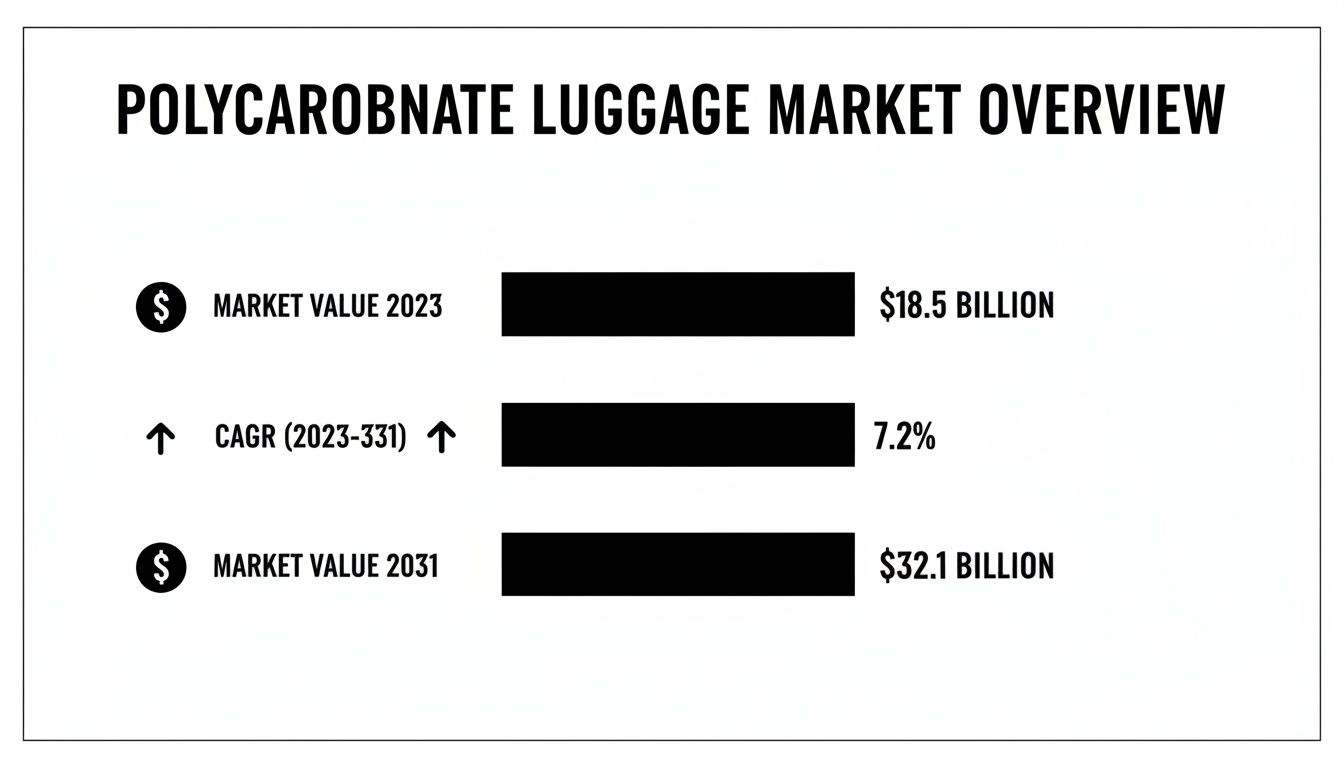
The projected growth here isn't just a blip; it shows that polycarbonate luggage is what savvy travelers are choosing for the long haul. When you balance durability, weight, and value, polycarbonate almost always comes out on top as the most practical and reliable choice for most of us.
What This All Means for Your Actual Travels
It's one thing to talk about material science, but what really matters is how your luggage performs when you're rushing to catch a flight or waiting at the baggage claim. Choosing a polycarbonate suitcase isn't just about picking a type of plastic; it's about making your entire journey, from curb to hotel, a whole lot smoother.
Think about that moment of dread at the baggage carousel. You watch bags tumble out, getting dropped and slammed around. This is where polycarbonate's incredible impact resistance really proves its worth. Because it can flex and absorb the shock, your suitcase is far more likely to come out the other side without a scratch, keeping everything inside safe and sound.
Travel Lighter, Look Sharper
Beyond its sheer toughness, what people really love about polycarbonate is how light it is. Every ounce you save on the suitcase itself is an ounce you can use for your own stuff. That means you can throw in that extra pair of shoes or grab that cool souvenir without worrying about getting hit with expensive overweight baggage fees at the check-in counter. It just makes life easier, whether you're lifting your bag into an overhead bin or rolling it down a cobblestone street.
Polycarbonate is also a dream for designers. It can be molded into sleek, modern shapes and finished in just about any color or texture you can imagine. This means you get a suitcase that’s not just a box for your clothes but a genuine style accessory—one that stands out from the sea of boring black bags.
The real genius of polycarbonate is how it solves the traveler's classic trade-off. You no longer have to pick between a suitcase that’s tough and one that’s light. You get both in one package.
A Smart Investment for Modern Travel
The luggage world isn't standing still. The market for hard-sided cases made from polycarbonate is predicted to grow at a 7.18% CAGR, and that's because manufacturers are constantly finding new ways to make it even stronger and lighter. Dig into the market trends on FutureMarketReport.com and you'll see a clear pattern: travelers want gear that can keep up with them.
So, how do these benefits play out for different types of travelers?
- For the Chronic Over-Packer: The lighter shell gives you precious extra pounds for your belongings. It's the difference between paying a fee and sailing through check-in.
- For the Road Warrior: If you travel a lot, you know how much abuse a bag takes. The superior durability means your investment will last for years, not just a few trips.
- For the Style-Savvy Traveler: With so many colors and finishes available, you can find a suitcase that truly reflects your personal style without compromising on quality.
At the end of the day, picking a polycarbonate suitcase is a smart, practical move. It gives you peace of mind, takes the stress out of packing, and keeps your gear protected, so you can focus on what really matters—enjoying the trip.
How to Pick the Perfect Polycarbonate Luggage
Choosing the right polycarbonate suitcase involves more than just finding a color you like. The best luggage is a finely-tuned travel companion where every part works together to make your trip a breeze. Let's dig into the details that separate a decent bag from a truly great one, so you can make an investment that pays off for years to come.
Think about it like buying a car—the wheels are everything. You wouldn't settle for a bumpy ride, right? The same goes for your suitcase. You'll want 360-degree spinner wheels—four of them—that glide smoothly and silently in any direction. They let you roll the bag right beside you, which is so much easier on your arm and back than dragging a two-wheeled suitcase behind you down a long airport concourse.
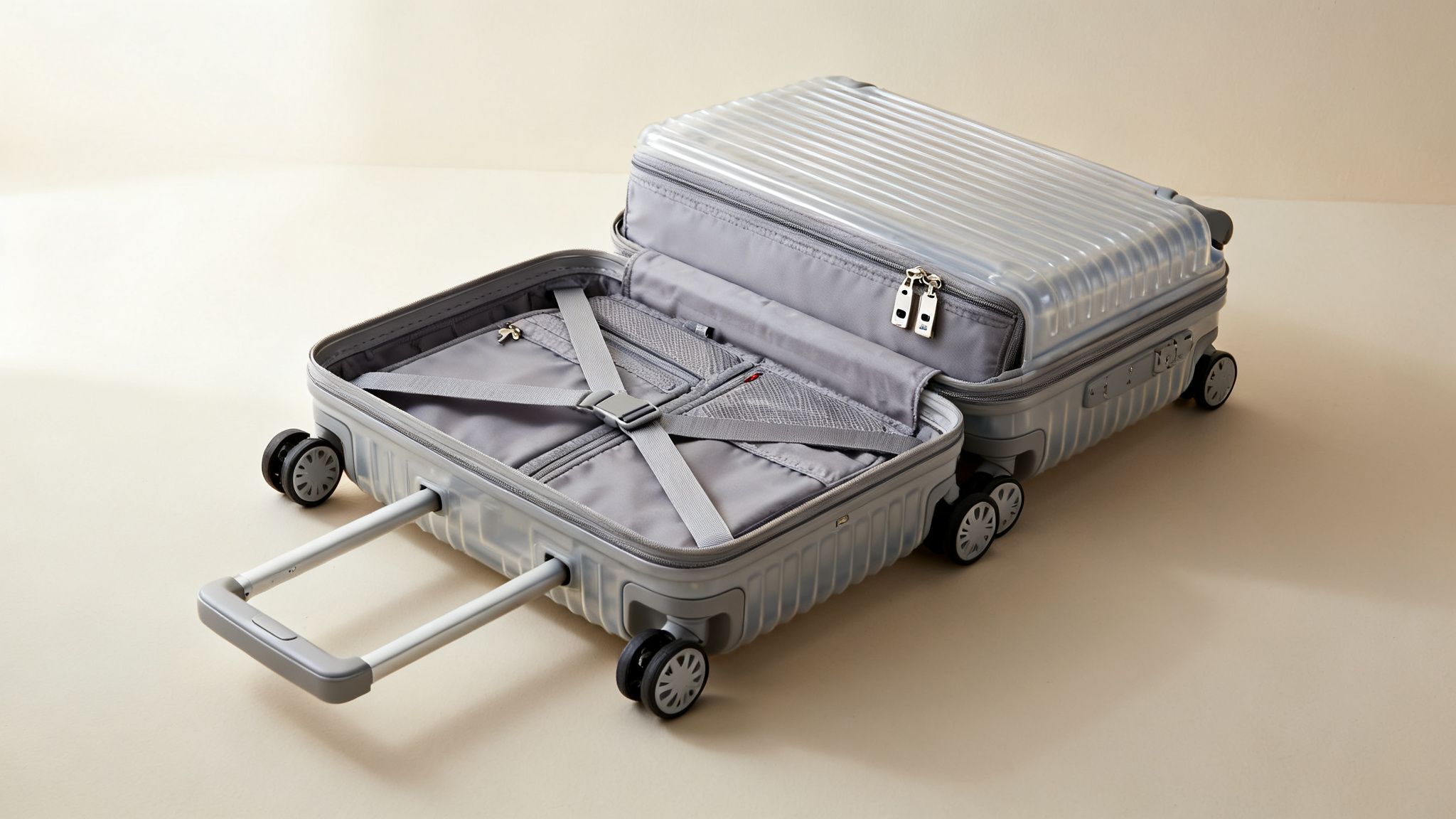
Next up, give that telescoping handle a good shake. Does it feel flimsy? A quality handle should extend and lock into place with a satisfying click, showing minimal wobble. Look for multiple height settings, which is a small detail that makes a huge difference in comfort for travelers of all heights.
Securing Your Belongings
Your zippers and locks are your first line of defense against theft and spills. Look for chunky, robust zippers that feel like they can take a beating. Even better are self-repairing ones; if a tooth gets out of line, you can often just zip it back and forth to fix it. And when it comes to locks, always, always go for a built-in TSA-approved lock.
A TSA-approved lock is a must-have. It allows security agents to inspect your bag with a special master key if they need to, all without breaking your lock or damaging your suitcase. It’s security and convenience in one simple feature.
You can spot these locks by their little red diamond logo. For modern travel, they're non-negotiable. They keep your stuff safe while making sure you don't run into any trouble with airport security.
Mastering Your Interior Space
A great hardshell suitcase is more than just an empty box. Smart organization on the inside can completely change your packing game, helping you fit more in while keeping everything perfectly neat.
Here are the key features to look for inside:
- Clamshell Design: Most polycarbonate luggage opens like a book, splitting into two main compartments. A great setup has a full zippered divider on one side to keep things like shoes or dirty laundry separate.
- Compression Systems: The other half should have a compression pad or X-shaped straps. These are brilliant for squeezing the air out of your clothes, which not only creates more room but also stops your items from jumbling around during transit.
- Accessory Pockets: Little zippered pockets, especially mesh or water-resistant ones, are perfect for stashing toiletries, chargers, socks, and other small essentials you need to find quickly.
This kind of intelligent design means you can pack smarter and find what you need without having to unpack your entire bag. For a deeper dive into picking the perfect bag, check out our complete guide on how to choose luggage.
Getting the Size Right
Finally, don't just glance at the size—check the exact dimensions. Luggage sizing isn't universal, and one brand's "carry-on" might be too big for another airline's overhead bin.
- Carry-On: For most U.S. domestic flights, the sweet spot is around 22 x 14 x 9 inches. But be careful—budget airlines and international carriers are often much stricter. Before you buy, double-check the rules for the airlines you fly with the most.
- Checked Luggage: For trips over a week, a medium (24-26 inches) or large (28-30 inches) checked bag is your best bet. Just keep an eye on the weight. Most airlines cap economy bags at 50 pounds (23 kg), and those overweight fees can be brutal.
Top Polycarbonate Luggage Brands Worth Considering
Once you start shopping for a new polycarbonate suitcase, you'll see a few names pop up over and over again. These are the brands that have really nailed the combination of strength, weight, and style. Figuring out what makes each one different is the secret to finding the perfect bag for how you travel.
It’s a bit like shopping for a car. Some brands are known for being reliable and family-friendly, while others are all about luxury and performance. The luggage world is no different. You’ll find major players like Safari, Samsonite, Rockland, and Delsey Paris dominating the scene, with the top two companies holding a huge slice of the market share in 2024. You can find more details on the polycarbonate luggage market on futuremarketreport.com.
Each one has its own personality, and they all cater to slightly different kinds of travelers.
Samsonite The Industry Pioneer
Samsonite is practically a household name, and for good reason. They were one of the first to really push advanced materials to make luggage both lighter and tougher. A Samsonite polycarbonate suitcase is a true workhorse. It’s built to take a beating from baggage handlers and frequent flights without costing a fortune.
They’re known for smart features and putting their products through some serious testing. If you just need a dependable, long-lasting bag that gets the job done, Samsonite is a fantastic place to start.
Samsonite has built its reputation on a simple promise: create high-quality, durable products that make travel easier. Their polycarbonate collections are a perfect example of this commitment in action.
TUMI The Luxury Powerhouse
If Samsonite is the trusty family sedan, TUMI is the precision-engineered sports car. You’ll see TUMI bags in the hands of business executives and discerning travelers who appreciate the finer things. Their polycarbonate luggage is all about the details, from custom-designed wheels and handles to incredible interior organization.
Yes, TUMI comes with a premium price tag, but you're paying for top-tier craftsmanship and a certain level of status. These bags are designed to perform perfectly and look sharp for years, making them a go-to for road warriors who can’t afford any hiccups. If you want to explore more high-end options, our article on the best hardside luggage brands offers a wider look.
Delsey The Parisian Innovator
Delsey brings a little bit of French flair to the luggage aisle. This brand is fantastic at mixing chic, sophisticated designs with genuinely useful features. A Delsey polycarbonate suitcase often catches your eye with its bold colors and interesting textures, but it’s also built with security in mind.
Many Delsey bags feature their patented Zip SecuriTech, which is a double-zipper system that’s way tougher to break into than a standard zipper. For anyone who puts a premium on both style and security, Delsey is a perfect match. They prove that a tough suitcase can also be a beautiful one.
Keeping Your Polycarbonate Luggage in Top Shape
You've invested in a great suitcase, and with just a little bit of care, you can keep it looking sharp and rolling smoothly for years. Think of it like maintaining a car; a few simple habits make all the difference.
The easiest win is a quick clean-up after each trip. Most of the scuffs and dirt from the baggage carousel are just surface-level. Grab a soft cloth, some warm water, and a bit of mild soap, and they’ll wipe right off. For a stubborn mark that won’t budge, a magic eraser often works wonders without scratching the shell.
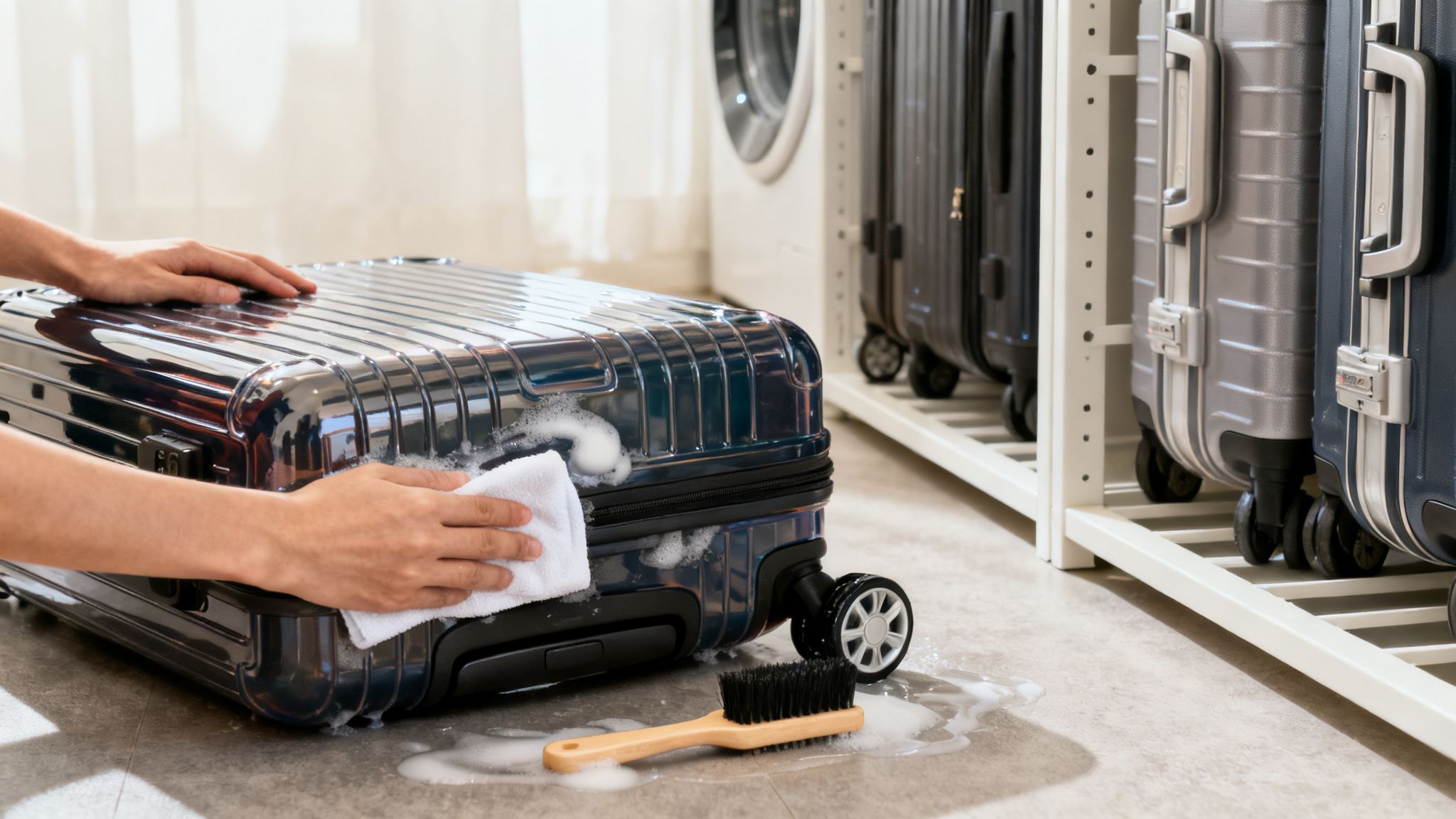
Simple Steps for Long-Term Durability
Beyond just cleaning the shell, a little attention to the hardware will ensure your bag glides through the airport as effortlessly as it did on day one.
- Wheel Check: Every so often, flip your suitcase over and check the spinner wheels. You’d be surprised how much hair, thread, and gunk can get tangled in there. A quick clean-out is all it takes to prevent jamming and keep them rolling freely.
- Proper Storage: When your trip is over, find a cool, dry spot for your luggage, ideally out of direct sunlight. Extreme heat or cold can make the polycarbonate brittle over time.
- Nesting Dolls: If you have a luggage set, storing the smaller cases inside the larger ones is a great trick. It’s a fantastic space-saver and also helps the shells hold their shape when not in use.
Honestly, just spending ten minutes after a trip to wipe down the exterior and check the wheels can add years to the life of your bag. It’s a small effort that ensures your investment in the best polycarbonate luggage pays off for many adventures to come.
Got Questions About Polycarbonate Luggage? Let's Answer Them.
Even after you've done your research, a few common questions always seem to pop up. Let's tackle them head-on so you can feel 100% confident in your choice.
One of the biggest debates is whether a polycarbonate hardside suitcase is actually better than a classic softside bag. Honestly, it all comes down to what you value most. Polycarbonate is the bodyguard for your belongings, offering top-tier protection from drops and crushing. But, softside luggage wins on convenience, with those handy outside pockets for easy access to your passport or a magazine.
If you're packing fragile souvenirs or expensive gear, the rigid protection of a polycarbonate shell is unmatched. But if you live for easy-access pockets and a bit more packing flexibility, a softside might be your best bet.
Does Polycarbonate Luggage Actually Crack Easily?
This is a huge misconception, and the truth is the complete opposite. Polycarbonate’s superpower is its flexibility. Picture a sturdy plastic ruler—it bends under pressure instead of snapping in half. That’s exactly what your suitcase does. This flex is how it absorbs the shock from being tossed around by baggage handlers and then pops right back into shape.
Of course, no luggage is totally bulletproof. But a suitcase made from high-quality polycarbonate is built to withstand an incredible amount of abuse. It’s far less likely to crack than cheaper, more brittle plastics like ABS, which is precisely why so many seasoned travelers swear by it.
How Can I Keep It from Getting Scratched?
Let’s be real: scratches are a battle scar of travel for any suitcase. The good news is that polycarbonate is naturally scratch-resistant, and a few simple tricks can keep it looking sharp.
- Pick a Textured Finish: A matte, brushed, or ribbed texture is your best friend. These surfaces are brilliant at camouflaging the minor scuffs and scrapes that would stand out on a glossy finish.
- Get a Luggage Cover: Think of it as a jacket for your suitcase. A simple fabric or clear plastic cover adds an extra layer of defense against the conveyor belts and cargo holds.
- Give It a Quick Clean: You’d be surprised what a magic eraser or a soft cloth with a bit of soapy water can do. Many surface-level marks will wipe right off, making your bag look fresh after a long trip.
Ready to travel with confidence? Explore our curated collection of Voyage Luggage and find the perfect travel partner for your next adventure. Shop now at https://voyageluggage.com.


Share:
Finding the Best Business Travel Backpacks
Rolling: rolling underseat carry on — A Quick Guide to Effortless Travel