

The absolute best lightweight luggage for international travel isn't just about a light shell—it's a smart combination of a tough, low-weight frame (ideally under 7 lbs or 3.2 kg for a carry-on), silky-smooth spinner wheels, and a handle that won’t wobble under pressure. Getting this combination right is the secret to gliding through airports and, more importantly, dodging those nasty overweight baggage fees.
Why Lightweight Luggage Is a Game-Changer for International Travel
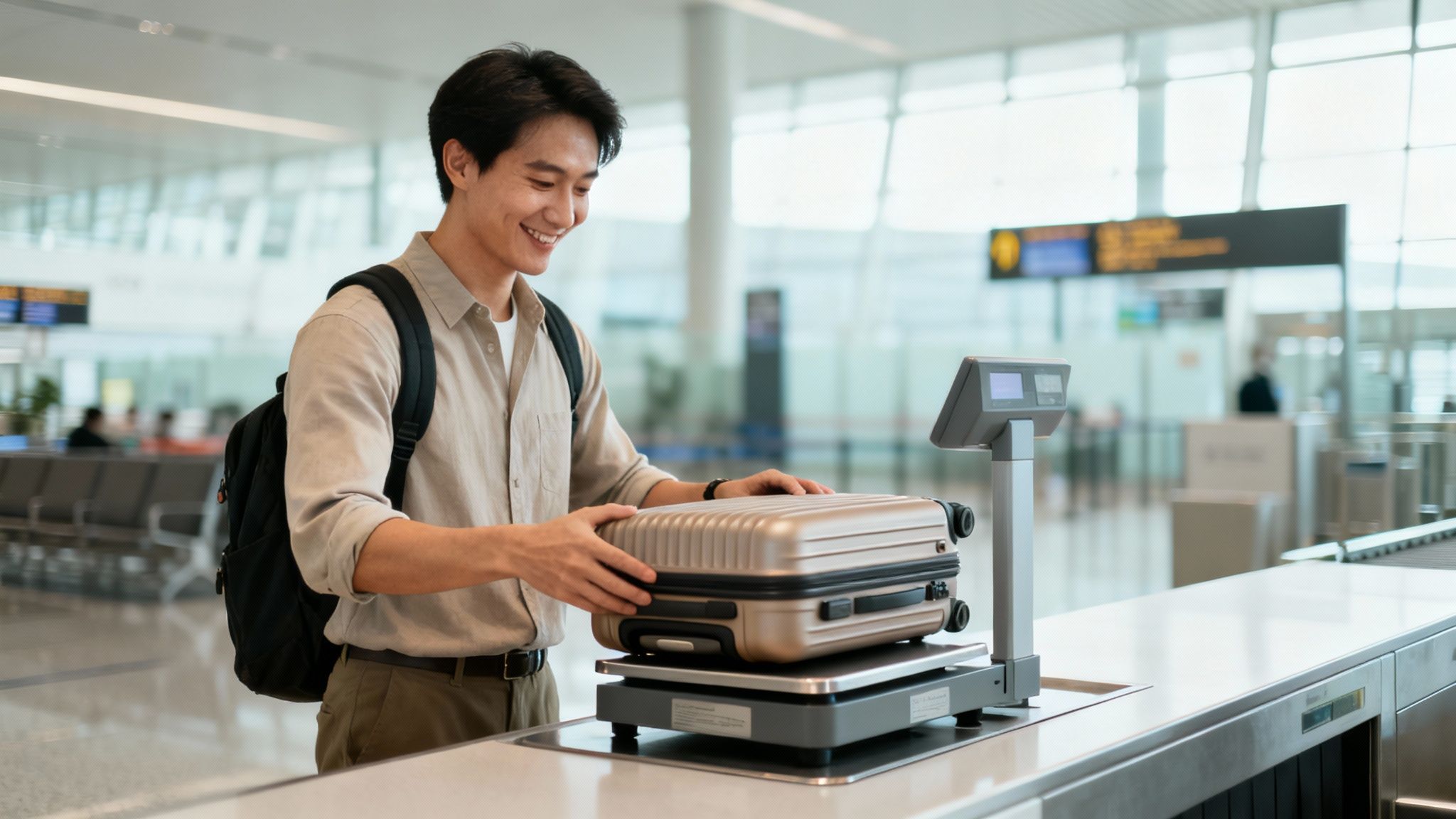
We've all felt that moment of dread at the check-in counter. You heave your bag onto the scale, hold your breath, and hope for the best, only to be hit with a surprise overweight fee. It’s a terrible way to start a trip. This is exactly where the right luggage makes all the difference, especially when you're flying internationally where airlines are notoriously strict about weight.
Think of lightweight luggage not as just another travel accessory, but as a strategic tool. When your bag starts off lighter, you gain a massive advantage before you’ve even packed your first pair of socks.
The Strategic Advantage of a Lighter Bag
Every pound your empty suitcase takes up is a pound you can't use for your own gear. An older, clunky bag might weigh 10-12 lbs (4.5-5.4 kg) before you put anything in it. When an international airline caps your carry-on at 22 lbs (10 kg), that old bag has already eaten up half your allowance.
Now, picture a modern lightweight case that weighs just 6 lbs (2.7 kg). Suddenly, you’ve clawed back 4-6 lbs of packing capacity. That's a huge deal.
This extra room means you can:
- Pack what you actually want: Go ahead, bring that extra pair of hiking boots or leave space for souvenirs without second-guessing every item.
- Dodge expensive fees: You significantly cut your risk of paying penalties, which often run $30-$50 per bag on international routes.
- Move with ease: Lifting your bag into an overhead bin is a breeze. Navigating a hotel with no elevator? No problem.
The core benefit is simple: A lighter bag shifts the weight from the luggage itself to the items you actually need for your trip. It’s about maximizing your freedom and minimizing stress.
It's no surprise that travelers are catching on. The global demand for smarter gear has sent the luggage market soaring. Valued at $38.8 billion in 2023, it's expected to hit a staggering $101 billion by 2035. This boom is almost entirely fueled by innovations in lightweight materials designed for savvy travelers tired of paying extra. You can dig into the numbers yourself with market trend data from Allied Market Research.
The Reality of International Carry-On Rules
Airlines, especially international ones, can be incredibly strict. A few extra pounds can be the difference between carrying your bag on and being forced to check it (and pay for it). Here’s a quick look at what you’re up against.
Typical Carry-On Allowances for Major International Airlines
| Airline (Example) | Typical Carry-On Weight Limit | Typical Carry-On Dimensions (cm) |
|---|---|---|
| British Airways | 23 kg (51 lbs) | 56 x 45 x 25 cm |
| Emirates | 7 kg (15 lbs) | 55 x 38 x 20 cm |
| Singapore Airlines | 7 kg (15 lbs) | Sum of L+W+H not to exceed 115 cm |
| Lufthansa | 8 kg (17.6 lbs) | 55 x 40 x 23 cm |
| Qantas | 7 kg (15 lbs) | 56 x 36 x 23 cm |
As you can see, that 7-8 kg limit is very common. When your luggage weighs half of that, you’re already in a tough spot.
More Than Just Weight
Saving money is great, but the benefits of lightweight luggage go far beyond the check-in counter. It fundamentally improves how you experience your journey. You become more agile, able to navigate a crowded terminal or a cobblestone street without feeling like you're dragging an anchor.
A lighter bag is simply easier to live with. It makes hopping on and off trains less of a workout and turns a long travel day into something manageable.
Ultimately, choosing a premium lightweight suitcase is an investment in a better trip. It sets the foundation for a stress-free adventure, letting you focus on the destination ahead, not the dead weight you're hauling behind you.
Choosing Your Luggage Material: Hardside vs. Softside
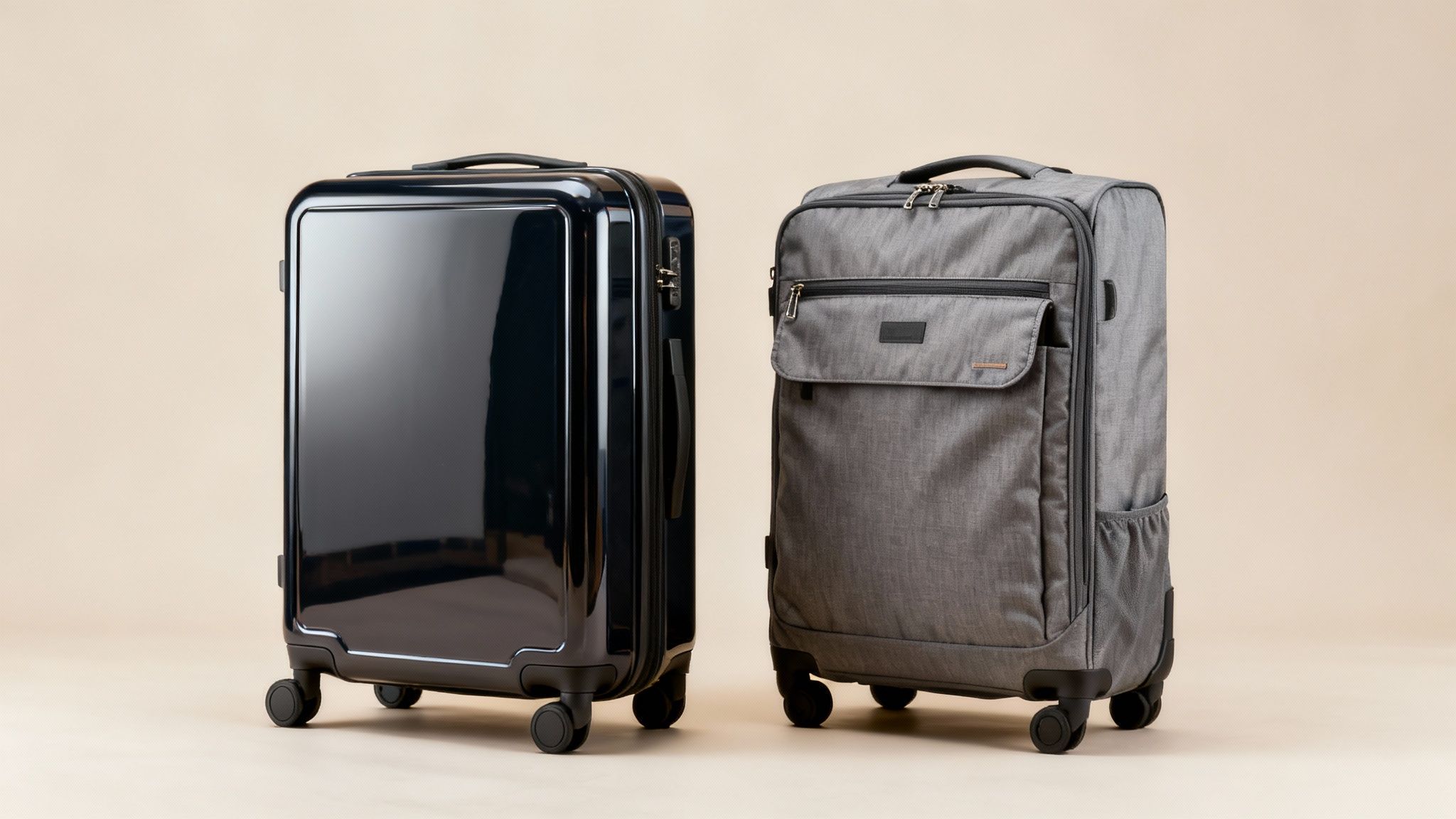
When you're picking out the perfect lightweight luggage for a trip abroad, the first big question you'll face is a classic one: hardside or softside? This isn't just about looks. Your choice here will define how your bag protects your gear, how much it weighs empty, and how well it stands up to the chaos of international travel.
Think of it as choosing between a sleek suit of armor and a tough, flexible backpack. Each has its own strengths, and the right one for you really depends on what you pack and where you're headed. Let's break down the most common materials to help you find your perfect travel partner.
The Case for Hardside Luggage: Protection and Style
If protecting your belongings is your absolute top priority, hardside luggage is hard to beat. Its rigid shell acts like a personal vault, making it the perfect choice for fragile items, expensive electronics, or that delicate souvenir you absolutely have to get home in one piece.
The two most popular materials in this arena are polycarbonate and aluminum.
- Polycarbonate: This is the real workhorse of modern hardside luggage. It’s incredibly durable and built to take a hit. Its secret weapon is the ability to flex under pressure and then pop right back into shape, which means it’s a great lightweight option that resists cracking when being tossed around by baggage handlers.
- Aluminum: For the ultimate in security and a timeless, rugged look, nothing compares to aluminum. It's definitely the heaviest and priciest option, but its frame is nearly indestructible, offering protection that's second to none. It’s a statement piece that screams durability and classic travel style.
Beyond sheer strength, hardside bags offer fantastic water resistance, which is a lifesaver when you're making a mad dash through the rain to catch a taxi. Their clean, minimalist design also has a strong modern appeal. For a deeper dive, our guide on the best luggage sets for international travel explores even more styles.
Key Takeaway: Hardside luggage is your best bet when maximum protection for fragile contents is non-negotiable. Its rigid shell offers excellent security and a sleek, modern appearance.
The Flexibility of Softside Luggage: Lightweight and Convenient
On the other side of the aisle, you have softside luggage, the long-time champion for many frequent flyers. Usually made from tough woven fabrics like ballistic nylon or polyester, these bags bring a whole different set of perks to the table, focusing on flexibility and convenience.
Imagine landing in Tokyo or Paris and realizing your suitcase weighs 12kg before you've even packed anything. That’s a real nightmare for travelers facing strict airline weight limits, like the 7-10kg carry-on rules you'll find on carriers like Ryanair or Emirates. Lightweight softside luggage has become a game-changer here, expected to hold a massive 78.96% market share in 2025 because it's so light and budget-friendly.
The biggest win for softside luggage is its lower starting weight. This frees up more of your precious baggage allowance for the things you actually want to bring with you.
Another feature travelers love is the external pockets. They are incredibly handy for stashing things you need to grab in a hurry—your passport, a book, or a light jacket—without having to unzip your entire life story in the middle of the airport.
Hardside vs. Softside Luggage: A Head-to-Head Comparison
To help you decide, let's put these two contenders side-by-side. Remember, your ideal match comes down to what you value most in a travel companion.
This table breaks down the key differences between hardside and softside luggage to help you make an informed choice based on your travel priorities.
| Feature | Hardside (Polycarbonate/Aluminum) | Softside (Nylon/Polyester) |
|---|---|---|
| Protection | Excellent for fragile items; crush-resistant | Good, but offers less impact protection |
| Weight | Generally heavier, though polycarbonate is light | Typically lighter, maximizing packing allowance |
| Flexibility | Rigid; cannot be overstuffed | Pliable; can often squeeze in extra items |
| Exterior Access | None; must be fully opened | Convenient exterior pockets for quick access |
| Weather Resistance | Highly water-resistant shell | Water-resistant fabric, but zippers can be a weak point |
| Durability | Prone to scratches and scuffs, but resists tears | Resists scuffs but can be vulnerable to rips or tears |
In the end, there isn't one "better" choice—only what's better for you. If you're a careful packer who puts a premium on security, a hardside case is an outstanding pick. But if you value flexibility, quick access to your things, and a lighter bag to start with, a softside model will probably be your best friend on your international adventures.
Key Features That Define Great Luggage
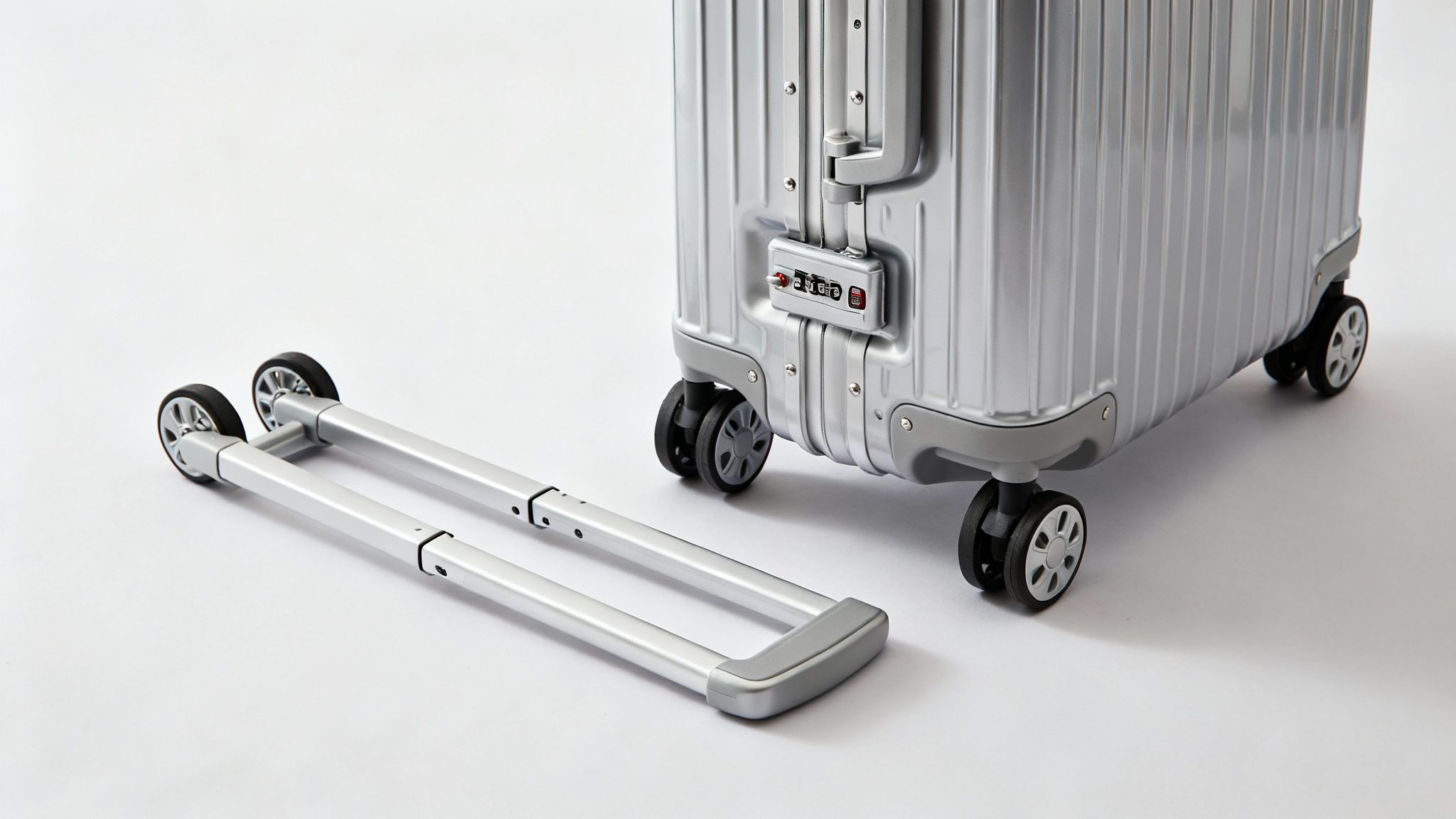
A great suitcase is more than just a box to hold your stuff; it’s a travel partner. After you've settled the hardside versus softside debate, it's time to look at the details that really matter. The wheels, handles, and locks are what separate a frustrating airport slog from a smooth, breezy journey.
The best lightweight luggage for international travel isn't just about the shell—it’s about how effortlessly the whole package works with you. This is where premium brands earn their reputation, by perfecting these critical, and often overlooked, components. Let's break down what really makes a difference.
Wheels: The Foundation of Effortless Mobility
The choice between two-wheel rollers and four-wheel spinners is a big one, but for international travel, there's a clear winner. Two-wheel bags, which you have to drag behind you, can really put a strain on your arm and shoulder, especially after a long day of travel. They're also notorious for tipping over the second you let go.
Four-wheel spinners, on the other hand, give you true 360-degree mobility. Imagine the difference between pushing a rickety old shopping cart and gliding across a smooth floor in an office chair. That’s the feeling you get with a quality spinner.
This agility is a lifesaver in a few common travel situations:
- Crowded airport terminals: You can push the bag right in front of you or glide it alongside, weaving through crowds without tripping anyone.
- Narrow airplane aisles: Spinners can be turned sideways and rolled down the aisle—something that's nearly impossible with a two-wheeler.
- Long security lines: A gentle nudge with your foot is all it takes to move your bag forward, leaving your hands free for your passport and phone.
Bottom line: four-wheel spinners dramatically reduce physical effort and make navigating tight spaces a breeze. For the unpredictable environments of international travel, they are absolutely the way to go.
Handles: The Key to Comfortable Control
Ever grabbed a suitcase handle and felt it wobble and shake? It’s an instant sign of cheap construction. A solid telescoping handle is crucial for comfort and control, especially when you're rushing to make a connection. Look for a handle that clicks securely into multiple height settings so you can adjust it to your own body, not the other way around.
The best handles are built from lightweight but strong materials like aircraft-grade aluminum. They should retract smoothly and have very little wiggle when fully extended. This stability means the suitcase responds instantly to your touch, feeling less like a dead weight you're dragging and more like a natural extension of your arm.
Security: A Non-Negotiable for International Travel
When you’re flying internationally, your checked bag is going to be handled by a lot of people. A TSA-approved lock is an absolute must. These locks have a special master key that allows TSA agents to inspect your bag if needed, all without breaking your lock or damaging the suitcase.
If you use a non-TSA lock and your bag gets flagged for a random search, agents have the authority to simply cut it off. Your bag then travels the rest of the way completely unsecured. A built-in TSA lock provides peace of mind, keeping your belongings safe while still complying with security rules. And while you're securing your bag, don't forget the little things—a set of durable leather luggage tags can make identifying your bag and getting it back if lost a whole lot easier.
We're also seeing some interesting tech being built into luggage. The smart luggage market hit $2.24 billion in 2024 and is expected to grow to $4.14 billion by 2030, thanks to features like GPS tracking and built-in chargers. It’s a trend worth watching. You can see more research on this growing market from Grand View Research.
Mastering the Art of Packing Light for Any Trip
Getting the perfect lightweight suitcase is a great first step, but what you put inside is just as important. Packing smart isn't about leaving things behind; it's about being strategic. You want to use every last inch of space without going over those dreaded airline weight limits.
The real goal here is to pack smarter, not necessarily less. When you focus on versatile, well-organized items, you can build a travel wardrobe that feels huge but still fits neatly into a carry-on. That means less stress and no waiting around at the baggage carousel.
The Power of Packing Cubes
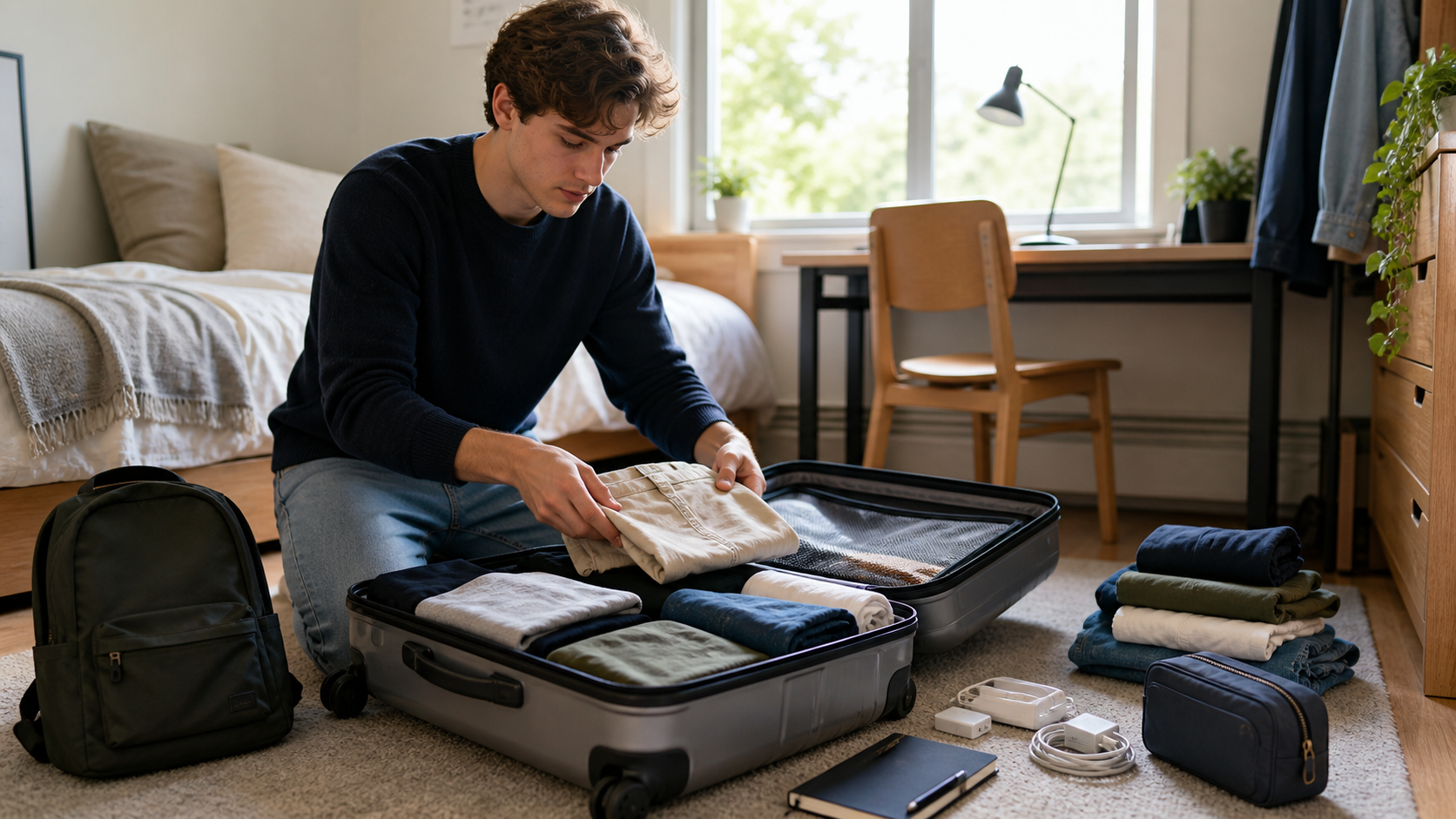
If I could recommend one game-changing tool for travelers, it would be a good set of packing cubes. Seriously. Think of them as dresser drawers for your luggage. They take a potential mess of clothes and turn it into a perfectly organized system.
But their real magic is in compression. When you roll your clothes tightly and tuck them into a cube, you gently squeeze out the air, saving a shocking amount of space. This also helps keep everything wrinkle-free. No more digging through your entire bag for one shirt. If you're ready to see what a difference they can make, our guide to the best packing cubes for travel is a great place to start.
Create a Versatile Capsule Wardrobe
A "capsule wardrobe" is the secret weapon of every seasoned traveler. It's just a small, hand-picked collection of clothes where everything can be mixed and matched to create a ton of different outfits. It’s the key to packing light, especially for longer trips.
The trick is to stick to a coordinated color palette. Start with a foundation of neutral colors—think black, gray, navy, or beige—for your main pieces like pants, jackets, and shoes. Then, toss in a few accent items like a colorful scarf or a patterned shirt to add some personality.
A simple way to start is the "Rule of Three":
- Three tops you can layer or wear on their own.
- Three bottoms, like a pair of jeans, some dressier pants, and a skirt or shorts.
- Three pairs of shoes—I usually go with comfy walking shoes, a nicer pair, and some sandals.
This simple formula gives you plenty of options for a week-long trip without taking up much room at all.
By making sure every piece works with the others, you create an exponential number of outfits. A small set of nine core items can easily create more than a dozen distinct looks, getting you ready for anything from a business meeting to a casual city tour.
Use a Simple Packing Framework
To avoid that last-minute panic where you start throwing "just-in-case" items into your bag, it helps to have a simple plan. The 5-4-3-2-1 rule is a fantastic guide for a week-long trip, and it's a lifesaver if you're trying to travel with only a carry-on.
Here’s how it works:
- 5 sets of socks and underwear.
- 4 tops (T-shirts, blouses, etc.).
- 3 bottoms (pants, shorts, or a skirt).
- 2 pairs of shoes (one for walking, one for evenings).
- 1 of each key accessory, like a hat, jacket, or swimsuit, depending on where you're headed.
This structured method takes the guesswork out of packing. It forces you to be deliberate, ensuring every single item you bring has a purpose. Combine this rule with a capsule wardrobe and some packing cubes, and you’ll be amazed at how much you can fit—and how prepared you'll feel.
Finding Your Perfect Lightweight Travel Companion
Alright, you now have a solid understanding of what separates great lightweight luggage from the rest. The final piece of the puzzle is finding the one that feels like it was made just for you. The perfect suitcase isn’t just a list of features; it’s about how those features match your actual travel style.
Think of it as finding a reliable partner for your journeys. To make it easier, let’s look at a few common traveler types. See which one sounds most like you, and you’ll be able to zero in on a bag that will serve you well for years to come.
The Business Professional
If you’re a road warrior constantly collecting frequent flyer miles, efficiency is the name of the game. Your trips are often quick, jam-packed with meetings, and require you to look sharp the moment you step off the plane. The ideal bag here is a tough but light hardside carry-on that can take a beating.
Here’s what you should be looking for:
- A dedicated tech compartment: For a pro, a padded, easy-to-reach sleeve for a laptop and tablet is a must. It makes breezing through security so much faster.
- 360-degree spinner wheels: You need to glide effortlessly through massive terminals to make those tight connections. No exceptions.
- Wrinkle-reducing features: Look for smart interior dividers and compression systems that keep suits and shirts looking crisp.
A sleek polycarbonate spinner with a built-in TSA lock is the ultimate tool for the modern business traveler. It ensures you arrive organized, prepared, and ready for anything. For a deeper dive, check out our ultimate guide to choosing the perfect carry-on luggage.
The Style-Conscious Globetrotter
For this traveler, the journey is just as much about the aesthetic as the destination. Luggage isn’t merely a box for your stuff—it’s a fashion statement, an extension of your personal style. We’re talking clean lines, premium materials, and a look that turns heads at baggage claim.
Whether it’s a stunning aluminum suitcase or a sophisticated leather-trimmed softside bag, the details are everything. This traveler sees their luggage as part of a complete, stylish look, from their passport holder right down to their suitcase.
For the style-conscious, a suitcase is an investment piece. It’s part of the travel ensemble, blending high-performance engineering with timeless design for a bag that’s as elegant as it is reliable.
The Adventure Seeker
The adventurer needs gear that’s as rugged and flexible as their plans. One day you might be navigating a chaotic city, and the next you're hopping on a train to the mountains. Your luggage has to be tough enough to handle whatever you throw at it.
For this kind of travel, a high-quality softside bag made from ballistic nylon is usually the best bet. Its flexible shell can accommodate oddly shaped gear, and exterior pockets give you quick access to essentials like a rain jacket or water bottle. Another great option is a wheeled duffel, which gives you the pack-it-all-in freedom of a duffel with the convenience of wheels. For more trip-planning inspiration, check out some of the best travel blogs for great tips.
This flowchart gives you a simple decision-making tool for packing light, focusing on organizing, compressing, and creating a system for your gear.
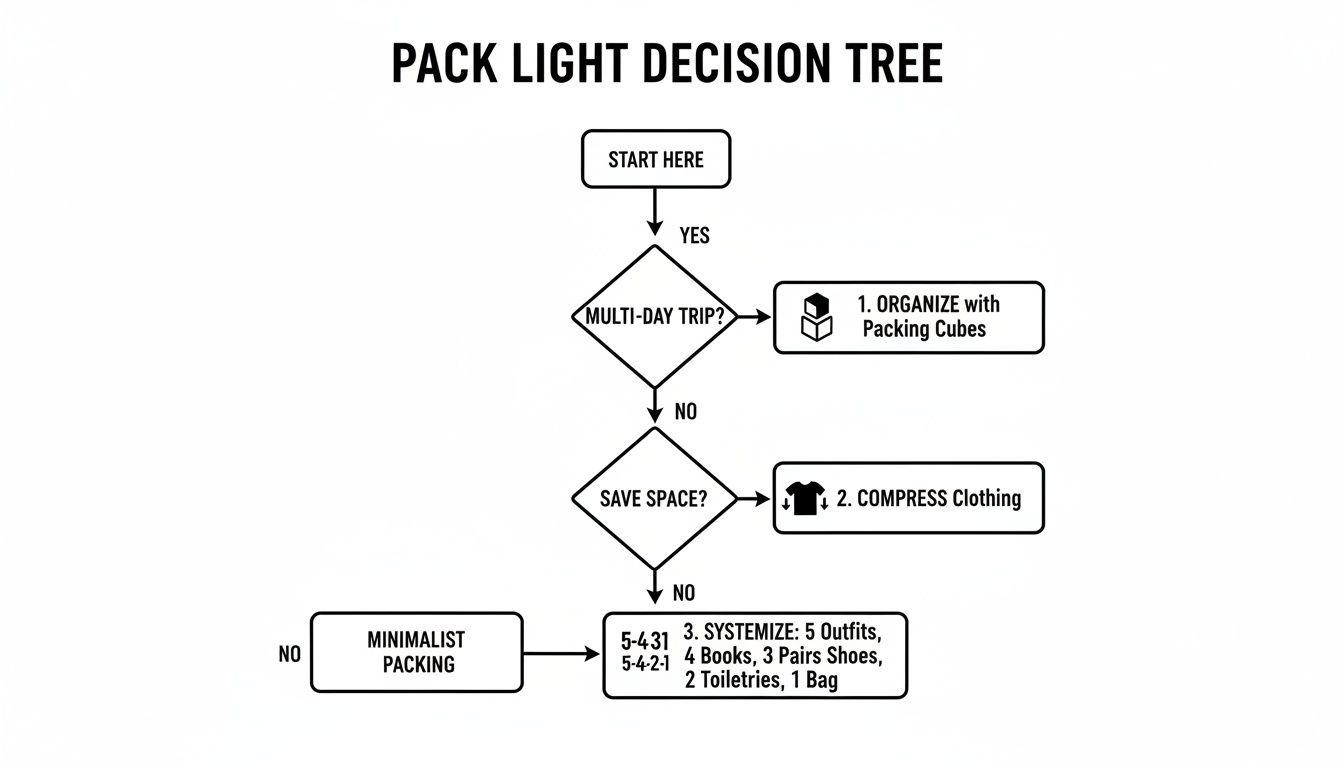
Ultimately, it just goes to show that a smart, methodical approach to packing is just as important as the bag you choose.
Your Top Luggage Questions, Answered
You’ve done the research, but a few questions might still be lingering. It happens to every traveler. Nailing down these last few details is what separates a good luggage choice from a great one, giving you the peace of mind to pack and just go.
We hear these questions all the time. Let’s get you some clear, practical answers from our years of experience.
Is Hardside or Softside Luggage Actually Lighter?
This is a common one. Generally speaking, softside luggage made from materials like nylon or polyester will be lighter off the shelf than a comparable hardside case.
Even with today's incredibly light polycarbonate shells, a similar-sized softside bag often saves you a pound or two. That might not sound like much, but when you're up against a strict airline limit, every ounce counts. That said, the lightest of the light can be found in both camps, so always check the specific weight of the models you're considering.
What Is The Standard Carry-On Size For International Flights?
There's no single, universal standard, which is the frustrating part. However, a safe bet for most major international airlines is 22 x 14 x 9 inches (56 x 36 x 23 cm). A crucial detail: this measurement includes the wheels and handles, which can trip up a lot of people at the gate.
But here’s what’s even more important: international weight limits are often much stricter than what you might be used to domestically. It's common to see limits between 7 to 10 kg (that’s only 15-22 lbs). Rules vary wildly between carriers, so your best move is always to check the specific airline's website before you even start packing.
Pro Tip: Flying a big airline for the long-haul leg? Don't forget to check the rules for any smaller, regional airlines on your itinerary. Their restrictions are often even tighter. Check every single airline you'll be flying with.
Are Four-Wheel Spinners Better Than Two-Wheel Rollers?
For navigating a modern airport, yes, four-wheel spinners are absolutely better. That 360-degree mobility is a lifesaver. You can effortlessly glide the bag right beside you, weaving through crowds and down tight airplane aisles without breaking a sweat. Your arm and shoulder will thank you.
Two-wheelers, which you have to pull behind you, can really wear you out on a long trek across a terminal. While their larger, often recessed wheels can sometimes handle very rough terrain like cobblestones a little better, the pure convenience and agility of a quality spinner make it the clear winner for almost all international travel.
Is Expensive Lightweight Luggage Really Worth It?
If you travel internationally more than once in a blue moon, the answer is a definite yes. Think of it as an investment. That higher price tag isn't just for a fancy logo; it buys you real, tangible benefits.
Here’s what you’re actually paying for:
- Superior Materials: Lighter polycarbonates that flex instead of crack and high-denier ballistic nylons that resist tears and scuffs.
- Reliable Components: Wheels that don't seize up, and handles that don't get wobbly or stuck after a few trips. This stuff matters when you're rushing to a gate.
- Better Warranties: The best brands stand behind their gear. A solid warranty that covers defects can save you from having to buy a whole new bag.
A premium suitcase will not only last you for years, but it will also make every single trip smoother. It saves you from the headache (and cost) of a bag failing you at the worst possible moment.
Ready to find the perfect travel partner for your next adventure? At Voyage Luggage, we've curated a premium selection of the world's best lightweight luggage to take the guesswork out of your decision. Explore our collections and travel smarter. Shop now at voyageluggage.com.


Share:
Durable Luggage for International Travel A Complete Guide
A Smart Traveler's Guide to Lightweight Luggage with Spinner Wheels