

For most of us, the best luggage lock is a durable, TSA-approved combination lock. It strikes the perfect balance between keeping your stuff secure and making your travel life easier. A great example is the Voyage Luggage 3-Dial Sentry Lock, which means no more fumbling for tiny keys while letting security agents do their job without destroying your lock. It's the standard for a reason—it just works.
Your Quick Guide to Finding the Best Lock
Let's be honest, the world of travel security can feel a bit overwhelming. But picking a lock for your suitcase? That should be simple. The main goal of a luggage lock isn’t to turn your bag into Fort Knox. It’s all about preventing zippers from popping open in transit and deterring anyone looking for an easy grab.
Think of it like locking your car door. A determined thief can always break a window, but a locked door stops the casual opportunist in their tracks. A good luggage lock does the exact same thing for your belongings. A simple, visible lock is often all you need to make a potential thief look for an easier target.
Key Concepts to Understand
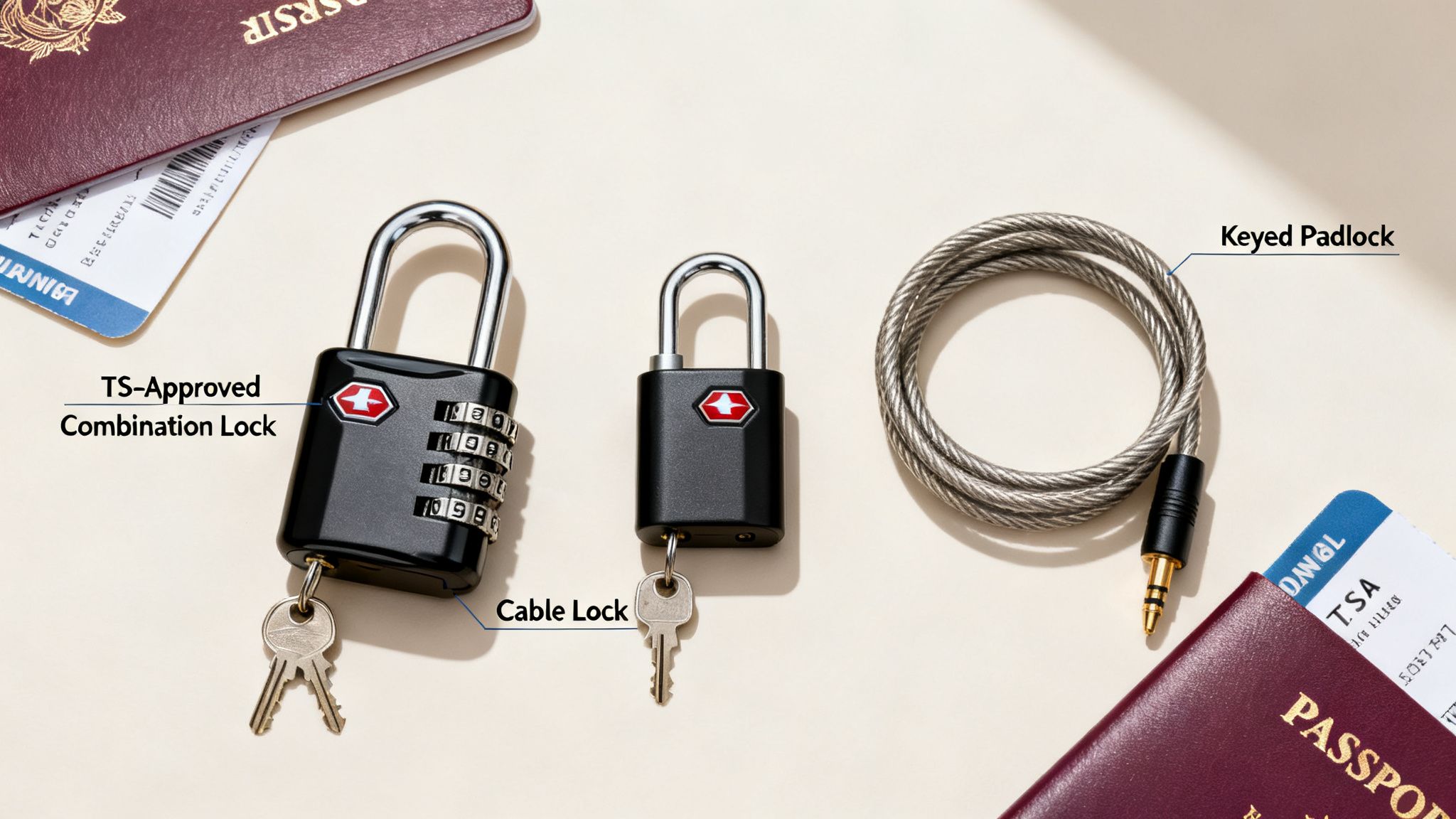
Before you start shopping, it helps to get familiar with the main players in the luggage lock game. Each one has its own strengths, depending on where you're going and what you're packing.
- TSA-Approved vs. Non-TSA: This is the big one. TSA-approved locks have a special keyhole that allows security agents in the US to open them with a master key for inspection. This means they won't have to clip your lock if your bag gets flagged for a random search.
- Combination vs. Key: It's all about personal preference. Combination locks are great because you only need to remember a code. Keyed locks are simple and traditional, but you’ve got to keep that little key safe throughout your trip.
- Integrated vs. External: A lot of new suitcases, particularly hardside ones, have integrated TSA locks built right in. External locks are the separate padlocks or cable locks you can add to pretty much any bag with a zipper.
To help you sort through it all, the table below gives you a quick snapshot of the most common options and what they're good for.
Luggage Lock Types at a Glance
This quick comparison should help you decide which type of luggage lock is the right fit for your travels.
| Lock Type | Best For | Key Feature | Security Level |
|---|---|---|---|
| TSA Combination Lock | Most travelers, especially for flights to/from the USA. | Agents can open it with a master key without damage. | Good |
| Keyed Padlock | Travelers who prefer tangible security over memorizing codes. | Simple, classic locking mechanism. | Good |
| Cable Lock | Securing multiple zippers or oddly shaped bags. | Flexible cable offers versatility. | Moderate |
| Non-TSA Lock | Travel outside the USA where TSA access is not a factor. | Potentially more robust locking mechanisms. | Varies |
Ultimately, the best lock is the one that fits your luggage and gives you peace of mind, so let's dig a little deeper into these options.
Why a TSA-Approved Lock is a Must-Have for Modern Travel
Ever spotted that little red, diamond-shaped logo on a luggage lock? That tiny symbol is your ticket to a smoother, more secure trip, especially if you're flying in or out of the United States. It means the lock is TSA-approved, and honestly, for today's traveler, that's non-negotiable.
Think of it this way: a TSA-approved lock gives your suitcase two ways to open. You have your private key or combination, but Transportation Security Administration (TSA) agents have a special master key. This allows them to open your lock for inspection if your bag gets flagged for a random search, without breaking a thing.
If you don't have one, agents are authorized to cut or break any non-approved lock to get inside. Imagine landing after a long flight only to find your lock destroyed and your suitcase damaged. Worse, your bag is now completely unsecured for the rest of its journey.
How Did This System Come to Be?
This whole system wasn't just invented out of the blue. After the major security changes following 9/11, baggage screening became incredibly strict. In the early days, this meant a lot of travelers were finding their locked bags forced open, leading to a huge spike in damaged luggage complaints.
To fix this, a smart partnership was formed between security agencies and lock companies. They came up with locks that travelers could secure, but that security agents could also open. Today, the TSA officially recognizes two systems: Travel Sentry, with its iconic red diamond logo, and Safe Skies, marked by a red torch logo. Choosing a lock with either symbol means you're getting a product built to work with airport security, not against it.
This collaborative approach has since become the gold standard for travel security worldwide. Using a TSA-approved lock isn't just about preventing theft; it's about protecting your actual luggage from being damaged during necessary security checks.
This innovation totally changed the game for travelers. Now a cornerstone of travel security, the market for TSA-approved luggage locks was valued at around $399 million in 2025 and is still growing. These locks, which became standard practice in 2003, were a direct response to the post-9/11 security era when luggage damage claims jumped by 30%.
It's Just Not Worth the Gamble
Using a non-TSA lock on your checked bags is a risk you simply don't need to take. It might feel like you're adding extra security, but you're actually making your luggage far more vulnerable. Here's exactly what can happen:
- Your Lock Gets Destroyed: If security needs to look inside your bag, they will cut that lock right off. They don't have another way in.
- Your Luggage Gets Damaged: Forcibly removing a tough lock can easily break zipper pulls or even tear the fabric of your suitcase.
- Your Stuff is Left Unsecured: After the lock is gone, your bag continues its journey completely unlocked. This leaves it wide open to theft or just accidentally spilling its contents.
On the other hand, a TSA-approved lock keeps your bag secure even after it's been inspected. An agent will use their master key, check what they need to, and then simply relock your bag before it continues on its way. It’s a simple solution that offers genuine peace of mind. For a deeper dive into our favorites, check out our guide on the best TSA-approved luggage locks. It's a small investment that protects both your belongings and your luggage.
Navigating the Different Types of Luggage Locks
So, what's the best lock for your luggage? That's the million-dollar question, and the answer really comes down to you. Not all locks are created equal, and figuring out the core differences is the first step to finding the perfect security sidekick for your travels.
Think of it like picking a car for a road trip. A sporty convertible is fun, but a rugged SUV might be what you actually need. We can break down the main choices into a few key matchups. First up is the classic debate: convenience versus tradition, or combination versus key. Then, we’ll look at the difference between rigid shackle locks and their more adaptable cable cousins. Finally, we'll cover locks that are built right into your suitcase versus the ones you add on yourself.
Combination Locks Versus Key Locks
This is probably the first decision you'll make, and it’s all about personal preference. There’s no right or wrong answer here, just what works best for your travel style and gives you the most peace of mind.
A combination lock is all about convenience. You don’t have to worry about losing a tiny key in the bottom of your bag or, even worse, leaving it on your kitchen counter. You just set a code you'll remember—maybe an anniversary or a lucky number—and you're set. It's a fantastic option for anyone who likes to travel light and keep things simple.
On the flip side, a classic key lock just feels secure. For some people, the physical act of turning a key is more reassuring than spinning a few dials. The big catch, of course, is what happens if you lose that key. It can turn into a real headache. A common workaround is to stash a spare in your wallet or give one to your travel buddy.
Traveler’s Tip: If you go with a combination lock, pick a code that’s meaningful to you but not obvious to a stranger. Stay away from "1234" or "0000"—those are the first things anyone will try.
Flexible Cable Locks Versus Rigid Shackle Locks
Next, let's talk about the lock's physical shape. Do you need something that can bend and flex, or is a solid, traditional shackle a better fit? Your type of luggage will often make this decision for you.
Cable locks are the gymnasts of the lock world. Their flexible steel cables can easily loop through two zipper pulls at once, tether your bag to a fixture in your hotel room, or secure a backpack with awkwardly placed zippers. This adaptability makes them incredibly versatile for more than just your standard suitcase.
- Best for: Backpacks, duffel bags, or even locking a couple of bags together.
- Key Advantage: Unbeatable flexibility for tricky locking situations.
- Potential Drawback: A thin cable is easier to snip with cutters than a solid steel shackle.
In contrast, rigid shackle locks are your old-school heavyweights. They look like mini padlocks, with a tough, U-shaped bar usually made of hardened steel. Their biggest advantage is their simple, tough-as-nails design, which makes them a real pain for anyone trying to force them open.
- Best for: Hardside suitcases with dedicated lock loops or even things like firearm cases.
- Key Advantage: Excellent resistance to being cut or pried open.
- Potential Drawback: The rigid bar might not fit through smaller or oddly shaped zipper pulls.
This image shows exactly how a TSA agent can use a master key to open your bag for inspection without breaking your lock.
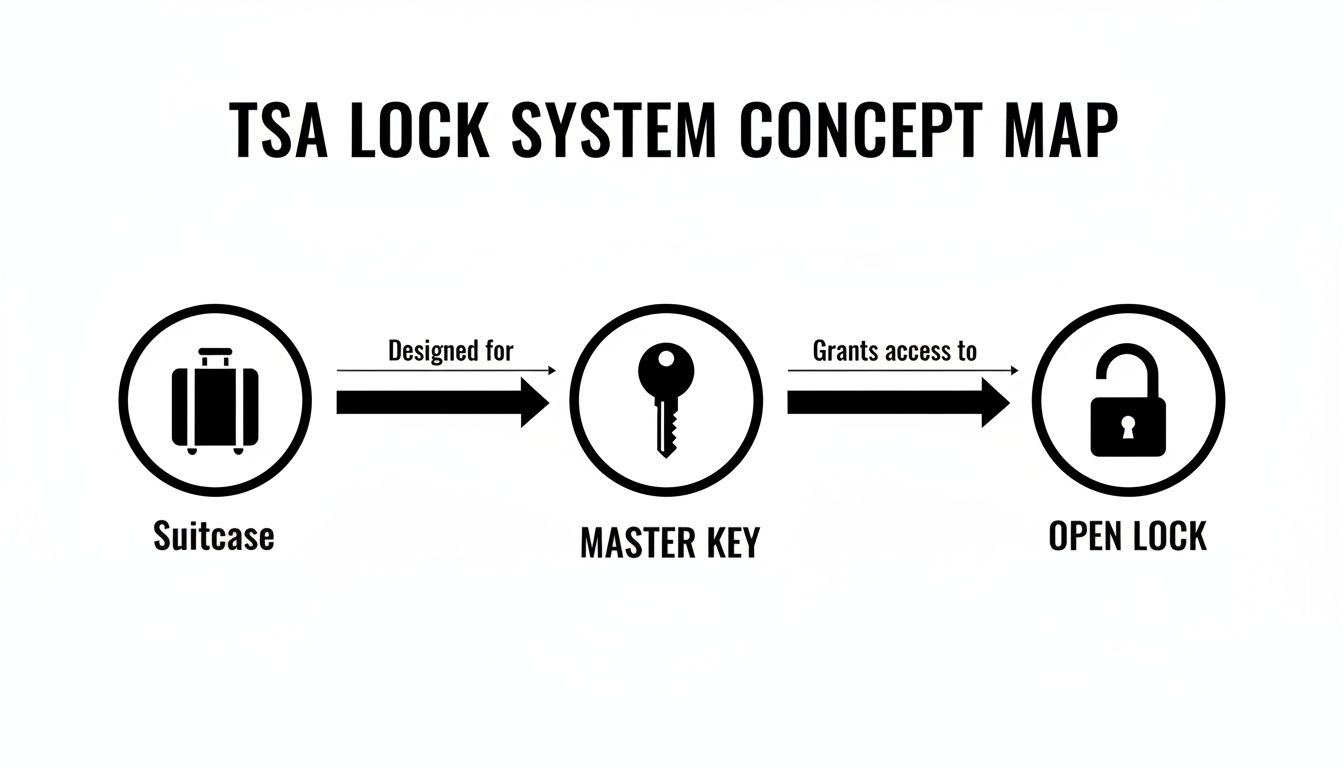
It's a smart system that keeps your stuff secure from everyone but the authorized screeners.
Integrated Locks Versus External Locks
Last but not least, do you want a lock that's a part of your suitcase or a separate accessory you can take on and off? Lots of modern luggage, especially hardshell bags, now come with integrated locks built right in.
These built-in locks are slick. You can't forget them because they're permanently attached. The zipper pulls just click right into the lock mechanism, giving the bag a very clean, streamlined look. The only real downside is that if the lock breaks, getting it fixed is a lot more complicated than just buying a new padlock.
External locks, like the classic padlocks and cable locks, give you complete freedom. You can move one from your checked bag to your carry-on to your gym locker. For travelers who use different bags for different trips, this flexibility is a huge win. And if one ever fails, you just toss it and grab a new one. Easy.
At the end of the day, the right lock is the one that ticks all your boxes. Whether that’s a flexible TSA combination cable lock for a backpacking adventure or a beefy integrated lock on your premium Voyage Luggage hardshell, understanding these options helps you choose the security that lets you travel with confidence.
How to Choose the Right Luggage Lock for Your Trip
Picking the right luggage lock isn't as simple as grabbing the first one you see. The best lock for you really depends on who you are as a traveler—where you're going, what you're carrying, and what your priorities are. A lock that's perfect for a quick business trip just won't cut it for a month-long backpacking adventure across Europe.
Think of it like picking out shoes. You wouldn't wear stilettos on a hiking trail or clunky boots to a wedding. It's the same idea here. Matching your lock to your travel style ensures you get the right mix of security, convenience, and durability for every single trip.
H3: The Business Traveler
If you're constantly on the road for work, you know that every second counts. You're zipping through airports, living out of a carry-on, and you need your gear to just work. For you, speed and reliability aren't just nice-to-haves; they're essential.
This is where a solid, TSA-approved combination lock is your best friend. There are no tiny keys to lose during a stressful layover, and a quick flick of the dials gets you into your bag in an instant. Look for one made from a tough material like zinc alloy that can handle the bumps and scrapes of frequent travel without giving up on you.
A lock with smooth, easy-to-read dials can make a surprising difference when you’re trying to quickly grab a document or blazer from your bag between meetings. For you, the best luggage lock is a tool of efficiency.
H3: The Style-Conscious Globetrotter
Let's be honest, if you've invested in a beautiful luggage set from a brand like TUMI or Porsche Design, the last thing you want is a clunky, cheap-looking padlock messing up the whole vibe. For the traveler who appreciates good design, a lock is more than just a security device—it's an accessory that completes the look.
Many high-end suitcases come with sleek, integrated TSA locks that blend right into the design. If yours doesn't, look for an external lock with a clean, minimalist profile and a matte or metallic finish. A well-designed lock adds that final touch of class while keeping your belongings safe.
And that peace of mind is more important than ever. The luggage lock market is expected to grow by a massive USD 1.23 billion between 2023 and 2028 as more people start traveling again. With over 25 million bags reported lost or damaged each year, it's easy to see why 42% of travelers in 2023 said a good lock was a top priority—a big jump from just 30% in 2019. If you want to dive deeper, you can read the full research about these market trends and find out what's driving demand.
H3: The Family Vacation Planner
Traveling with the whole family brings its own unique brand of chaos. When you're juggling kids, strollers, and what feels like a mountain of suitcases, the last thing you need is a complicated security system. Simplicity is your best friend.
This is the perfect situation for a set of keyed-alike locks. You get a single key that opens every lock in the set. No more fumbling around trying to remember which key or combination goes to which bag. Just put one person in charge of the "master key," and you're good to go. It’s a simple trick that can save you a ton of time and stress at the airport or your hotel.
Now that we've covered the different traveler types, let's break down which lock might be the perfect fit for you.
Matching the Lock to Your Travel Style
Find the perfect lock based on your traveler profile and typical luggage.
| Traveler Profile | Recommended Lock Type | Key Consideration | Example Voyage Luggage Pairing |
|---|---|---|---|
| The Frequent Flyer | Integrated TSA Combination Lock | Speed and built-in convenience are paramount. | A hard-shell carry-on with a built-in lock. |
| The Backpacker | TSA Cable Lock | Flexibility to secure bags to fixed objects. | A large travel backpack with multiple zippers. |
| The Family Adventurer | Keyed-Alike TSA Padlocks | Simplicity of using one key for all bags. | A matching set of soft-side checked suitcases. |
| The Style Setter | Designer External TSA Lock | Aesthetics that complement high-end luggage. | A luxury leather or aluminum suitcase. |
| The Security-Minded | Hardened Steel TSA Padlock | Maximum protection against brute-force attacks. | A Pelican case or other high-security container. |
This table should give you a great starting point for finding a lock that not only secures your belongings but also fits seamlessly into your travel routine.
H3: Matching Your Lock to Your Luggage Material
Finally, don't forget to look at what the lock itself is made of. The best luggage lock isn't just about the mechanism inside; it's about how well it can stand up to being thrown around.
- Zinc Alloy: This is a fantastic all-rounder for the lock's body. It's tough but lightweight, doesn't rust, and can be molded into sleek, modern designs. It strikes a great balance between durability and style.
- Hardened Steel: When it comes to the shackle—that's the U-shaped bar or flexible cable—hardened steel is king. It's incredibly tough to cut with bolt cutters, giving you a serious leg up against any would-be thieves.
For a reliable and easy-to-use option that suits most travelers, consider the Voyage Luggage 3-Dial Travel Sentry Combination Lock. It balances strong construction with TSA-approved convenience. By thinking about your travel style and your gear, you can pick a lock that gives you true peace of mind on the road.
Getting the Most from Your Luggage Lock
Think of your luggage lock as an investment in your peace of mind. But like any good tool, it only works if you know how to use it properly. Taking a few moments to understand how to set, troubleshoot, and care for your lock is the key to making it a reliable travel partner for years to come.
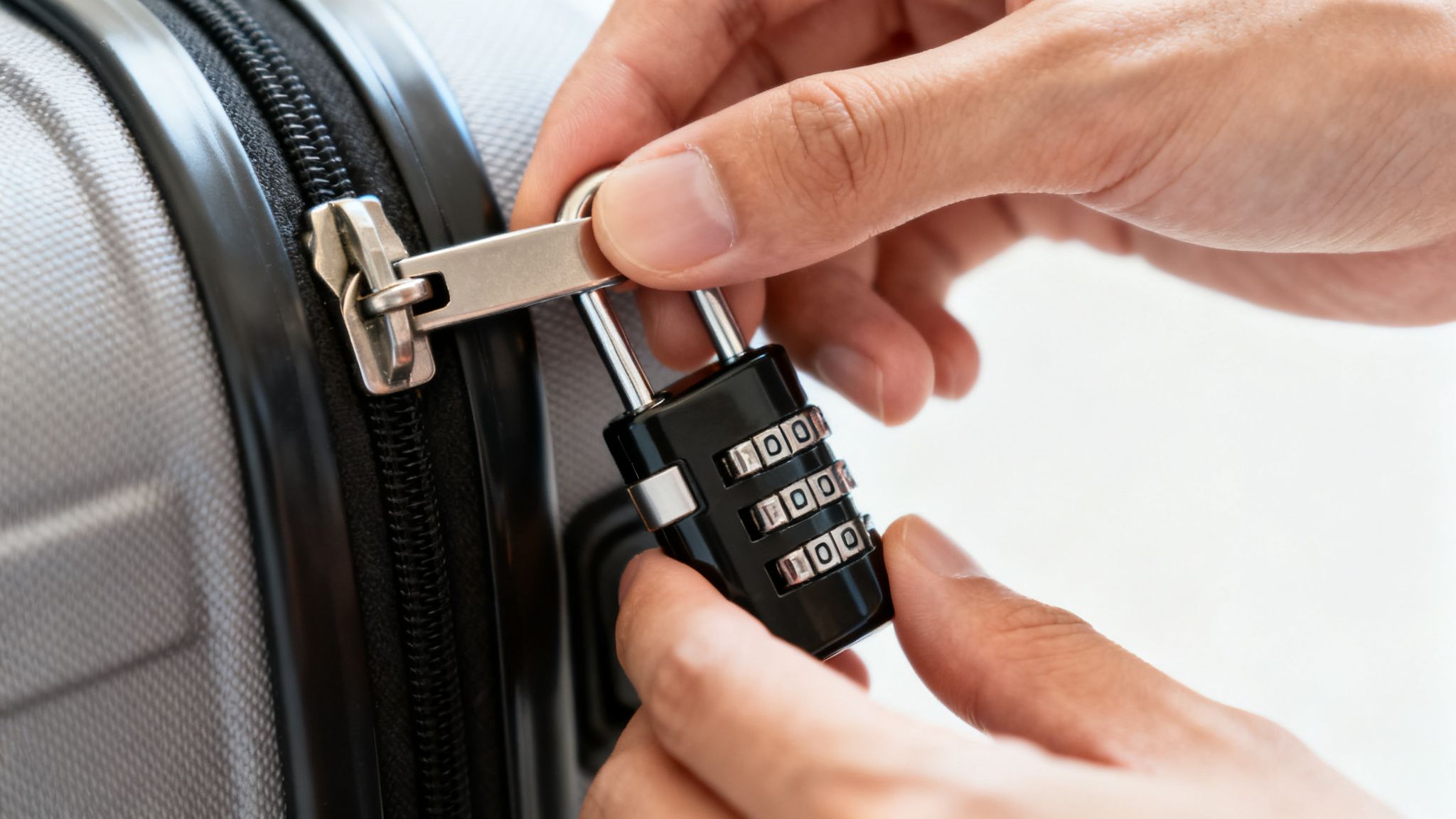
Let's walk through everything you need to know. We’ll cover setting your personal code for the first time, what to do when things go wrong, and some simple tips to keep your lock working smoothly.
Setting Your Combination the Right Way
Straight out of the package, nearly every combination lock is set to a factory default, usually 0-0-0 or 0-0-0-0. Your very first job is to change that. The exact steps can differ a little between models, but the basic idea is always the same.
- Open the Lock: Start by dialing in the default code (like 0-0-0) to open the shackle.
- Find the Reset Button: Look for a tiny button, often tucked away on the side or bottom. You'll likely need a paperclip or the tip of a pen to press it in until you hear or feel a click. On other locks, you might need to twist the shackle 90 or 180 degrees and push it down.
- Dial in Your New Code: With the reset function active, carefully turn the dials to your new secret combination. Pick something you'll remember, but that a stranger couldn't guess easily.
- Lock It In: Now, release the reset mechanism. This might mean popping the button back out or returning the shackle to its normal position. Your new code is now active.
Crucial Tip: Before you scramble the numbers and snap it on your bag, test your new code a couple of times. Make sure it opens and closes correctly. This simple check can save you from a massive headache at the airport.
Troubleshooting Common Lock Problems
Even the most dependable locks can have an off day. Whether you've blanked on the code or the mechanism just feels sticky, don't reach for the bolt cutters just yet. A few simple tricks can usually get you sorted.
- Forgotten Combination: It happens to the best of us. Before you panic, take a deep breath and try a few combinations that are meaningful to you—birthdays, old addresses, anniversaries. If you draw a blank, the only other option is to patiently try every combination, starting from 0-0-0. It takes time, but it works.
- Stuck Mechanism: If your lock has been through dusty or humid climates, the internal parts can get a bit sticky. A quick spray of a lubricant like WD-40 into the shackle opening can work wonders. Jiggle the shackle a bit to help it spread around.
- Misaligned Dials: Sometimes the issue is just that the numbers aren't lined up perfectly. Make sure each digit is centered on the indicator line before you try to open it. A slight misalignment is enough to keep it from popping open.
If you're using one of our locks, we have a detailed walkthrough just for you. You can learn how to secure your luggage with the 3-dial Travel Sentry combination lock in our dedicated guide.
Simple Maintenance for Long-Lasting Security
A little bit of care goes a long way in extending the life of your lock. After a trip, especially if you've been somewhere sandy or humid, just give it a quick wipe-down with a dry cloth.
Between adventures, store your lock in a dry spot, like a drawer or travel pouch. This prevents rust and keeps the inner workings from seizing up. A well-maintained lock is one you can count on, trip after trip.
The Future of Luggage Security and Smart Locks
The humble luggage lock is getting a serious tech upgrade. For years, we've relied on simple keys and combinations, but the next generation of luggage security is borrowing some impressive tricks from the world of smart home security. These aren't just locks anymore; they're becoming connected guardians for your gear.
Imagine your lock acting like a digital leash for your suitcase. New smart locks can connect to your phone via Bluetooth, and if you accidentally wander away from your bag at a crowded airport gate, you'll get an alert. That one feature could be the difference between a smooth trip and a travel nightmare.
App-Controlled and Biometric Locks are Here
The biggest change is how we'll open our bags. Forget about fumbling for tiny keys or struggling to remember a combination under pressure. Smart locks put total control right on your phone.
- App-Based Unlocking: With just a tap on your smartphone screen, you can unlock your suitcase. This is incredibly handy if, say, you need a family member to grab something from your checked bag after you've already gone through security.
- Biometric Access: This is as personal as security gets. These locks use your unique fingerprint to open, which means there are no codes to forget and no keys to lose. It's just a simple, secure touch.
This move toward smarter security isn't just a niche trend. The global market for luggage locks was valued at USD 1.2 billion in 2023 and is expected to climb to USD 2.0 billion by 2032. This surge is fueled by a massive post-pandemic travel boom, with online sales of travel accessories jumping by 25%.
Is a Smart Lock the Right Choice for You?
While the technology is undeniably cool, it’s important to think about the practical side of things. Smart locks run on batteries, so you’ll have another device to keep charged. They also tend to be a bigger investment than a standard combination or key lock.
A smart lock gives you amazing convenience and tracking features you just can't get with a traditional lock. But it also means managing batteries and a higher upfront cost. The right choice really comes down to whether those high-tech perks are worth the trade-offs for your travel style.
If you're curious about where this is all heading, checking out the best smart locks for home security can give you a sneak peek. As this technology gets more common and affordable, it’s going to completely change our expectations for travel security, blending classic protection with the ease of digital tech.
Got Questions About Luggage Locks? We've Got Answers.
Let's clear up some of the most common questions travelers ask. These quick, straightforward answers should help you lock in your final decision and travel with total confidence.
Can TSA Open My Lock Without My Key?
Yes, they absolutely can, and that's the whole point of a TSA-approved lock.
Transportation Security Administration (TSA) agents have a special master key that opens any lock with the official 'Travel Sentry' or 'Safe Skies' logo. This lets them inspect your bag if needed without having to break your lock. Once they're done, they simply lock it back up, keeping your stuff secure for the rest of its journey.
Are Combination Locks More Secure?
Honestly, it's less about the type of lock and more about how well it's made. A tough, well-built combination lock is just as secure as its keyed counterpart. The real difference is what you find more convenient.
With a combination lock, you never have to panic about losing a tiny key. On the other hand, some people just feel more secure with a physical key in their pocket. It really boils down to your personal travel style.
Traveler’s Insight: The biggest security boost comes from a well-constructed lock, not whether it uses a key or a combination. Focus on durability and strong materials—that's what truly keeps your bag safe.
What Should I Do if I Forget My Combination?
That sinking feeling of a forgotten code is the worst. Before you panic, try the factory default (usually 0-0-0) or any numbers that are special to you, like a birthday or anniversary. You can also check the manufacturer’s website, but be warned: most high-security locks don't have an easy backdoor reset.
If you’re completely stuck, you might have to get the lock professionally cut off. For more general insights into how different locks work, a locksmith's list of general lock FAQs can be a surprisingly helpful resource. This is exactly why it's a great idea to jot down your combination and keep it somewhere safe, like in your wallet or a notes app on your phone.
Ready to travel with complete peace of mind? Explore the premium selection of durable and TSA-approved luggage locks at Voyage Luggage. Find the perfect lock for your next journey today!

Share:
A DIY Guide on How to Repair Luggage Wheels
Your Ultimate Checklist of Travel Essentials for Long Flights