

When you're trying to figure out what to look for in luggage, it really boils down to four main things: getting the right size to avoid airline fees, picking the best material for your needs (protection or flexibility), making sure it's durable enough to survive baggage handlers, and checking for must-have features like good wheels and a sturdy handle.
Nail these four, and you’ll end up with a travel companion that makes your trips smoother, not a piece of luggage that adds to the stress.
Your Essential Luggage Buying Checklist
Shopping for a new suitcase can feel a bit much with all the options out there, but it doesn't have to be. It's really just a handful of key decisions that depend entirely on how you travel. Think of this as your pre-flight checklist before you even start looking at bags.
We'll walk through the main trade-offs you'll need to consider, giving you a solid foundation before we dive into the nitty-gritty details of each feature later on.
Our goal is simple: to help you feel confident enough to shop online or walk into a store knowing exactly what you need in a new suitcase.
This flowchart gives you a great visual of the decisions ahead—from picking a size and material to zeroing in on the features that matter most to you.

As you can see, your travel style is what drives every choice. It dictates whether you need a carry-on that fits strict airline dimensions or a hardshell case built for adventure. Each path leads to a different kind of bag, which just goes to show there’s no single "best" suitcase—only the one that’s best for you.
This guide is here to help you navigate those choices with confidence.
Key Luggage Features at a Glance
To make things even easier, here's a quick summary table. Use it to get a high-level view of the most important features and what to keep in mind as you start your search.
| Feature | What to Consider | Best For |
|---|---|---|
| Size | Airline carry-on vs. checked baggage rules, trip length. | Short trips (carry-on), long trips (checked), over-packers (larger sizes). |
| Material | Hardside (protection) vs. Softside (flexibility). | Fragile items (hardside), squeezing into tight spaces (softside). |
| Wheels | Two-wheel (rollers) vs. four-wheel (spinners). | Navigating rough terrain (two-wheel), gliding through airports (four-wheel). |
| Handles | Telescoping handle length, sturdiness, and grip comfort. | Taller travelers (longer handles), frequent flyers (durable mechanisms). |
| Weight | The empty weight of the suitcase, to avoid excess baggage fees. | Anyone trying to maximize packing weight without going over airline limits. |
| Organization | Internal pockets, dividers, and compression systems. | Business travelers, organized packers, and those sharing a suitcase. |
| Durability & Warranty | Material quality, corner guards, zipper strength, and warranty terms. | Frequent travelers, adventurers, and anyone looking for a long-term investment. |
This table is just a starting point. In the next sections, we'll break down each of these features in detail, giving you all the information you need to make the perfect choice.
Choosing the Right Luggage Size for Your Trip
We’ve all seen it: the traveler at the boarding gate frantically trying to squish their overstuffed carry-on into that unforgiving metal sizer. An inch or two over the limit can mean last-minute gate-check fees and a stressful start to your trip. Getting the size right isn’t just about what you can pack; it’s about gliding through the airport without a hitch.
The first thing to get straight is the difference between carry-on and checked luggage rules. While they can differ slightly from one airline to another, there are some pretty reliable standards to go by.
Decoding Carry-On and Checked Luggage Dimensions
For most major U.S. airlines like Delta and United, the magic number for carry-on bags is 22 x 14 x 9 inches. This includes every part of the bag—the wheels, the handles, everything. It’s designed to be the perfect fit for the overhead bin. For bags you plan to check, the standard limit is a total of 62 linear inches (that’s length + width + height all added together).
Before you even think about packing, measure your bag yourself. Lay it flat and run a tape measure from the very bottom of the wheels to the top of the handle when it’s pushed all the way down. Don’t just go by the size on the tag; those external bits and pieces count.
Pro Tip: Toss a small, flexible tape measure in your travel pouch. A quick check before you leave for the airport can save you a world of hurt and some serious cash in unexpected fees.
And don't forget about weight! Those overweight baggage fees are a killer. Most airlines will hit you with extra charges for any checked bag that tips the scales over 50 pounds (23 kg). A lighter suitcase to begin with gives you more packing wiggle room, which can make all the difference.
Finding the Sweet Spot Between Size and Compliance
Choosing the right luggage is a classic balancing act. You need enough room for your stuff, but you have to stay within the airline’s strict limits. It’s no surprise that the luggage market, which is expected to hit USD 40.21 billion by 2035, is booming with smarter, rule-friendly designs. In fact, industry reports show that a staggering 15-20% of non-compliant bags get turned away at the gate every year. That's an expensive lesson to learn.
If you’re trying to master the art of traveling light, you’ll want to check out these expert tips for how to pack carry-on only.
To get you started, here’s a simple guide to match your trip length with the right bag:
- Weekend Trips (1-3 Days): Your standard carry-on (up to 22 inches) or even a roomy backpack is all you need.
- Short Trips (4-7 Days): A larger carry-on or a medium checked bag (around 23-26 inches) should do the trick.
- Long Trips (1-2 Weeks): This is where a large checked bag (27-30 inches) becomes your best friend.
- Extended Travel (2+ Weeks): Think about an extra-large suitcase or pairing a large checked bag with a carry-on.
At the end of the day, the perfect luggage size really comes down to your personal travel habits and the airlines you fly most frequently. Always do a quick check of their specific rules online before you head out—it’s the best final step you can take.
Hardside vs. Softside: Which One Is Right For You?

The classic luggage debate: hardside or softside? This is one of the biggest forks in the road when you’re hunting for a new suitcase. It’s more than just a style preference; it changes how you pack and what your bag can handle on the road.
Think of it like choosing armor for your belongings. One is a rigid shield that deflects major impacts, while the other is more like flexible chainmail, adapting to whatever you throw at it (or in it).
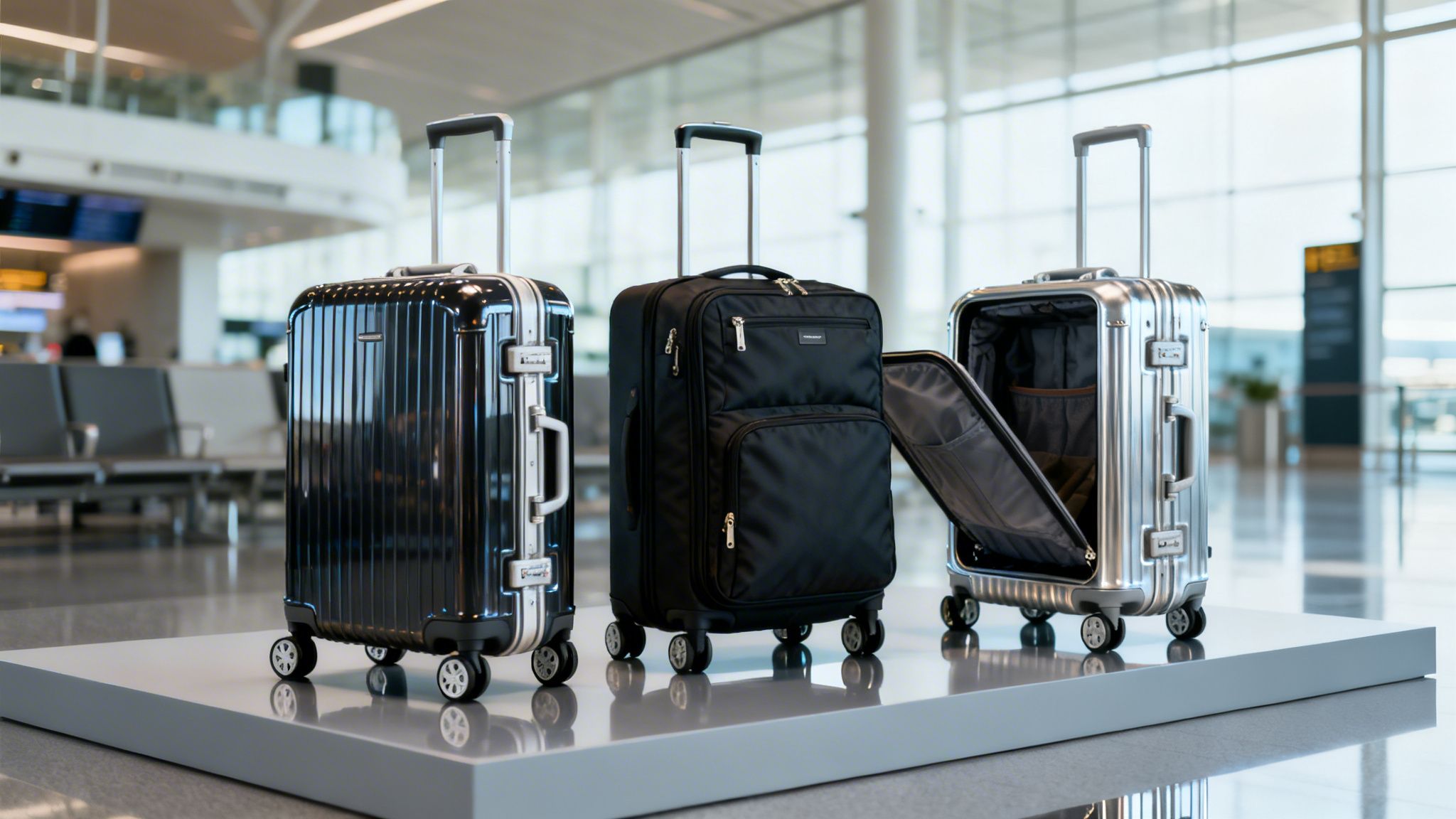
Hardside luggage is that modern suit of armor. Usually crafted from materials like polycarbonate, ABS, or aluminum, its main job is to protect what’s inside. If you’re traveling with fragile souvenirs, a bottle of wine, or camera gear, that rigid shell is your best defense against the inevitable bumps and tumbles of travel.
Softside luggage, on the other hand, is built for flexibility. Made from tough fabrics like ballistic nylon or polyester, these bags are champions of adaptability. They can often be squeezed into a tight overhead bin or an overstuffed car trunk, a huge plus for travelers who need to be ready for anything.
Protection and Durability
The biggest draw of a hardside case is its unapologetic protection. Today’s best polycarbonate shells are engineered to flex under pressure and pop right back into shape, which helps them resist major dents and cracks. They also provide fantastic water resistance, keeping your clothes dry if you get caught in a downpour running from the taxi to the terminal.
But softside bags are tough in their own way. High-end fabrics like ballistic nylon are incredibly resistant to the scuffs, scrapes, and tears that come with frequent travel. While they won't absorb a direct blow quite like a hardside case, they do a much better job of hiding the minor scratches that can make a hardside bag look beat up after just one trip.
The Trade-Off: Hardside offers superior impact protection for fragile items. Softside is better at hiding the everyday wear and tear of travel, like scuffs and scratches.
Packing and Accessibility
This is where your personal travel style really comes into play. Softside luggage almost always comes with those handy exterior pockets. They are a lifesaver for stashing last-minute items you need to grab quickly, like a jacket, a book, your passport, or charging cables.
Hardside cases typically feature a "clamshell" design, opening like a book into two equal compartments. This is amazing for organization—you can easily separate shoes from clothes or clean from dirty. The downside? You need a good amount of floor space to open it up completely, which can be tricky in a tiny European hotel room.
To lay it all out, let's look at a direct comparison.
Hardside vs Softside Luggage Comparison
Choosing between hardside and softside luggage often comes down to personal packing habits and travel priorities. This table breaks down the key differences to help you decide which style best fits your needs.
| Feature | Hardside Luggage | Softside Luggage |
|---|---|---|
| Protection | Excellent for fragile items; water-resistant shell. | Good; materials resist tears and abrasions. |
| Flexibility | Rigid; cannot be overstuffed or squeezed into tight spaces. | High; can often be expanded and compressed. |
| Accessibility | Requires opening the entire bag to access contents. | External pockets offer quick access to essentials. |
| Maintenance | Shows scratches more easily but is simple to wipe clean. | Hides scuffs well but can absorb stains and moisture. |
| Weight | Often slightly heavier, though modern materials are closing the gap. | Generally lighter than their hardside counterparts. |
So, what's the final verdict? If you prioritize maximum protection for your belongings and love a sleek, modern look, a hardside suitcase is probably your best bet. But if you value quick-access pockets and the flexibility to stuff in one last souvenir, softside is the clear winner.
What’s It Made Of? A Guide to Luggage Materials and Construction
A great suitcase is more than just a box for your stuff; it’s an investment in smoother, less stressful travel. Its ability to last trip after trip comes down to one thing: what it's made of. The materials and construction are the true heart and soul of your luggage, dictating how well it protects your belongings and survives the brutal reality of baggage handling.
Think of your suitcase as a portable vault for everything you need on the road. You wouldn't trust a flimsy vault, right? The same logic applies here. The material is the foundation for everything from weight and flexibility to how it handles a nasty drop.

It’s no surprise that the global luggage market is expected to hit $36.16 billion by 2032. Travelers are tired of flimsy bags and are demanding stronger, more reliable options. The proof is in the numbers: studies show that traditional luggage fails 25-30% more often than premium hardside models under rough handling. Investing in quality materials from the start really does pay off.
Hardside Materials: The Big Three
When you're browsing hardside luggage, you'll almost always run into three core materials. Each one brings something different to the table.
- Polycarbonate: This is pretty much the gold standard for hardside bags. It's incredibly strong, surprisingly lightweight, and has a unique flex to it. When it gets hit, it bends to absorb the impact and then pops right back into shape, which is fantastic for preventing cracks. If you want to get into the details, check out our guide on the best polycarbonate luggage.
- Aluminum: If you need maximum protection, this is your answer. Aerospace-grade aluminum is the toughest material around, making it perfect for photographers or anyone traveling with expensive gear. The trade-offs? It’s heavier, and it dents. But for many seasoned travelers, those dings are just badges of honor marking a journey well-traveled.
- ABS (Acrylonitrile Butadiene Styrene): You'll often see ABS in more budget-friendly luggage. It’s a rigid plastic that’s very lightweight, but it doesn't have the flexibility of polycarbonate. That means it’s more likely to crack if it takes a really hard knock.
Softside Fabrics: A Closer Look
Softside luggage is all about tough, woven fabrics that can handle being stretched, stuffed, and scraped.
- Ballistic Nylon: This stuff is the real deal. Originally created for military flak jackets, ballistic nylon is a thick, rugged fabric that’s the top choice for softside durability. It has incredible resistance to tears, punctures, and scuffs, making it a workhorse for frequent flyers.
- Polyester: A very common and affordable choice, polyester's strength is measured in denier (D)—a unit for thread thickness. Look for higher numbers like 600D to 900D, as this indicates a stronger, more durable fabric that will stand up better to wear and tear.
Key Takeaway: For the best hardside durability, choose 100% polycarbonate. For a softside bag that will last for years, you can't go wrong with ballistic nylon. These materials deliver the best performance and long-term value.
Quality Is in the Details
Beyond the main material, it's the little things that separate a good bag from a great one. These are the components that usually fail first, so they deserve a close look.
Check for reinforced corners—these are the high-impact zones that take the most abuse during transit. Next, inspect the zippers. High-quality YKK zippers are the industry benchmark for a reason; they’re known for their reliability and are far less likely to snag or break when you’re in a hurry.
Finally, give the handle a test. A sturdy, multi-stage telescoping handle that extends and retracts smoothly without wobbling is a non-negotiable feature for a dependable travel partner.
7. Wheels, Handles, and Locks: The Details That Define Your Trip
You can have the toughest suitcase shell in the world, but it’s the smaller, moving parts that will make or break your travel day. Think about it—the wheels, handles, and locks are the things you’ll touch and use constantly. Their quality is what separates a smooth, effortless airport run from a frustrating struggle.
A great suitcase becomes an extension of you. One with a wobbly handle or a stubborn wheel? That’s just a heavy box you have to fight with from the curb to the gate. Let’s get into the details that really matter.
H3: Spinner Wheels vs. Two-Wheelers: What's the Right Call?
The great wheel debate is one of the most important decisions you'll make. How you move through an airport or down a city street comes down to this choice.
-
Four-Wheel Spinners (360-Degree Wheels): These are the king of the smooth, polished floors of an airport terminal. With spinner wheels, you can glide your bag right beside you, pushing it with just your fingertips. It’s a lifesaver for your arm and shoulder, especially when you're weaving through crowds.
-
Two-Wheel Rollers (Inline Wheels): These are the workhorses. The wheels are often recessed into the suitcase body, which protects them from the brutal reality of baggage handling. If your travels involve rolling over cobblestones, cracked pavement, or hopping curbs, two-wheelers are your best friend. Pulling the weight behind you gives you much more stability on rough ground.
The Expert Takeaway: Spinners are for effortless airport mobility. Two-wheelers are for rugged durability on unpredictable surfaces. Choose based on where you travel most.
The Handle: Your Connection to the Bag
A flimsy, wiggling handle is an absolute deal-breaker. It’s the first sign of a poorly made suitcase. When you’re in the store, extend the handle all the way and give it a shake. It should feel solid, locking into place with minimal give or flex.
Look for a handle that locks at multiple heights. This isn't just a fancy feature; it’s essential for finding a comfortable pulling angle, whether you're tall, short, or somewhere in between. A little ergonomic padding on the grip also goes a long way when you’re trekking through a mega-terminal.
Security: Locks, Tech, and Smarter Packing
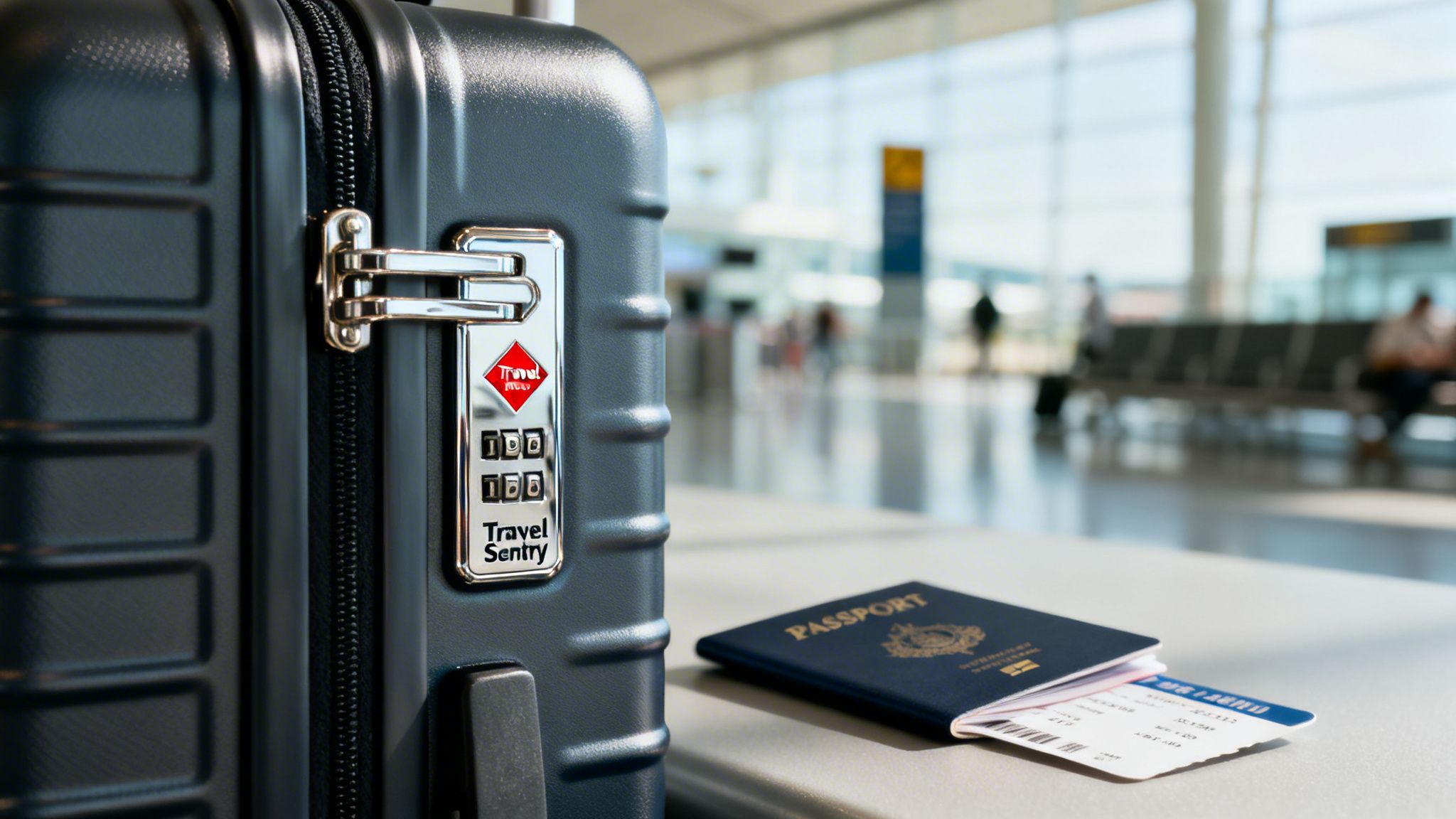
A good lock is non-negotiable. Thankfully, most quality modern suitcases come with built-in TSA-approved locks. These have a special keyhole that TSA agents can use with a master key if they need to inspect your bag. That way, they don't have to break your lock to get inside. If you're considering buying a lock separately, check out our guide on the best TSA-approved luggage locks.
This is also where luggage is getting smarter. The "smart luggage" category, which includes features like GPS tracking and built-in USB chargers, is on track to become a USD 4.14 billion market by 2030. For frequent flyers, especially business travelers, clever features are a huge draw—in fact, 40% of professionals say that wrinkle-prevention systems are a key feature they look for.
Speaking of packing, what's inside matters just as much. Look for features like:
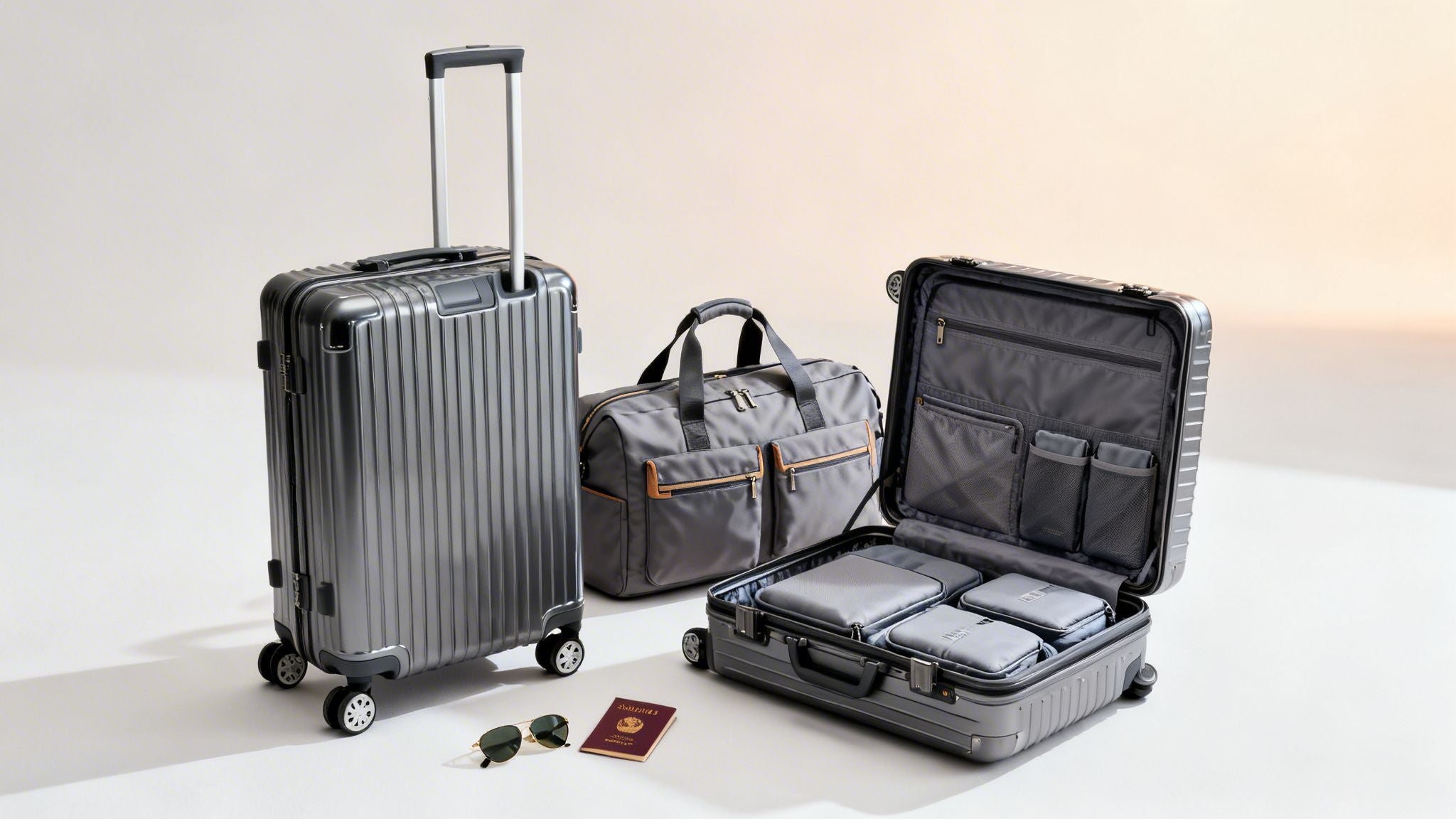
- Compression Systems: Straps or panels that press your clothes down, freeing up a surprising amount of space.
- Zippered Dividers: These create separate compartments, so your shoes don't end up on top of your shirts.
- Mesh Pockets: Perfect for keeping small items visible and organized.
These organizational tools are what truly make for a stress-free packing and unpacking experience, letting you find what you need without causing a luggage explosion.
Investing in Quality: How to Find the Best Value

When you're trying to figure out what to look for in luggage, it’s easy to get fixated on the price tag. But a cheap suitcase that saves you a few bucks today often turns into a broken, useless hassle in just a year or two. The real value isn't in the lowest price, but in that sweet spot where durability, price, and a solid warranty meet.
Think about it this way. A $100 suitcase that falls apart after two years really costs you $50 per year. On the other hand, a $300 bag that holds up for a decade only sets you back $30 per year. Paying more upfront for a well-made piece of luggage almost always saves you money—and a lot of headaches—in the long run.
Why the Warranty Is Your Best Friend
A warranty is more than just a piece of paper; it’s a direct reflection of how much a brand believes in its own product. But you have to look closely, because not all warranties are created equal.
- Limited Warranties: These are pretty standard and usually just cover manufacturing defects. Think a zipper that was faulty from the start or a handle that breaks under normal use. They almost never cover damage caused by rough handling at the airport.
- Comprehensive Warranties: This is where premium brands really shine. These warranties are far more valuable because they often cover any functional damage for the life of the bag—even if an airline is to blame.
A comprehensive warranty that includes airline damage is the ultimate safety net for a frequent traveler. It turns your luggage into a true long-term investment, ensuring repairs are covered no matter what happens on your journey.
Calculating the True Cost
So, how do you actually spot a good deal? You have to look past the initial sticker price and think about the total cost of ownership. A high-quality suitcase from a brand you can trust is engineered to survive years of being tossed around.
This means fewer repair bills and, most importantly, no more frantic, overpriced airport purchases to replace a bag that just gave up. It's all about peace of mind.
To make the smartest choice, it helps to see how different brands compare in real-world durability and features. If you're ready to dive deep, check out our guide comparing the best luggage brands based on durability tests and smart features. It will help you find the brands that actually deliver on their promises of quality and value.
Frequently Asked Questions About Buying Luggage
Even after doing your homework, a few questions can still pop up when you're about to make a choice. To help you cross the finish line with confidence, we’ve tackled some of the most common things travelers wonder about when buying a new suitcase.
How Much Should I Spend on a Good Suitcase?
Think of a good suitcase as an investment in smoother, less stressful travel. While you can certainly find bags for under $100, if you travel regularly, you should plan to spend somewhere in the $200-$500 range for a piece that will hold up.
This price point is the sweet spot where you get durable materials, reliable wheels that won’t seize up, and a decent warranty. Premium brands might cost more upfront, but their lifetime warranties (which often cover airline damage) can save you a ton of money on replacements over the years, making them a great value in the long run.
A lifetime warranty is the ultimate sign of a brand's confidence in its product. It transforms your suitcase from a disposable item into a reliable, long-term travel partner you can count on for years.
Are Four Wheels Better Than Two Wheels?
This really comes down to where you’re going and how you like to move.
- Four-wheeled spinners are a game-changer in airports. Their 360-degree mobility lets you glide the bag alongside you with zero effort, taking all the strain off your wrist and shoulder.
- Two-wheeled rollers, on the other hand, are built for tougher terrain. Their wheels are often larger and more recessed, making them champs at handling cobblestones, curbs, and cracked sidewalks without tipping over.
For most modern travel—navigating terminals, hotel lobbies, and smooth city streets—the effortless convenience of spinner wheels is hard to beat.
What Is the Most Durable Luggage Material?
When it comes to durability, a couple of materials stand out from the pack.
For hardside luggage, 100% polycarbonate is the top contender. It’s the perfect mix of lightweight and strong, with just enough flex to absorb hard impacts without cracking. If you prefer softside, look for ballistic nylon. This dense fabric is incredibly tough and resists the rips, tears, and scuffs that come with frequent flying.
While aluminum offers maximum protection, it’s also heavy and prone to denting. A good rule of thumb is to avoid cheap ABS plastic if you travel more than once or twice a year—it just doesn't have the resilience for the job.
Ready to find the perfect travel partner? Explore the curated selection of premium suitcases at Voyage Luggage and discover luggage built to last. Shop now at https://voyageluggage.com.
Share:
A Complete Carry On Luggage Comparison Guide