

Let's face it: nothing kills the post-flight high faster than spotting your suitcase on the carousel with a busted lock or a forced-open zipper. It’s more than just an inconvenience; it feels like an invasion, leaving your stuff vulnerable for the rest of its journey.
This is exactly why a TSA-approved lock isn't just another travel gadget—it's your luggage's best friend.
Why a TSA Lock Is Your Most Important Travel Companion
The magic of a TSA-approved lock is that it keeps honest people honest while giving security agents a way in without resorting to bolt cutters. If a TSA agent needs to inspect your bag and it’s secured with a non-approved lock, they have full authority to break it open.
A small investment in the right lock protects your expensive luggage from that kind of damage, making sure it arrives looking just as good as it did when you handed it over.
The Airport Master Key Analogy
The easiest way to think about the system is like a "master key for airports." You have your own personal key or combination that secures the lock against theft. But built into that same lock is a second, special keyhole that only TSA agents can access with their master keys.
This dual-access system is the secret sauce. It lets you keep your bag locked and secure while still complying with mandatory security screenings. It's the perfect middle ground between keeping your belongings safe and letting the TSA do its job.
A TSA-approved lock is your ticket to a stress-free baggage claim. It ensures that security inspections happen without damaging your luggage, keeping your journey smooth and your investment protected.
A Growing Travel Essential
This simple, practical solution has caught on in a big way. The global market for TSA locks was recently valued at USD 1.2 billion and is expected to nearly double to USD 2.1 billion by 2033.
What does that number tell us? That modern travelers are getting smarter about protecting their gear. You can discover more insights about the TSA locks market growth and see for yourself why it's become a must-have for anyone who flies regularly.
Ultimately, the best TSA lock is the one that lets you check your bag and forget about it, confident that it will arrive safe, sound, and fully intact.
What Are My Options? A Look at Different TSA Lock Types
Picking the right TSA-approved lock isn't a one-size-fits-all deal. The best choice really comes down to your luggage, your travel habits, and what you feel most comfortable with. Think of it less like buying a standard product and more like choosing the right tool for the job.
Your main options boil down to three common styles: keyed, combination, and cable locks. Each one strikes a different balance between security, convenience, and flexibility. Let's dig into what sets them apart so you can find the perfect match.
The right lock is a key part of the bigger travel picture. It’s the foundation for a smoother, more worry-free journey, as this diagram shows.

When your luggage is properly protected, you can relax and enjoy the trip without that nagging feeling in the back of your mind.
Keyed TSA Locks: The Old-School Classic
If you appreciate simplicity, the keyed lock is your straightforward, no-fuss option. It works just like a traditional padlock but has that special keyhole that allows TSA agents to do their thing.
Many travelers prefer them for their solid, all-metal feel, which just seems more secure. The big catch? You have to keep track of that tiny key. If you lose it on your trip, you’re in for a headache. They're a solid choice for checked bags you won't need to open until you're safely at your hotel.
Combination TSA Locks: The Convenient Go-To
There’s a reason combination locks are everywhere these days—they’re incredibly convenient. Instead of a key, you just set a 3- or 4-digit code that you can change anytime. No more fumbling for a key or panicking when you can't find it.
This convenience has made them a massive hit. The global market for combination TSA locks is valued at USD 500 million, and over 100 million are made each year. Top luggage brands have noticed, with these locks making up 70% of sales in the suitcase category.
If you’re curious about how to get yours set up, you can learn how to secure your luggage with a 3-dial combination lock in our detailed guide.
Cable TSA Locks: The Flexible Problem-Solver
Cable locks trade the standard rigid shackle for a tough, flexible steel cable. This one simple change makes them unbelievably versatile.
A cable lock can snake through multiple zipper pulls on a backpack, secure your bag to a chair leg at a café, or even lock a helmet to your bike. Its flexibility is its superpower.
The trade-off is that the cable, while strong, can sometimes be thinner than a hardened steel shackle, which might make it an easier target for a determined thief. Even so, for carry-on bags, backpacks, and situations where you need to adapt, a cable lock is often the perfect tool for the job.
TSA Lock Types at a Glance
To make the choice even clearer, here’s a quick comparison of the most common TSA lock types.
| Lock Type | Best For | Pros | Cons |
|---|---|---|---|
| Keyed | Travelers who prefer simplicity and a robust feel for their checked luggage. | Simple to use, often feels more sturdy, no code to remember. | The key can be easily lost, creating a major hassle. |
| Combination | Frequent travelers who value convenience and don't want to carry an extra key. | Keyless entry, you can set your own code, very popular. | You have to remember the code, some find them less durable. |
| Cable | Securing backpacks, oddly shaped items, or locking luggage to fixed objects. | Highly versatile and flexible, great for non-standard locking situations. | The cable can be thinner and potentially easier to cut than a solid shackle. |
Ultimately, the right lock protects your belongings without getting in your way. Whether you prefer a classic key, a simple code, or a flexible cable, there’s a TSA-approved option that will fit your travel style perfectly.
How TSA Locks Actually Work at the Airport
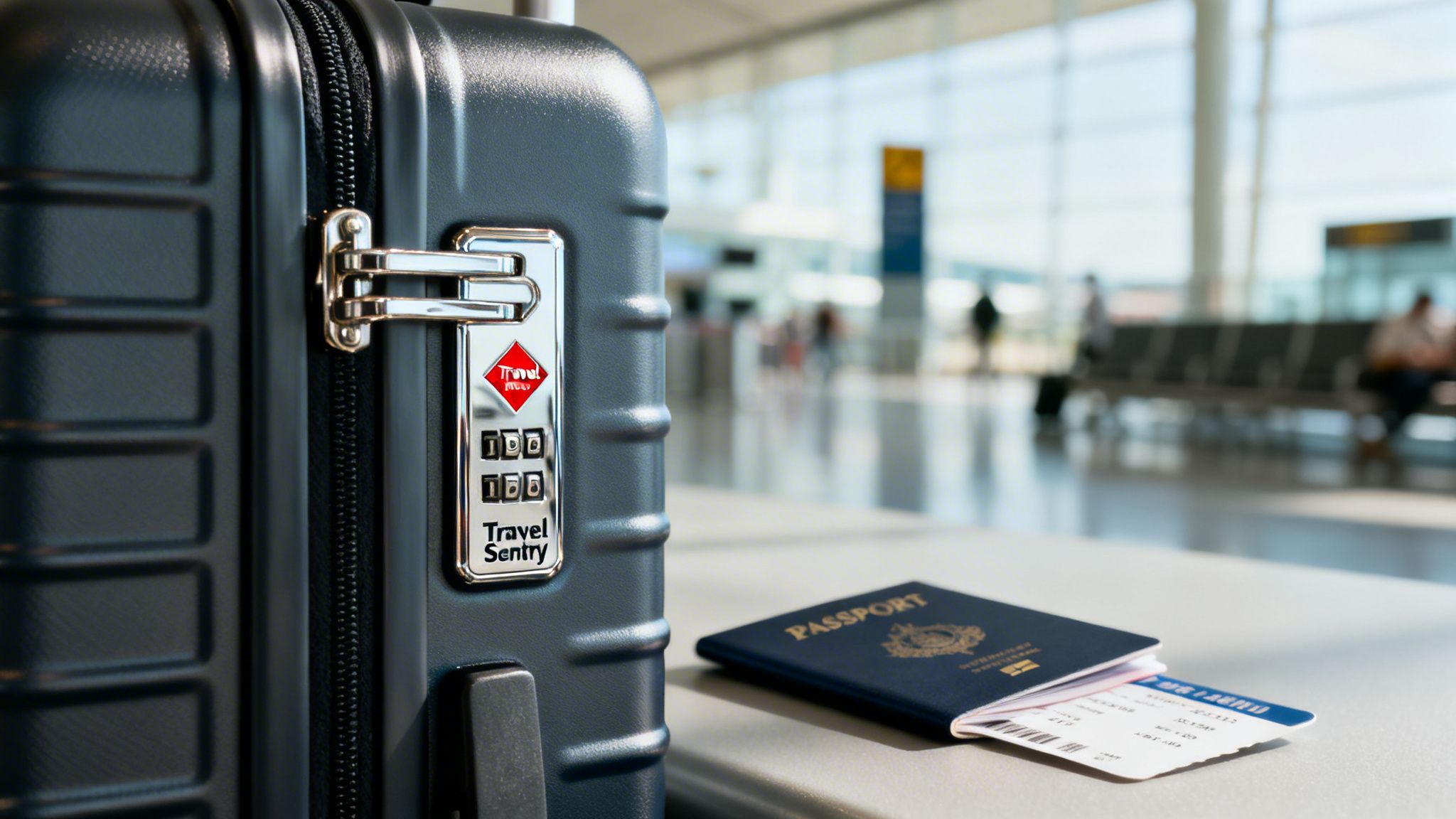
You’ve probably noticed that little red diamond logo on your lock. It’s not just for show—it’s the official mark of a system called Travel Sentry, and it’s what allows security agents to inspect your bag without having to break your lock or damage your expensive luggage.
Think of it as having two different keys to the same front door. You have your personal key (or combination), but security agents have a special master key that also fits. Every TSA-approved lock has a second, universal keyhole built right in. Only TSA agents have the set of master keys that can open it, letting them inspect what’s inside and then securely lock it back up.
This simple but brilliant idea solves a huge headache for travelers. Your bag stays locked and safe from casual theft while it's out of your sight, but it's still completely accessible for official security checks.
The Role of Advanced Airport Scanners
This whole system became essential as airports adopted more powerful screening technology. The global security screening market is a massive USD 9.94 billion industry, and it's constantly evolving. While standard X-ray machines still make up 45.12% of the market, advanced Computed Tomography (CT) scanners are quickly becoming the new standard.
These powerful CT scanners now account for 22.37% of the market because they can process up to 30% more bags per hour. This speed is exactly why a good TSA lock is no longer optional; it’s part of a finely tuned system. When a scanner flags something suspicious, agents need to get into that bag immediately without holding up the entire line. You can read the full research on security screening technology to see how these advancements are changing travel security.
Ever found a "Notice of Baggage Inspection" slip inside your suitcase when you landed? That’s the system working as intended. It means an agent opened your bag, checked it, and locked it back up without breaking a thing.
It's a seamless process that keeps things moving while making sure your stuff stays protected. For a full rundown of your bag's journey, you might be interested in what happens after you check your suitcase.
How the Inspection Process Unfolds
So, what does this look like in practice? Let’s break it down step-by-step.
- Initial Scan: Your checked bag glides through a high-tech scanner. If the machine spots something that needs a closer look, it automatically pulls your bag from the main line for a manual check.
- Manual Inspection: A TSA agent brings your bag to a secure inspection table and immediately looks for the Travel Sentry logo on your lock.
- Master Key Access: The agent selects the correct master key for your lock type and opens it easily. No crowbars, no broken zippers, no damaged hardware.
- Re-locking and Clearance: Once the inspection is finished, the agent relocks your bag using your original lock and sends it on its way to the plane.
The whole thing is designed to be quick and non-destructive. It's a smart system that perfectly balances the airport's need for security with your right to keep your property safe, making the entire travel experience feel a lot less stressful.
How to Choose the Best TSA Lock for Your Luggage

Picking the right TSA lock isn't just about grabbing the first one you see at the store. It’s a thoughtful choice that hinges on your specific luggage and travel style. Think of it as a small, smart investment that can make a huge difference in how smoothly your trip goes.
First things first, take a good look at your bag. Is it a hardside suitcase with a rigid shell and two zippers that meet in the middle? A classic, sturdy padlock is probably your best bet. On the other hand, if you're using a softside bag or a backpack with lots of pockets, a flexible cable lock is a brilliant solution—you can weave it through multiple zippers to secure the whole thing.
Now, consider how you travel. If you’re constantly on the road for business, convenience is everything. A combination lock means one less key to worry about misplacing, letting you get into your bag without a second thought. For those who travel less frequently, a simple keyed lock offers reliable, no-fuss security.
Look for Durable Materials
The materials a lock is made from will tell you a lot about how well it will hold up. You want to see words like hardened steel or zinc alloy on the packaging. These metals are tough enough to survive the chaotic world of baggage handling, resisting both brute force and rust over the long haul.
A solid lock does more than just deter theft; it actually protects your luggage. It keeps zippers from getting snagged and pulled apart in transit, saving you from a potentially expensive repair down the line.
Choosing a lock made from durable materials like zinc alloy or hardened steel is the single most important factor for ensuring long-term reliability and security for your luggage.
Consider the Security Features
Not all combination locks are created equal. Your standard 3-dial lock gives you 1,000 possible codes, which is pretty good. But upgrading to a 4-dial lock bumps that up to a whopping 10,000 combinations. That simple extra digit makes it exponentially harder for anyone to guess your code.
The shackle—the U-shaped part of a padlock—also matters a great deal. A thick, solid-shank padlock is a nightmare for bolt cutters, making it a much tougher target than a thin U-shackle or a standard cable. For anything that needs maximum security, like a firearm case or a bag with high-value gear, this is the way to go.
Key Factors for Your Decision
To narrow down your options, here are the core things to think about. Nailing these details will help you find a lock that feels like it was made just for you and your bag.
- Luggage Compatibility: Will the shackle or cable fit your zippers without leaving a big gap? Too much wiggle room can create a weak point where zippers could be pried apart.
- Combination vs. Key: Let’s be honest—are you the type to lose a tiny key, or are you more likely to forget a 4-digit code? Pick the one that works best for you.
- Material and Build Quality: Give it a feel. Does it feel heavy and solid? Steer clear of locks with flimsy plastic parts that look like they'd crack under pressure.
- Added Conveniences: Sometimes it's the little things. Look for easy-to-read, high-contrast numbers on the dials or a simple push-button release that makes opening the lock a breeze.
By thinking through these points—your bag, your travel habits, and the level of security you need—you can find the perfect TSA lock. It’s a small detail that delivers big peace of mind, making sure your stuff arrives safe and sound, every single time.
Getting Your TSA Lock Set Up and Ready for Travel

So you've got your new lock. The next step is making it yours by setting a personal combination. Don't worry, this is usually a quick and painless process. Most manufacturers design their locks to be set in just a minute or two, letting you secure your bag and get on with packing.
The secret to most of these locks is a tiny, often hidden, reset button. You’ll typically need a pen tip or an unbent paperclip to press it. This simple action puts the lock into "set mode," allowing you to dial in the numbers you want.
A Quick Step-by-Step for Setting Your Combination
While it's always smart to glance at the specific instructions that came with your lock, most follow the same basic logic. Here’s a general rundown that works for the vast majority of combination locks out there.
-
Start with the Factory Code: Open the lock using its default setting. This is almost always 0-0-0 or, for a four-dial lock, 0-0-0-0. Once the dials are aligned, just pull the shackle to open it.
-
Find the Reset Button: Take a close look at the lock's body. You're searching for a tiny, pinhole-sized button, usually on the side or bottom. Some cable locks might have a small lever instead.
-
Press the Button: Use the tip of a pen to gently press and hold the button. You should feel or hear a little "click" as the mechanism engages.
-
Dial In Your Code: With the button still held down, turn the dials to the combination you'll actually remember.
-
Lock It In: Release the reset button. Another click will signal that your new code is set. Give it a quick test—scramble the numbers, then enter your new code to make sure it opens smoothly.
For a great visual example, you can see these steps in action with the 3-dial Travel Sentry Combination Lock.
Keeping Your Lock Working Like New
A little bit of care goes a long way in making sure your lock works flawlessly trip after trip. You don’t want to be stuck with a jammed lock at the airport.
A well-maintained TSA lock is a dependable travel partner. Simple care routines prevent corrosion and keep the internal mechanism moving smoothly, ensuring it works perfectly when you need it most.
After a trip, especially if you've been somewhere sandy or humid, just give the lock a quick wipe-down with a dry cloth. Every once in a while, a tiny spray of a lubricant like WD-40 into the shackle opening and dials will keep everything moving freely.
And what if you forget your combination? It happens. The best (and only) way to get it open without breaking it is to patiently try every possible combination, starting from 0-0-0. It sounds like a chore, but it usually takes less than an hour and saves you from having to buy a new lock.
Your Top Travel Security Questions Answered
Alright, let's cut through the confusion. We've gone over a lot of ground, but I know you probably still have some specific questions buzzing around. Think of this as the final myth-busting session to clear up any lingering doubts and help you travel with confidence.
When it comes to your gear, clarity is everything. Knowing the real-world ins and outs of these locks helps you protect your stuff without creating a headache for yourself at the airport.
Can I Use a Non-TSA Lock When I Travel?
You can, but I wouldn't recommend it, especially if you're flying in, out, or through the United States. If the TSA decides your bag needs a closer look and it's sealed with a lock they can't open, they have full authority to break it. That means they’ll cut the lock, potentially wrecking your zippers or even damaging the bag itself in the process.
A lock with that little Travel Sentry red diamond logo is basically your insurance against this. It signals to agents that they can use their master key to get in, do their inspection, and lock it back up. Your luggage and your lock stay completely intact.
The whole point of a TSA-approved lock is to give security agents a way in without resorting to bolt cutters, all while keeping your bag secured from casual theft.
Are TSA Locks Completely Secure from Theft?
Let's be realistic here: TSA locks are a deterrent. They do a fantastic job of stopping opportunistic thieves—the kind of person who might try a quick unzip on the baggage carousel or in a back room. They also do a great job just keeping your zippers from pulling apart while your bag is being tossed around.
However, a skilled, determined thief with the right tools and enough time can get past almost any consumer luggage lock, TSA-approved or not. This is exactly why you should never, ever pack high-value items in your checked luggage. Laptops, cameras, jewelry, critical documents—all of that belongs with you in your carry-on.
What Happens if a TSA Agent Inspects My Bag?
The process is actually pretty straightforward. If an agent opens your bag using their master key, they’re supposed to leave a "Notice of Baggage Inspection" inside once they're finished.
Finding that little slip of paper is your confirmation that they were in there. After the inspection, the agent will re-lock your bag before sending it along to the plane. So if you see that note, it just means the system worked exactly as it was designed to.
How Do I Know if a Lock Is TSA-Approved?
This is the easy part. Every official lock has a special logo that security agents are trained to recognize. The one you'll see 99% of the time is the Travel Sentry red diamond. It's usually stamped right onto the lock body.
You might also spot a red torch logo from a company called Safe Skies, which is also approved, though it's less common. When you're shopping, just keep an eye out for one of those two marks. Any premium luggage brand worth its salt, including everything we carry at Voyage Luggage, uses TSA-approved locks, so you're good to go.
Ready to travel with complete peace of mind? Explore the curated selection of premium luggage and TSA-approved locks at Voyage Luggage. Find the perfect gear to protect your belongings on every journey. https://voyageluggage.com
Share:
Finding the Best Rolling Backpack for Travel in 2024
A Complete Carry On Luggage Comparison Guide