

Polycarbonate is a type of high-performance plastic, but calling it just "plastic" doesn't quite do it justice. Think of it more like a "super plastic," tough enough for everything from riot shields and bulletproof glass to the hardside luggage you see gliding through airports.
Its magic lies in a unique molecular structure that allows it to absorb impacts by flexing and then popping right back into its original shape. This quality is precisely what makes it a traveler's best friend.
A Traveler's Guide to Polycarbonate

While the term "polycarbonate" sounds technical, its benefits for travel are incredibly practical. It's best understood as a protective shield for your belongings, engineered to survive the rough-and-tumble journey from the check-in counter to the baggage carousel.
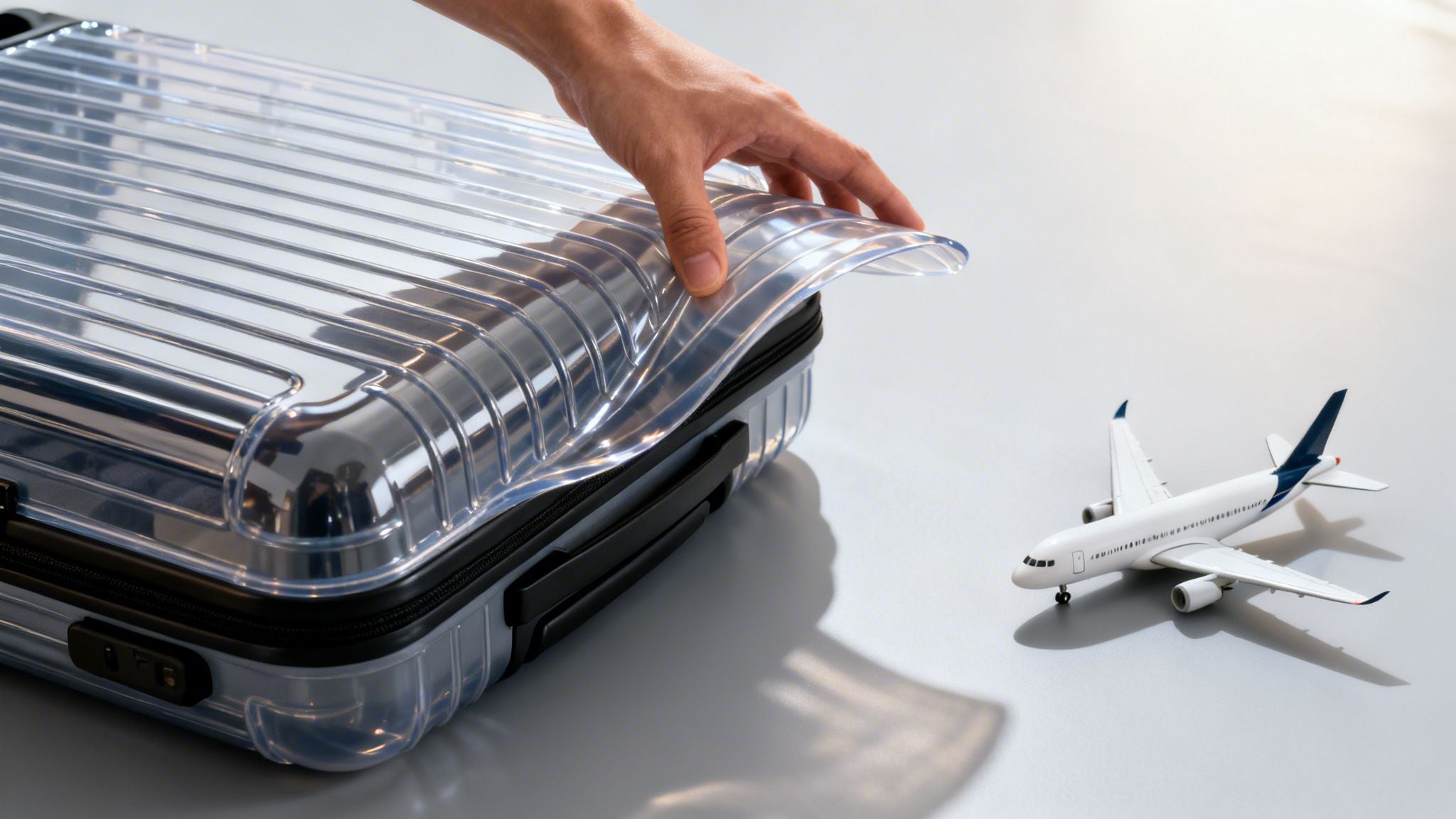
We've all seen brittle plastics that crack or shatter under pressure. Polycarbonate is the exact opposite. Imagine a baggage handler tossing your suitcase onto a conveyor belt; instead of cracking, the shell gives way, absorbs the shock, and returns to form. It’s this built-in resilience that makes it the go-to material for premium hardside luggage.
The Material of Choice for Modern Luggage
It’s no accident that the travel industry has embraced this material for its best products. Polycarbonate has become the leading material in the global luggage market, capturing a massive 37.7% share of all rolling luggage.
This dominance is all thanks to its killer combination of durability and low weight—two things every traveler wants. For a deeper dive, you can explore more about the luggage market's material trends on FutureMarketReport.com.
So, what does this actually mean for you when you're packing for a trip? Choosing polycarbonate luggage offers real-world solutions to common travel problems:
- Impact Resistance: It can take a serious beating without shattering, giving you confidence that fragile items inside your bag are well-protected.
- Lightweight Durability: You get a tough suitcase that will last for years, all without the heavy bulk that can push you over airline weight limits.
- Inherent Flexibility: It can handle being squeezed into a packed overhead bin or piled under a mountain of other bags without breaking.
Here’s a quick breakdown of why this material stands out.
Polycarbonate Luggage at a Glance
| Characteristic | Benefit for Travelers |
|---|---|
| High Impact Strength | Protects fragile contents from drops and rough handling. |
| Excellent Flexibility | The shell can flex under pressure and return to its shape. |
| Lightweight Nature | Easier to lift and helps you avoid excess baggage fees. |
| Temperature Resistance | Performs well in both hot and cold climates without becoming brittle. |
Ultimately, polycarbonate gives you peace of mind.
In essence, polycarbonate material is an investment in a travel companion that won’t let you down. It ensures your focus stays on the adventure ahead, not on dealing with a broken suitcase.
What Polycarbonate Actually Does for You on a Trip

So, what does all this science mean when you’re sprinting to catch a flight? The technical specs of polycarbonate translate into real-world solutions for common travel headaches. It’s not just about a fancy plastic; it’s about making your journey go a whole lot smoother.
Its biggest selling point is a massive one: impact resistance. Think of a polycarbonate shell as a helmet for your stuff. It’s specifically designed to take a beating—absorbing and spreading out the force from drops, tumbles, and the less-than-gentle treatment it gets behind the scenes.
When a brittle plastic suitcase gets dropped, it cracks. Polycarbonate, on the other hand, flexes. This ability to give a little under pressure is its superpower. It means your bag can survive a fall off the conveyor belt or a rough landing in the cargo hold, keeping your souvenirs in one piece.
Flexible Strength and a Lighter Load
That flexibility isn't just for show. It gives polycarbonate a remarkable ability to bounce back to its original form.
Ever had to cram your bag into a ridiculously full overhead bin? A rigid case might just give up and crack. A polycarbonate bag, however, can bend and contort to fit, then pop right back into shape once it's free. That’s a huge advantage.
Now, pair that resilience with its other key feature: it's incredibly light. We all know that moment of dread when you place your bag on the check-in scale. Polycarbonate luggage is much lighter than old-school materials like aluminum, which you’ll appreciate every time you have to lift it.
- Easier Lifting: You'll really feel the difference when you're hoisting your carry-on into the overhead compartment or grabbing it off a crowded baggage carousel.
- Avoiding Fees: Starting with a lighter suitcase means you can pack more essentials without tipping the scales and getting hit with those painful overweight baggage fees.
This is more important than ever. The market for carry-on luggage is massive, with an estimated 75 million units made each year. As airlines get stricter with weight limits, a lightweight yet tough bag isn't just a luxury—it's a necessity. You can dive deeper into the latest trends in the polycarbonate luggage market.
A polycarbonate suitcase isn't just a box to hold your clothes. It’s a piece of high-performance gear that actively protects your belongings while saving you from physical strain and surprise fees at the airport.
Striking the Perfect Balance
At the end of the day, polycarbonate hits the sweet spot for modern travelers. It gives you heavy-duty, almost armor-like protection without weighing you down. This is the kind of durability that turns a suitcase into a long-term investment for countless trips, not just a one-and-done purchase.
When you choose polycarbonate, you're picking a material built for the chaos of travel. From its ability to flex under pressure to its featherlight feel, every aspect is designed to make your journey more secure and less of a hassle. For travelers ready to make a smart choice, check out our guide to the best polycarbonate luggage on the market today.
What Are the Downsides?
Polycarbonate is a fantastic material for luggage, but it’s not flawless. Like anything, it has a couple of trade-offs, and knowing what they are will help you decide if it’s the right fit for your travels.
The biggest thing to know is that polycarbonate can scratch. It’s incredibly tough and won't crack under pressure, but its surface can pick up scuffs and scrapes from conveyor belts and rough handling. Think of it like the screen on your smartphone—it’s built to prevent shattering, but you still might see minor cosmetic scratches over time.
Luckily, this is a well-known issue, and luggage makers have come up with some clever ways to deal with it.
It's a Bit More of an Investment
First off, you'll notice that polycarbonate suitcases generally cost more than their ABS or polypropylene counterparts. It’s easy to see that higher price tag and hesitate, but it’s better to think of it as an investment in a bag that’s built to last. You’re paying for superior protection that will survive years of trips, not just a single getaway.
The higher upfront cost often pays for itself over time. A durable polycarbonate bag can outlast several cheaper ones, saving you money in the long run.
Now, about those scratches. The best way to combat them is to choose a suitcase with a design that hides wear and tear from the start.
Look for these features:
- Textured Finishes: A textured, brushed, or ribbed surface is your best friend. These patterns cleverly hide minor scuffs, making them almost impossible to see unless you're looking for them.
- Matte Finishes: Glossy luggage looks amazing on the showroom floor, but it shows every single scuff mark. A matte finish, on the other hand, diffuses light and does a much better job of keeping those cosmetic blemishes under wraps.
By picking a bag with one of these finishes, you get all the amazing impact resistance of what is polycarbonate material without having to stress over every little mark. It’s a simple design choice that keeps your luggage looking sharp, no matter how many baggage handlers it meets.
How Polycarbonate Stacks Up Against Other Luggage Materials
Choosing a new suitcase can feel overwhelming. With so many different materials on the market, it's hard to know which one is right for you. To really understand what makes polycarbonate material special, it helps to see how it compares head-to-head with the other big players in hardside luggage.
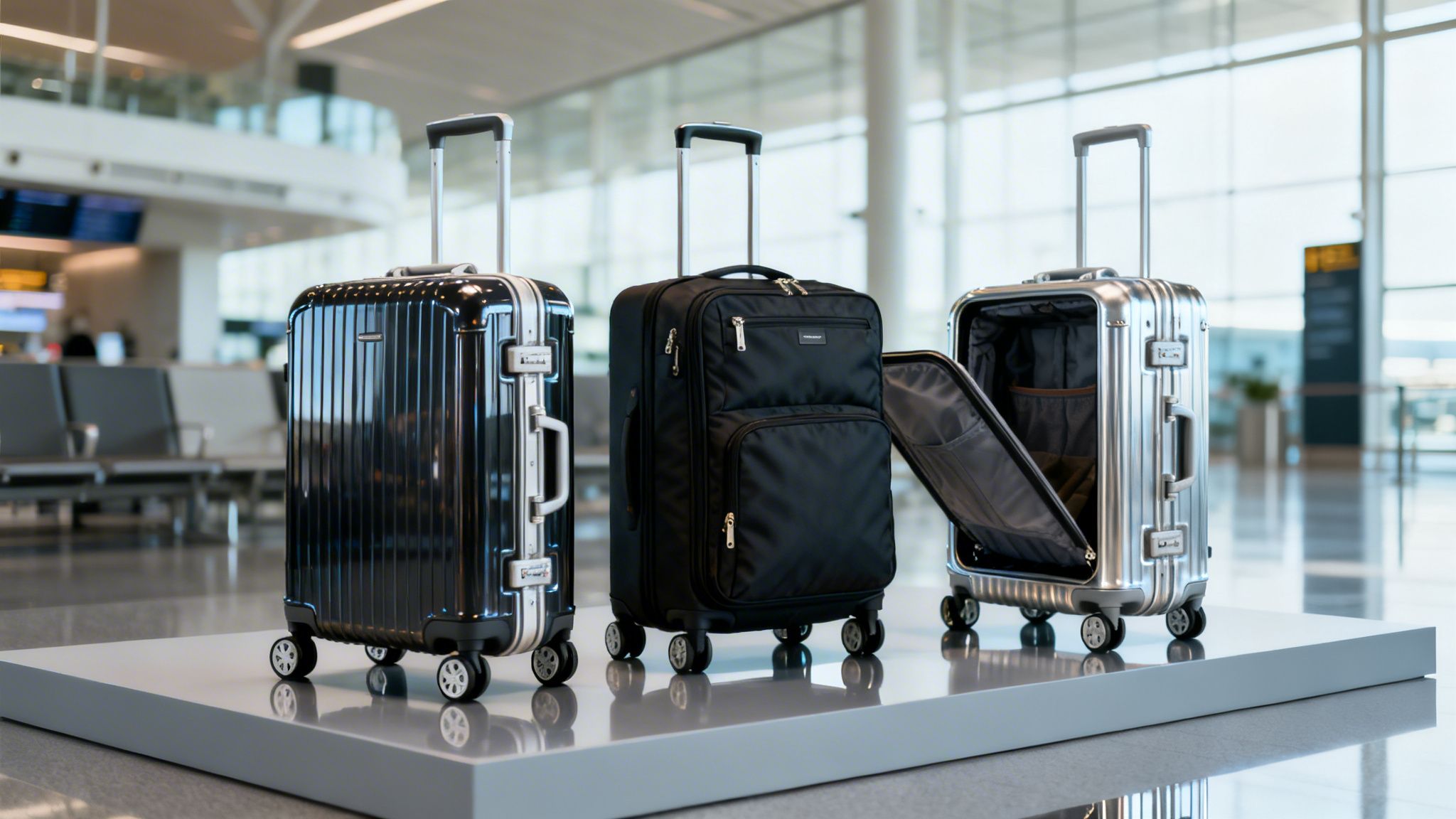
Each material has its own personality, with real-world strengths and weaknesses that can make or break your travel experience. Let's dive into the most common options you'll see on the shelf. The main contenders in the world of plastic luggage are Polycarbonate (PC), ABS, and Polypropylene (PP). And of course, there's the classic choice: aluminum.
Polycarbonate vs. ABS
You'll often find ABS plastic used in more budget-friendly luggage, and there’s a simple reason for that—it’s inexpensive to make. This makes it a go-to for travelers looking for an entry-level bag. But that lower price tag comes with a serious catch: durability.
While ABS is lightweight, it's also much more rigid and brittle than polycarbonate. It just doesn't have that crucial "flex" to absorb impacts. A sharp drop or a rough baggage handler could easily leave a permanent crack in an ABS shell, whereas a polycarbonate case would likely bounce back without a problem.
Polycarbonate vs. Polypropylene
Polypropylene is another popular choice, and its biggest claim to fame is being incredibly lightweight—often even lighter than polycarbonate. It’s also very flexible, much like PC. So, what's the trade-off here?
The difference really comes down to overall toughness and scratch resistance. Polypropylene is a softer material, which means it’s more likely to get scuffed up or even deeply gouged. While it's a solid mid-range option, it generally doesn't have the same long-term structural integrity or premium feel you get from a top-quality polycarbonate suitcase.
Polycarbonate vs. Aluminum
Then we have aluminum, the original tough guy of travel. There's no denying it—aluminum offers incredible protection and has a timeless, stylish look that many travelers love. It’s exceptionally strong and secure.
But that strength comes with some hefty downsides. Aluminum is significantly heavier than any plastic, which can be a real headache when you're trying to avoid airline weight fees. It also dents. While it won’t crack, every single bump and knock will leave its mark. Some people love that "well-traveled" look, but others don't. And, of course, it’s by far the most expensive option.
Polycarbonate hits that sweet spot. It offers the kind of tough-as-nails protection you'd expect from a material like aluminum but with the lightweight flexibility that makes modern luggage so much better. It's the best of both worlds, giving you top-tier performance without the extreme weight or cost.
To help you visualize the differences, here’s a quick breakdown of how these materials compare.
Hardside Luggage Material Comparison
This table gives you a clear, at-a-glance look at the pros and cons of each major hardside luggage material, helping you match the right one to your travel style and budget.
| Material | Durability | Weight | Flexibility | Cost |
|---|---|---|---|---|
| Polycarbonate (PC) | Excellent impact and crack resistance. | Lightweight | Very High | High |
| ABS | Fair, but can be brittle and prone to cracking. | Very Lightweight | Low | Low |
| Polypropylene (PP) | Good, but less scratch-resistant than PC. | Extremely Lightweight | High | Medium |
| Aluminum | Excellent protection but dents easily. | Heavy | None (dents) | Very High |
As you can see, while every material has its place, polycarbonate consistently stands out as the most well-rounded choice for most people. It manages to be tough, flexible, and light all at the same time.
If you want to see how these differences play out in actual luggage designs, our carry-on luggage comparison is a great resource to check out before you make your final decision.
Keeping Your Polycarbonate Luggage Looking Great
When you invest in a quality polycarbonate suitcase, you're getting a travel partner that's built to last. The good news? Keeping it in top shape is surprisingly easy. A little bit of care goes a long way in making sure it looks just as good on its tenth trip as it did on its first.
For the everyday dirt and grime that baggage carousels are famous for, a simple wipe-down is usually all you need. Just grab a soft cloth, some mild soap, and warm water. It's best to steer clear of harsh chemical cleaners or abrasive scrubbers, as they can easily scratch or dull the finish.
Got a few scuffs that soap and water can't handle? Try a magic eraser. A gentle buffing motion on the mark is often enough to lift minor scuffs right off the surface, leaving it looking much cleaner.
Proper Care and Storage
How you store your luggage between adventures is just as important as how you clean it. Find a cool, dry spot away from direct sunlight, like a closet or under the bed. Leaving it in a hot attic or a stuffy garage can expose it to extreme temperatures, which might cause the material to warp over time.
Proper storage protects the shell's shape and integrity, ensuring it’s always ready to go when you are.
This diagram offers a great side-by-side look at how polycarbonate compares to other popular luggage materials.

You can see how polycarbonate hits that sweet spot—offering a fantastic balance of strength and weight that sets it apart from both the more brittle ABS and the heavier, pricier aluminum.
Even the toughest bags can get scratched up. Interestingly, some of the same principles used to remove car scratches can be adapted to buff out deeper marks on your luggage.
Pro Tip: Whatever you do, never use acetone (the main ingredient in most nail polish removers) on your polycarbonate suitcase. It will chemically react with the plastic, causing it to become cloudy and permanently damaged. Stick with the basics: soap and water.
While these tips are great for cosmetic touch-ups, sometimes baggage handlers can be a little too rough. If your bag comes off the carousel with a crack, a busted wheel, or other serious damage, it's important to know what to do next. This guide on what to do if your suitcase was damaged during a flight can walk you through the steps to take.
Your Top Polycarbonate Questions, Answered
Now that we’ve covered the technical side of things, let's get into the practical questions that pop up when you’re standing in a store, trying to make a choice. Getting these common points cleared up will help you feel totally confident you're picking the right polycarbonate suitcase.
One of the biggest points of confusion is the material itself. You’ll often see luggage advertised as a "polycarbonate composite" or a "PC/ABS blend." It’s important to know that these are not the same as a suitcase made from 100% virgin polycarbonate.
Mixing polycarbonate with ABS (a cheaper, more rigid plastic) certainly brings the price down, but it also waters down the very benefits you’re looking for. A pure polycarbonate shell gives you that incredible flexibility and impact resistance—the ability to take a hit and pop right back into shape. Blended materials, on the other hand, are stiffer and much more likely to crack under pressure.
How to Spot a Genuine Polycarbonate Suitcase
So, how can you tell what you’re actually looking at? You don’t need a science degree, just your hands and a little know-how.
-
Do the Flex Test: Gently press on the center of the suitcase shell. If it's 100% polycarbonate, you'll feel a good amount of give. It will flex inward easily and then snap back to its original shape the moment you let go. An ABS blend will feel noticeably harder and more rigid.
-
Check the Finish: Take a look at the surface. High-quality polycarbonate luggage often has a textured or matte finish. This isn't just for style—it’s a clever design feature that helps camouflage the inevitable scuffs and scratches that come with travel.
For a suitcase that's built to last trip after trip, always go for 100% polycarbonate. The extra cost upfront is a smart investment in gear that can truly handle the chaos of modern travel.
This growing preference for quality is shaking up the luggage industry. The global market for polycarbonate luggage was valued at USD 5.5 billion and is projected to nearly double. This reflects a major shift as travelers move toward more durable, reliable gear. You can dig into the numbers in this luggage market analysis on ArchiveMarketResearch.com.
And what about the environmental impact? Polycarbonate is a thermoplastic, which means it can be melted down and reformed. While recycling facilities vary from place to place, the material itself is designed to be reused, making it a much better choice than single-use plastics.
Ready to invest in luggage that lasts? Explore our curated collection of premium travel gear at Voyage Luggage and find the perfect companion for your next adventure. https://voyageluggage.com
Share:
What to Look for in Luggage A Guide for Every Traveler