

There's a right way and a wrong way to pack a garment bag. The right way involves a few simple principles: start with clean, pressed clothes, use quality slim hangers, and layer your items thoughtfully to prevent them from shifting and creasing. Get this down, and you'll step off the plane looking just as sharp as when you left home, saving you from that frantic last-minute ironing session in your hotel room.
The Secret to Arriving Wrinkle-Free
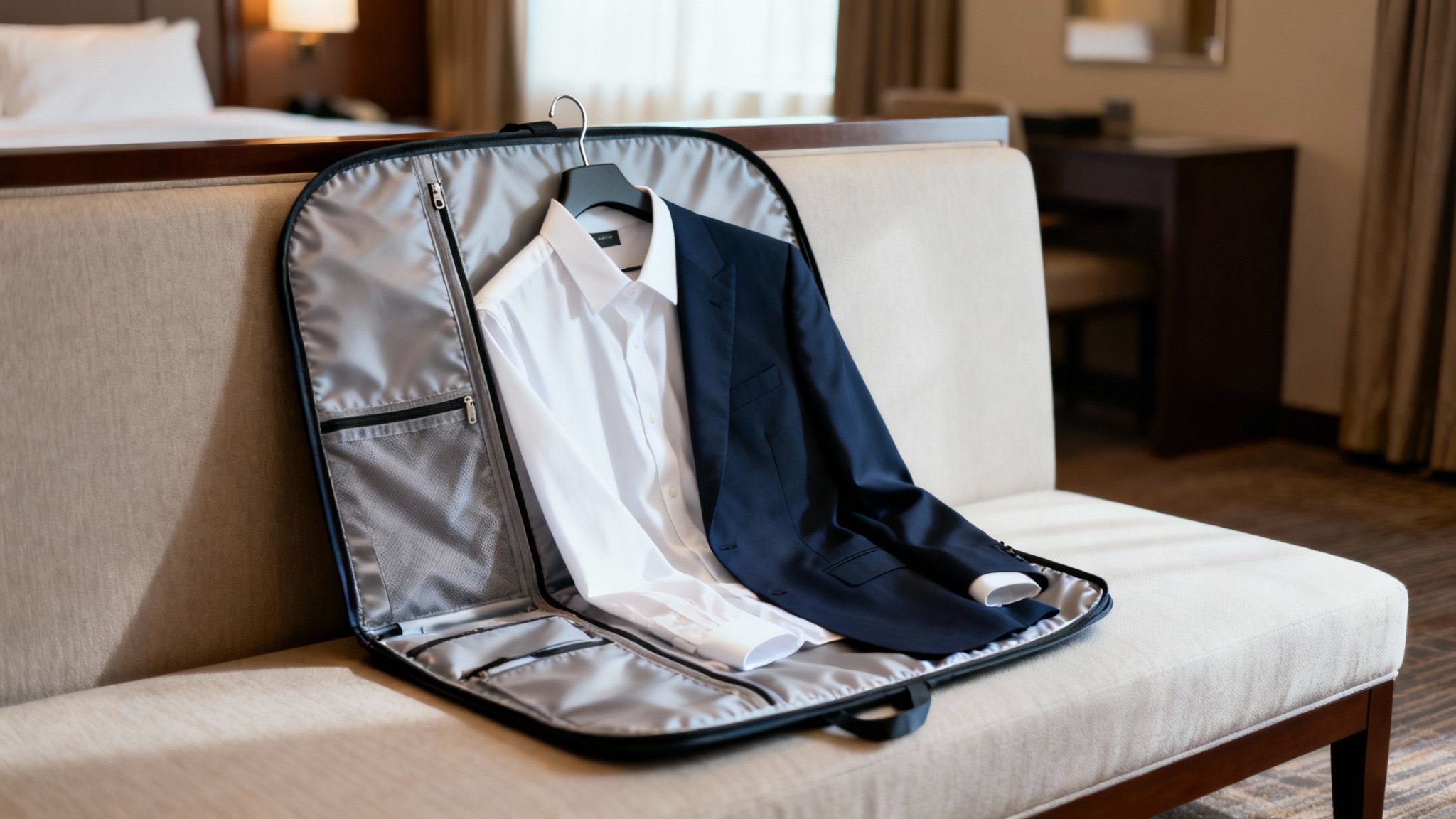
Learning how to properly use a garment bag isn't just a travel hack; it’s about maintaining your professional edge from the moment you land. It's what separates a polished, confident arrival from a panicked search for the hotel's iron. Whether you're working with a sleek tri-fold carry-on or a larger TUMI roller, the bag itself is only half the equation.
For anyone who travels for business, time is money. Today’s garment bag has become a precision tool, especially as more people embrace carry-on-only travel. In fact, surveys show that over 60–70% of business travelers avoid checking a bag for trips under three nights. This shift makes having a compact, well-organized garment bag more critical than ever. You can learn more about the latest trends in travel bags here.
Why Mastering This Skill Matters
Getting your packing system dialed in does more than just prevent wrinkles—it genuinely improves your entire travel experience. It’s about creating a repeatable process that sets you up for success, no matter where you're headed.
- Less Stress: You can stop worrying about whether your suit or dress will be a wrinkled mess when you unpack.
- More Time: No more time wasted steaming shirts or sending things out for a rush press. You can focus on your actual schedule.
- Protect Your Investment: High-quality suits, dresses, and shirts are shielded from snags, damage, and deep-set creases that can be hard to remove.
- Unpack in Seconds: Simply unzip the bag and hang everything in the closet. You're ready to go.
A well-packed garment bag is like having a personal valet on the road. It ensures the effort you put into your professional appearance at home travels with you, delivering confidence and polish wherever you land.
This guide will walk you through the exact techniques I use to make my garment bag an indispensable part of every trip.
Preparing Your Wardrobe for the Journey
A perfectly packed garment bag isn’t just about how you fold; it starts with smart choices made well before you even lay it open on your bed. The real secret to arriving with sharp, wrinkle-free clothing is all in the prep work. This initial effort is what separates a polished, ready-to-go look from a rumpled mess.
The foundation of a travel-ready wardrobe always comes down to fabric. Materials like wool and high-quality wool blends are your best friends on the road. Their natural fibers have a built-in resilience, allowing them to bounce back from being folded. On the other hand, fabrics like linen or 100% cotton are famous for creasing at the slightest pressure—probably best to leave those at home for short business trips.
Pre-Packing Garment Care
Before a single shirt or suit jacket makes it into your bag, it needs to be clean and freshly pressed. It sounds obvious, but packing something that already has a few wrinkles is a guaranteed way to make them worse. Travel has a way of setting creases, so you want to give your clothes a smooth, strong start.
Take a few moments for these non-negotiable steps:
- Button Up: Always fasten the top button on your shirts and at least the middle button on suit jackets. This simple trick helps the garment hold its natural shape, especially around the collar and shoulders.
- Empty Pockets: Check every single pocket. A forgotten pen, set of keys, or even a slim wallet will create awkward bulges and put unnecessary strain on the fabric seams.
- Use Good Hangers: Ditch the flimsy wire hangers from the dry cleaner. They’re terrible for your clothes. Instead, use sturdy, slimline felt or wooden hangers that actually support the shoulders of your garments correctly.
The goal isn't just to pack your clothes, but to prepare them for the journey. A few minutes of prep work at home can save you from a half-hour of frantic steaming in a hotel room.
Creating a Cohesive Travel Wardrobe
Once your individual items are prepped, zoom out and think about the big picture. How do all these pieces work together? Planning your outfits in advance is the cornerstone of packing light and smart, ensuring you don't bring "just in case" items that only add bulk. We cover this concept in more detail in our guide on how to pack efficiently for any trip.
For instance, one great navy blazer can work for a meeting with grey trousers and then for a dinner with different chinos, giving you multiple distinct looks from a single core piece. This approach makes packing simpler and getting dressed at your destination a breeze.
If your trip blends business with leisure, getting additional packing tips for your trip can help you think through how to build a versatile wardrobe. Ultimately, it’s all about choosing high-performing, multi-purpose items that travel well. This strategic curation is the final, vital step in your pre-packing ritual.
Mastering The Art Of The Fold
With your clothes prepped, it's time to get down to the real technique of packing a garment bag. This isn't just about stuffing things in; it's a strategic process of layering and folding that protects your clothes and ensures you arrive looking sharp. Honestly, mastering a few key folds is what separates the pros from the rookies.
This visual guide is a great reminder of those critical first steps we just covered—choosing the right fabrics, making sure everything is clean and pressed, and buttoning it all up to hold its shape.
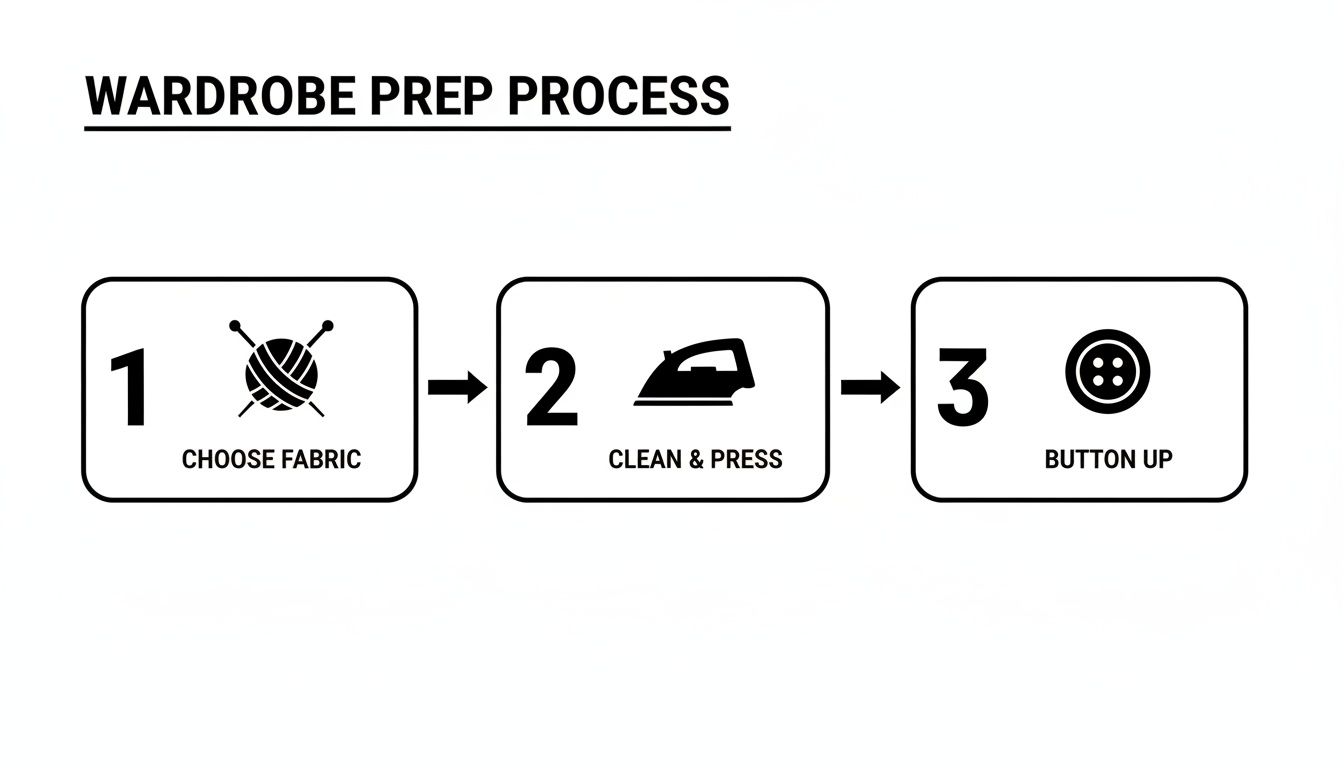
Starting with this foundation makes the actual packing process so much smoother. You're already setting your wardrobe up for a wrinkle-free arrival.
Folding a Suit Jacket The Right Way
The suit jacket is usually the piece that gives people the most trouble, but there’s a simple trick I’ve used for years that makes it nearly foolproof. It’s all about protecting the jacket’s structure and keeping the exterior fabric safe from friction.
Here’s how it works:
- Hold the jacket facing you, like you’re about to put it on.
- Pop one shoulder back so it's concave, then turn the other shoulder completely inside-out over it.
- Gently tuck the first shoulder into the neatly inverted second one.
- You should end up with a perfectly aligned jacket, folded in half lengthwise with the lining facing out.
This method creates a soft, padded fold that cushions the most structured part of your suit. From there, you can fold it horizontally once to fit the dimensions of your bag.
The best packing methods always work with a garment's natural lines, not against them. Trying to force a suit into an unnatural fold is the quickest way to create deep-set wrinkles that are a nightmare to get out on the road.
Handling Trousers and Delicate Items
Trousers are much simpler, but they still demand a bit of precision. Hold them upside down by the cuffs and let them hang straight, making sure the main crease is perfectly aligned. Then, just gently fold them over the hanger bar or lay them flat over your already-folded jacket. The secret is to follow the existing crease without fail.
For more delicate garments like silk dresses or blouses, the enemy is friction. I always recommend placing a thin sheet of acid-free tissue paper or even a plastic dry-cleaner bag between the folds. It acts as a buffer, so as things inevitably shift in transit, the fabric glides smoothly instead of rubbing against itself—a major cause of those fine wrinkles. These techniques are part of a bigger picture, and you can learn even more in our guide on the best ways to fold clothes for travel.
Packing Method Comparison for Different Garments
Choosing the right fold for the right item makes a huge difference. Here's a quick cheat sheet I use to decide the best approach for common travel pieces.
| Garment Type | Recommended Packing Method | Key Wrinkle-Prevention Tip |
|---|---|---|
| Suit Jacket | The Inside-Out Shoulder Fold | Protecting the lapel and shoulder structure is the #1 priority. |
| Trousers/Slacks | The Crease-Aligned Fold | Drape over the hanger bar, meticulously following the ironed crease. |
| Dress Shirts | Buttoned and Folded Flat | Use a shirt folding board for perfectly uniform, crisp folds every time. |
| Dresses (Silk/Delicate) | Layered with Tissue Paper | Drape loosely with tissue between each fold to eliminate fabric friction. |
| Knitwear (Sweaters) | The Bundle Wrap | Wrap around a soft core (like socks) to avoid sharp, creased edges. |
Ultimately, a little forethought here saves you a lot of time with the hotel iron later.
Securing Everything In Place
Once your main garments are folded and layered on their hangers, it’s time to lock them down. Any good garment bag will have a hanger clamp system at the top. Group your hangers together, slide them into the clamp, and make sure it’s fastened securely. This simple step is what prevents everything from collapsing into a sad, wrinkled pile at the bottom of the bag.
Finally, think about using the bundle wrapping method for smaller items. You can wrap things like knit shirts or sweaters around a soft central item, like a small packing cube filled with socks. Placing this bundle in the main compartment fills any empty space and keeps your larger, folded garments from sliding around.
Packing Accessories and Other Essentials
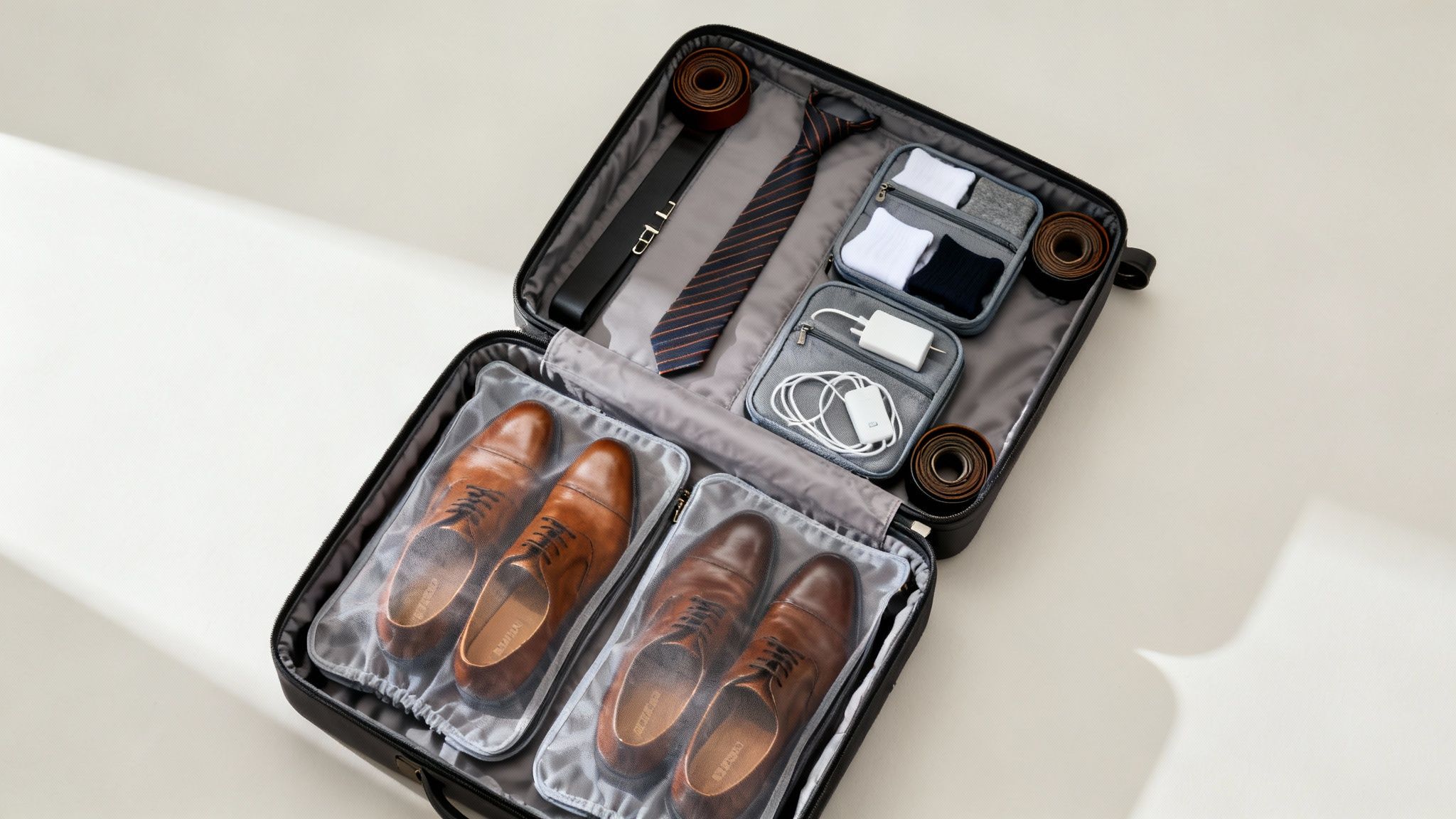
A quality garment bag isn't just for your suit—it's your entire travel system. The real trick to mastering it is figuring out how to pack all your other gear without turning your wrinkle-free clothes into a crumpled mess. When you get this right, you’ve turned a simple suit carrier into a powerful, single-bag solution.
This isn't just about convenience; it’s about smart travel. With a bit of packing discipline, you can easily fit a few days' worth of clothing into one bag. I've seen travelers pack two suits, a couple of shirts, and shoes all into one carry-on by using the suiter panel and compartments effectively.
Think about the savings, too. A frequent flyer taking 20 round trips a year can easily save $300 to $750 annually just by avoiding checked bag fees on half of those trips. The bag practically pays for itself. If you're interested in the numbers, you can dig into travel bag market trends in this detailed report.
Strategically Placing Your Shoes
Your shoes are almost always the heaviest, most awkward things you'll pack. Where you put them makes all the difference in how the bag carries and how well your clothes are protected. I always pack my shoes first.
The best practice is to place each shoe in its own shoe bag to keep dirt and scuffs off your fabrics. Position them at the very bottom of the garment bag, ideally in a dedicated shoe compartment. This gives the bag a solid base, anchoring it and preventing it from feeling top-heavy and awkward to carry.
Never, ever toss your shoes in loose next to a suit or dress shirt. It's a disaster waiting to happen—a direct route to scuff marks and dirt stains that can ruin an expensive garment. A simple shoe bag isn't just an accessory; it's a necessity.
Organizing Smaller Items and Accessories
With your shoes secured, it's time to fill in the gaps with smaller essentials. The goal here is to prevent chaos. Loose items shift during transit, creating lumps and pressure points that cause wrinkles.
This is where a few smart packing tricks come in handy:
- Belts: Don't lay them flat where they'll take up space. Instead, roll your belts tightly. I like to tuck them into empty corners or even place a rolled-up belt inside the collar of a dress shirt to help it hold its shape.
- Ties: A dedicated tie case is a fantastic investment if you travel with them often. No case? No problem. Carefully roll your ties and tuck them inside a shoe or into a small, zippered pocket where they won't get crushed.
- Socks and Underwear: This is exactly what packing cubes were made for. A small cube keeps these items neatly compressed and contained, so they aren't just floating around your bag.
If you want to dive deeper into organizing smaller items, our guide on the best packing cubes for travel is a great resource. By grouping items logically, you're not just protecting your suits and dresses—you're also making it incredibly easy to find what you need when you arrive. It's the final piece of the puzzle to packing like a pro.
Post-Trip Care for Your Bag and Garments
The trip isn't really over the moment you walk through the door. The final, and arguably most important, step is taking care of your clothes and your luggage. Letting a packed garment bag sit for even a day or two is a surefire way to let temporary travel creases settle into stubborn, deep-set wrinkles.
The golden rule is simple: unpack immediately. Don't put it off. Get your suit, dress, or shirts out of the bag and onto proper hangers right away. This gives the fabric a chance to breathe and relax after being cooped up during your travels. For any minor wrinkles that cropped up, a little steam is your best friend.
De-Wrinkling Without an Iron
You can usually skip the ironing board for those small travel creases. One of my go-to tricks after every trip is a quick "shower steam." It's incredibly effective.
- Hang your garments in the bathroom, but keep them away from the direct spray of water.
- Crank the shower to hot and shut the door to trap the steam.
- Just let the clothes hang in the steamy air for about 15–20 minutes.
That warm, moist air works wonders. It gently relaxes the fabric fibers, and you'll find most of the minor wrinkles just fall right out. This method is much kinder to delicate fabrics like wool and silk than the harsh, direct heat of an iron.
Your garment bag is designed to protect your clothes in transit. Your job is to free them from that protective cocoon as soon as you're home. Unpacking immediately is the single best habit you can build for keeping your travel wardrobe in pristine condition.
Maintaining Your Garment Bag
Taking care of your luggage is just as crucial as caring for the clothes inside it. A well-maintained bag isn't just a purchase; it's an investment that can last for years, even decades. Before you put it away, always give it a quick wipe-down to get rid of any dust or grime from its travels.
The cleaning method really depends on the material:
- Ballistic Nylon: This stuff is tough. A damp cloth with a little bit of mild soap is usually all you need to get it looking great again.
- Leather: For a leather bag, you'll want to use a proper leather cleaner and conditioner. This keeps the material from drying out and cracking over time.
Make sure you empty every last pocket and compartment. Give the bag a good shake to dislodge any crumbs or debris. This has become even more important as premium bags are now designed with breathable panels and separate compartments to better protect what’s inside.
The clothing industry now churns out over 170 billion garments annually—that's more than 21 new pieces for every person on Earth. As we invest in better clothing, smart packing and proper luggage care are essential for making those investments last. You can dive deeper into garment bag design trends in this insightful report.
Finally, find a good spot to store your empty garment bag. A cool, dry place is ideal. Steer clear of attics or basements where humidity and temperature swings can wreak havoc on the materials. I recommend storing it unzipped or loosely folded to let the air circulate, keeping it fresh and ready for your next adventure.
Answering Your Top Garment Bag Questions
Even the most seasoned travelers have questions when it comes to getting the most out of their garment bag. Airline rules can be a bit of a maze, and knowing how to maximize your space without wrinkling everything is a skill. Let's clear up a few of the most common head-scratchers so you can pack with total confidence.
The first thing you need is, of course, a suitable garment bag that fits your needs. But once you have it, you need to know how the airlines see it. Getting this wrong can lead to some frustrating moments at the gate.
Is It a Carry-On or a Personal Item?
This is probably the most frequent question I get. Almost every single airline will count your garment bag as your main carry-on item. It will not pass as your smaller, personal item.
Think about the size difference. A personal item is supposed to slide under the seat in front of you—we're talking a small backpack, a briefcase, or a purse. A folded garment bag, whether it’s a bi-fold or a tri-fold, is built to fit in the overhead bin. So, plan accordingly: your garment bag is your one carry-on, and you'll need a separate, smaller bag for anything you want at your feet.
How Many Suits Can I Realistically Pack?
I know it's tempting to stuff as much as possible in there, but for a standard carry-on garment bag, the magic number is one to two suits. If you want to arrive with your suit looking like it just came from the dry cleaner, packing just one is the gold standard. This gives the fabric room to breathe and avoids the kind of compression that leads to stubborn creases.
You can definitely get away with two suits if you're meticulous with your folding. Any more than that, and you're pretty much asking for a wrinkled mess. Overpacking also puts a ton of stress on the zippers and seams, which is the last thing you want to deal with on a trip.
Think of it this way: your garment bag's job is to protect your clothing, not just transport it. Packing one suit perfectly is always better than packing three suits poorly.
What's the Best Way to Pack Dress Shirts?
Inside a garment bag, the age-old debate of rolling versus folding has a clear winner: folding is the superior method. A nice, flat fold lets the shirt lie flush against your suit jacket, which helps both pieces keep their shape. This is especially critical for keeping your collars looking sharp and not crushed.
Rolling is a brilliant space-saver, don't get me wrong, but it’s best for softer items like t-shirts, sweaters, or socks. Save that technique for the things you'll tuck into the accessory pockets, not for your crisp dress shirts.
How Do I Get Through Airport Security Smoothly?
Getting through the security line with a garment bag is easy if you're prepared. Make sure your liquids and any electronics are in an outer pocket for quick access. When it's your turn, security agents may ask you to unfold the bag and lay it flat on the conveyor belt for the X-ray scanner.
If you’ve packed a laptop in a built-in sleeve, just be ready to pull it out. The whole secret to a stress-free security check is being organized. When everything has its place, you can breeze right through without fumbling around and holding everyone up.
At Voyage Luggage, we believe the right gear makes every journey better. Explore our curated collection of premium garment bags from top brands like TUMI, Briggs & Riley, and Samsonite to find the perfect travel companion for your style. Shop our selection today and travel smarter.

Share:
Top Picks: best tsa approved luggage locks for secure travel
How to pack for week long trip: Smart Tips to Travel Light