

When you're facing a long-haul flight, the right essentials make all the difference. It's not just about getting through it; it's about arriving at your destination feeling rested and ready to go. The secret lies in focusing on seven key areas: Comfort, Sleep, Health, Organization, Entertainment, Documents, and Clothing.
A well-packed carry-on is your single best weapon against jet lag. Get this right, and you can turn a grueling journey into a surprisingly pleasant experience.
Your Blueprint for a Stress-Free Long-Haul Flight
Try to reframe how you think about a long flight. Instead of a test of endurance, see it as a rare, uninterrupted block of "me time." It’s a chance to finally read that book, catch up on movies, or just unplug completely. But to actually enjoy it, you need to be strategic.
Let's be real: the recycled air, the constant engine drone, and the tight seats can wear anyone down. This is where smart packing comes in. Your carry-on should be a meticulously curated kit, where every single item has a job. This isn't about cramming your bag full; it's about packing with intention to meet your needs at 35,000 feet.
With global air travel expected to carry 9.8 billion passengers annually, knowing how to pack for comfort isn't a luxury anymore—it's a necessary skill for any modern traveler.
The Seven Pillars of In-Flight Well-Being
A great packing strategy is built on a simple, logical framework. When you organize your gear into a few core categories, you ensure nothing gets left behind and everything is easy to find when you need it. It’s a methodical approach that takes the stress out of prepping for your flight.
Here are the seven fundamental categories we'll dive into:
- Comfort & Sleep: Think a supportive travel pillow and noise-canceling headphones. These are the tools that create your own little bubble of peace.
- Health & Hygiene: Essentials like hand sanitizer and a hydrating facial mist help you combat the dry air and stay feeling fresh.
- Organization & Power: Packing cubes and a reliable portable charger keep your belongings tidy and your devices ready for action.
- Documents & Clothing: This covers your non-negotiables like your passport, plus a comfortable, layered outfit to handle those unpredictable cabin temperatures.
A well-planned carry-on is more than just a bag—it's your personal headquarters for the journey. Each item should earn its place by improving your comfort, health, or peace of mind.
To get the full picture, it helps to look at a broader stress-free flight survival guide that covers everything from airport navigation to pre-flight prep.
For a quick overview of what to pack, this table breaks down the essentials. Think of it as your go-to checklist before you head to the airport.
Long-Haul Flight Essentials at a Glance
| Category | Must-Have Items | Why It Matters |
|---|---|---|
| Comfort | Travel Pillow, Noise-Canceling Headphones, Eye Mask | Creates a personal oasis to block out distractions and rest comfortably. |
| Sleep | Melatonin or Herbal Tea, Earplugs, Scarf/Blanket | Helps you adjust to new time zones and arrive feeling refreshed. |
| Health | Sanitizing Wipes, Hydrating Mist, Lip Balm, Basic Meds | Combats dry cabin air and germs, keeping you healthy and comfortable. |
| Organization | Packing Cubes, Toiletry Bag, Tech Pouch | Keeps your essentials tidy, accessible, and easy to find in a dark cabin. |
| Power | Portable Charger, Universal Adapter, Charging Cables | Ensures your devices stay powered up for entertainment and communication. |
| Documents | Passport/ID, Boarding Pass, Visa, Pen | Your non-negotiable items for a smooth journey through security and customs. |
| Clothing | Compression Socks, Layers (Sweater/Jacket), Change of Top | Promotes circulation and allows you to adapt to changing cabin temperatures. |
Having these items on hand means you’re prepared for almost anything the journey throws at you, from a chilly cabin to a dead phone battery. It's all about making the flight work for you.
Mastering In-Flight Comfort and Sleep
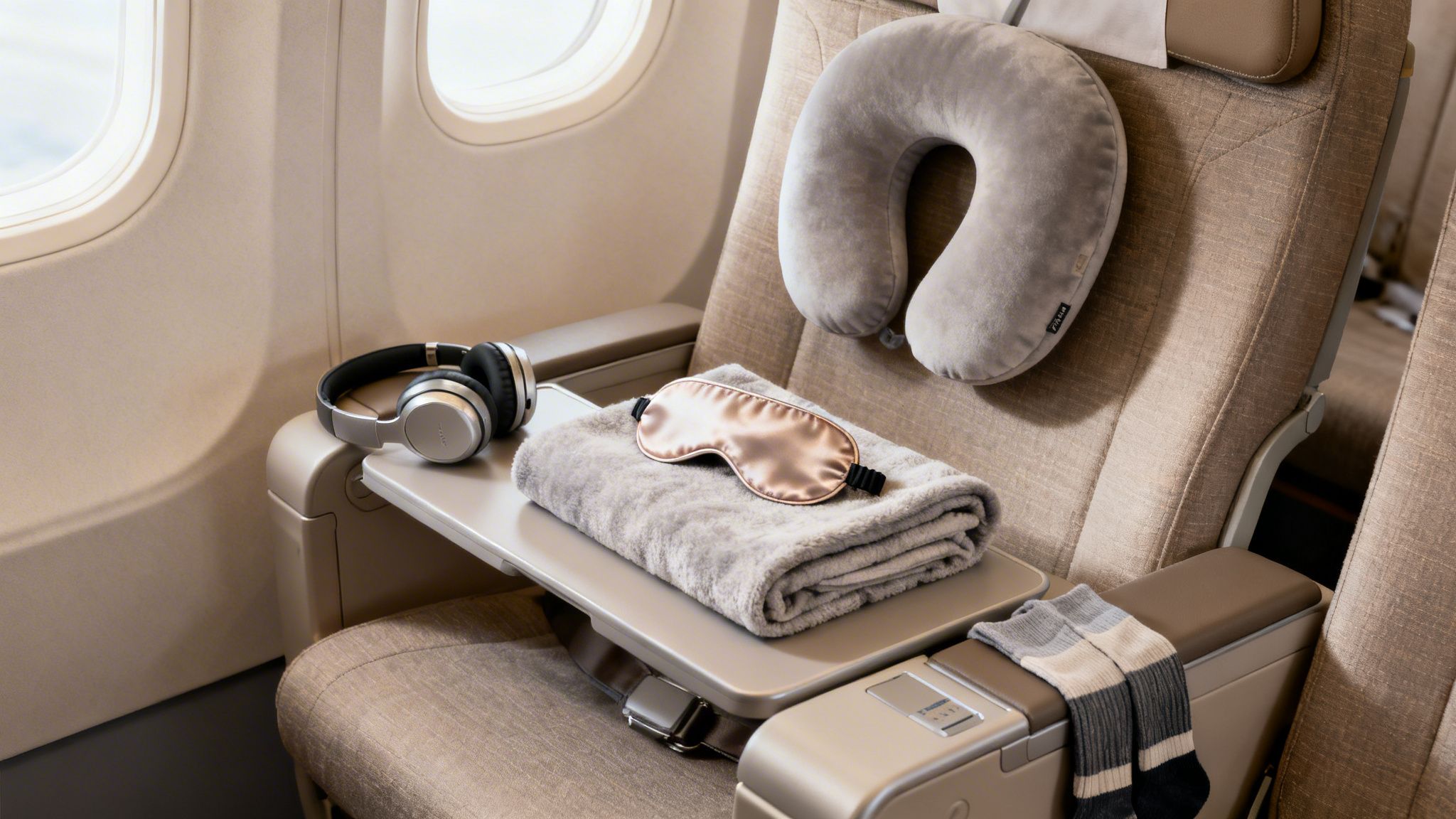
The real difference between landing exhausted and arriving ready to go? It all boils down to comfort and sleep. On a long flight, your seat is your entire world for hours at a time, so turning it into a small sanctuary isn't just a luxury—it’s how you beat jet lag before it even starts.
You know that constant drone of the airplane engines? It seems like simple background noise, but after 10 hours, it can completely drain you. A great pair of noise-canceling headphones is one of the smartest things you can pack. They don’t just make the movie sound better; they create a pocket of calm that lets your brain actually rest.
Choosing Your Comfort Essentials
Beyond blocking out the noise, getting physically comfortable is key. The right gear can make even a middle seat in economy feel manageable. Let’s be honest, sleeping bolt upright is unnatural and usually ends with a stiff neck and a terrible nap. This is where a truly good travel pillow earns its keep.
Look for one that gives you real neck support, stopping your head from doing that awkward forward bob. Memory foam pillows mold to your neck and shoulders, while inflatable ones are a lifesaver for saving space in your carry-on. A pro tip: look for a pillow with a fastener in the front. It keeps it from sliding off the second you doze off.
Another game-changer is a pair of compression socks. Being stuck in a seat for hours isn't great for your circulation and often leads to swollen, uncomfortable ankles. Compression socks apply gentle pressure to your legs, keeping the blood flowing and reducing swelling. It’s a simple, science-backed way to feel much better when you land.
Creating a personal comfort zone is the single best way to manage the physical stresses of long-haul travel. Each item should serve a clear purpose in helping your body relax and endure the journey.
Engineering a Better In-Flight Sleep
Getting real, quality sleep on a plane can feel like the final boss of travel, but it’s totally doable. The biggest obstacle is usually the light—from the cabin lights dimming and brightening to your neighbor’s reading light glaring at you. An eye mask is your first line of defense.
To really block everything out, consider these options:
- Contoured Eye Mask: These have little domes over your eyes, so there's no pressure on your eyelids. This lets you blink naturally and helps with deeper REM sleep.
- Silk Eye Mask: Silk is incredibly soft on your skin and does a fantastic job of blocking light. You can learn more about our top-rated sleep mask here.
Finally, don’t get caught off guard by the notoriously chilly cabin air. A lightweight travel blanket or even a big, cozy scarf is an absolute must. Bringing your own means you won't have to shiver under one of those thin airline blankets, letting you stay warm enough to finally drift off.
Staying Healthy and Organized at 35,000 Feet
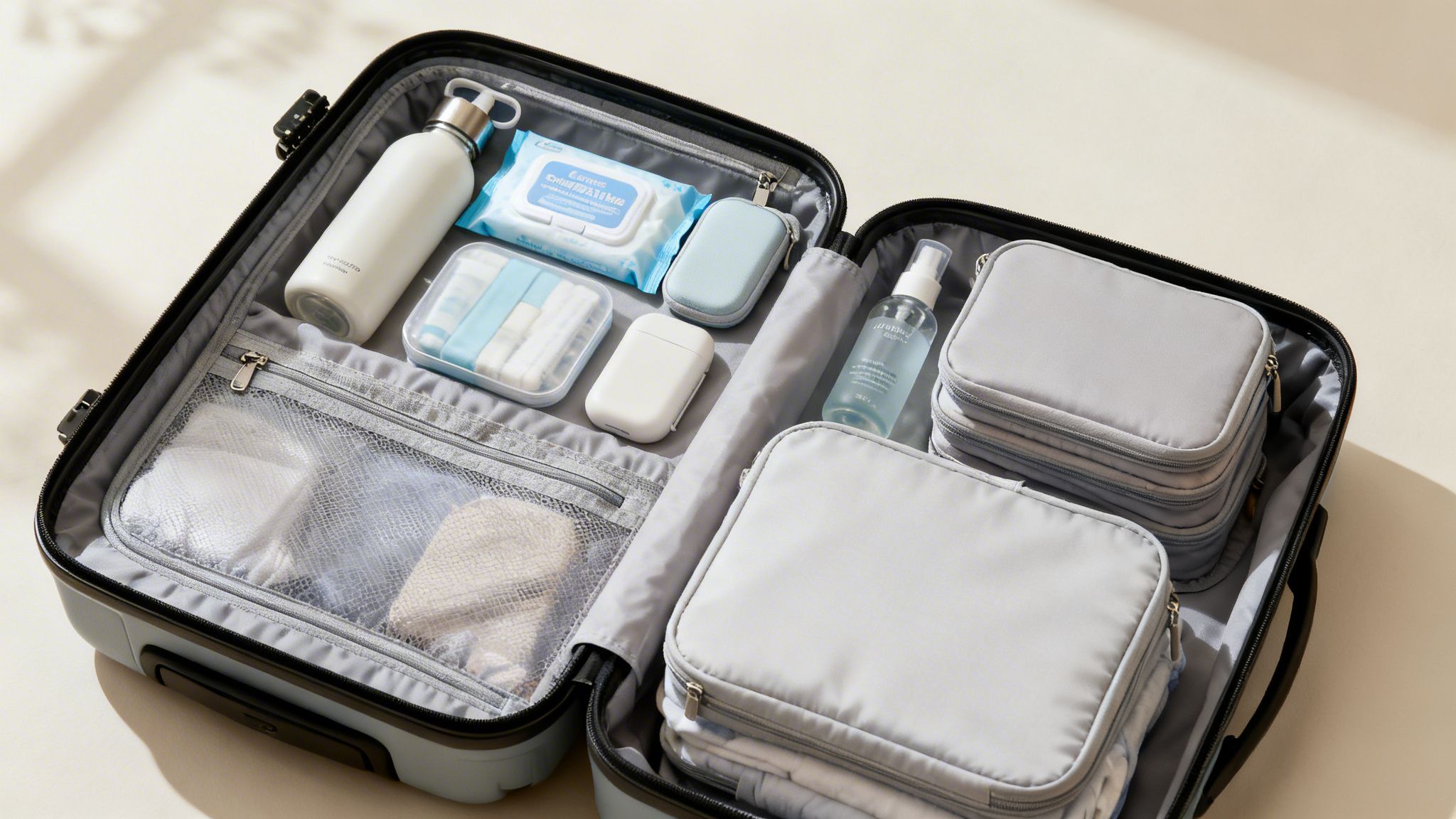
Beyond just being comfortable, a truly great long-haul flight comes down to two things: arriving feeling healthy and knowing exactly where your stuff is when you need it. Let’s be honest, the recycled, bone-dry air in a plane cabin can be brutal on your skin and immune system. On top of that, nothing adds stress like digging through a messy bag in a dark, cramped space.
This is why prioritizing your well-being and keeping things in order are non-negotiable travel essentials for long flights. A few simple items can help you fight back against the harsh cabin environment, and the right packing tools can turn your carry-on from a black hole into an organized command center. Think of it as setting yourself up for a win before you even take off.
Your In-Flight Wellness Kit
The secret to staying healthy in the air is playing good defense against germs and dehydration. The air at cruising altitude is drier than a desert, so your body needs a little help staying hydrated, both inside and out. A small, well-curated health kit makes all the difference.
Here are the must-haves for your kit:
- Reusable Water Bottle: This is a game-changer. Just fill it up after you pass through security. Having your own bottle is a constant reminder to keep sipping water, which is your best defense against dehydration and a core part of our guide on unlocking the secrets of jet lag solutions.
- Sanitizing Wipes: Before you get settled, give your tray table, armrests, and seatbelt buckle a quick wipe-down. It’s a small step that creates a much cleaner personal space for the journey.
- Hydrating Facial Mist and Lip Balm: The dry air will parch your skin. A quick spritz of facial mist and a swipe of lip balm offer instant relief and stop that tight, uncomfortable feeling in its tracks.
- Healthy Snacks: Airport food is often overpriced and not exactly nutritious. Packing your own healthy travel snacks will keep your energy levels stable and your wallet happy.
The Art of Carry-On Organization
A well-organized carry-on isn’t just about being neat—it’s about saving yourself a headache. Knowing exactly where your passport, headphones, or charger is means no more frantic searching under the seat in the dark. This is where smart organizational tools really shine.
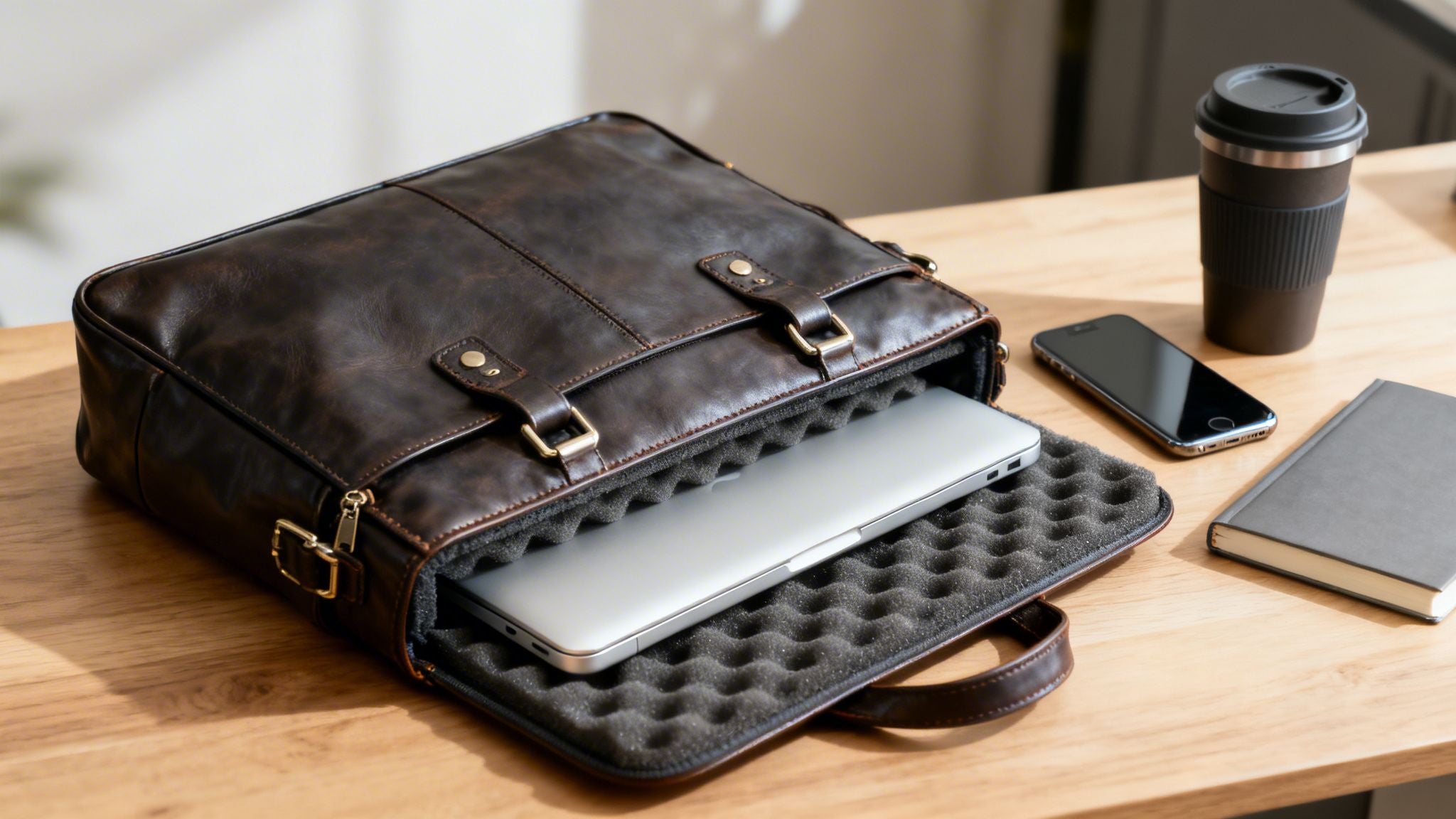
A solid laptop backpack with dedicated compartments acts as your mobile base of operations. Look for one with padded sleeves for your electronics, easy-access pockets for your documents, and a roomy main section. This kind of thoughtful layout makes breezing through security a much calmer experience.
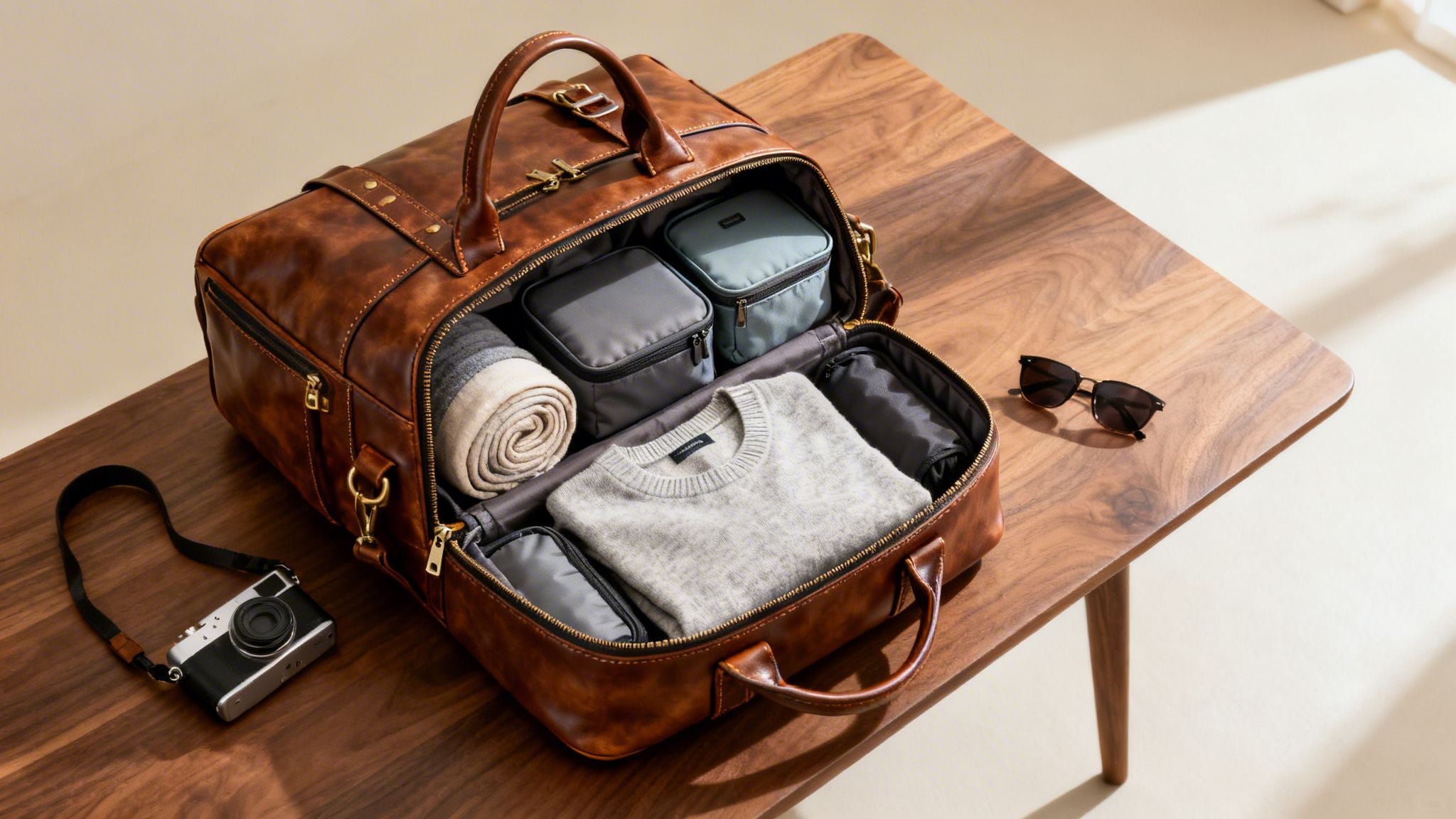
Packing cubes are the secret weapon of savvy travelers. They work like portable drawers for your luggage, compressing clothes and sorting items by type. You'll be amazed by how much more you can fit and how easy it is to grab what you need.
By using packing cubes for your clothes and smaller pouches for all your cables and chargers, you create a simple, modular system. It not only keeps everything secure and tidy during the flight but also makes unpacking when you arrive incredibly fast.
Keeping Your Devices Powered and Entertained
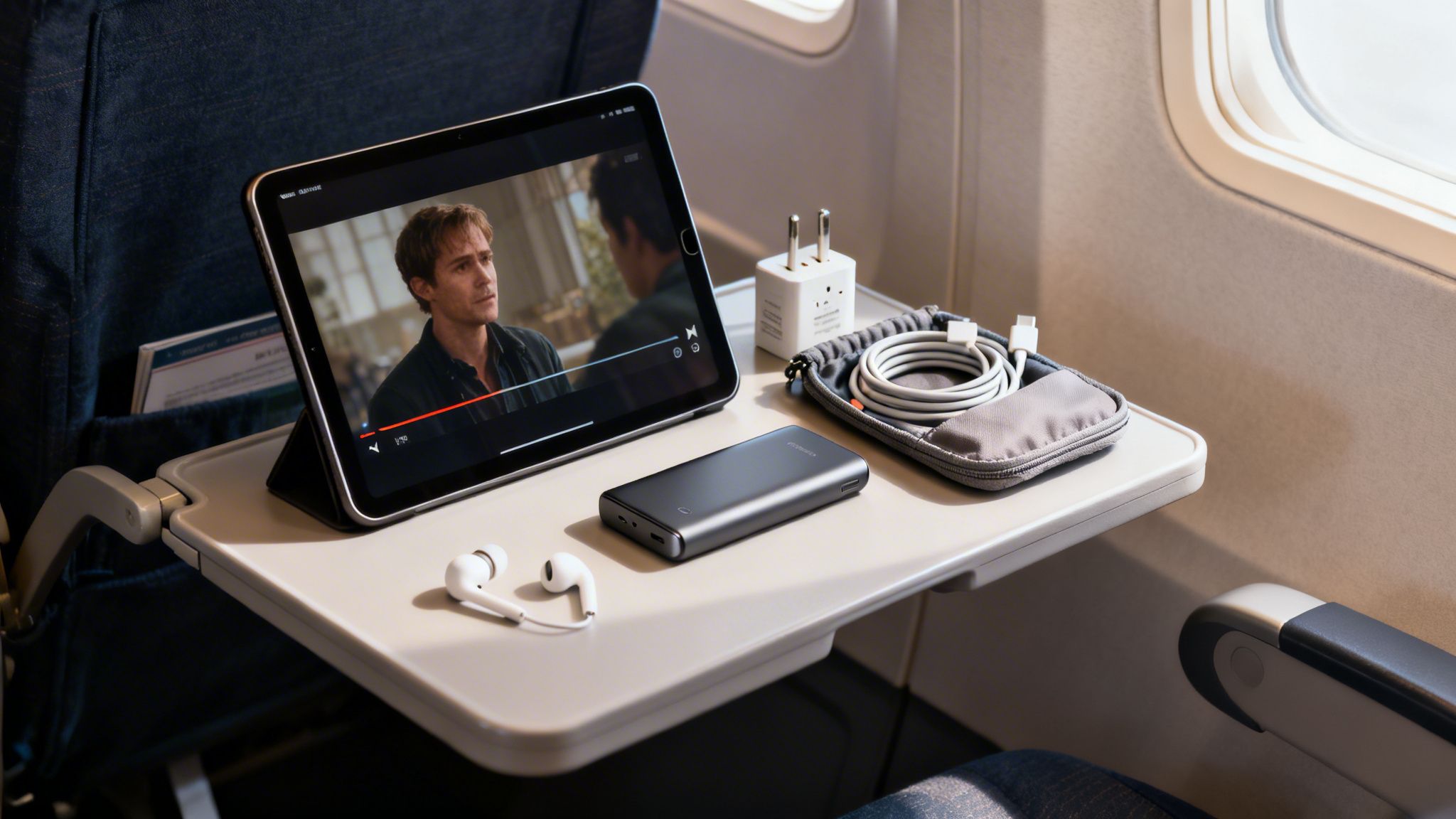
Let's be honest: landing with a dead phone is the modern traveler's nightmare. It’s more than just a minor hiccup; it can throw your entire arrival plan into chaos. That's why managing your power and entertainment is one of the most important parts of packing for a long flight. It’s all about staying connected and sane from takeoff to touchdown.
Relying on the plane's in-seat USB port is a rookie mistake. They’re often slow, sometimes broken, and on older aircraft, completely missing. A trusty portable charger, or power bank, is your personal power grid in the sky. It’s the only way to guarantee your devices will have life when you need them most.
Securing Your Power Supply
When it comes to picking a power bank, capacity is everything. That small charger you carry for a day around town won't cut it for a 12-hour flight. You’ll want something with at least 10,000mAh, which gives you enough juice to charge a modern smartphone two or three times over.
This isn’t just about convenience; it’s a necessity. With the growth of global passenger air traffic on the rise, more people are competing for limited power. Plus, did you know devices can drain up to 50% faster at high altitudes? It’s no wonder 82% of business travelers consider a portable charger an absolute essential.
Besides the power bank itself, here’s what else should be in your tech kit:
- Universal Travel Adapter: If you're crossing borders, even for a layover, this is non-negotiable.
- All Your Cables: Bundle up every cord you need—for your phone, headphones, e-reader, and watch—into a small tech pouch. No more digging through your bag for a tangled mess.
Think of your power bank as an insurance policy against a dead battery. Charge it to 100% before you head to the airport, and always pack it in your carry-on—they aren’t allowed in checked luggage.
Curating Your In-Flight Entertainment
Sure, most long-haul flights have seat-back screens, but they're a gamble. The movie selection could be terrible, the system could be glitchy, or the screen might not even work. The only way to guarantee you won't be staring at the back of a seat for ten hours is to bring your own entertainment.
Before leaving the house, take a few minutes to load up your phone or tablet. Download a full season of that show you’ve been meaning to watch, a few new movies, and a backlog of podcasts or audiobooks. This simple prep work means you'll have hours of entertainment ready to go, no spotty or expensive in-flight Wi-Fi needed. It’s a small step that makes a world of difference.
Smart Packing Strategies for Your Carry-On
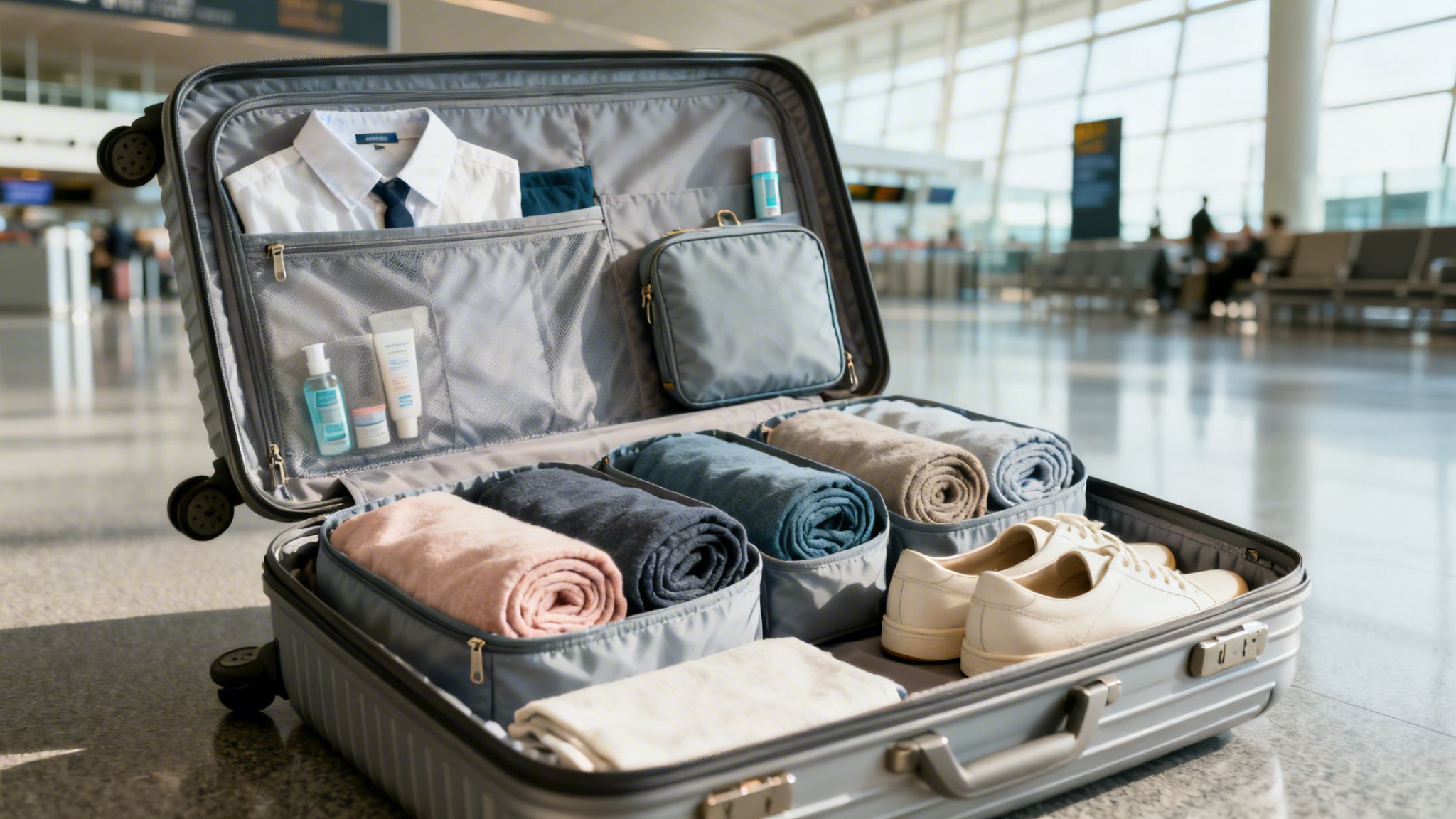
Knowing what to bring on a long flight is one thing, but knowing how to pack it is what really makes the difference between a smooth trip and a chaotic one. The trick is to create a system where everything you need is secure, but also easy to grab when you need it. A smart packing strategy turns your bag from a jumbled mess into a perfectly organized toolkit for your journey.
The most effective method I've found over years of travel is the classic "personal item plus carry-on" system. It's simple: you strategically split your essentials between the two bags. Your smaller personal item (like a laptop backpack or tote) stays at your feet, while the larger carry-on suitcase goes in the overhead bin. This keeps your most important items within arm's reach at all times.
The Two-Bag System Explained
Think of your personal item as your in-flight survival kit. This is where you should keep anything you’ll want to access during the flight without having to stand up and rummage through the overhead bin. Your main carry-on, on the other hand, holds everything else you'll need once you land.
Here’s a quick way to think about dividing your gear:
- Personal Item (Under Your Seat): This bag is for your absolute travel essentials for long flights. We're talking about your passport, wallet, phone, a portable charger, headphones, any necessary medications, a book or tablet, and a small pouch with basics like lip balm and hand sanitizer.
- Carry-On (Overhead Bin): This bag is for everything you won't need until you're off the plane. This includes the majority of your clothes, your main toiletry bag, an extra pair of shoes, and any gifts or souvenirs. It’s always a good idea to pack at least one full change of clothes in here, just in case your checked bag takes a little detour.
To make it even clearer, here’s a handy guide for deciding what goes where.
Carry-On vs Personal Item Packing Guide
| Item Type | Pack in Personal Item (Under Seat) | Pack in Carry-On (Overhead Bin) |
|---|---|---|
| Documents | Passport, tickets, visa, ID, wallet | Copies of important documents |
| Electronics | Phone, laptop, headphones, charger | Extra chargers, adapters, camera |
| In-Flight Comfort | Travel pillow, eye mask, earplugs | Spare blanket or travel towel |
| Health | Daily medications, hand sanitizer, lip balm | Main toiletry bag, first-aid kit |
| Clothing | A spare sweater, scarf, compression socks | Bulk of clothing, extra outfits, shoes |
| Snacks & Water | Small snacks, empty water bottle | N/A |
This table should give you a solid starting point for organizing your bags for maximum convenience and peace of mind during your flight.
Maximizing Space with Packing Cubes
If you're not using packing cubes yet, you're missing out. They are the not-so-secret weapon of frequent flyers. These simple zippered pouches let you compartmentalize everything in your suitcase, almost like having a set of drawers inside your bag.
You can use one cube for shirts, another for pants, and a small one for socks and underwear. This method keeps your clothes from becoming a wrinkled mess, compresses them to save a surprising amount of space, and makes finding a specific item ridiculously easy. No more digging around for a clean pair of socks.
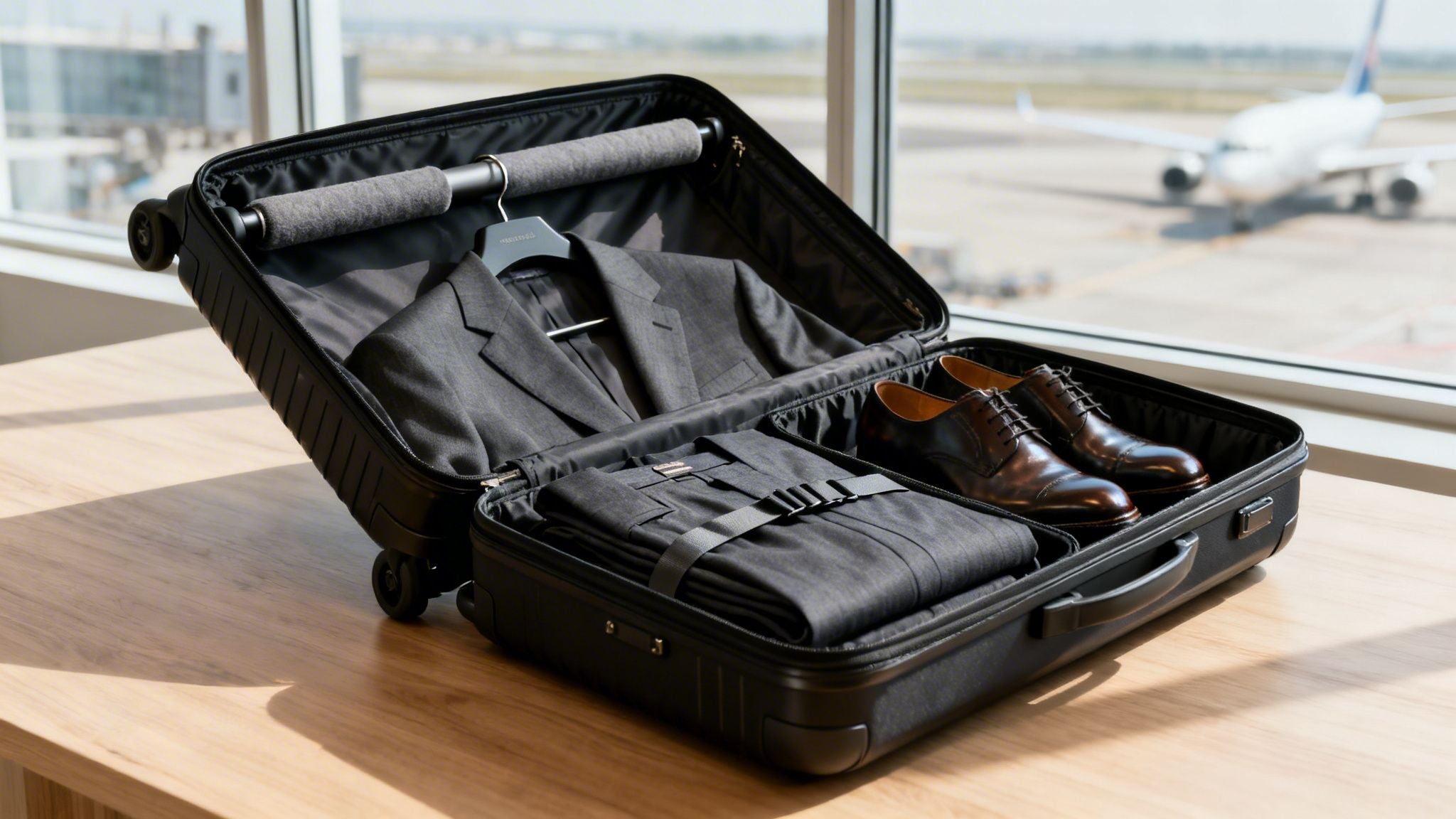
By organizing your bag with purpose, you eliminate the stress of searching for items. A high-quality carry-on with smooth spinner wheels and thoughtfully designed compartments complements this system, making your entire airport experience feel effortless from check-in to the gate.
If you're ready to get organized, our guide on choosing the best packing cubes for travel can help you find the perfect set. This one simple tool will make packing—and unpacking—so much faster and more civilized.
Your Complete Long-Haul Flight Checklist
Getting through a long-haul flight without feeling completely drained all comes down to what you pack. The right gear, organized smartly, can genuinely turn a grueling travel day into a surprisingly comfortable one. This checklist pulls together all the travel essentials for long flights we’ve talked about, giving you a straightforward guide for your next big trip.
Think of this less as a list of stuff and more as a strategy for your own well-being. From your main carry-on down to your personal item, everything has a purpose—to keep you rested, healthy, and in control. Packing this way means you can board with confidence and land feeling ready to go.
Comfort and Sleep Essentials
Honestly, the single most important thing on a long flight is your ability to get some rest. If you can create a little bubble of comfort for yourself, you can block out the chaos and get some real sleep. It’s your best weapon against jet lag.
- Supportive Travel Pillow: Find a good memory foam or inflatable one, ideally with a clip at the front. It stops that dreaded head-bobbing thing that wakes you up.
- Noise-Canceling Headphones: These are non-negotiable. They block out the engine hum and crying babies, letting your brain actually switch off.
- Contoured or Silk Eye Mask: A quality mask that blocks out every bit of light without squishing your eyes makes a huge difference for deep sleep.
- Large Scarf or Travel Blanket: Cabins always get cold. Having your own cozy layer is a game-changer for getting comfortable enough to doze off.
- Compression Socks: They might not seem glamorous, but they keep your blood flowing, which stops your feet and ankles from swelling up after hours of sitting.
Health and Organization Must-Haves
Staying healthy and knowing where your stuff is are the next priorities. A few simple items will help you feel human and keep you from frantically digging through your bag mid-flight.
A well-organized bag is a stress-free bag. Knowing exactly where every essential is located allows you to navigate your journey with ease and confidence.
- Reusable Water Bottle (Empty): This is your best friend for staying hydrated. Just remember to empty it before security, then fill it up at a fountain near your gate.
- Sanitizing Wipes and Hand Sanitizer: The first thing you should do when you sit down is wipe your tray table, armrests, and seatbelt buckle.
- Packing Cubes: The secret to a tidy carry-on. They compress your clothes and let you separate items so you’re not making a mess to find one t-shirt.
- Tech Pouch: Keep all your cords, chargers, and adapters in one place. No more untangling a spaghetti monster of cables at 30,000 feet.
- Toiletry Bag with Essentials: A small kit with lip balm, a hydrating face mist, a toothbrush, and any personal medications will help you feel refreshed.
A Few Last-Minute Questions
Even the most seasoned traveler has those nagging last-minute questions that pop up before a long-haul trip. Let's tackle a few common ones to make sure your journey is as smooth as possible.
What Kind of Snacks Should I Pack?
The golden rule for flight snacks is to be considerate. Pack things that are non-perishable, don't make a mess, and aren't noisy to eat. Think trail mix, protein bars, dried fruit, or a bag of pretzels.
Out of courtesy to everyone sharing the cabin, it's best to leave anything with a strong smell at home—like that tuna sandwich or potent cheese. Having your own stash not only saves you from overpriced airport food but also keeps your energy levels stable.
What's the Best Way to Stay Hydrated?
Simple: bring an empty, reusable water bottle. You can’t take water through security, but you can fill it up at a fountain on the other side.
The air in a plane cabin is incredibly dry, and those tiny cups the flight attendants hand out just don't cut it. Sipping water consistently throughout the flight is your best bet for feeling fresh when you land.
A quick pro-tip: while it's tempting, try to limit coffee, soda, and alcohol. They can actually make dehydration worse. If you do have one, just be sure to follow it up with plenty of water.
Any Killer Tips for Beating Jet Lag?
The battle against jet lag begins before you even leave the ground. A day or two before your flight, start shifting your sleep schedule closer to your destination's time zone.
Once you’re on the plane, set your watch to the new time and act accordingly. If it’s nighttime where you’re going, try to sleep. Staying hydrated, eating light, and getting some rest on the plane will give you a major head start.
For a curated selection of premium luggage and travel accessories designed to make every journey effortless, explore the collections at Voyage Luggage. Find the perfect carry-on or backpack to house all your long-flight essentials. https://voyageluggage.com
Share:
Finding the Best Luggage Lock for Secure Travel
The Best Travel Cable Organizer for Tangle-Free Trips