

The right travel cable organizer really comes down to your personal gear and how you travel. It should have a good mix of elastic loops for your cords, some zippered pockets for bigger things like a power bank, and a tough shell to keep it all safe. Honestly, for most of us, a versatile soft-shell pouch or a compact roll-up organizer is the sweet spot between protection and portability, finally putting an end to that travel-day chaos.
Why a Cable Organizer Is Your Best Travel Companion
You know the feeling. You're at the airport gate, phone blinking at 5%, and you dig into your carry-on only to pull out a tangled bird's nest of cables. It's frustrating, wastes time, and can even damage your expensive tech. This is exactly why a good travel cable organizer is an essential, not a luxury. It turns a messy chore into a quick, simple process.
But a dedicated organizer is more than just a way to keep things neat. Think of it as a protective case for your most important accessories—an insurance policy for your chargers, adapters, and power banks. By securing everything in padded compartments and snug elastic loops, you stop cables from fraying and connectors from bending, which is exactly what happens when they're just tossed into a backpack.
More Than Just Tidiness
The real perks go beyond just organization and protection. A well-packed tech kit saves you a ton of time and mental energy. No more frantic rummaging for the right cable or that nagging feeling you left the wall charger at home. Everything has a home, and you can grab it in seconds. That kind of order brings a real sense of peace of mind, turning a moment of stress into one of pure efficiency.
And it’s not just us—the numbers show it, too. The global market for cable management is expected to explode, hitting USD 31.57 billion by 2031. This growth is all thanks to tech-savvy travelers who simply can't afford to be offline. North America is leading the charge, making up over 30% of the market as more and more professionals travel with multiple devices.
The real value of a travel cable organizer isn't just being tidy. It's about reliability—knowing exactly where your essential tech is, that it's safe, and that it's ready to go the moment you need it.
While a great organizer helps you manage the cables you bring, it’s also worth thinking about how to bring fewer of them in the first place. Looking into innovations like wireless charging can offer true cable-free convenience and make your travel setup even simpler.
Choosing Your Perfect Organizer: What to Look For
Picking the right travel cable organizer isn't just about grabbing the first one you see on the shelf. It’s about finding a partner for your tech. Think of it like buying a good pair of hiking boots—what works for a casual walk in the park won't cut it on a mountain trail. The best organizer is the one that fits your gear and your travel style perfectly.
Let's walk through the key things I always look at when evaluating an organizer. Getting these right is the difference between a tidy, protected set of electronics and a frustrating jumble of wires.
Assess Your Size and Capacity Needs
First thing's first: do a "tech audit." Before you even start shopping, pull out every single cable, charger, power bank, and adapter you typically pack for a trip. Lay it all out on your bed or desk. This isn't about guessing; it's about seeing the physical footprint of what you need to organize.
Once you have a clear picture, you can pick a size that makes sense. The sweet spot is an organizer that holds everything you currently own with a little bit of wiggle room for that one new gadget you'll inevitably buy. Going too big just eats up valuable space in your luggage, but cramming everything into one that's too small is a recipe for a tangled mess and a headache.
A common mistake is buying an organizer for an imaginary, minimalist version of yourself. Be realistic about what you actually carry to find a size that genuinely works for you.
Evaluate Compartment Design and Layout
The inside of the organizer is where the magic happens. A smart layout is just as crucial as the overall size because it determines how quickly you can find what you need. A good design should completely eliminate the "one giant pocket" problem, where everything ends up tangled together anyway.
Look for a thoughtful mix of storage solutions:
- Elastic Loops: These are your best friends for holding charging cables, wired earbuds, and even a stylus. They keep everything coiled and ready to grab.
- Zippered Mesh Pockets: Perfect for all those small, easy-to-lose items like SD cards, USB sticks, and dongles. The mesh is key—you can see what’s inside at a glance.
- Larger Padded Pockets: This is where you’ll stash the bigger stuff. A chunky power bank, a travel mouse, or a wall adapter needs a secure, cushioned spot to protect it from getting banged up.
The chaos of a poorly packed bag isn't just annoying—it's a risk to your gear.
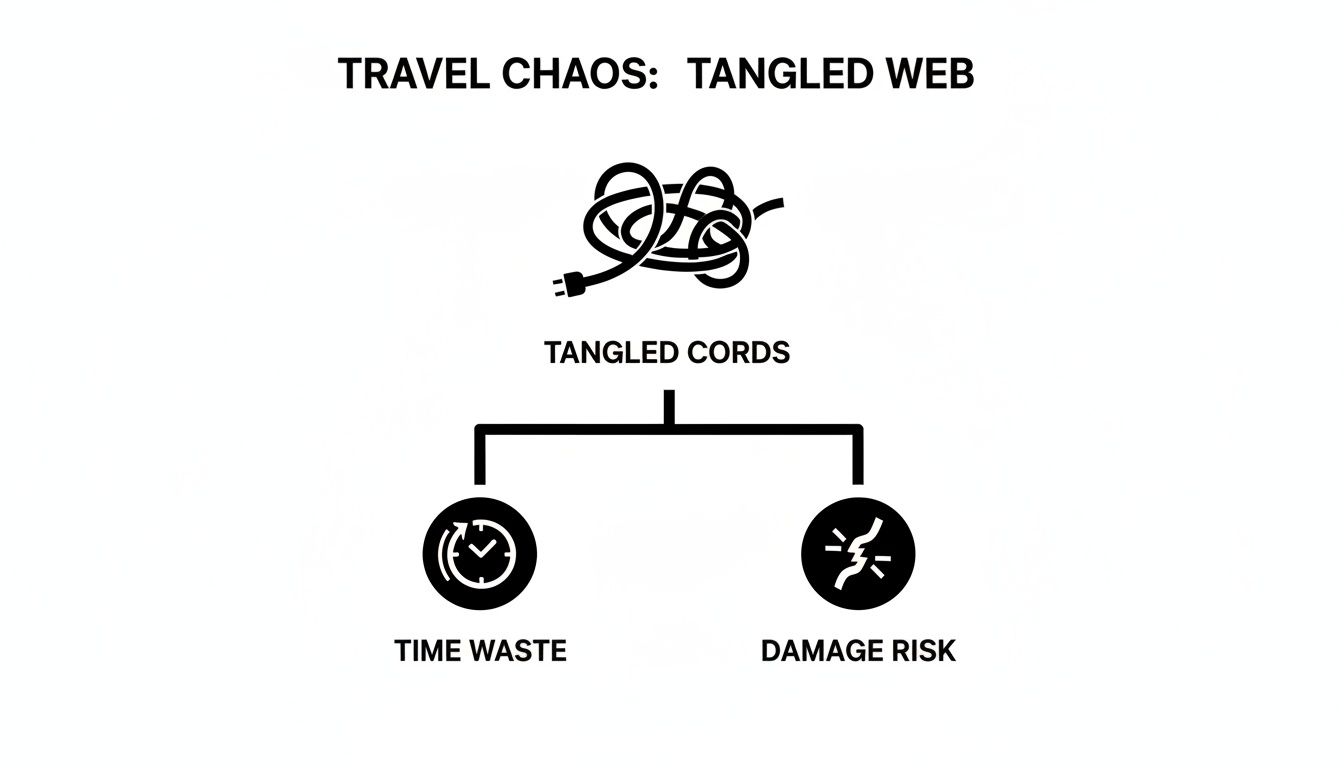
As you can see, a little organization goes a long way. It saves you the headache of untangling knots and protects your expensive electronics from getting yanked and damaged.
To help you decide what matters most for your trips, I've put together a quick-reference table.
Essential Features of the Best Travel Cable Organizers
This table breaks down the pros and cons of different features, so you can quickly zero in on what's most important for how you travel.
| Feature | What to Look For | Ideal For | Considerations |
|---|---|---|---|
| Size & Capacity | A snug fit for your current gear with a little extra room. | Everyone—from minimalists to digital nomads. | Too big wastes space; too small causes tangles and frustration. |
| Compartments | A mix of elastic loops, zippered mesh pockets, and larger padded sections. | Travelers with a diverse mix of small and large accessories. | A single-pouch design is simpler but less organized. |
| Material | Durable fabrics like ripstop nylon or polyester; water-resistant coating. | Frequent flyers and adventure travelers. | Premium materials often come with a higher price tag. |
| Closure | High-quality zippers (like YKK), strong Velcro, or secure roll-top designs. | Anyone who needs quick, reliable access to their gear. | Cheap zippers are a common point of failure. |
| Protection | Semi-hard shell exteriors or integrated padding throughout the organizer. | Photographers, videographers, and anyone carrying fragile tech. | Hardshell cases offer more protection but are bulkier. |
Ultimately, the best features are the ones that solve your specific packing challenges. A weekend traveler might prioritize a slim profile, while a content creator will need robust padding.
Prioritize Material and Durability
Let's be honest—your travel gear takes a beating. Your cable organizer will be shoved into backpacks, squeezed into overhead compartments, and generally knocked around. It has to be built to last. Skimping on materials is a surefire way to end up with a broken zipper or a torn seam when you're miles from home.
Keep an eye out for tough fabrics like ripstop nylon or polyester, which are great at resisting scuffs and tears. A water-resistant coating is another huge plus, giving you a bit of a safety net against spills or a sudden downpour. And don't forget the zippers! A reliable zipper from a brand like YKK is often a good indicator of overall quality construction.
It's not just about function, either. For many, a well-organized bag is part of a polished travel aesthetic. This growing interest in smart accessory management is part of a market valued at an incredible USD 28.1 billion in 2024, with projections to hit USD 58.56 billion by 2033. You can dig deeper into this trend and its drivers on SkyQuest.
Finding the Right Style of Cable Organizer
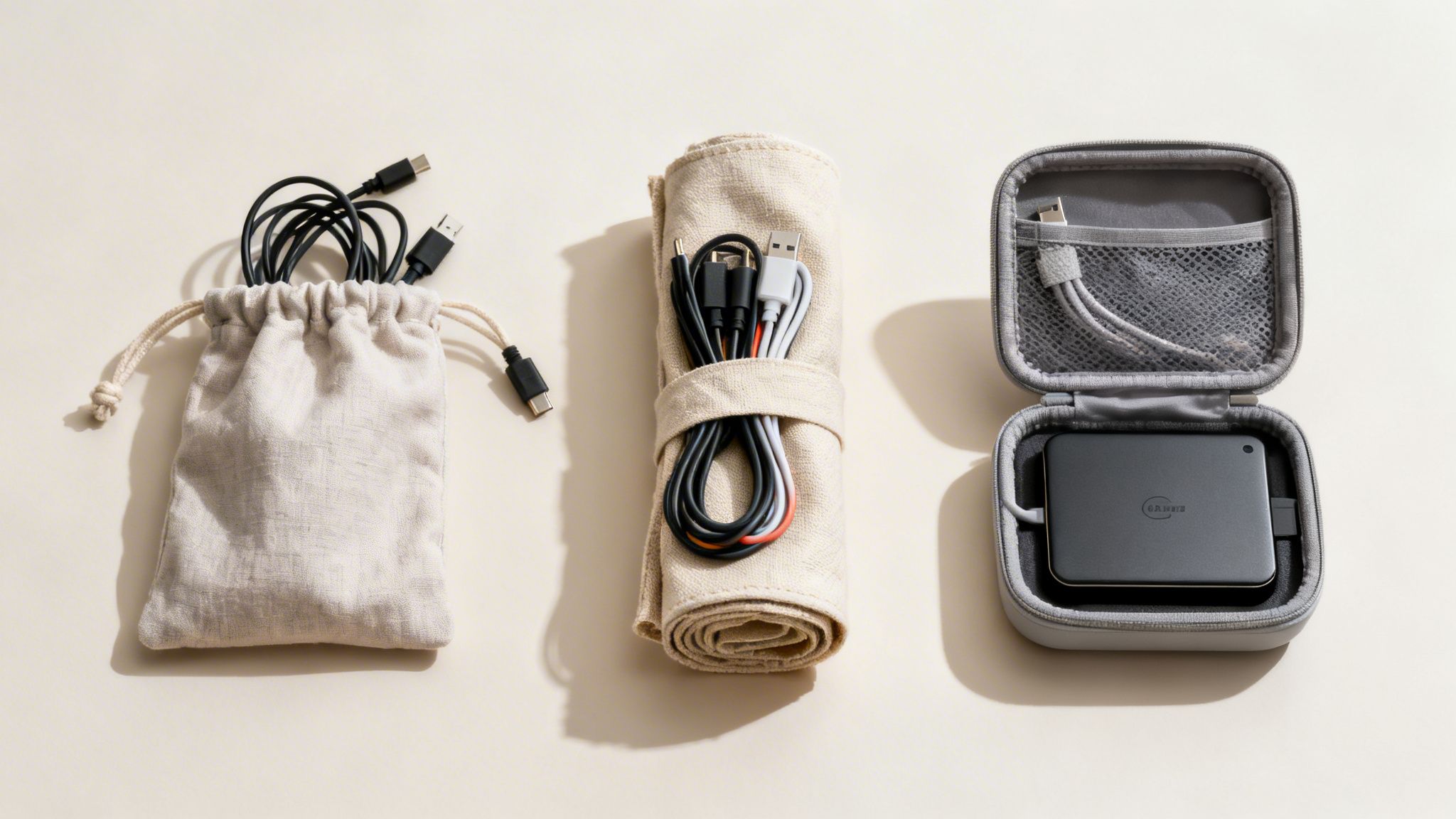
Choosing a travel cable organizer isn't about finding the "best" one, but the best one for you. It’s all about matching the style to how you actually travel. You wouldn't take a massive checked bag for a quick weekend trip, right? The same logic applies here.
Most organizers fall into one of three main camps: the pouch, the roll-up, and the hard-shell case. Getting to know the pros and cons of each is the secret to finding a system that just clicks with your gear and packing habits. Let’s dig in.
The Versatile Pouch
Think of the pouch as the dopp kit for your tech. It’s easily the most flexible and forgiving option out there, built to be tossed into a backpack or carry-on without a second thought. Most of them open like a small book or clamshell, revealing a world of elastic loops, zippered mesh pockets, and handy little dividers.
Because they’re soft-sided, they have a little give and can squish down when not stuffed to the brim, which is a real space-saver. This adaptability makes them a fantastic all-rounder. A good pouch can easily swallow a power bank, a handful of charging cables, a wall plug, and your earbuds, keeping the whole mess neatly contained.
The pouch is the go-to for most travelers. It hits that sweet spot between structured organization and flexible space, making it perfect for anything from a weekend getaway to a week-long conference.
If you just want a reliable solution that works, the pouch is a great place to start. A perfect example is the popular TUMI Alpha Electronic Cord Pouch from our collection at Voyage Luggage. It’s a premium take on the classic pouch, blending tough materials with a genuinely smart layout that frequent flyers swear by.
The Minimalist Roll Up
Next up is the roll-up, the darling of minimalists and anyone obsessed with efficiency. This style lays out completely flat, putting all your gear on display in a neat little grid. After you tuck your cables and accessories into their slots, you just roll it up and fasten it with a strap or buckle. Simple.
The design has two big things going for it. First, it’s incredibly slim when rolled, so it can slide into a laptop sleeve or the side pocket of a backpack without creating a bulge. Second, because it lays flat, you can see everything you have at once. No more blindly digging for that tiny dongle at the bottom of a bag. It instantly turns any coffee shop table into your command center.
The Protective Hard Shell Case
Finally, we have the hard-shell case. This is less of an organizer and more of a personal bodyguard for your expensive, fragile tech. If your travel kit includes things like an external hard drive, pricey camera batteries, or delicate audio gear, the hard-shell case provides protection that soft organizers just can't match.
Its rigid exterior is built to take a beating, absorbing impacts and preventing your valuables from getting crushed in an overstuffed suitcase. It’s definitely the bulkiest of the three, but for photographers, videographers, and digital nomads with gear they can’t afford to replace, that peace of mind is worth everything. This is easily the best travel cable organizer for anyone who needs to prioritize maximum security for their tech.
Finding the Right Organizer for Your Travel Style
Knowing what kinds of organizers are out there is a good start, but the real trick is matching one to how you actually travel. There's no single "best" travel cable organizer. The right one is the one that just clicks with your habits and your gear.
Let's look at a few common traveler types. See if you recognize yourself in one of them—it'll make picking the right solution a whole lot easier.
The Efficient Business Traveler
Picture Alex. A consultant who practically lives out of a carry-on, hopping between cities for quick business trips. Alex’s tech is minimal and professional: just a laptop, smartphone, wireless earbuds, and a power bank. The priority here is speed and efficiency. There’s simply no time to untangle a mess of cords between landing and walking into a client meeting.
For a traveler like Alex, the best organizer is sleek, professional, and almost invisible.
- Top Choice: A minimalist roll-up organizer or a slim, structured pouch.
- Key Features: It has to slip into a laptop bag or briefcase without adding any annoying bulk. A few strong elastic loops are perfect for keeping cables tidy, and a small padded pocket for a power bank is a major bonus.
- Why It Works: This setup lets Alex roll it out on a tiny hotel desk or a café table, see everything at once, and pack it all up again in seconds. It’s all about grab-and-go simplicity.
The Globetrotting Creator
Next up is Maya, a travel vlogger and photographer. Her gear bag is her entire office, crammed with a whole ecosystem of tech. We're talking camera batteries, a drone, microphones, an external hard drive, a handful of SD cards, and a chaotic tangle of very specific cables. For Maya, protecting her gear isn't just a nice-to-have; it's essential for her job.
A simple little pouch just isn't going to work. Maya needs something built like a tank.
- Top Choice: A large, padded hard-shell case.
- Key Features: A tough, rigid exterior is non-negotiable—it prevents gear from getting crushed in a stuffed overhead bin. Inside, customizable velcro dividers are a lifesaver for creating secure spots for oddly shaped items like drone batteries or audio equipment.
- Why It Works: This kind of case is like a portable vault. It gives her peace of mind that a bumpy flight or a rough taxi ride won’t destroy the expensive equipment she depends on.
The Organized Family Vacationer
Finally, let's meet the Miller family, packing up for their annual vacation. Their big challenge? Juggling the tech for four people. That means two adult smartphones, two tablets for the kids, a Nintendo Switch, and all the chargers and cables that go with them. The main goal is to keep it all in one spot and put an end to the "Who took my charger?!" drama.
Their needs aren't about looking professional; they're all about capacity and durability.
- Top Choice: A large, multi-panel pouch organizer, often called a "tech folio."
- Key Features: Look for tons of space with multiple zippered pockets and a whole lot of elastic loops. A bright, fun color makes it easy to find in a suitcase overflowing with family stuff, and a wipe-clean material is a must for handling the inevitable spills.
- Why It Works: It becomes a central "charging station" for the whole family. Before leaving the hotel room, a quick check of the organizer ensures every device's cord is back where it belongs. Hello, peaceful vacation.
No matter who you are, the problem is universal: we're all carrying more gadgets. In fact, research predicts 85% of business trips in 2025 will involve three or more devices. All those electronics contribute to an estimated $2.3 billion in global losses from damaged cables alone. A good organizer is a simple way to cut that risk. You can read more about the trends driving the cable management market and see how other travelers are adapting.
When you pair a great tech organizer with other smart packing tools, you can take all the stress out of packing. To get the rest of your bag in order, check out our guide on the best packing cubes for travel.
Pro Tips for Smarter Cable Packing
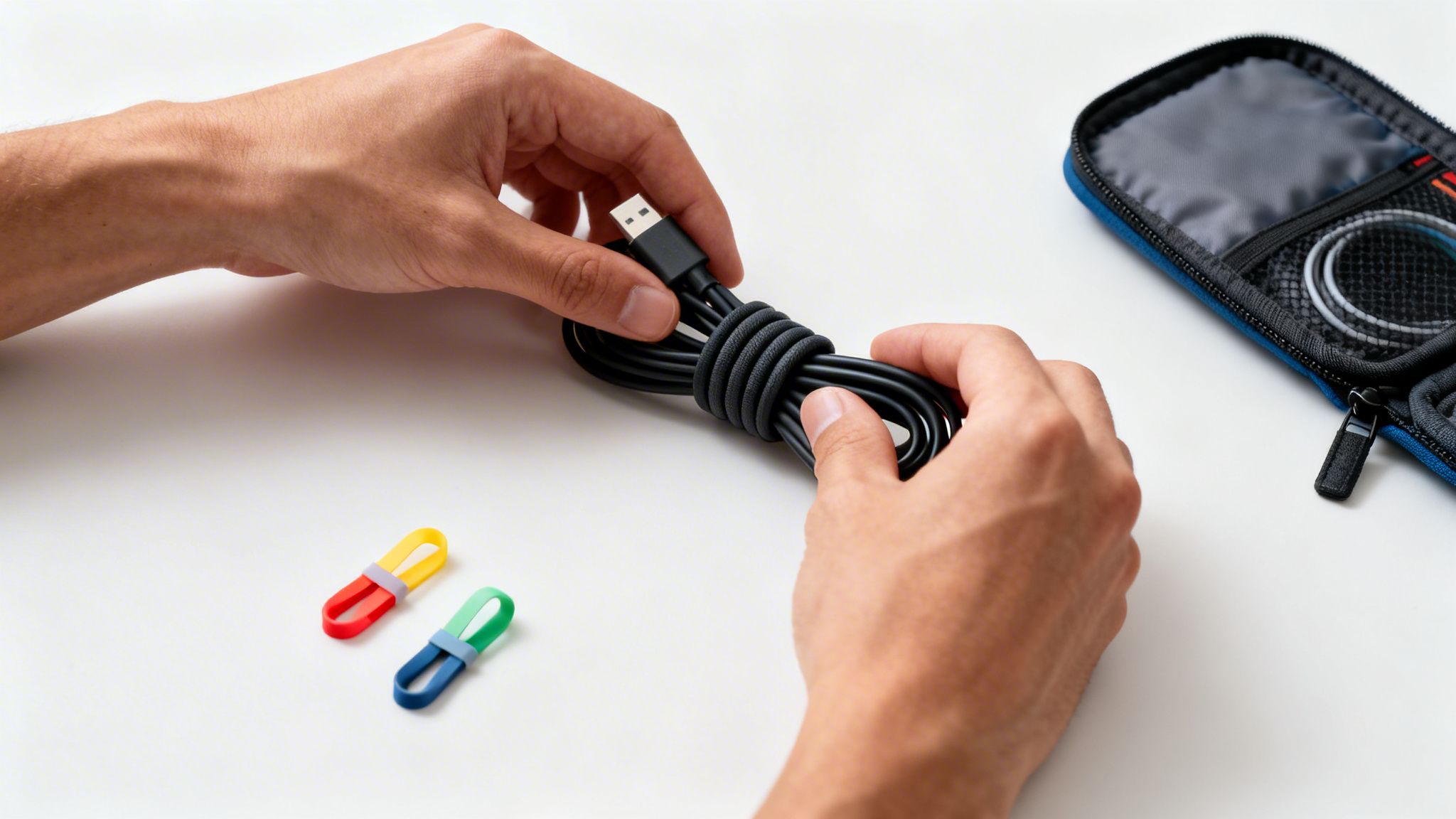
Having a great travel cable organizer is the first step, but how you use it is what separates the novices from the pros. These aren't just about stashing your gear; they're about building smarter packing habits that protect your tech and save you headaches on the road.
Start thinking of your cables as the lifelines they are. When you wrap them too tightly around your hand or the power brick, you're putting a ton of stress on the delicate wires inside. That constant strain is what causes frayed ends and dead cables, usually right when you need them most.
Master the Roadie Wrap
The secret to keeping your cables healthy is a technique called the "roadie wrap," or the over-under method. Audio engineers and stagehands have used this trick for decades to keep their expensive equipment in top shape. It involves alternating the direction of each loop, which creates a natural, stress-free coil.
This simple method prevents the internal twisting and kinking that kills cables over time. A quick search for a tutorial online is all it takes to learn this game-changing habit.
And while you're at it, think about what you're plugging those cables into. Finding the best travel charger with multiple ports can cut down on the number of power bricks you need to pack in the first place.
Color-Code for Quick Identification
Now, let's tackle the "which-cable-is-which" problem. When you're staring into a pouch full of identical black and white cords, finding the right one is pure guesswork. A little color-coding ends that frustration for good.
- Colored Cable Ties: Assign a color to each of your devices. Maybe blue is for your phone, red is for your tablet, and green is for your camera. This simple system lets you spot and grab what you need in a split second. Our collection of MUMI cable ties is perfect for this.
- Washi Tape: Don't have ties? A small piece of colorful or patterned washi tape wrapped near the ends of each cable does the same job and adds a personal touch.
Taking a few minutes to set this up turns your organizer from a simple pouch into a super-efficient, grab-and-go command center for your electronics.
Pro-Tip: Always, always pack your cable organizer in your carry-on bag. Stick it in an easily accessible front pocket. This ensures your essential chargers are with you, not in a lost suitcase, and makes it a breeze to pull out for airport security screenings. No more digging around at the last minute
Your Top Cable Organizer Questions Answered
Even with all the options laid out, a few key questions always seem to come up. Getting straight answers to these common sticking points can make all the difference in picking the right organizer. Let's tackle the questions we hear most often from fellow travelers.
Think of this as your final checklist—a quick conversation to clear up any lingering doubts before you make a choice.
Is a Hard-Shell Organizer Better Than a Soft One?
The honest answer? It really depends on what you're carrying and where you're going. Neither one is automatically "better," but one is definitely going to be better for you.
A hard-shell organizer is basically an armored car for your gadgets. It offers the best possible protection from drops, bumps, and the pressure of an overstuffed suitcase. This makes it a no-brainer for expensive or fragile gear like external hard drives, camera batteries, or nice headphones, especially if you plan on checking your bag.
On the flip side, a soft organizer is all about flexibility. It’s lighter and can be squished into that last awkward empty spot in your backpack. If you're a carry-on-only traveler who needs to make every inch count, a soft-sided pouch is your best friend.
What Size Travel Cable Organizer Should I Get?
The single biggest mistake people make is getting an organizer that's way too big or, even worse, one that's just a little too small. The perfect size is tied directly to the gear you actually bring on a trip. Before you even start browsing, do a quick "tech audit."
Seriously, lay out every single cable, charger, power bank, and adapter you plan to pack. This simple step gives you a real-world picture of what you need to fit.
The goal isn't just to fit what you have now, but to leave a little breathing room for one or two new gadgets. You want an organizer that fits snugly, not a giant case that wastes precious space in your luggage.
Can I Just Use a Plastic Bag for My Cables?
Look, we get it. A Ziploc bag seems easy, and it's certainly better than just throwing your cables into the abyss of your backpack. But it’s a temporary fix that comes with real risks. A plastic bag offers zero protection and next to no organization. Your cords will still end up in a tangled mess, and it only takes one bad toss of your bag to bend or break a delicate connector.
A proper organizer is a small investment that pays for itself. Those elastic loops, padded pockets, and structured compartments are all designed for one thing: to keep your electronics safe, untangled, and ready to go.
Where Should I Pack My Cable Organizer?
This is one of the non-negotiable rules of smart travel: always pack your cable organizer in your carry-on bag. Never, ever put it in your checked luggage.
Keeping it with you means you can easily grab your power bank during a long layover or charge your phone on the plane. More importantly, it protects your essential gear from getting lost, stolen, or damaged if your checked bag takes an unexpected detour. For pro-level access, stick it in an outer pocket of your backpack so you can pull it out in a flash at the TSA checkpoint.
At Voyage Luggage, we’ve hand-picked a collection of tech organizers that solve these exact problems. We have the perfect fit to end cable chaos for good. Shop our travel accessories now.
Share:
Your Ultimate Checklist of Travel Essentials for Long Flights
Your Guide to Finding the Perfect International Carry On