

When you see a backpack with tons of five-star reviews, you know it's doing something right. The best top rated travel backpacks aren't just bags; they're travel partners that blend smart design, serious durability, and features that genuinely make your life easier. Think of packs like the Peak Design Travel Backpack or the Osprey Farpoint 40—they consistently get rave reviews because they solve real-world travel problems, like fitting into an overhead bin or keeping your laptop safe. They make the journey smoother.
What Makes a Travel Backpack "Top-Rated"?
Before diving into the hundreds of options out there, let's break down what truly separates a top-rated backpack from all the others. It's not just about a fancy logo. It's about a thoughtful combination of materials, design choices, and practical features that have been tested and approved by travelers just like you. A high rating is simply proof that the backpack actually delivers on its promises when it matters most.
Think of it like a perfectly balanced tool. The right one makes the job of traveling feel almost effortless. For a business traveler, that might be a sleek pack with a dedicated laptop sleeve that sails through security. For an adventurer, it's a rugged companion that can handle rough weather and even rougher baggage handlers.
To help you narrow down your search, here's a quick look at what different types of travelers should prioritize.
Quick Guide to Finding Your Perfect Travel Backpack
| Traveler Profile | Key Features to Look For | Top Material Choice | Ideal Capacity Range |
|---|---|---|---|
| The Business Traveler | Dedicated laptop sleeve, professional look, easy-access pockets | Ballistic Nylon | 25-35 Liters |
| The Style-Conscious | Premium materials, sleek design, unique color options | Waxed Canvas or Leather | 20-30 Liters |
| The Deal-Seeker | Durability for the price, versatile features, solid warranty | Ripstop Polyester | 30-40 Liters |
| The Gift Buyer | High ratings, versatile use case, trusted brand name | CORDURA® fabric | 35-45 Liters |
This table gives you a starting point. Now, let’s dig into the specific qualities that earn a backpack its high ratings.
Core Qualities of Elite Packs
The backbone of any great travel pack is its construction. It all starts with high-performance fabrics like CORDURA® ballistic nylon, which is famous for its incredible resistance to tears, scuffs, and abrasion. This is the kind of material that ensures your bag can be tossed into an overhead bin or dragged through a crowded market and still look great.
Hardware is the other piece of the puzzle. Always look for brands that use YKK zippers. They are the undisputed industry gold standard for a reason—they're tough, reliable, and practically foolproof. A busted zipper can ruin a trip, and premium hardware is the best insurance you can get. These are the small but critical details that seasoned travelers and gear experts always point out in their reviews.
A backpack's rating is a story told by hundreds of travelers. It reflects not just how the bag looks, but how it performs under pressure—from surviving baggage handlers to keeping gear organized across multiple countries.
It's More Than Just Materials
Beyond tough fabrics and zippers, the best backpacks are all about smart, functional design. You'll notice that the highest-rated packs often share a few key features that just make traveling simpler. A clamshell opening, for example, lets you open the bag like a suitcase, so you can see and grab whatever you need without having to dig through everything.
Other features you'll almost always find in top-tier bags include:
- A Comfortable Suspension System: Padded shoulder straps, a supportive back panel, and an adjustable sternum strap work together to distribute the bag's weight evenly. This is what saves your back and shoulders on long travel days.
- Smart Organization: Look for dedicated compartments for your laptop, passport, and water bottle. Keeping your essentials secure and easy to reach is a game-changer.
- Versatile Compression Straps: These are fantastic for cinching the bag down when it isn’t fully packed. It keeps the profile slim and stops your gear from sloshing around inside.
Getting a handle on these core qualities is the first step to finding a backpack you'll love. For a deeper look at matching your gear to your travel style, check out our guide on how to choose luggage.
Anatomy of a Premier Travel Backpack
Stepping into the world of top-rated travel backpacks can feel a bit like learning a new language. You'll hear terms like "ballistic nylon," "YKK zippers," and "load lifters" tossed around, but what do they really mean for your trip? The secret is to think of a great backpack not as just a bag, but as a complete system where every single piece is chosen for a reason.
Understanding this anatomy is how you learn to spot the difference between a pack that just looks good online and one that's a true performer on the road. It’s the key to reading a product description like a pro and seeing the real value behind the price tag. Let's break down the core elements that work together to make an exceptional travel companion.
This map helps visualize how the three core pillars—design, materials, and features—all connect to create a truly top-tier backpack.
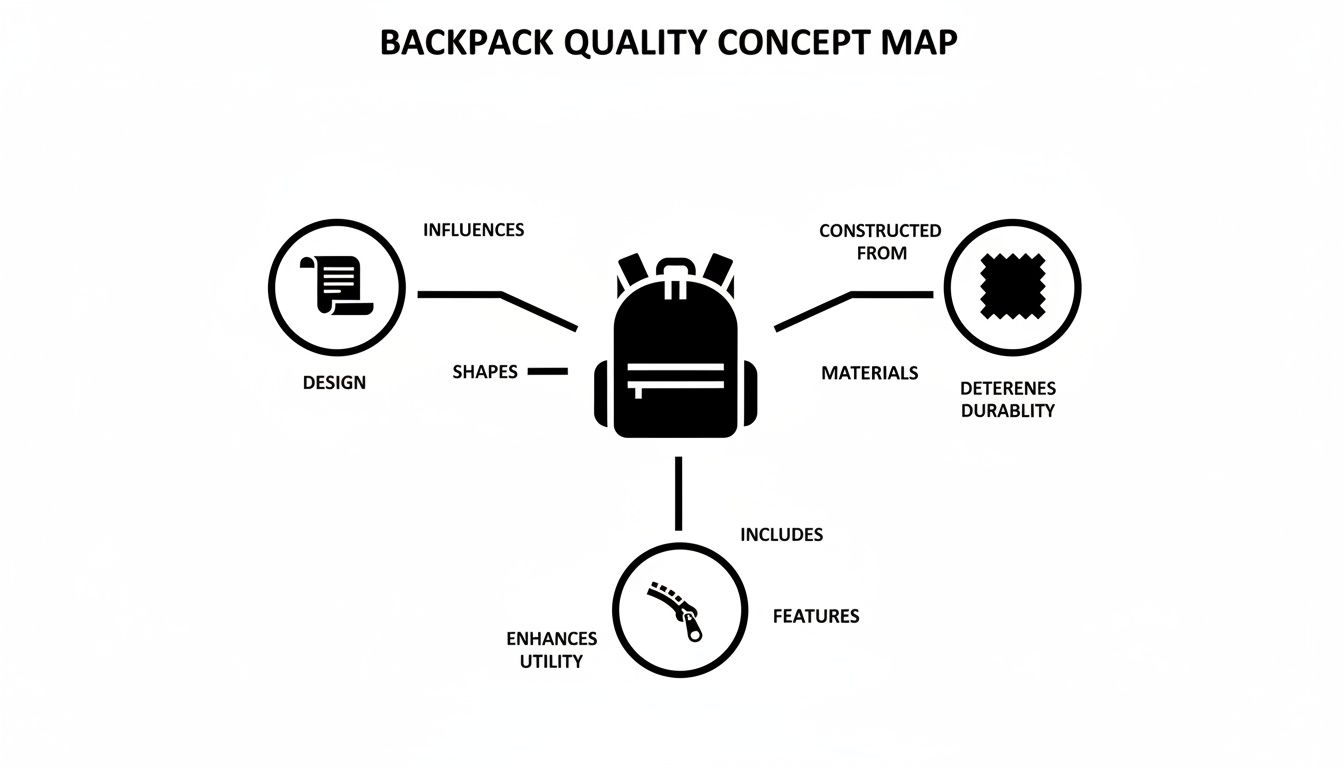
As you can see, a backpack’s quality isn't about one single thing; it’s about how well these three areas are balanced. A brilliant design is pointless without tough materials, and fancy features don't mean much if the design itself isn't practical.
The Foundation: Materials That Endure
A backpack's fabric is its first line of defense. It’s the armor that shields your gear from rough weather, abrasive surfaces, and the occasional careless baggage handler. While there are plenty of materials out there, a few really stand out in the world of high-performance packs.
One of the most trusted names you'll see is CORDURA® ballistic nylon. This stuff was originally developed for military flak jackets, so you know it’s tough. It’s famous for its incredible resistance to tears and scuffs. Seriously, it’s the kind of fabric that can get scraped against a brick wall and come out looking just fine.
Weather resistance is another huge factor. Many of the best packs have a DWR (Durable Water Repellent) coating that makes water bead up and roll right off. While it won't make the bag fully waterproof like a diver's dry bag, this finish gives you crucial protection in a sudden downpour, buying you enough time to find cover before anything inside gets soaked.
The Unsung Heroes: Reliable Hardware
If the fabric is the armor, then the hardware—zippers, buckles, and stitching—is the skeleton holding it all together. This is one area where cutting corners can lead to a complete disaster mid-trip. That's why the best brands are so picky about the components they use.
When it comes to zippers, the gold standard is YKK. These Japanese-made zippers are known all over the world for being smooth and ridiculously durable. Many top backpacks use their self-healing coil zippers, which can often fix a split track just by zipping back and forth over it.
Beyond zippers, keep an eye out for these details:
- Reinforced Stitching: Look closely at stress points, like where the shoulder straps attach to the bag. High-quality packs use bar-tack stitching—a series of dense, tight stitches—to create a bond that won’t pull apart even under a heavy load.
- Durable Buckles: Brands like Duraflex are often chosen for their strength, ensuring that straps and closures won’t suddenly snap when you need them most.
These little things might not seem exciting, but they're what separates a bag that lasts for one vacation from one that joins you on adventures for the next decade.
Ergonomics: Carrying Your World in Comfort
A backpack can be made of space-age materials, but if it hurts to carry, it's failed its most important job. Ergonomics is all about designing for human comfort, and for a travel backpack, it’s everything. The real goal is to make a 25-pound load feel more like 15 pounds by distributing the weight properly.
Key ergonomic features to look for include:
- Padded Shoulder Straps: High-density foam gives you cushion without being overly bulky.
- Ventilated Back Panel: A structured back panel with built-in air channels is a lifesaver, helping prevent that awful sweaty-back feeling by letting air flow through.
- Load Lifters: These are the small straps that connect the top of your shoulder straps to the pack itself. Tightening them pulls the weight closer to your back, making you feel more balanced and stable.
- Adjustable Sternum Strap: This strap across your chest keeps the shoulder straps from sliding off, securing the pack to your body.
A well-designed suspension system shifts most of the pack's weight from your shoulders to your hips, which are much better at carrying heavy loads. This is the secret to walking through an airport or across a city without feeling completely worn out.
Organization: The Genius of Smart Design
Finally, the layout of the pockets and compartments determines how easy it is to actually live out of your bag. The best backpacks have an intuitive flow that keeps your essentials within reach and prevents your stuff from turning into a jumbled mess.
One of the most loved features in modern travel packs is the clamshell opening. This design lets the main compartment unzip all the way around, opening flat like a suitcase. It’s a total game-changer, giving you a full view of everything inside without having to dig around from the top.
Other critical organizational features are:
- Dedicated Tech Compartments: A padded and suspended laptop sleeve is a must-have to protect your most expensive gear from bumps and drops.
- Quick-Access Pockets: Small pockets on the top or front are perfect for things you need to grab in a hurry, like your passport, phone, or keys.
- Compression Systems: Internal or external straps let you cinch everything down. This not only saves space but also keeps your items from shifting around while you're on the move. For more tips, check out our guide on maximizing packing efficiency with a cargo backpack.
These are the kinds of features that come together in the best packs on the market. Premier models like the Aer Travel Pack 3 and Cotopaxi Allpa 35L are constantly praised for their smart combination of CORDURA® fabric, YKK zippers, load lifters, and clamshell openings. These designs dominate the popular 20-40L capacity range, which makes up over 51% of the $21.74 billion global backpack market—proving that travelers everywhere really value smart, durable design.
Matching a Backpack to Your Travel Style
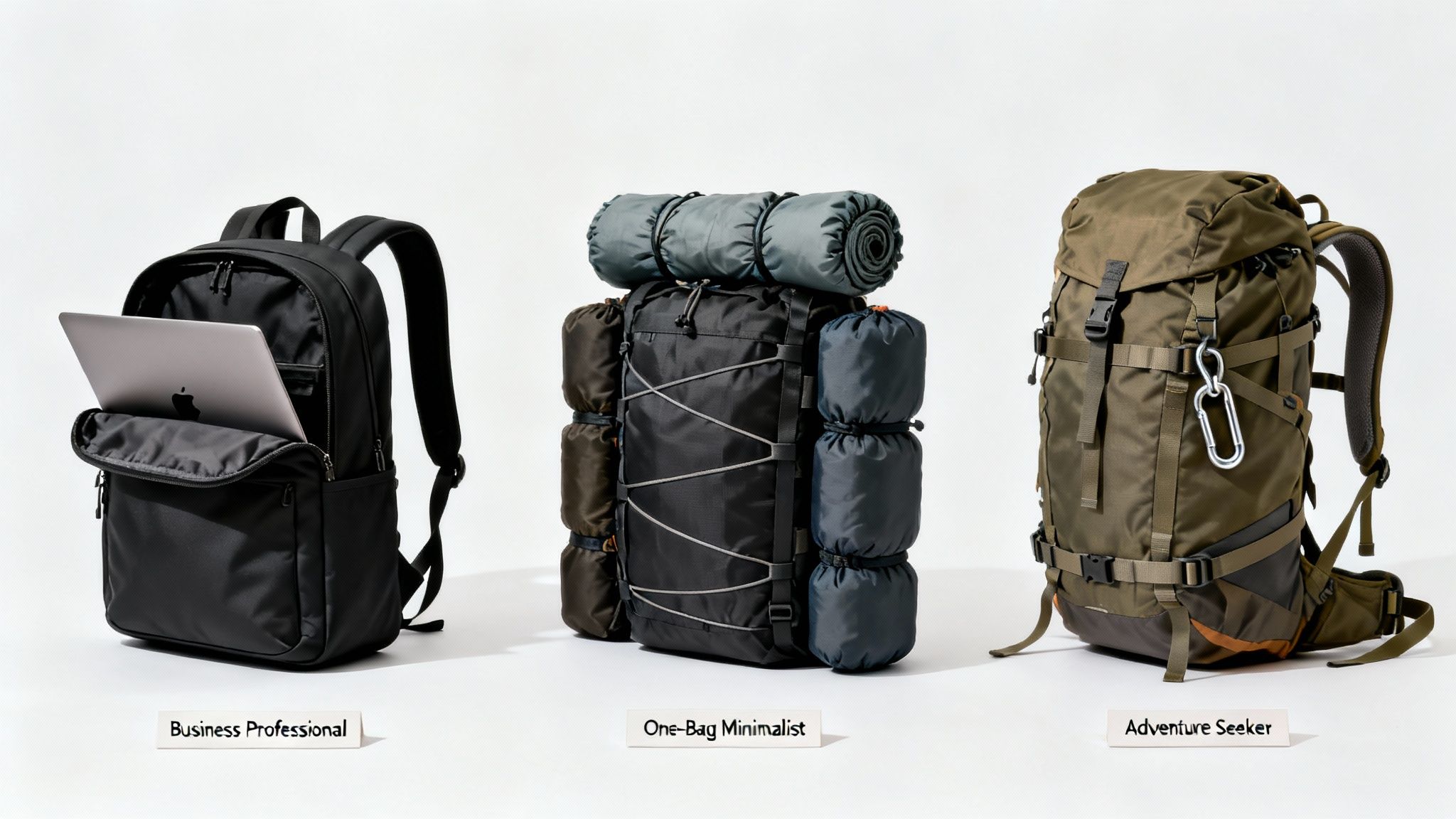
The best backpack in the world is useless if it doesn't fit the way you travel. It’s that simple. All the fancy features—ballistic nylon, clamshell openings, YKK zippers—only really matter when they serve your specific journey. A sleek pack that’s perfect for a week of meetings will be a nightmare on a mountain trail.
Think of it like choosing shoes. You wouldn’t wear hiking boots to a wedding or dress shoes on a muddy path. The same logic applies here. Once you nail down your primary travel style, you can cut through the noise and find a pack that feels like it was made just for you.
Let's break down three common traveler types and pinpoint the features that will make the biggest difference for each.
For the Business Professional
The modern professional on the move needs more than just a bag; they need a mobile office that looks the part. This traveler is all about efficiency, organization, and a polished look that fits in everywhere from the airport lounge to a client’s boardroom. The last thing they want is a bag that screams "I just got back from a hostel."
Their trips are often packed with tight schedules and thousands of dollars worth of electronics. The backpack has to protect that gear while keeping them agile and looking sharp.
Here's what a top-rated business travel backpack absolutely must have:
- A Sleek, Understated Design: Look for clean lines, minimal dangling straps, and professional colors like black, charcoal, or navy. Materials like ballistic nylon or coated canvas provide rugged protection without the "outdoorsy" vibe.
- A Dedicated and Protected Tech Sleeve: This is completely non-negotiable. It needs to be padded, easily accessible, and preferably checkpoint-friendly to save you from fumbling with your laptop in the security line.
- Smart Organization for Essentials: Quick-access pockets are your best friend. You need designated spots for your passport, phone, pens, and business cards so you're not digging around for them.
For a business professional, the backpack is a tool. Its design should communicate competence and its features should remove friction from the entire travel experience.
A clamshell opening is great for neatly packing a wrinkle-free shirt, and a luggage pass-through strap is a lifesaver for sliding the pack over your rolling suitcase handle.
For the One-Bag Minimalist
The one-bag minimalist is all about freedom. Their goal is to fit everything they need into a single, carry-on compliant backpack, allowing them to glide through airports, hop on trains, and navigate crowded city streets without being weighed down. For this traveler, versatility and clever use of space are king.
Every ounce counts. Every inch matters. Their ideal backpack is a masterclass in smart design, maximizing every bit of packing space while staying within those strict airline size limits. If you want to dive deeper into this mindset, check out our guide on packing essentials for minimalist travelers.
These features are critical for the minimalist:
- Maximum Carry-On Compliance: The sweet spot is a capacity between 35L and 45L. The pack's dimensions should be right around 22 x 14 x 9 inches to fit even the most notorious budget airline sizers.
- Ultralight Yet Durable Materials: A bag made from something like Ripstop nylon or high-grade polyester keeps the base weight incredibly low. This saves more of your precious weight allowance for the things you actually want to bring.
- Effective Compression Systems: Good compression straps, both inside and out, are essential. They let you cinch everything down, shrinking the bag's profile when it isn't full and keeping your gear from shifting around.
For the Adventure Seeker
The adventure seeker needs a backpack that’s as tough and ready for anything as they are. Their trips can involve navigating ancient cobblestone streets one day and a dusty mountain trail the next. For them, two things trump all else: comfort and durability.
This traveler’s bag is their lifeline. It has to be rugged enough to get tossed onto the roof of a bus but comfortable enough to carry for hours while searching for a remote hostel.
A top-rated pack for an adventurer will always have these features:
- A Robust Suspension System: This is the single most important element. You need a well-padded, adjustable harness with load lifters, a supportive hip belt that takes the weight off your shoulders, and a ventilated back panel to keep you from getting too sweaty.
- Rugged, Weather-Resistant Materials: Tough fabrics like high-denier CORDURA® with a water-repellent coating offer crucial protection against scrapes, scuffs, and surprise rainstorms. Lockable, heavy-duty YKK zippers also add a much-needed layer of security.
- Versatile Packing Options: Beyond a main compartment, look for practical features like deep side pockets for water bottles, external loops or straps for attaching extra gear, and maybe even a separate bottom compartment for stashing dirty shoes or laundry.
Navigating Backpack Sizing and Carry-On Rules
Choosing the right travel backpack can feel like you're trying to solve a puzzle, especially when every airline seems to have its own set of rules. You'll see sizes listed in liters (L), but what does that number actually mean for your trip?
Think of it like this: a backpack's liter capacity is its total volume. A bigger number means more space, but it also means a bigger bag that might not fit in the overhead bin. Getting this right is your best defense against having to gate-check your bag last minute. A small 25L pack is like a day bag, perfect for a quick overnight, while a huge 65L pack is more like a trunk for long-term adventures where checking your luggage is the only option.
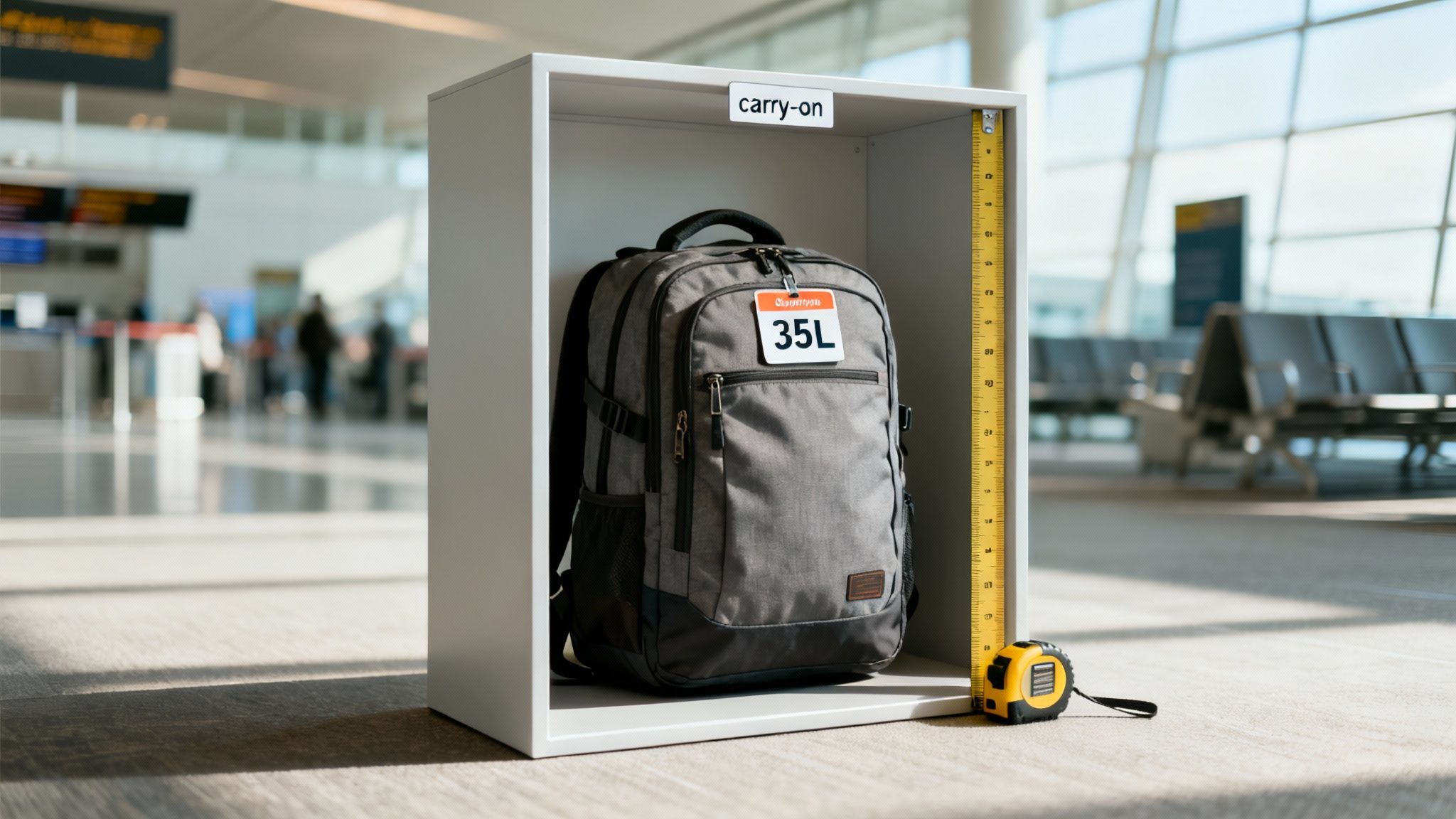
Decoding Liters for Real-World Travel
For most of us trying to travel with just a carry-on, the sweet spot is a bag between 35L and 45L. This size hits the perfect balance, giving you enough room for a few days' worth of clothes and gear without being too bulky to carry through the airport.
Here’s a quick way to visualize what that means for packing:
- 20-30 Liters: The weekend warrior. Think a couple of outfits, toiletries, and your laptop.
- 35-45 Liters: The one-bag travel champion. Ideal for trips up to a week long and generally designed to meet carry-on size limits.
- 50+ Liters: For the long haul. These are for extended travel or trips that require special gear (like camping equipment) and almost always need to be checked.
There's a reason you see so many carry-on-sized bags on the market. The global backpack industry is projected to hit $21.74 billion, and bags in that versatile 20-40 liter range make up over 51% of all sales. It’s clear that travelers want maximum space without the hassle of checking a bag.
The Unwritten Rules of Carry-On Dimensions
While liter capacity tells you about volume, airlines only care about one thing: physical dimensions. The standard carry-on size for most major airlines in the U.S. and abroad is 22 x 14 x 9 inches (roughly 56 x 36 x 23 cm). A 40L backpack is often designed to fit right within these limits.
But—and this is a big but—not all airlines play by the same rules. Budget carriers are famous for having smaller, stricter size limits. This is where a well-designed backpack truly shines.
Look for bags with external compression straps. These are a game-changer. They let you cinch everything down when your pack isn't stuffed to the brim, which can easily shave off a critical inch or two and help you slide into that dreaded baggage sizer.
A backpack’s real size isn’t what the tag says; it’s how big it is when you’ve packed it. A flexible design with good compression can be the difference between strolling onto the plane and paying a surprise fee at the gate.
Also, don't forget that understanding airline personal item rules is just as important. If your backpack is your main carry-on, you still get a smaller personal item, like a sling bag or tote, to keep under the seat.
Your Pre-Flight Checklist for a Perfect Fit
Gate-check anxiety is real. A few minutes of prep before you leave for the airport can save you a ton of stress and money.
- Always Check Your Airline's Website: Don't just assume. Before you pack, look up the specific carry-on dimensions for the airline you're flying.
- Do a Test Pack: A backpack's shape changes a lot once it's full. Pack it like you would for your trip, then grab a tape measure and check the dimensions yourself.
- Prioritize Soft-Sided Bags: Unlike a hardshell suitcase, a soft-sided backpack has some give. That flexibility can be a lifesaver when you're trying to fit into a tight baggage sizer.
- Use Those Compression Straps: Once you're all packed, pull those external straps tight. It makes the bag smaller and also keeps your gear from shifting around.
By choosing a versatile 35-45L backpack and double-checking the rules for your specific flight, you can walk onto that plane with confidence, knowing your bag is coming with you.
Why Trust Voyage Luggage for Your Next Backpack
Figuring out what makes a great travel backpack is half the battle. The other half is finding a place you can actually trust to sell you one. At Voyage Luggage, we're more than just a store; think of us as your travel partner, here to connect you with the right gear and take the guesswork out of the whole process.
Let's be honest, shopping for top rated travel backpacks online can feel like a total shot in the dark. We get it. That's why we've done the legwork for you. Our collection isn’t just some random pile of bags. It's a hand-picked lineup from the most respected names out there—brands like TUMI, Samsonite, and Briggs & Riley that have earned their reputation for incredible quality and smart design.
A Curated Collection of The Best Brands
We see ourselves as expert gear curators. Before any backpack even shows up on our site, it has to meet our own tough standards. We only stock brands known for their real-world durability, comfortable fit, and thoughtful features. This means you can browse our selection knowing that anything you see is already best-in-class.
Our rule is simple: if we wouldn't be thrilled to travel with it ourselves, we won't sell it. This simple commitment ensures you’re getting a backpack that’s ready for the long haul, trip after trip.
Customer-First Policies That Remove The Risk
Buying a new backpack should be exciting, not a source of anxiety. We’ve designed our entire process around your peace of mind and stand behind every single product we sell.
Your travel success is our top priority. We structure our service to support your journey from the moment you start browsing to long after your purchase arrives.
To make things as smooth as possible, we offer a few key perks:
- Free FedEx Shipping: Get your new backpack delivered fast without paying extra for shipping on any order over $75.
- 60-Day Hassle-Free Returns: If it turns out the backpack isn’t quite right for you, no problem. You have a full two months to return it, no questions asked.
- Fast Florida Delivery: For our fellow Floridians, we offer super-fast 1-2 day delivery on most items. You can start packing for your next adventure almost immediately.
Experience the Quality in Person
Sometimes, you just have to see it and feel it for yourself. You need to pull the zippers, feel the fabric, and try the backpack on to see how it fits. If you’re a hands-on shopper, we’d love for you to stop by one of our physical locations, like our store at Dolphin Mall in Miami.
Our in-store team is made up of genuine travel enthusiasts who can give you personalized advice to find your perfect match. It’s this combination of online convenience and real-world expertise that helps you make a choice you’ll be happy with for years to come. Shopping with Voyage Luggage isn't just a purchase—it's an investment in a better, more confident travel experience.
Still Have Questions? Let's Clear a Few Things Up
Even after you've done your homework, a few questions always pop up right before you hit "buy." I get it. Picking from the best top rated travel backpacks feels like a big commitment, and you want to be sure.
Let's walk through some of the most common questions I hear from travelers. Think of this as a final gut-check to make sure you're feeling 100% confident about the pack that's going to be your travel companion.
What’s the Best Size for a Carry-On Travel Backpack?
For most airlines and trips, a backpack between 30L and 45L is the sweet spot. It gives you enough room for several days' worth of gear without being so big you have to fight to get it in the overhead bin.
A 40L pack, for instance, is usually designed right around that common airline limit of 22 x 14 x 9 inches. But—and this is a big but—always check with your specific airline before you head to the airport. Budget carriers, in particular, are notorious for having stricter rules.
A great travel backpack often has compression straps, and they are your best friend at the gate. If your bag isn't stuffed to the brim, you can cinch it down to a smaller profile, giving you a little extra wiggle room to make it fit.
Should I Get a Clamshell or a Top-Loading Backpack?
If you're traveling in cities, staying in hotels, and generally sticking to a plan, the clamshell backpack is almost always the way to go. This design opens up completely, just like a suitcase, so you can see everything you packed at a glance.
Seriously, this one feature is a game-changer. It makes packing, unpacking, and grabbing that one specific shirt an absolute breeze. You won’t have to dump everything out just to find your charger. Top-loaders, which are holdovers from the hiking world, make you dig down from a single opening. Unless you’re trekking through the wilderness, the clamshell design will save you a ton of hassle.
How Do I Properly Fit and Adjust My Backpack?
Getting the fit right is everything. It's the difference between a heavy pack feeling like a part of you or a painful burden. If you don't adjust it correctly, all that weight will land squarely on your shoulders, and you'll be miserable.
Just follow these five simple steps to get the weight distributed properly:
- Get the Hip Belt Right: First things first, put the pack on and buckle the hip belt so it sits right on top of your hip bones, not up around your waist. This is the most crucial step—your powerful hips should carry about 80% of the load.
- Snug Up the Shoulder Straps: Now, pull down on the shoulder straps until they're snug. They should hug the curve of your shoulders but not be so tight that they're digging in.
- Use the Load Lifters: See those little straps on top of your shoulder straps? Gently pull them forward. This will bring the top of the backpack closer to your body, keeping it from pulling you backward and throwing you off balance.
- Clip the Sternum Strap: Last, clip the chest strap and adjust it so it sits comfortably across your collarbone. This little strap does a big job by keeping the shoulder straps from sliding off and making the whole load feel more stable.
What's the Difference Between a Travel and a Hiking Backpack?
They might look alike from a distance, but travel and hiking backpacks are built for totally different worlds. It's like comparing a city sedan to a 4x4 truck; they both have wheels, but you wouldn't take a sedan rock-crawling.
-
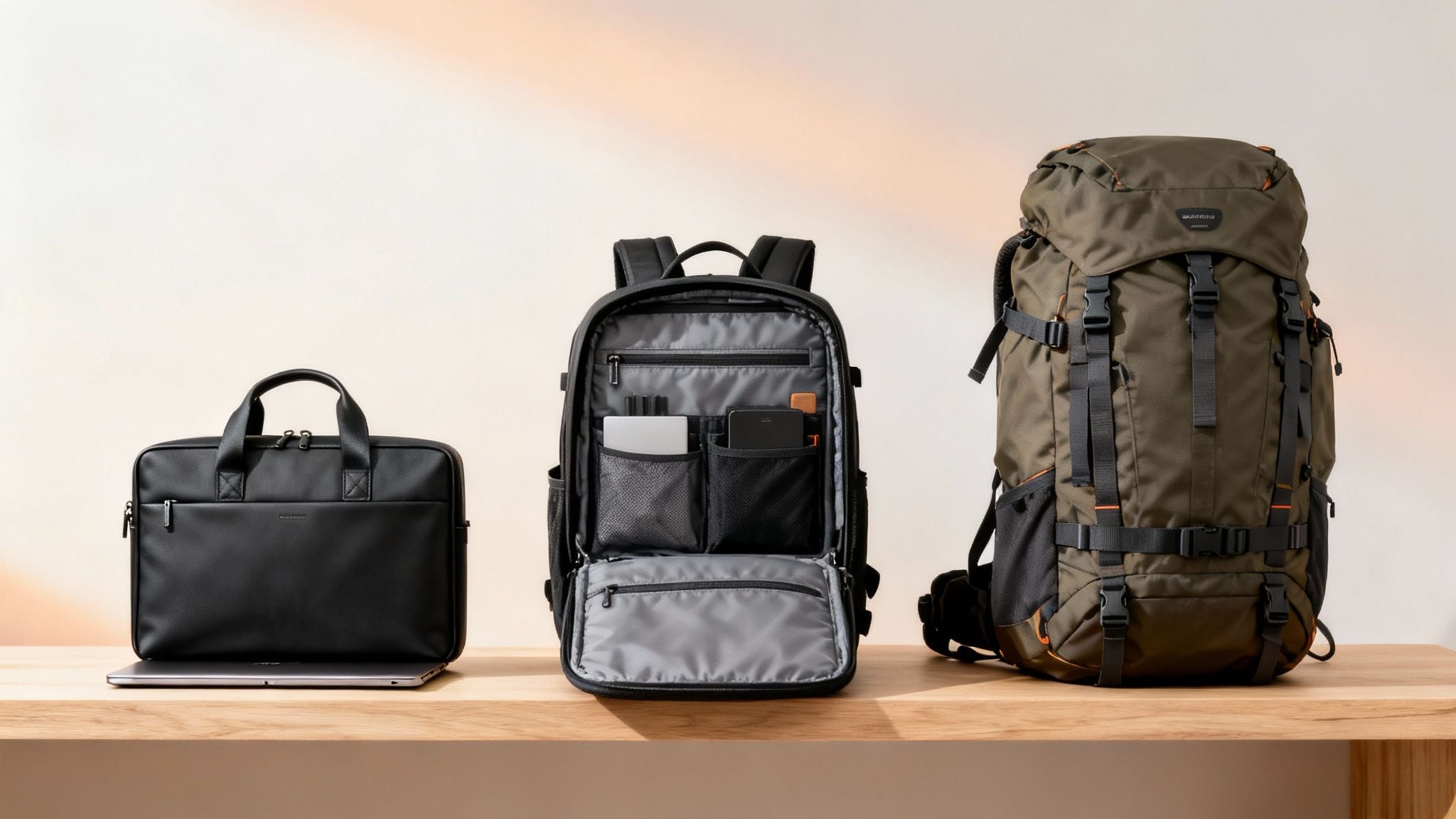
Travel Backpacks: These are made for navigating the modern travel landscape—airports, train stations, and bustling city streets. They’re all about organization, easy access, and security. You'll find features like padded laptop sleeves, those suitcase-style clamshell openings, and lockable zippers. The suspension is designed to be comfortable for shorter hauls, like walking from the metro to your hotel.
-
Hiking Backpacks: These are engineered for one thing: carrying heavy loads comfortably over long distances on rugged trails. They have burly suspension systems, heavy-duty hip belts, and back panels designed for maximum ventilation. They're almost always top-loading and are covered in external straps and loops for gear like tents or trekking poles—things that love to get snagged on airport conveyor belts.
Picking the right tool for the job is key. Of course, a great trip is about more than just your gear. Smart travelers also know how to prepare for international travel to make sure every part of the journey goes smoothly.
Ready to find the perfect partner for your adventures? At Voyage Luggage, we’ve already done the hard work by curating a collection of the world's best backpacks. Explore our collection of top rated travel backpacks and travel with confidence.
Share:
Your Ultimate Guide to Top Rated Carry On Luggage