

Finding the best carry on backpack for women can feel like a mission impossible. It starts with the thrill of planning a new trip and quickly devolves into a headache. The best packs aren't just smaller versions of men's bags; they combine a truly ergonomic design, clever organization, and airline-approved sizing. It’s time to ditch the "one-size-fits-all" myth that never really fits anyone.
Your Search for the Perfect Travel Backpack Ends Here
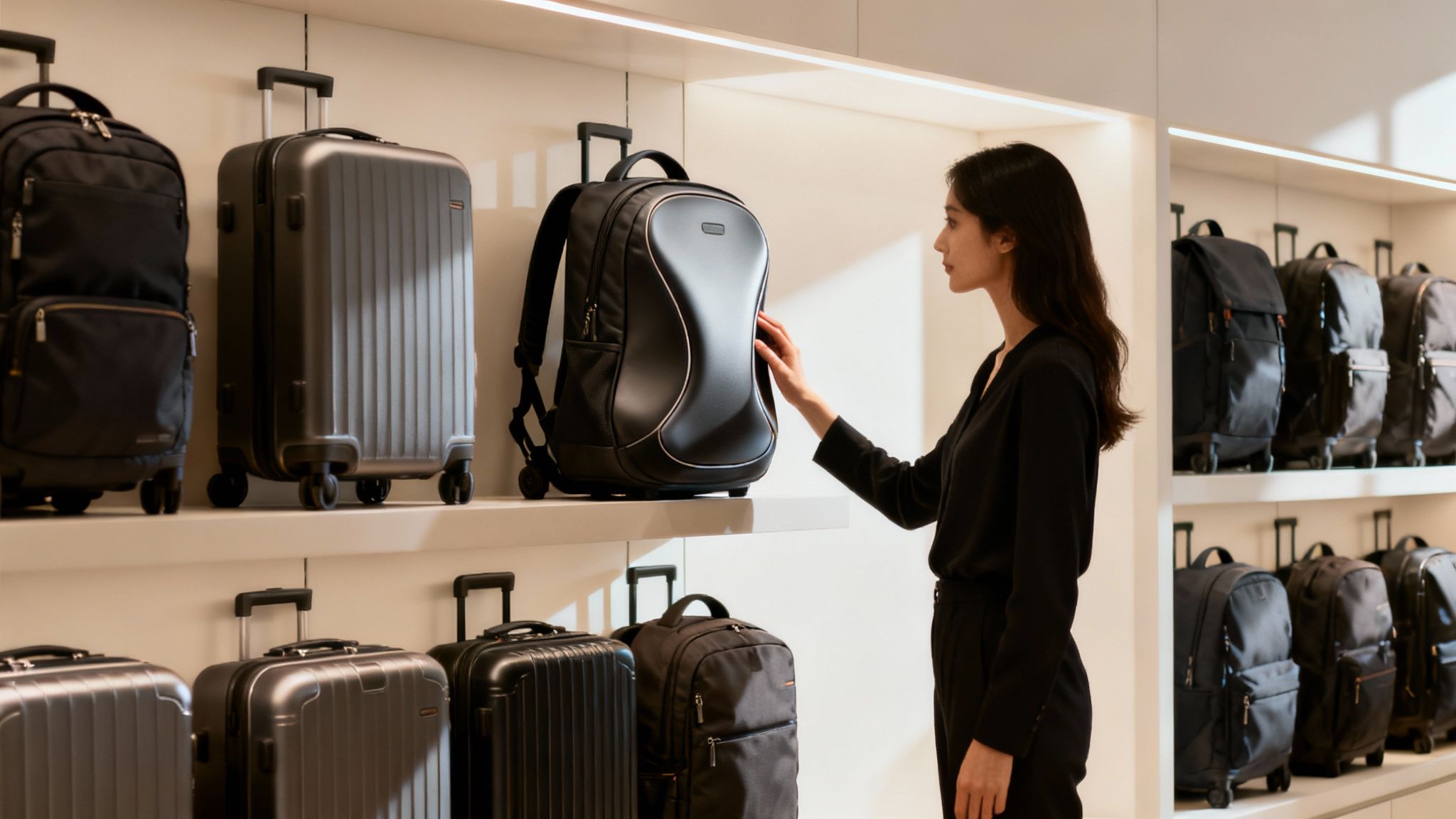
Does staring at a wall of backpacks make your head spin? You're not alone. We've all been there—wrestling with an overstuffed bag, digging for a passport, and dealing with sore shoulders. This guide is here to change that. We’re going to cut through the noise and show you how the right backpack can genuinely transform your trips from stressful to effortless.
We'll break down the features that actually make a difference for women travelers: a comfortable fit that’s made for you, smart storage that keeps you organized, and tough materials that give you peace of mind.
A great travel backpack is more than just a bag—it's your personal travel assistant. It keeps your essentials organized, your valuables safe, and everything you need right at your fingertips, so you can actually enjoy the journey.
What Makes a Travel Backpack Right for You
The "perfect" backpack is all about your personal travel style. Are you a digital nomad who lives out of your bag, a minimalist weekend explorer, or an adventurer heading off the beaten path? Each trip has different demands. Our goal is to help you pinpoint the features that will become your non-negotiables, trip after trip.
- Ergonomic Fit: A backpack designed specifically for a woman's frame isn't just a marketing gimmick. It can make a heavy load feel surprisingly light and save you from a world of back pain.
- Smart Organization: Think dedicated spots for your laptop, a quick-access pocket for your passport, and compartments that keep your clothes separate from your toiletries. No more frantic searching at the security line.
- Durable Security: Quality materials and thoughtful security features mean your bag can handle the chaos of travel while protecting what’s inside.
Think of us as your personal shopping experts, guiding you through trusted brands like TUMI and Samsonite to find a travel partner that feels like it was made just for you. This is where the endless searching stops, and smarter travel begins.
Navigating Airline Carry On Rules with Confidence
Let's tackle the most confusing part of picking a travel backpack: the dreaded airline carry-on rules. But don't worry, once you know the basics, it's actually pretty simple. Getting this right is the key to breezing through the airport, knowing your bag will fit without a second thought.
Think of the size limit as the "golden ticket" for your backpack. Most major US airlines have agreed on a standard size that almost guarantees your bag a spot in the overhead bin.
The magic numbers are 22 x 14 x 9 inches (or 56 x 36 x 23 cm). This measurement includes everything—the wheels, handles, and even that front pocket you've stuffed to the brim. Stick to this, and you're good to go on most domestic flights.
Now, if you're an international jet-setter, a little heads-up: budget airlines in Europe and Asia can be stricter. To be on the safe side and avoid any last-minute drama (and fees!) at the gate, look for a bag that's a bit smaller, around 21.5 x 13.5 x 7.5 inches. This gives you a comfortable buffer for any airline, anywhere.
Carry-On vs. Personal Item: Your Secret Weapon
Here's a travel hack every pro uses: the one-two punch of a carry-on and a personal item. Airlines let you bring both, and it's your ticket to packing everything you need without checking a bag.
-
Your Carry-On Backpack: This is your main bag. It holds most of your clothes, shoes, and toiletries and goes in the overhead bin. It needs to meet that 22 x 14 x 9-inch standard.
-
Your Personal Item: This is your smaller, under-the-seat companion—think a large purse, a tote bag, or a small daypack. The size for this varies, but a common dimension is around 17 x 10 x 9 inches.
I always think of my personal item as my in-flight "survival kit." I keep my laptop, a good book, headphones, snacks, and a water bottle in it. That way, I'm not constantly getting up and digging through the overhead bin. The best carry on backpack for women is one that's streamlined enough to let you bring a roomy personal item alongside it.
Just remember this: If it's meant for the overhead, it's your carry-on. If it fits under the seat in front of you, it's your personal item. Simple as that.
What's the Deal with "Linear Inches"?
Every now and then, you might see an airline mention a limit in "linear inches," which sounds way more complicated than it is.
It's just the bag's height, width, and depth added together. So, a 22 x 14 x 9-inch bag comes out to 45 linear inches (22 + 14 + 9). It's just a different way of saying the same thing. Don't sweat this term; the individual measurements are what really matter, since that's what those metal sizer bins at the airport check.
For a deeper dive into all things carry-on, you can check out our ultimate guide to carry-on luggage.
Major Airline Carry On Size Cheat Sheet
To make life even easier, I've put together a quick cheat sheet with some of the biggest airlines. But remember, rules can change, so it’s always a smart move to give the airline's website a quick look before you head to the airport.
| Airline | Carry-On Dimensions (Inches) | Personal Item Dimensions (Inches) |
|---|---|---|
| Delta Air Lines | 22 x 14 x 9 | Must fit under the seat |
| American Airlines | 22 x 14 x 9 | 18 x 14 x 8 |
| United Airlines | 22 x 14 x 9 | 17 x 10 x 9 |
| Lufthansa | 21.6 x 15.7 x 9 | 15.7 x 11.8 x 3.9 |
| British Airways | 22 x 18 x 10 | 16 x 12 x 6 |
By picking a backpack that plays by these rules, you're setting yourself up for a totally stress-free trip. You can walk right onto that plane and start thinking about the adventure ahead.
Why Comfort Is Your Most Important Feature
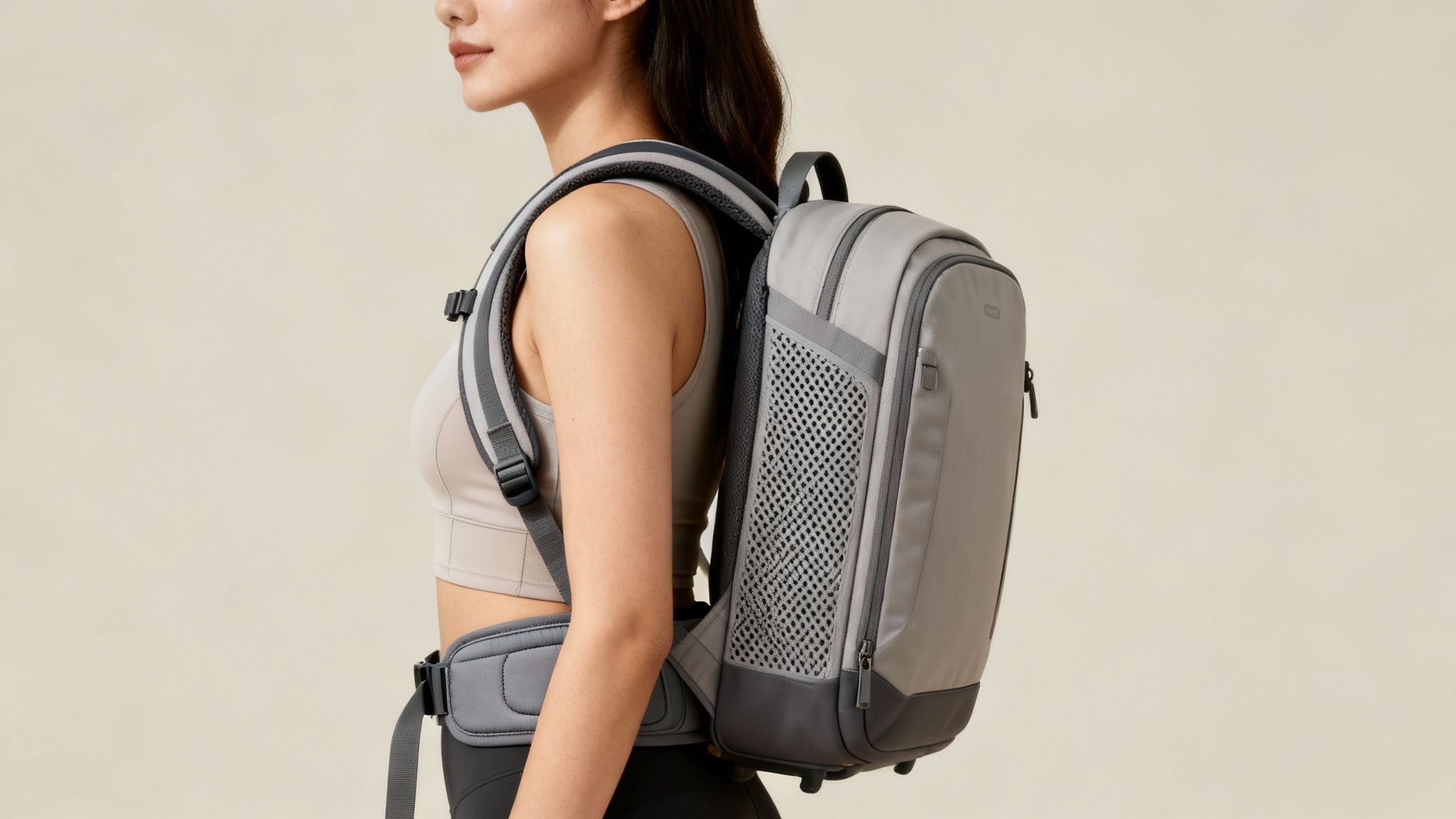
All the clever pockets and tough-as-nails materials in the world don't matter if your backpack is a nightmare to carry. A poorly fitting bag can turn a day of exploring a new city into a miserable slog, sending you back to your hotel with aching shoulders and a strained back.
When it comes to travel backpacks for women, a comfortable, ergonomic fit isn’t just a nice-to-have feature—it's everything.
Think of it this way: you wouldn't buy a pair of hiking boots two sizes too big, no matter how cool they looked. Your backpack is no different. The right one should feel like a part of you, not some clunky, heavy object you're wrestling with through the airport. A bag designed for a man's broader shoulders and longer torso will sit all wrong on a woman's frame, creating painful pressure points and shifting the load in all the worst ways.
Thankfully, the travel gear industry is finally paying attention. Women are a massive force in travel, and brands are designing gear that actually fits us. This has led to some huge improvements that make all the difference.
The Science of a Woman-Specific Fit
So, what actually makes a backpack "woman-specific"? It’s not just about shrinking a unisex bag and painting it a different color. It’s about a few key ergonomic tweaks designed to work with female anatomy.
- S-Curved Shoulder Straps: Instead of the straight straps you see on many bags, these are contoured to curve around a woman’s chest. This small change prevents pinching and ensures the straps lie flat, distributing weight evenly.
- Shorter Torso Length: Women typically have shorter torsos than men of the same height. A backpack with the correct torso length makes sure the weight is properly supported by your hips, not yanking down on your shoulders.
- Angled Hip Belts: A good hip belt is a game-changer for heavier loads. On women's packs, they’re angled and padded to sit right on top of the hip bones. This simple adjustment can transfer up to 80% of the bag’s weight off your shoulders and onto your body’s strongest foundation—your legs.
This focus on ergonomics isn't just a fleeting trend. As women become the fastest-growing customer base for travel gear, the demand for comfortable, well-designed packs has skyrocketed. In fact, women are on track to make up 40% of new backpack sales by 2025, a big jump from 30% before 2020. This shift has pushed brands to offer better-fitting options, boosting sales in women's lines by 15% in urban markets alone. You can dive deeper into these numbers over at the backpack industry report.
Finding Your Perfect Fit at Home
You don't need to be a gear nerd to find a backpack that fits like a glove. The single most important measurement is your torso length, and you can find it in two minutes with a friend and a flexible tape measure.
- Locate Your C7 Vertebra: Tilt your head forward and feel for the bony bump at the base of your neck. That’s your C7 vertebra, and it's your starting point.
- Find Your Iliac Crest: Put your hands on your hips like you're striking a superhero pose, with your thumbs pointing to your back. The shelf your hands are resting on is the top of your hip bones (the iliac crest).
- Measure the Distance: Have your friend measure the length along your spine from that C7 vertebra down to the imaginary line between your thumbs. That measurement is your torso length.
Once you have your torso length, you can confidently check it against the sizing charts that backpack companies provide. This one step will do more than anything else to guarantee you pick a pack that will be a joy to carry.
Other Comfort Features to Look For
Beyond the main fit, a few other details can make a huge difference in how a pack feels.
A sternum strap (or chest strap) is a small but powerful feature. It’s that little strap that connects the two shoulder straps across your chest. It keeps them from sliding off your shoulders and helps stabilize the whole load, especially when you're moving quickly.
Also, keep an eye out for a ventilated back panel. These are usually designed with mesh and air channels that let air flow between your back and the backpack. On a hot day of sightseeing, this feature is a lifesaver for cutting down on that dreaded sweaty-back feeling.
How Smart Organization Simplifies Your Travels
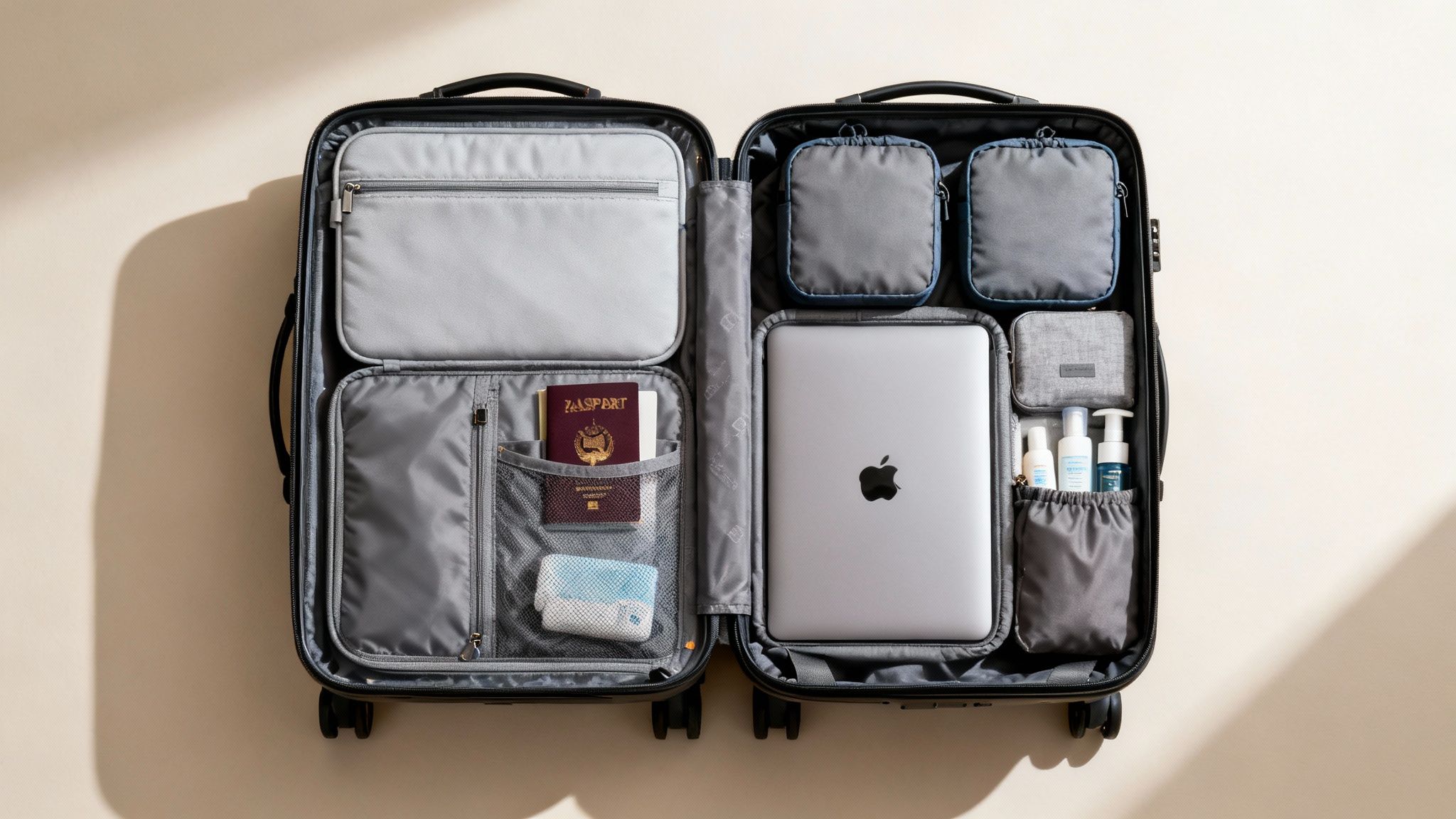
A great backpack is more than just a bag—it's your mobile command center. The right organizational features can transform the usual pre-trip packing frenzy into a surprisingly calm experience. We've all been there: frantically dumping everything out just to find a phone charger. Smart design ends that chaos for good.
The way a backpack opens and is laid out inside completely changes how you pack. There are really two main styles you'll see, and each one fits a different kind of traveler.
- Clamshell Opening: This is my personal favorite for most trips. The bag unzips all the way around and opens flat, just like a suitcase. You can see everything at once, which makes packing and finding things a breeze. If you like to keep things neat and accessible, this design is a game-changer.
- Top-Loading Opening: You'll see this a lot on hiking packs. It has a single opening at the top, usually with a drawstring and a lid that buckles down. It's fantastic for stuffing a lot of gear in and keeping it all protected from the weather, but grabbing something from the bottom can feel like a magic trick.
Ultimately, the best backpack will have a layout that just clicks with the way you travel, giving every item a home.
The Pockets and Compartments That Matter Most
Beyond the main space, a backpack's real genius is in its pockets. These are the little details that save you from stress at the security line or the boarding gate.
Smart organization is the difference between a backpack that works for you and one you have to work against. The goal is to create a system where every item has a logical home, making packing intuitive and travel effortless.
A few non-negotiables to look for are a padded laptop sleeve (bonus points if it's suspended off the bottom of the bag for extra drop protection) and a quick-access pocket on the front or top. This is where your phone, passport, and boarding pass live. I also love a separate compartment for shoes or a toiletry kit—it's a lifesaver for keeping dirty soles or potential shampoo spills away from your clean clothes.
Maximizing Your Space With Smart Tools
Even the best-designed backpack can use a little help. This is where packing organizers come in. Think of them as your secret weapon for creating order and squeezing out every last inch of space.
Packing cubes are popular for a reason. These little zippered pouches let you group your clothes by type—one for tops, one for bottoms, another for underwear. Not only does this keep your bag incredibly tidy, but it also compresses your clothes, freeing up a surprising amount of room. If you want to dive deeper, we have a whole guide on choosing the best packing cubes for travel.
Once you have the right bag and tools, a few simple packing tricks can make all the difference. For example, learning the art of packing dresses without wrinkles can save you from hunting down an iron the minute you arrive. It’s these little strategies that help you feel put-together from the moment you unpack.
Keeping Your Gear Safe: Durability and Security
Think of your carry-on as a personal vault for your most valuable stuff—your laptop, passport, wallet, you name it. It’s the one thing that holds everything you can’t afford to lose. That’s why looking at a backpack's materials and security features isn't just about specs; it’s about buying yourself some serious peace of mind on the road.
A great backpack starts with great fabric. It’s like the armor that protects your gear. You’ll see names like ballistic nylon and Cordura thrown around a lot with top-tier bags, and for good reason. Both are ridiculously tough synthetic fabrics that can take a beating, resisting scuffs, tears, and scrapes like champs.
Ballistic nylon was originally designed for military flak jackets (seriously!), so you know it's tough. Cordura has a more rugged, canvas-like feel but is just as durable. A bag made from either of these materials can be shoved under seats, crammed into overhead bins, and dragged through busy terminals without falling apart.
It's the Little Things: Zippers and Stitching
Fabric gets all the glory, but it’s often the small stuff—the hardware and stitching—that makes or breaks a bag. A busted zipper mid-trip is a nightmare scenario, and it’s usually where cheap bags fail first.
This is why you should always check for high-quality hardware. Look for the YKK logo on the zippers. They’re the gold standard in the industry because they just work. They glide smoothly and refuse to jam or break, even after you’ve overstuffed your bag for the tenth time.
Don't forget to inspect the stitching, either. The best bags have reinforced seams, especially where the shoulder straps and top handle connect to the main body. This extra stitching, often called "bar tacking," adds a ton of strength right where the bag is under the most stress, so you don't have to worry about a strap ripping off when you're racing to catch a train.
Smart Security for Modern Travel
These days, security is about more than just a tough exterior. You also need to protect your valuables from thieves, both the old-school pickpockets and the new-school digital kind. The best carry-on backpacks for women build in clever features so you can relax and enjoy your trip instead of constantly clutching your bag.
Here are a few non-negotiable security features to look for:
- Lockable Zippers: These are a must. The zipper pulls are designed to loop together, so you can slip a small TSA-approved lock through them. It’s a simple, low-effort way to deter anyone looking for an easy target.
- Hidden Pockets: A secret pocket, usually hidden in the back panel against your body, is the perfect place to stash your passport, extra cash, or emergency credit card. Out of sight, out of mind.
- RFID-Blocking Pockets: This is a big one. Digital thieves can use scanners to lift your credit card and passport information right through your bag. An RFID-blocking pocket is lined with a special fabric that creates a protective shield, stopping those signals cold.
As more people travel, the demand for these smart security features is skyrocketing. It’s no surprise that tech-forward features like anti-theft locks are a huge factor in the women's carry-on market, which is projected to grow from $18.8 billion in 2025 to $30.8 billion by 2034. You can dig into the evolving backpack market trends at Research and Markets to see where things are headed.
When you choose a backpack with tough materials and smart security, you're not just buying luggage. You're investing in the freedom to explore confidently, knowing your essentials are safe and sound.
Our Top Picks for Every Type of Traveler
Alright, now that you know what to look for in a carry-on backpack, let's put it all together. The best way to find the perfect bag is to think about how you actually travel.
Every trip is different, and so is every traveler. The needs of a business professional dashing to a conference are worlds apart from a creative packing for a weekend city break. Finding the best carry on backpack for women means choosing a companion that fits your specific lifestyle like a glove.
For the Business Professional
When you travel for work, efficiency and a polished image are everything. Your backpack isn't just a bag; it's your mobile office. It needs to be sleek, professional, and organized enough to keep you on top of your game from the airport lounge to the boardroom.
Our top recommendation is a sophisticated pack from a brand like TUMI. They are masters of blending legendary durability with refined style. These backpacks almost always include:
- A dedicated, heavily padded laptop compartment to protect your most critical work tool.
- Multiple organizer pockets for your chargers, pens, business cards, and documents.
- A luggage sleeve (sometimes called a trolley strap) that slides right over your rolling suitcase handle for a seamless trip through the airport.
For the Weekend Jetsetter
The weekend jetsetter is all about style, versatility, and a bit of spontaneity. Your backpack needs to move with you—from a morning flight to an afternoon exploring a new city, and then on to a chic dinner spot without missing a beat. The key is finding something lightweight, comfortable to carry for hours, and stylish enough to be part of your look.
Look for a pack that merges fashion with smart function. Key features to keep an eye on are:
- A clamshell opening that lets you pack it just like a mini-suitcase. No more digging around!
- A clean, minimalist exterior in a versatile color that goes with just about anything.
- Comfortable, padded shoulder straps that won't dig in after a full day of walking.
A great weekend bag is the ultimate travel accessory. It should hold just enough for a few days away while feeling light and looking chic, freeing you up to be present and enjoy the moment.
For the Adventure Seeker
If your travels involve more hiking trails than airport terminals, you need a backpack built for the real world. Adventure seekers need a rugged companion that can handle unpredictable weather, rough terrain, and being stuffed to the gills. This is where function truly shines over form.
We often point people toward brands like Briggs & Riley, which are famous for their tough-as-nails construction and incredible lifetime guarantees. Your ideal pack will have:
- Durable, water-resistant materials like ballistic nylon to keep your gear dry and protected.
- Supportive suspension systems, including a hip belt and sternum strap, to properly distribute weight on long treks.
- External compression straps and attachment points for extra gear like a water bottle or a rain jacket.
The women's backpack market is absolutely booming, with experts projecting it will be worth $15 billion by 2025. It's style-conscious women aged 25-50 who are driving this growth, and here at Voyage Luggage, we cater directly to them with our premium lines from TUMI and Briggs & Riley. For a deeper dive, you can check out the full market report on women's backpacks.
Your Carry On Backpack Questions Answered
Even after going through all the details, you might still have a few lingering questions. That's perfectly normal! Finding the right backpack is a big decision, and it’s smart to cover all your bases.
This section is all about giving you quick, clear answers to the most common questions we get. Think of it as a final check-in to help you feel totally confident before you make your choice. We’ll touch on everything from packing smart to keeping your new bag in great shape for all the adventures ahead.
To start, this handy little decision tree can help you see which features matter most for your kind of travel, whether you're heading to a business meeting, a weekend getaway, or an off-the-beaten-path adventure.
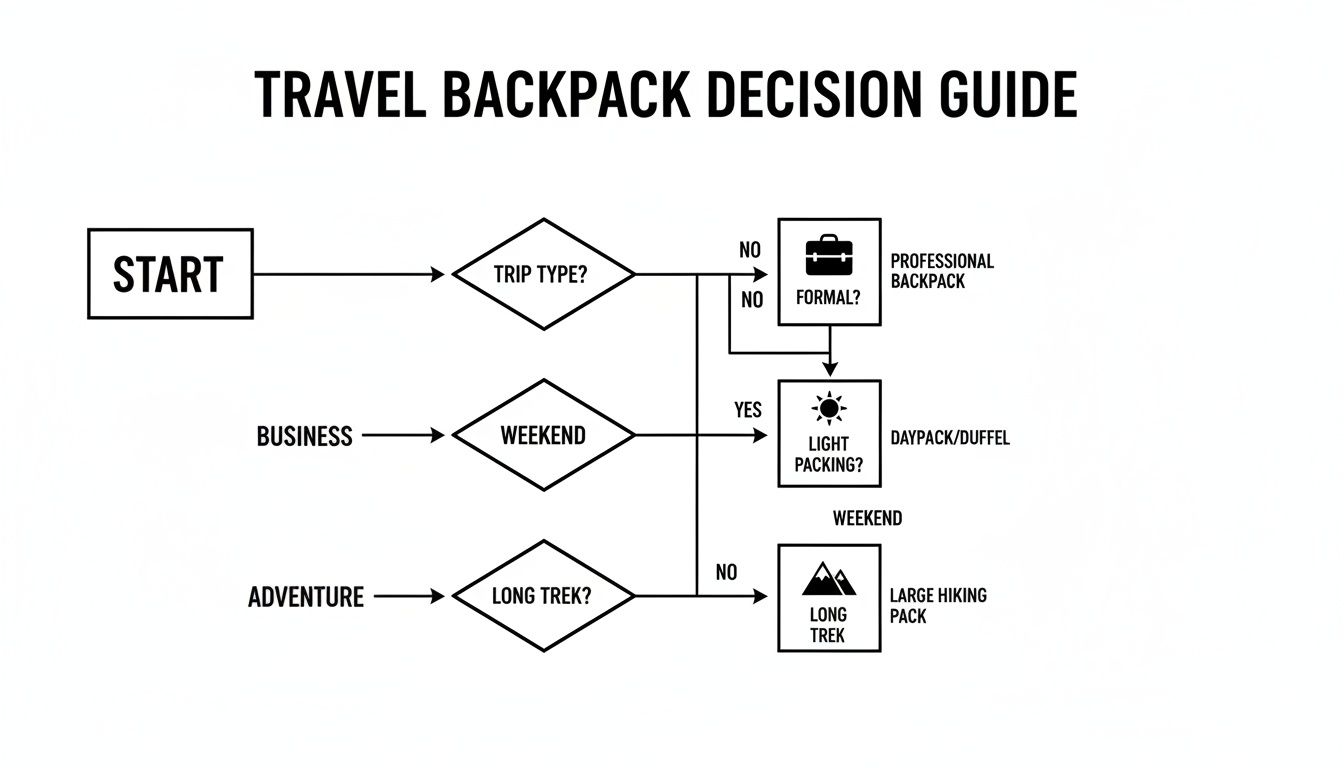
It’s a simple way to connect your travel style with the backpack that’ll serve you best.
Common Questions About Carry On Backpacks
How do I pack my backpack to maximize space and comfort?
It's all about strategic weight distribution. The golden rule is to place your heaviest items—like your laptop or a packing cube filled with jeans—right in the middle of the pack, flush against your back. This helps keep your center of gravity stable and stops the bag from yanking on your shoulders.
Lighter, squishier things like a down jacket can fill the bottom, and anything you'll need to grab quickly (think passport, snacks, or headphones) should live at the very top.
What is the best way to clean and maintain my backpack?
Resist the urge to throw it in the washing machine! The machine can wreck the fabric's protective coatings and damage the straps. Instead, just spot clean any spills with a damp cloth and some mild soap.
If it needs a deeper clean after a long trip, hand-wash it in a tub with lukewarm water and a gentle detergent. Then, just hang it up to air dry completely, but keep it out of direct sunlight.
A well-cared-for backpack is a long-term travel investment. Taking a few minutes to clean it after a trip ensures it will be ready for your next adventure, protecting its materials and functionality for years to come.
Can a 40L backpack really be a carry-on?
Absolutely! In fact, a 40 to 45-liter pack is often seen as the sweet spot for carry-on travel. It gives you plenty of packing room while still usually falling within that standard 22 x 14 x 9-inch airline limit.
The one catch? Pay attention to the bag's actual dimensions. A poorly designed 40L bag could be too long or bulky to fit, so always double-check the specs.
Are expensive backpacks really worth it?
For frequent travelers, the answer is almost always yes. When you invest in a backpack from a reputable brand, you're not just paying for a name. You’re paying for much more durable materials like ballistic nylon, heavy-duty YKK zippers, thoughtfully designed ergonomic support, and often, a lifetime warranty.
It’s the difference between a bag that gives out after a few trips and a reliable travel partner that provides comfort and peace of mind for years.
Ready to find the perfect travel companion that fits your life and your adventures? Explore the curated collection of premium travel backpacks at Voyage Luggage and travel with confidence and style. Find your perfect match today at https://voyageluggage.com.

Share:
Finding the Best Rolling Garment Bag for Wrinkle-Free Travel
The Best Luggage for Business Travel A Complete Guide